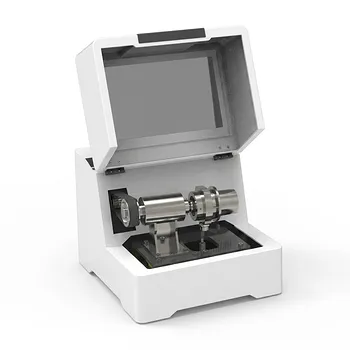
How does a planetary ball mill achieve mechanical alloying for Al-SiC-TiC-TiB2? Master High-Energy Powder Synthesis
Updated 5 months ago
The mechanical alloying of Al-SiC-TiC-TiB2 composites is achieved through the repeated fracture and cold welding of powders driven by high-energy planetary motion. This process utilizes the intense centrifugal and impact forces generated by the mill to force hard ceramic particles (SiC, TiC, TiB2) into the ductile aluminum matrix. By operating in the solid state, the mill facilitates atomic-level mixing and grain refinement that traditional thermal processing cannot replicate.
Core Takeaway: A planetary ball mill transforms a physical mixture into a true composite by using high-dynamic energy to overcome the natural agglomeration and poor wettability of ceramic reinforcements, resulting in a microstructurally uniform material.
The Mechanics of Planetary Energy Generation
Dual-Axis Rotation and G-Forces
The planetary ball mill operates on a "sun and planet" principle, where grinding jars revolve around a central axis while simultaneously rotating in the opposite direction on their own axes. This complex motion generates immense centrifugal forces, often reaching dozens of times the acceleration of gravity (G).
Impact and Shear Energy
The high-speed rotation causes the grinding media—typically hardened steel or ceramic balls—to undergo violent trajectories within the jar. These balls deliver high-energy impacts and intense shear forces upon the powder trapped between the balls or between a ball and the jar wall.
Kinetic Energy Transfer
The kinetic energy from the grinding media is transferred to the Al-SiC-TiC-TiB2 powder mixture, acting as the catalyst for mechanical activation. This energy is sufficient to break chemical bonds and facilitate solid-state reactions without requiring external heat sources.
The Mechanical Alloying Cycle: Deformation, Fracture, and Welding
Plastic Deformation of the Aluminum Matrix
In the initial stages, the ductile aluminum powder particles undergo severe plastic deformation due to the impact of the grinding balls. These particles flatten into plate-like structures, increasing their surface area and preparing them to receive the reinforcement phases.
Fragmentation of Ceramic Reinforcements
The brittle ceramic components—SiC, TiC, and TiB2—do not deform; instead, they undergo continuous fracture. The high-energy impacts break down initial agglomerates and refine these particles to the nanometer scale, ensuring they are small enough to be embedded.
Repeated Cold Welding and Entrapment
As the milling continues, the flattened aluminum flakes and refined ceramic particles are pressed together under high pressure, leading to cold welding. The hard ceramic particles become trapped within the aluminum matrix, creating a composite structure where the reinforcements are physically locked into the metal.
Achieving Atomic-Level Mixing
Through thousands of cycles of fracturing and welding, the diffusion distances between different elements are drastically reduced. This leads to atomic-level mixing, allowing for the creation of solid solutions or new intermetallic phases that are uniform at the microscopic level.
Overcoming Material Limitations
Solving the Wettability Issue
A major challenge in Al-matrix composites is the poor "wettability" between molten aluminum and ceramic particles. Mechanical alloying bypasses this by forcibly embedding the ceramics into the solid metal, ensuring a perfect mechanical bond that would be difficult to achieve in a liquid melt.
Eliminating Particle Agglomeration
Ceramic nano-powders tend to clump together due to van der Waals forces, leading to weak spots in the final material. The intense friction and impact within the planetary mill break these clusters, ensuring a superior spatial distribution of the SiC, TiC, and TiB2 phases throughout the aluminum.
Grain Refinement and Nanostructuring
The continuous mechanical working of the powder leads to an increase in dislocation density and the formation of sub-grains. This results in significant grain refinement, often producing nanocrystalline structures that greatly enhance the mechanical strength of the final composite.
Understanding the Trade-offs
Thermal Management and Oxidation
The high-energy nature of planetary milling generates significant frictional heat, which can lead to unwanted oxidation of the aluminum powder. To mitigate this, milling is often performed in an inert gas atmosphere or with specific cooling intervals to maintain material purity.
Media Contamination
The constant collision between the grinding balls and jars can lead to material erosion, where small amounts of the jar or ball material (e.g., iron or carbon) contaminate the composite. Selecting grinding media with a higher hardness than the reinforcements is critical to minimizing this effect.
Processing Time vs. Material Integrity
While longer milling times improve the uniformity of the Al-SiC-TiC-TiB2 mixture, excessive milling can lead to over-work hardening or the formation of brittle intermetallic phases. Finding the optimal balance between mixing time and grain size is essential for maintaining ductility.
How to Apply This to Your Project
Making the Right Choice for Your Goal
- If your primary focus is Maximum Hardness: Increase the milling time and the volume fraction of TiC and SiC to ensure a high density of ceramic entrapment and maximum grain refinement.
- If your primary focus is High-Volume Production: Utilize industrial-grade planetary mills with high G-force capabilities to reduce the time required to reach the "steady-state" of fracturing and welding.
- If your primary focus is Material Purity: Perform the milling in an Argon-filled jar and use grinding media made of the same material as one of your reinforcements (e.g., SiC or Alumina) to prevent foreign metal contamination.
By precisely controlling the energy input and milling duration, the planetary ball mill serves as a definitive tool for synthesizing advanced Al-SiC-TiC-TiB2 composites with tailored microstructural properties.
Summary Table:
| Stage of Milling | Physical Mechanism | Impact on Al-SiC-TiC-TiB2 Composite |
|---|---|---|
| Initial Stage | Plastic Deformation | Ductile Al particles flatten into flakes; surface area increases. |
| Intermediate | Fragmentation | Hard ceramic (SiC, TiC, TiB2) agglomerates break into nano-scale particles. |
| Advanced Stage | Cold Welding | Ceramic particles are forcibly embedded into the Al matrix flakes. |
| Final State | Atomic-Level Mixing | Repeated fracture/welding results in a microstructurally uniform composite. |
| Result | Grain Refinement | Nanocrystalline structure is formed, significantly increasing material hardness. |
Optimize Your Composite Synthesis with Expert Solutions
Are you struggling with particle agglomeration or poor wettability in your material research? [Brand Name] provides complete laboratory sample preparation solutions specifically designed for material science and advanced powder processing.
We specialize in high-performance equipment to help you achieve the perfect Al-SiC-TiC-TiB2 composite, including:
- Advanced Milling: Planetary ball mills, jet mills, and cryogenic grinders for superior grain refinement.
- Powder Processing: Sieve shakers (vibratory/air-jet), powder mixers, and defoaming mixers.
- Compaction & Sintering: A full spectrum of hydraulic presses, including Cold/Warm Isostatic Presses (CIP/WIP), vacuum hot presses, and XRF pellet presses.
Whether you need to refine powders to the nanoscale or produce high-density compacted samples, our technical team is ready to support your project.
Contact us today to find the right equipment for your lab!
References
- Dawit Mekonen, Habtamu Tsegaye. Investigation of the effect of SiC, TiC and TiB2 particles on the microstructure and mechanical properties of aluminum under the local laser melting influence. DOI: 10.56975/ijsdr.v10i7.303893
Mentioned Products
- Vertical Semi Circular Planetary Ball Mill for Laboratory Precision Grinding
- High Energy Planetary Ball Mill for Nano Scale Grinding and Mechanical Alloying
- Vertical Production Planetary Ball Mill for High Throughput Powder Processing
- Heavy Duty Horizontal Planetary Ball Mill for Efficient Industrial Grinding and Sample Preparation
- 360° Rotating Omnidirectional Laboratory Planetary Ball Mill for Homogeneous Ultra-Fine Grinding and Mixing
People Also Ask
- What role does a planetary ball mill play in the synthesis of Li6PS5Cl (LPSCl)? Unlock High Ionic Conductivity
- Why is a planetary ball mill essential for SiBCN-rGO wet-spinning? Achieve Superior Dispersion and Spinnability
- Why is an intermittent grinding process required for perovskites in a planetary ball mill? Ensure Stability & Purity
- Why is a planetary ball mill required for PET micronization? Ensure Accurate Chemical Analysis of Reprocessed PET
- How does mechanized planetary ball milling compare to manual agate grinding? Optimize sulfide standard material precision.

Tech Team · PowderPreparation
Last updated on May 14, 2026
Related Products
Vertical Semi Circular Planetary Ball Mill for Laboratory Precision Grinding

High Energy Planetary Ball Mill for Nano Scale Grinding and Mechanical Alloying

Vertical Production Planetary Ball Mill for High Throughput Powder Processing

Heavy Duty Horizontal Planetary Ball Mill for Efficient Industrial Grinding and Sample Preparation

360° Rotating Omnidirectional Laboratory Planetary Ball Mill for Homogeneous Ultra-Fine Grinding and Mixing

Vertical Square Planetary Ball Mill for Laboratory Sample Preparation and Nanoscale Grinding

Miniature Planetary Ball Mill with Vacuum Grinding and High Efficiency for Laboratory Sample Preparation

High Energy Laboratory Planetary Ball Mill for Nano Grinding and Material Science Sample Preparation

High Energy Omnidirectional Planetary Ball Mill 16L
High Energy Planetary Ball Mill for Nano Scale Grinding and Colloidal Mixing in Material Science Research
High Energy Laboratory Planetary Ball Mill for Nano Grinding and Colloidal Mixing of Hard and Brittle Materials

High Energy Omnidirectional Planetary Ball Mill 20L
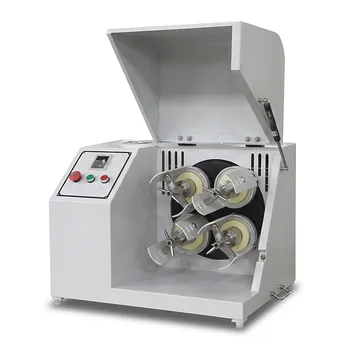
Horizontal Light Duty Planetary Ball Mill for Laboratory Sample Preparation
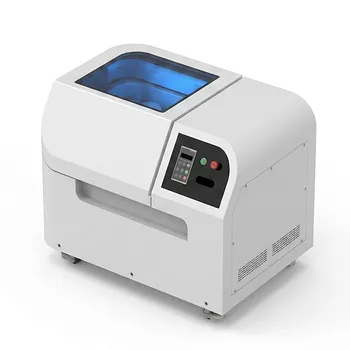
8L Planetary Ball Mill for Laboratory Grinding and Sample Preparation
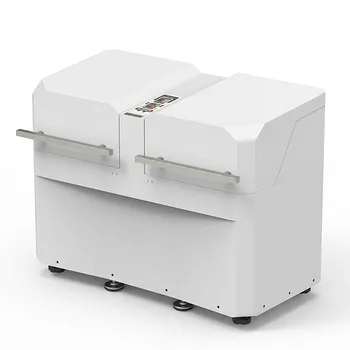
Dual Station Planetary Ball Mill 24L
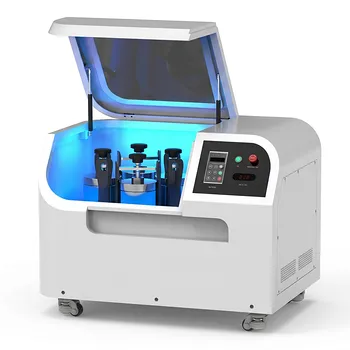
Planetary Ball Mill 12L

Nano High Energy Vibratory Ball Mill for Laboratory Sample Preparation
Multi-Platform Nanoscale High-Energy Vibratory Ball Mill
High Energy Hybrid Vibratory Ball Mill for Grinding Mixing and Cell Disruption