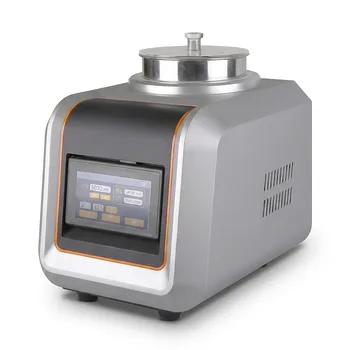
How does a mechanical sieve shaker improve particle size analysis accuracy? Achieve Repeatable, Scientific Results.
Updated 5 months ago
Mechanical sieve shakers redefine accuracy by replacing variable human motion with standardized, high-frequency vibration.
By maintaining a constant frequency, amplitude, and duration, these machines ensure that every particle is thoroughly rearranged and presented to the sieve mesh with uniform energy. This eliminates the inherent inconsistencies of manual operation, resulting in highly repeatable particle size distribution curves and precise data across multiple test cycles.
Core Takeaway: Mechanical sieve shakers improve accuracy by standardizing the sieving environment, utilizing multi-dimensional motion to prevent mesh clogging, and eliminating human operational bias to ensure scientific repeatability.
The Foundation of Precision: Standardization and Repeatability
Elimination of Human Operational Bias
Manual sieving is fundamentally limited by the physical variability of the operator, as fatigue and inconsistent technique lead to random errors. Mechanical shakers remove this variable by providing programmed vibration frequencies and fixed time settings. This ensures that a sample processed today will yield the same results as one processed a month from now.
Consistency Across Laboratories
Because mechanical shakers operate on standardized agitation patterns, results become comparable across different facilities. This is critical for industrial quality control where gravel, sand, or chemical powders must meet specific regulatory standards regardless of where they are tested. Without this mechanical consistency, cross-lab data often remains unreliable.
Regulated Timeframes for Analysis
Accuracy requires that particles have a precise, regulated timeframe to pass through the mesh apertures. Manual methods often result in over-sieving or under-sieving based on the operator's pace. A mechanical shaker ensures that every sample is subjected to the exact same duration of energy, stabilizing the data output.
Mechanical Motion Dynamics and Particle Orientation
Multi-Dimensional Vibration Patterns
High-quality shakers often utilize three-dimensional vibrations, causing particles to jump and rotate across the sieve surface. This multi-dimensional movement ensures that particles have the maximum opportunity to align their smallest dimension with the mesh openings. Manual shaking typically lacks this level of complex agitation, often leaving fine particles trapped on top of larger ones.
High-Frequency Energy Transfer
Mechanical shakers utilize high-frequency stable vibration energy to rearrange the sample bed continuously. This intense screening power ensures that even poorly graded materials or high-plasticity clays are effectively separated into their constituent sizes. The high energy levels facilitate the passage of "near-size" particles that might otherwise remain stuck in a manual process.
Prevention of Mesh Blinding
One of the greatest enemies of accuracy is mesh clogging, or "blinding," where particles become wedged in the sieve openings. The intensive and uniform mechanical vibrations of a shaker continuously dislodge these particles. By keeping the mesh clear, the equipment maintains a high probability of fine particles passing through throughout the entire test duration.
Understanding the Trade-offs and Limitations
Potential for Particle Attrition
While the high energy of a mechanical shaker improves separation, it can sometimes be too aggressive for friable materials. Excessive vibration duration or intensity can cause particles to break apart, leading to a "false" increase in the recorded percentage of fine materials. Operators must calibrate the settings to match the durability of the specific material being tested.
Equipment Noise and Initial Investment
Mechanical shakers represent a higher upfront capital cost and generate significant noise and vibration within a laboratory environment. Proper installation often requires sound-dampening enclosures or dedicated testing areas. However, these costs are generally offset by the reduction in labor time and the increased reliability of the data produced.
Making the Right Choice for Your Goal
When integrating a mechanical sieve shaker into your workflow, your primary objective will dictate your configuration:
- If your primary focus is Regulatory Compliance: Prioritize a shaker with programmable settings and digital timers to ensure every test meets industry-standard repeatability requirements.
- If your primary focus is Fragile Material Analysis: Select a model with adjustable amplitude and frequency to prevent particle degradation while still achieving thorough separation.
- If your primary focus is High-Throughput Efficiency: Invest in a high-capacity vibratory shaker that can handle multiple sieve stacks simultaneously to reduce labor time without sacrificing precision.
By transitioning from manual methods to a mechanical sieve shaker, you move from subjective estimation to a repeatable, scientifically defensible analysis of particle size distribution.
Summary Table:
| Feature | Mechanical Sieve Shaker | Manual Sieving |
|---|---|---|
| Consistency | High (Programmed frequency/time) | Low (Human fatigue & variation) |
| Motion Dynamics | 3D high-frequency vibration | Inconsistent manual agitation |
| Repeatability | Standardized, scientific results | Highly variable outcomes |
| Mesh Blinding | Minimized by continuous agitation | Common; reduces analysis accuracy |
| Efficiency | Multi-stack, high-volume capacity | Slow and labor-intensive |
Precision Sample Preparation for Superior Material Analysis
Accurate particle size distribution is the backbone of quality control and material research. At our core, we provide complete laboratory sample preparation solutions tailored for material science, ensuring your data is scientific, repeatable, and defensible.
We specialize in high-performance powder processing and compaction equipment, including:
- Sieving & Mixing: Precision vibratory and air-jet sieve shakers, test sieves, and advanced powder/defoaming mixers.
- Milling & Crushing: Jaw/roll crushers, liquid nitrogen cryogenic grinders, and planetary ball, jet, and rotor mills.
- Pressing & Compaction: A full spectrum of hydraulic presses, from standard lab units to Cold/Warm Isostatic Presses (CIP/WIP) and vacuum hot presses.
Ready to eliminate human bias and enhance your lab's productivity? Contact our expert team today to find the ideal equipment for your specific material requirements.
References
- Yusron Saadi, Eko Usman Aji. Perbandingan Gradasi Butiran Sedimen Terendap Waduk Batujai dengan Material Bahan Kerajinan Gerabah Bukit Balibe. DOI: 10.29303/jstl.v11i1.781
Mentioned Products
- 三维电磁微量振动筛分仪
- Vibratory Sieve Shaker Electromagnetic 3D Motion Powder Particle Size Analyzer for Dry and Wet Sieving
- Laboratory Dry and Wet Three Dimensional Vibratory Sieve Shaker for Particle Analysis
- Small Laboratory Vibrating Sieve Shaker for Precise Particle Size Analysis
- Stainless Steel Laboratory Vibratory Test Sieve Shaker
People Also Ask
- Why is a standard sieve shaker essential for CBA powders in geopolymers? Enhance Reactivity & Material Strength
- Why are standard metal sieves and sieve shakers necessary for 5-aminotetrazole mixtures? Optimize Thermal & Kinetic Data
- Why Use Sieve Shakers for Gangue Slurry Experiments? Optimize Particle Grading for Superior Results
- What are the advantages of mechanical vs. manual sieving for road dust analysis? Achieve Superior Data Standardization.
- How do high-precision sieve shakers and powder mixers facilitate material circularity in metal PBF? Optimize AM Cycles

Tech Team · PowderPreparation
Last updated on May 14, 2026
Related Products
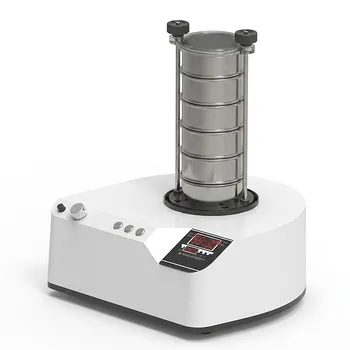
三维电磁微量振动筛分仪
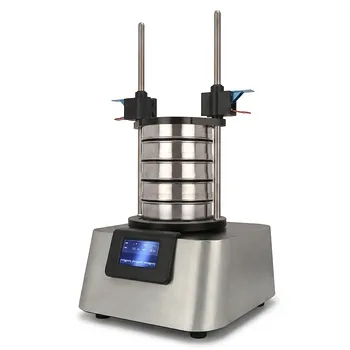
Vibratory Sieve Shaker Electromagnetic 3D Motion Powder Particle Size Analyzer for Dry and Wet Sieving
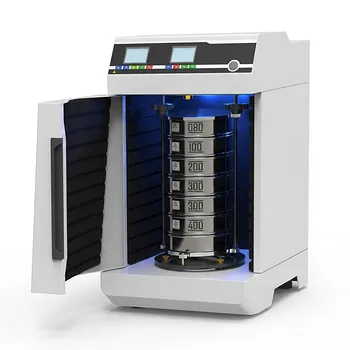
Laboratory Dry and Wet Three Dimensional Vibratory Sieve Shaker for Particle Analysis

Small Laboratory Vibrating Sieve Shaker for Precise Particle Size Analysis
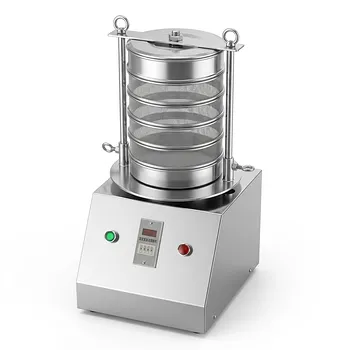
Stainless Steel Laboratory Vibratory Test Sieve Shaker
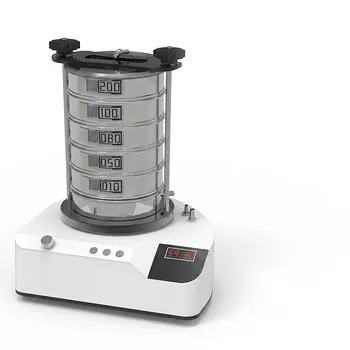
Heavy Duty Dry Three Dimensional Vibratory Sieve Shaker for Particle Separation

Dry Three Dimensional Vibratory Sieve Shaker

Small Laboratory Vibratory Sieve Shaker for Powder Gradation and Particle Size Analysis

Laboratory Vibratory Test Sieve Shaker for Precision Particle Size Analysis and Powder Grading
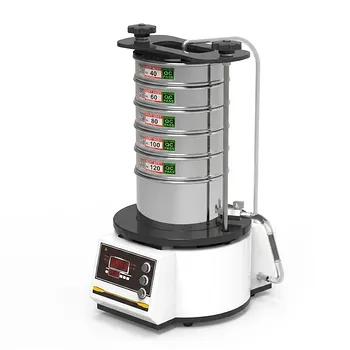
High Frequency Wet Three-Dimensional Vibrating Sieve Shaker for Dry and Wet Particle Size Analysis
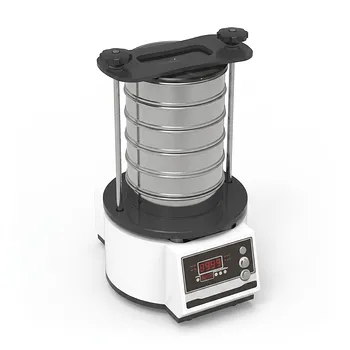
Tapping Oscillating Sieve Shaker for Dry and Wet Particle Size Analysis
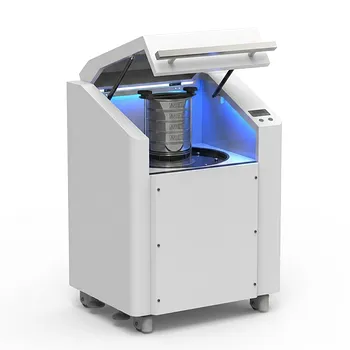
High Frequency Cabinet Type Three-Dimensional Rotary Vibrating Sieve Shaker for Dry Sieving and Particle Classification
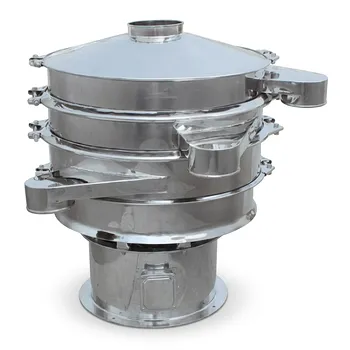
Stainless Steel Rotary Vibrating Sieve High Precision Circular Vibratory Separator Industrial Powder Grading Machine Multi Layer Sifting Equipment
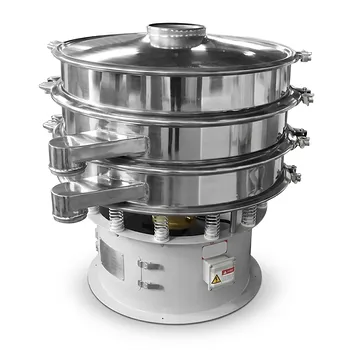
Three Dimensional Rotary Vibrating Sieve