How does a laboratory vibratory sieve shaker facilitate the particle size analysis of Rice Straw Ash? Improve RSA Accuracy
Updated 3 months ago
A laboratory vibratory sieve shaker automates the classification of Rice Straw Ash (RSA) through mechanical energy and standardized mesh screens. It facilitates particle size analysis by vibrating a stack of precision sieves, typically ranging from 300μm to 75μm, ensuring accurate separation of the ash into specific size fractions within a determined timeframe. This data is critical for understanding how the fineness of the ash influences the density and structural integrity of cement-based materials.
The vibratory sieve shaker provides the mechanical precision necessary to establish the particle size distribution (PSD) of Rice Straw Ash. By standardizing vibration frequency and duration, it ensures repeatable results that allow researchers to correlate ash fineness with pozzolanic activity and cementitious performance.
The Mechanism of Mechanical Separation
Controlled Vibration and Sample Throughput
The equipment utilizes controlled mechanical vibration to drive RSA particles across nested stainless steel sieves with decreasing aperture sizes. This constant motion ensures that every particle has multiple opportunities to find a mesh opening, which drastically reduces the risk of mesh "blinding" or clogging.
Precise Fractionation via Sieve Stacks
By employing a stack of precision test sieves, the shaker captures the mass retention data for each size level. This granular data allows researchers to plot the semi-logarithmic particle size distribution curves required to verify if the ash meets industrial grading standards.
Standardization of Test Parameters
The shaker applies a constant vibration amplitude and duration to the powder sample. This standardization is essential for scientific validity, as it ensures that the observed distribution is a result of the material’s properties rather than variations in the testing process.
Implications for Material Science
Predictive Analysis of Pozzolanic Activity
The particle size of Rice Straw Ash is directly linked to its specific surface area, which serves as a primary indicator of its chemical reactivity. Fine particles (specifically those in the 75-150μm range) enhance the formation of Calcium Silicate Hydrate (CSH) gel, the critical binding agent in concrete.
Optimization of Material Density
Accurate sizing ensures that the RSA can effectively fill the microscopic pores between larger aggregates in a mixture. This micro-filling effect increases the final density of cement-based materials, improving both strength and resistance to environmental degradation.
Consistency in Dissolution Kinetics
Precise particle size classification eliminates the influence of non-uniform sizes on dissolution kinetics. By strictly limiting the sample to a specific size range, researchers can ensure that changes in material behavior are attributed to the ash's structural characteristics rather than random size variations.
Understanding the Trade-offs
Limitations with Ultra-Fine Particles
While highly effective for the 75μm to 300μm range, mechanical vibratory sieving can struggle with ultra-fine powders below 45μm. At these levels, electrostatic forces often cause particles to agglomerate, potentially requiring wet sieving or air-jet technologies for higher accuracy.
Risk of Particle Attrition
Extended vibration times or excessive amplitude can lead to particle attrition, where fragile ash particles break down during the test. This can result in a skewed data set that suggests the sample is finer than it actually was in its original state.
Dependence on Sample Volume
The accuracy of a vibratory shaker is sensitive to sieve loading; overloading a screen can prevent smaller particles from reaching the mesh. To maintain precision, the initial sample mass must be carefully calibrated to the diameter of the sieves being used.
Optimizing Your RSA Analysis Workflow
To achieve the highest reliability in your particle size analysis, you must align your equipment settings with your specific material research objectives.
- If your primary focus is cement replacement efficiency: Prioritize the fraction below 75μm to maximize pozzolanic reactivity and the subsequent formation of CSH gel.
- If your primary focus is aggregate grading and standards compliance: Utilize a full stack of precision sieves to generate a semi-logarithmic distribution curve to ensure your mixture meets BS 882 or AASHTO benchmarks.
- If your primary focus is experimental reproducibility: Strictly maintain constant vibration amplitude and duration across all test batches to eliminate mechanical variables from your material data.
Precise particle size control transforms Rice Straw Ash from a raw agricultural byproduct into a high-performance, standardized engineering component.
Summary Table:
| Feature | Specification/Application | Impact on RSA Analysis |
|---|---|---|
| Typical Mesh Range | 300μm to 75μm | Ensures precise fractionation for cement grading |
| Mechanism | Controlled mechanical vibration | Prevents mesh blinding and ensures repeatable results |
| Key Metric | Particle Size Distribution (PSD) | Correlates ash fineness with pozzolanic reactivity |
| Material Benefit | CSH Gel Formation | Optimizes density and strength in cement mixtures |
| Optimization | Amplitude & Duration Control | Eliminates mechanical variables for scientific validity |
Elevate Your Material Research with Precision Powder Solutions
Achieving consistent results in Rice Straw Ash (RSA) analysis requires more than just standard equipment—it requires specialized precision. At [Your Brand Name], we provide complete laboratory sample preparation solutions tailored for material science and advanced powder processing.
From optimizing pozzolanic activity to ensuring structural integrity, our extensive product line is designed to meet the rigorous demands of your lab:
- Particle Classification: High-performance vibratory and air-jet sieve shakers with a full range of precision test sieves.
- Sample Preparation: Advanced mills (planetary ball, jet, and rotor) and cryogenic grinders for ultra-fine processing.
- Compaction & Processing: A full spectrum of hydraulic presses, including Cold/Warm Isostatic Presses (CIP/WIP), vacuum hot presses, and XRF pellet presses.
- Mixing: Specialized powder and defoaming mixers for uniform material blending.
Ready to optimize your RSA workflow? Our experts are here to help you select the right equipment to ensure repeatable, high-accuracy data.
Contact Us Today to Get a Tailored Solution
References
- Surajit Munshi, Richi Prasad Sharma. Use of Rice Straw Ash as Pozzolanic Material in Cement Mortar. DOI: 10.7763/ijet.2013.v5.626
Mentioned Products
- Vibratory Sieve Shaker Electromagnetic 3D Motion Powder Particle Size Analyzer for Dry and Wet Sieving
- Laboratory Dry and Wet Three Dimensional Vibratory Sieve Shaker for Particle Analysis
- Stainless Steel Laboratory Vibratory Test Sieve Shaker
- Heavy Duty Dry Three Dimensional Vibratory Sieve Shaker for Particle Separation
- Dry Three Dimensional Vibratory Sieve Shaker
People Also Ask
- How does a vibratory sieve shaker contribute to optimizing the performance of activated carbon? Enhance Adsorption Precision
- Why is a laboratory vibratory sieve shaker necessary for processing magnesium-based borate precursor powders? Boost Activity
- Why use a vibratory sieve shaker to verify coarse aggregate grading in rubberized concrete? Ensure Structural Integrity
- What function do vibratory sieve shakers and standard test sieves serve in the preparation of adsorbents? Key Guide
- What role does a vibratory sieve shaker play in the particle size analysis of ground corn products? Enhance QC Precision

Tech Team · PowderPreparation
Last updated on Jun 03, 2026
Related Products
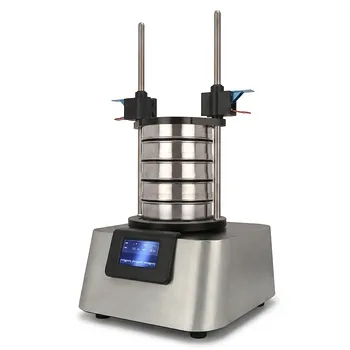
Vibratory Sieve Shaker Electromagnetic 3D Motion Powder Particle Size Analyzer for Dry and Wet Sieving
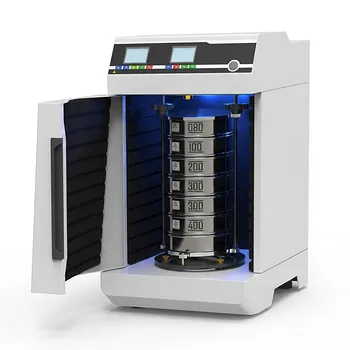
Laboratory Dry and Wet Three Dimensional Vibratory Sieve Shaker for Particle Analysis
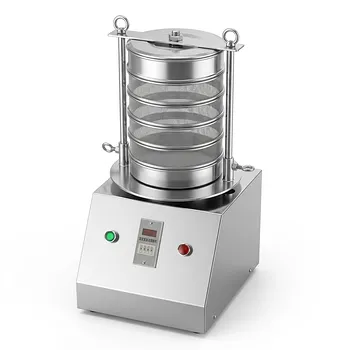
Stainless Steel Laboratory Vibratory Test Sieve Shaker
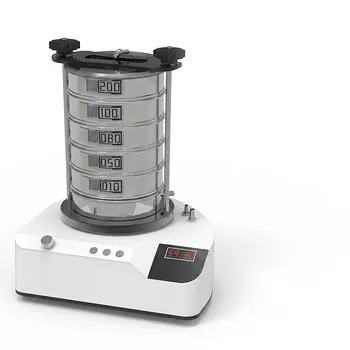
Heavy Duty Dry Three Dimensional Vibratory Sieve Shaker for Particle Separation
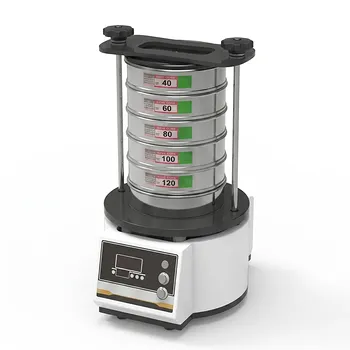
Dry Three Dimensional Vibratory Sieve Shaker
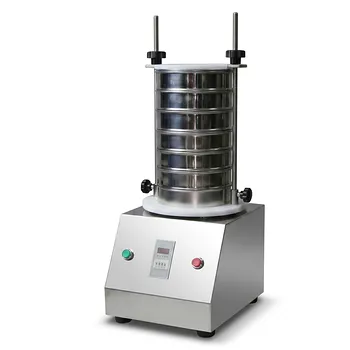
Small Laboratory Vibratory Sieve Shaker for Powder Gradation and Particle Size Analysis
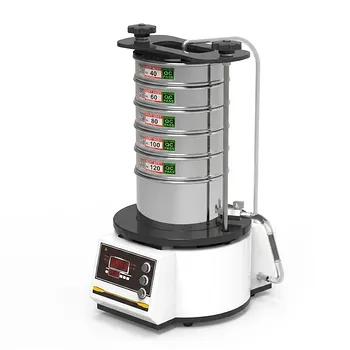
High Frequency Wet Three-Dimensional Vibrating Sieve Shaker for Dry and Wet Particle Size Analysis
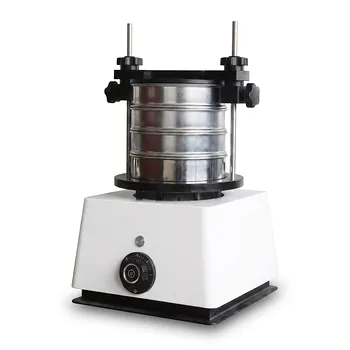
Small Laboratory Vibrating Sieve Shaker for Precise Particle Size Analysis
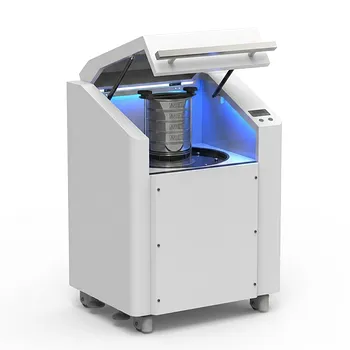
High Frequency Cabinet Type Three-Dimensional Rotary Vibrating Sieve Shaker for Dry Sieving and Particle Classification
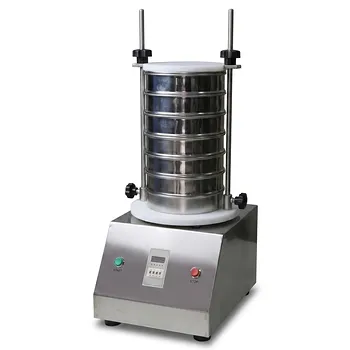
Laboratory Vibratory Test Sieve Shaker for Precision Particle Size Analysis and Powder Grading
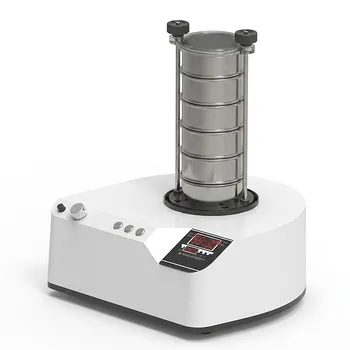
三维电磁微量振动筛分仪
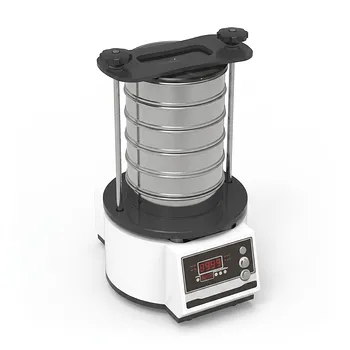
Tapping Oscillating Sieve Shaker for Dry and Wet Particle Size Analysis
Stainless Steel Rotary Vibrating Sieve High Precision Circular Vibratory Separator Industrial Powder Grading Machine Multi Layer Sifting Equipment
Three Dimensional Rotary Vibrating Sieve
Small Vibrating Ultrafine Grinder for Traditional Chinese Medicine
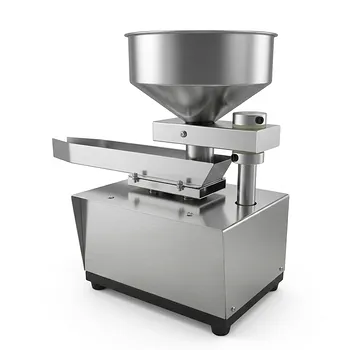
Automatic Vibrating Powder Feeder for Laboratory Material Processing Precision Vibratory Hopper Feeder for Granular and Powder Material Handling Industrial Grade Vibrating Tray Feeder for Consistent Material Sample Preparation
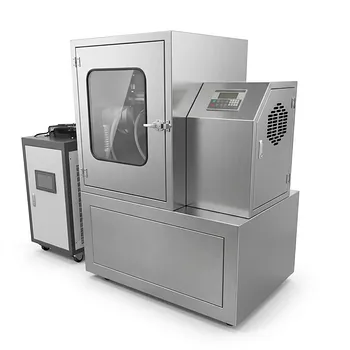
Vibratory Superfine Grinder for Ultra Fine Laboratory Powder Milling
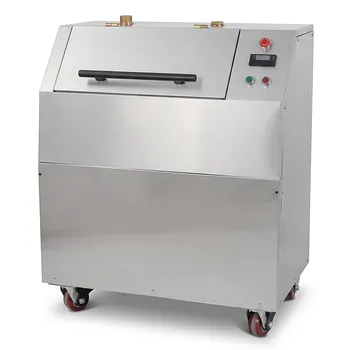
Vibratory Disc Mill for Rapid Fine Grinding and High Throughput Sample Preparation of Hard and Brittle Materials