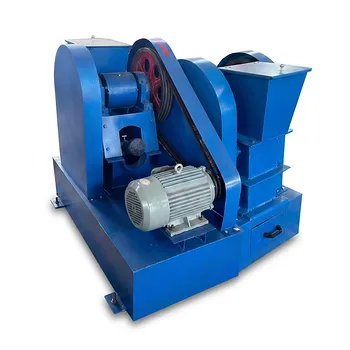
How does a laboratory hydraulic press influence tablet microstructure? Optimize Drug Performance & Stability
Updated 3 months ago
A laboratory hydraulic press reconfigures tablet microstructure by converting compressive force into particle-level deformation and spatial rearrangement.
In a controlled laboratory setting, these presses apply precise pressures—typically ranging from 20 MPa to 200 MPa—to drug and excipient powders. This force drives the reduction of void spaces, causes plastic deformation, and establishes a permanent internal capillary pore network that dictates how the tablet will eventually interact with moisture and dissolve.
The hydraulic press is the primary tool for defining a tablet’s relative density and average porosity. By controlling the magnitude and duration of pressure, researchers can manipulate the physical pathways required for moisture diffusion, drug release, and long-term chemical stability.
Mechanisms of Structural Transformation
Particle Rearrangement and Fragmentation
As the hydraulic press applies initial force, powder particles undergo rearrangement, sliding into available voids to increase the initial packing density. If the material is brittle, the pressure causes fragmentation, where larger granules break into smaller fragments that fill even smaller interstitial spaces.
Plastic and Elastic Deformation
Beyond initial packing, the materials experience plastic deformation, permanently altering the shape of the particles to maximize contact area. Some materials also exhibit elastic recovery once the pressure is released; if this recovery is too great, it can weaken the microstructural bonds formed during compression.
Inter-Particle Bonding and Surface Charges
The intense pressure within the die can generate fracture-induced surface charges (piezoelectricity). These charges enhance the bonding strength between particles, contributing to the overall tensile strength and structural integrity of the resulting green body.
The Impact on Pore Networks and Diffusion
Defining the Capillary Architecture
The press directly determines the average porosity, which serves as the physical basis for the tablet's internal capillary network. This network is the critical "highway" for moisture diffusion and solvent penetration during the disintegration process.
Regulating Fluid Penetration
By regulating pore size and distribution through pressure control, the press indirectly influences the bioavailability of the drug. A tighter, low-porosity microstructure may delay disintegration, while a more open network facilitates the rapid liquid ingress necessary for fast-acting formulations.
Molecular Dynamics and Phase Stability
Solid-Phase Transformations
High-pressure environments can induce lattice distortions or complete solid-phase transformations in the drug substance. In some cases, the laboratory press is used to optimize cocrystal structures, improving the tableting performance of otherwise difficult-to-process materials.
Molecular Relaxation and Amorphous Drugs
For amorphous drugs, the press modifies the packing density, which in turn alters molecular relaxation behavior. Understanding these changes is vital for predicting whether a drug will remain stable or undergo compression-induced crystallization during storage.
Understanding the Trade-offs and Pitfalls
The Risk of Capping and Lamination
Applying excessive pressure can lead to high internal stresses that manifest during the ejection phase. This often results in "capping," where the top of the tablet separates, or lamination, where the tablet splits into horizontal layers.
API Sensitivity and Over-Compression
High compressive forces can generate heat or mechanical stress that may degrade sensitive Active Pharmaceutical Ingredients (APIs). Furthermore, over-compression can create a tablet so dense that it fails to dissolve within the required therapeutic window, regardless of its mechanical hardness.
Strategic Recommendations for Formulation Development
How to Apply This to Your Project
- If your primary focus is long-term storage stability: Use the press to identify the "sweet spot" of packing density that minimizes molecular relaxation without triggering crystallization.
- If your primary focus is rapid drug release: Prioritize lower compression forces (closer to the 20-50 MPa range) to maintain an interconnected capillary network for fast fluid ingress.
- If your primary focus is industrial scale-up: Utilize the press to simulate hydrostatic pressures of several hundred MPa to identify potential mechanical defects like capping before moving to high-speed production.
- If your primary focus is conserving expensive APIs: Leverage the minimal stroke length and fine pressure regulation of a laboratory press to conduct small-batch compaction studies.
Mastering the hydraulic press allows for the precise engineering of a tablet's micro-architecture, ensuring the final product meets both mechanical durability and therapeutic efficacy standards.
Summary Table:
| Mechanism | Microstructural Impact | Practical Outcome |
|---|---|---|
| Rearrangement | Increased packing density | Reduced initial void space and air pockets |
| Plastic Deformation | Permanent particle shaping | Maximized contact area and bonding strength |
| Capillary Formation | Defined pore architecture | Controlled moisture diffusion and dissolution |
| Phase Transformation | Lattice distortions | Optimized cocrystal stability and solubility |
Precision Engineering for Your Pharmaceutical Formulations
At KINTEK SOLUTION, we understand that the therapeutic efficacy of your tablets depends on the precision of your laboratory equipment. We provide complete laboratory sample preparation solutions for material science, specializing in the powder processing and compaction equipment essential for pharmaceutical research.
Our extensive product line includes:
- Advanced Hydraulic Presses: A full spectrum including Cold/Warm Isostatic Presses (CIP/WIP), standard lab presses, XRF pellet presses, and vacuum hot presses for precise microstructure control.
- Powder Processing: High-performance crushers, liquid nitrogen cryogenic grinders, and diverse mills (planetary ball, jet, rotor) to achieve perfect particle size distributions.
- Sieving & Mixing: Precision sieve shakers and advanced powder/defoaming mixers to ensure formulation uniformity.
Master your tablet's micro-architecture and ensure industrial scale-up success with KINTEK's reliable technology. Contact KINTEK SOLUTION today to find the ideal pressing solution for your next project!
References
- Komlan Koumbogle, Nicolas Abatzoglou. Moisture Transport Coefficients Determination on a Model Pharmaceutical Tablet. DOI: 10.3390/pr10020254
Mentioned Products
- 6-Ton Small Single-Punch Tablet Press — Laboratory Powder & Granule Tableting Equipment / Tablet Forming Machine
- 5 Ton Single Punch Tablet Press Laboratory Small Batch Production
- Manual Tablet Press with Dual Scale Pressure Gauge for Pharmaceutical Food Chemical Laboratory Sample Preparation
- 6 Ton Variable Frequency Single Punch Tablet Press
- High Shear Laboratory Emulsifier for Mixing and Homogenization
People Also Ask
- What is the function of a laboratory press in Cr-Ti alloy evaluation? Quantify Fracture Stress & Strength
- What is the function of a laboratory press in assessing the hydrophobic performance of modified vermiculite fillers?
- What is the core function of a laboratory press in the forming of ceramic filter element green bodies? Maximize Density.
- What is the function of a laboratory press in the preparation of ceramic feed rods? Master Density and Precision
- Why is vacuum sealing and flexible packaging necessary for Aluminum Titanate powders during CIP? Ensure Peak Density

Tech Team · PowderPreparation
Last updated on Jun 03, 2026
Related Products
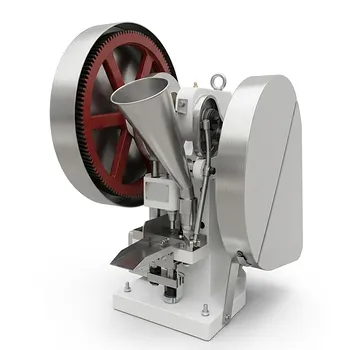
6-Ton Small Single-Punch Tablet Press — Laboratory Powder & Granule Tableting Equipment / Tablet Forming Machine
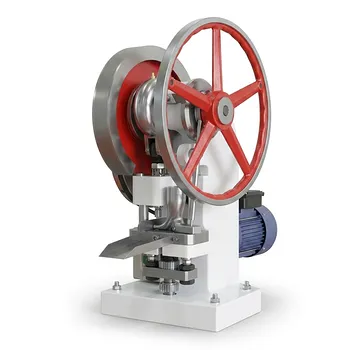
5 Ton Single Punch Tablet Press Laboratory Small Batch Production
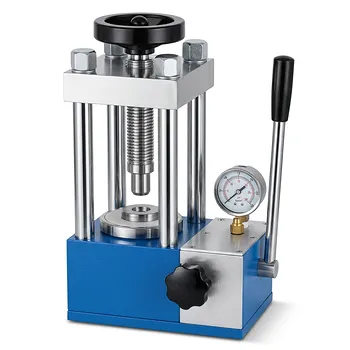
Manual Tablet Press with Dual Scale Pressure Gauge for Pharmaceutical Food Chemical Laboratory Sample Preparation
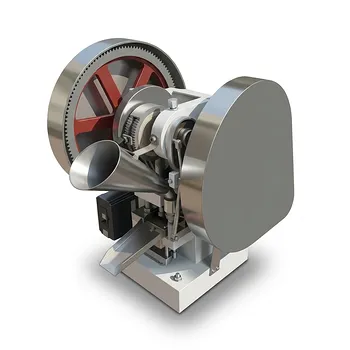
6 Ton Variable Frequency Single Punch Tablet Press
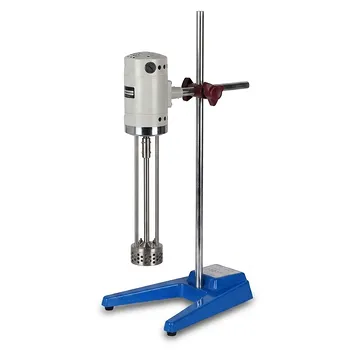
High Shear Laboratory Emulsifier for Mixing and Homogenization
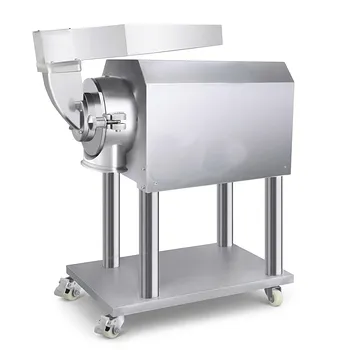
High Speed Small Laboratory Crusher for Dry Material Sample Preparation
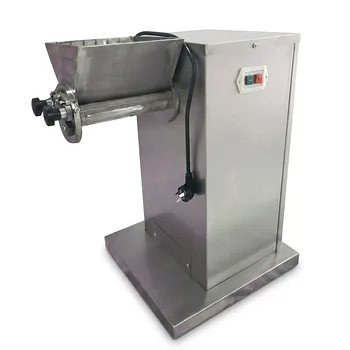
Small Laboratory Oscillating Granulator for Wet and Dry Granulation Processing
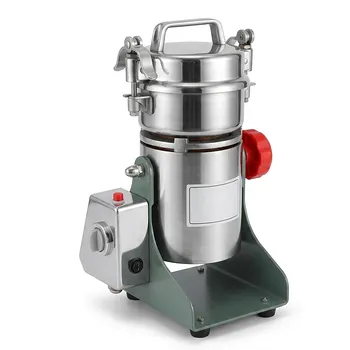
High Speed Swing Type Laboratory Pulverizer for Fine Powder Grinding and Sample Preparation