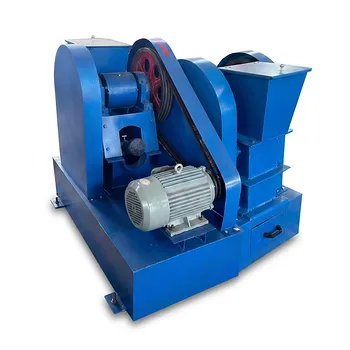
How does a laboratory hydraulic press improve the accuracy of WD-XRF elemental analysis? Optimize Sample Precision
Updated 5 months ago
A laboratory hydraulic press improves WD-XRF accuracy by compressing powder samples into dense pellets with a perfectly flat surface and uniform density. This process eliminates the physical variables—such as void spaces, surface roughness, and particle size effects—that would otherwise scatter X-rays inconsistently. By standardizing the sample’s physical form, the press ensures that the X-ray beam interacts with a representative, stable surface, leading to highly repeatable and precise quantitative data.
A laboratory hydraulic press is the critical link between raw powder and reliable data, as it eliminates structural inconsistencies that distort X-ray signals. By creating a standardized, high-density pellet, the press ensures that variations in measured intensity reflect the sample’s chemistry rather than its physical texture.
Optimizing Sample Geometry for X-Ray Interaction
Creating a Standardized Geometric Plane
WD-XRF requires a precise distance and angle between the X-ray source, the sample, and the detector. A hydraulic press uses specialized pellet dies to create a perfectly flat, circular surface that serves as a standardized geometric plane. This consistency ensures that the X-ray excitation source hits every sample in the exact same way, minimizing measurement drift.
Ensuring Consistent Sample Thickness and Diameter
The press applies high axial pressure (often up to 200 kN or 15 tons) to produce pellets of a constant diameter, such as 32mm, and uniform thickness. This uniformity ensures that the X-ray beam’s penetration path is consistent across different samples. Without this control, variations in sample volume could lead to fluctuating fluorescence intensities and inaccurate mass fraction calculations.
Eliminating Internal and Surface Signal Distortions
Removing Voids and Porosity
Loose powder contains air gaps and internal pores that cause X-rays to scatter unpredictably. The hydraulic press forces particles together to eliminate voids, creating a high-density structure that provides a stable signal. This is particularly vital for the quantitative analysis of rare-earth dopants and inorganic elements where signal clarity is paramount.
Reducing Scattering and Reflection Interference
A rough sample surface scatters the primary X-ray beam and interferes with the reflection of characteristic fluorescence. The physical molding process of a press creates an extremely smooth surface, which reduces this scattering interference. This technical prerequisite allows for the accurate detection of major oxides like silica, alumina, and calcium oxide.
Mitigating Complex Matrix and Particle Effects
Overcoming Particle Size Effects
Even finely ground powders can suffer from particle size effects, where larger grains shield smaller ones from the X-ray beam. High-pressure compression reduces the influence of these size variations by packing the material into a homogeneous mass. This ensures that the detected X-ray intensity accurately represents the elemental concentration of the entire sample.
Addressing Mineralogical Matrix Effects
Mineralogical effects occur when the crystalline structure of a sample interferes with the X-ray signal. By using a press—often in conjunction with a binder like lithium wax or boric acid—the sample is physically stabilized. This standardization mitigates the matrix effects that typically plague raw ore or soil samples, ensuring the reliability of phosphorus speciation and other complex analyses.
Understanding the Trade-offs
While pelletization significantly improves accuracy, it introduces specific variables that must be managed. The use of binders is often necessary to ensure the pellet is self-supporting, but these additives can dilute the sample and must be accounted for in final calculations.
Additionally, applying excessive pressure can sometimes cause certain minerals to re-orient or the pellet to crack upon decompression. Users must balance the need for maximum density with the physical limitations of the material to avoid structural failures that would necessitate a re-test.
Making the Right Choice for Your Analysis
How to Apply This to Your Project
To achieve the highest level of accuracy in WD-XRF, your sample preparation protocol must be tailored to your specific material.
- If your primary focus is major oxide analysis (e.g., Cement or Slag): Use high pressure (15+ tons) and a binder like lithium wax to ensure a smooth, glass-like surface for maximum signal stability.
- If your primary focus is trace element detection in ores: Utilize a boric acid back or cup to provide structural support for the pellet while maintaining a pure sample face for the X-ray beam.
- If your primary focus is phosphorus or light element speciation: Ensure your press offers precise pressure control to eliminate internal pores, as light elements are highly sensitive to thickness variations.
Standardizing the physical structure of your sample through high-pressure pelletization is the most effective way to transform raw powder into actionable, high-precision analytical data.
Summary Table:
| Key Feature | Impact on WD-XRF Accuracy | Optimization Strategy |
|---|---|---|
| Surface Flatness | Reduces beam scattering and reflection interference | Use precision-ground pellet dies |
| Void Elimination | Removes internal pores to stabilize fluorescence signals | Apply high axial pressure (up to 200 kN) |
| Uniform Density | Ensures consistent X-ray penetration path and volume | Standardize pellet thickness and diameter |
| Particle Size Control | Mitigates mineralogical and shielding effects | Combine high pressure with binders (e.g., lithium wax) |
Elevate Your Analytical Precision with Professional Sample Preparation
Achieving reliable WD-XRF data starts with a perfect sample. At [Brand Name], we provide complete laboratory sample preparation solutions for material science, specializing in high-performance powder processing and compaction equipment.
Our extensive product line supports your entire workflow:
- Size Reduction: Crushers (jaw/roll), liquid nitrogen cryogenic grinders, and diverse mills (planetary ball, jet, sand, disc, rotor).
- Classification: Sieve shakers (vibratory/air-jet) with high-precision test sieves.
- Mixing: Advanced powder and defoaming mixers.
- Compaction: A full spectrum of hydraulic presses, including XRF pellet presses, Cold/Warm Isostatic Presses (CIP/WIP), and vacuum hot presses.
Whether you are analyzing cement, ores, or rare-earth materials, our equipment ensures the structural integrity and uniformity your lab requires. Contact us today to discover how our tailored solutions can improve your research outcomes!
References
- Jurij Delihowski, Marcin Jarosz. Size fraction characterisation of highly-calcareous and siliceous fly ashes. DOI: 10.1007/s10973-024-13566-x
Mentioned Products
- 6-Ton Small Single-Punch Tablet Press — Laboratory Powder & Granule Tableting Equipment / Tablet Forming Machine
- 5 Ton Single Punch Tablet Press Laboratory Small Batch Production
- Manual Tablet Press with Dual Scale Pressure Gauge for Pharmaceutical Food Chemical Laboratory Sample Preparation
- 6 Ton Variable Frequency Single Punch Tablet Press
- High Shear Laboratory Emulsifier for Mixing and Homogenization
People Also Ask
- What is the function of a laboratory press in Cr-Ti alloy evaluation? Quantify Fracture Stress & Strength
- What is the function of a laboratory press in assessing the hydrophobic performance of modified vermiculite fillers?
- What is the core function of a laboratory press in the forming of ceramic filter element green bodies? Maximize Density.
- What is the function of a laboratory press in the preparation of ceramic feed rods? Master Density and Precision
- Why is vacuum sealing and flexible packaging necessary for Aluminum Titanate powders during CIP? Ensure Peak Density

Tech Team · PowderPreparation
Last updated on May 14, 2026
Related Products
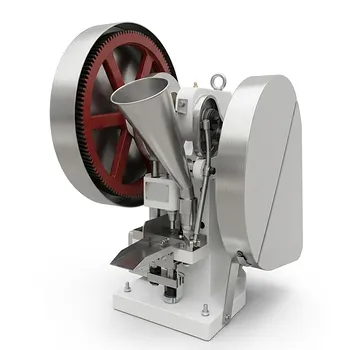
6-Ton Small Single-Punch Tablet Press — Laboratory Powder & Granule Tableting Equipment / Tablet Forming Machine
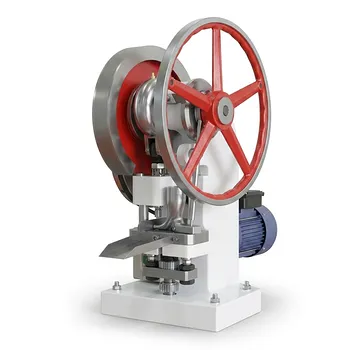
5 Ton Single Punch Tablet Press Laboratory Small Batch Production
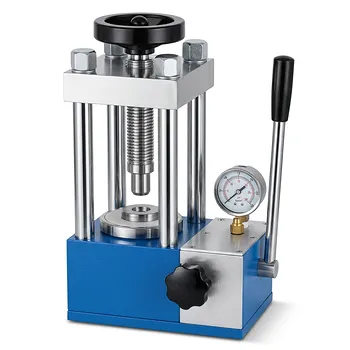
Manual Tablet Press with Dual Scale Pressure Gauge for Pharmaceutical Food Chemical Laboratory Sample Preparation
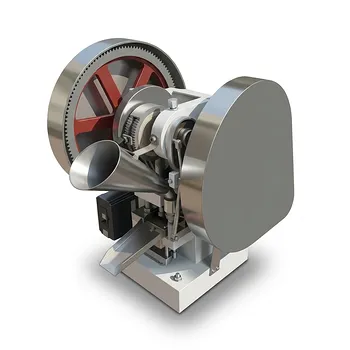
6 Ton Variable Frequency Single Punch Tablet Press
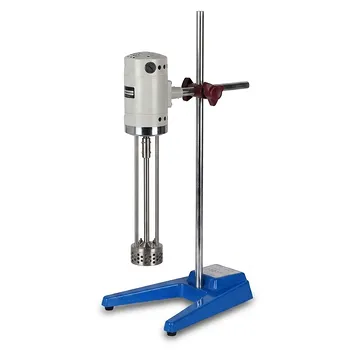
High Shear Laboratory Emulsifier for Mixing and Homogenization
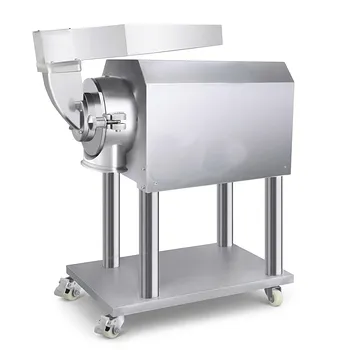
High Speed Small Laboratory Crusher for Dry Material Sample Preparation
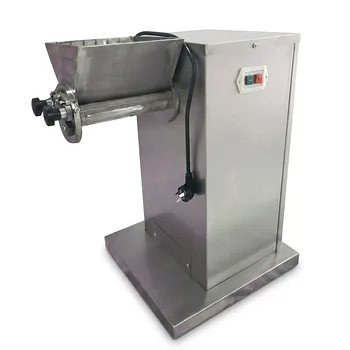
Small Laboratory Oscillating Granulator for Wet and Dry Granulation Processing
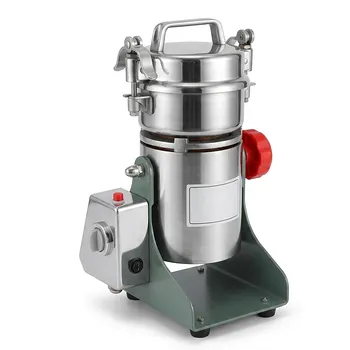
High Speed Swing Type Laboratory Pulverizer for Fine Powder Grinding and Sample Preparation