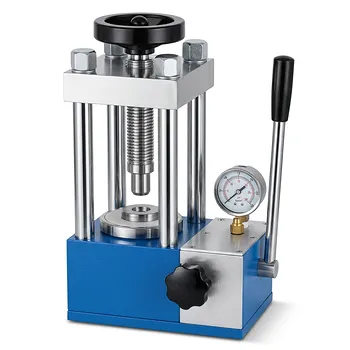
What is the core function of an industrial hydraulic press in abrasive tool molding? Master High-Density Compaction.
Updated 5 months ago
The core function of an industrial hydraulic press in resin-bonded abrasive tool molding is to apply high-intensity static pressure to compact raw mixtures into a dense, structurally sound "green body." By delivering constant pressure—typically in the range of 18 MPa—the press forces abrasive particles and the resin matrix to rearrange into a configuration that minimizes internal voids. This compaction is the fundamental step that determines the final tool's density, mechanical interlocking, and overall durability.
The hydraulic press serves as the primary mechanical driver for densification, transforming loose abrasive grain and resin into a unified structure. This process is critical for achieving the impact and flexural strength required for industrial grinding applications.
Achieving Structural Integrity Through Compaction
The Role of Material Rearrangement
The application of axial pressure displaces and deforms the mixture components within the mold. This movement ensures that abrasive particles settle into the most efficient configuration possible, increasing the contact area between the grains and the resin.
Eliminating Internal Porosity
High-intensity static pressure effectively expels air trapped between individual particles. Reducing this internal porosity is essential for creating a uniform internal structure that can withstand high-speed centrifugal forces during use.
Maximizing Mechanical Interlocking
By forcing the resin matrix and abrasive grains into tight contact, the press facilitates superior mechanical interlocking. This physical bond provides the resulting grinding wheels with the necessary strength to resist fracturing under heavy workloads.
Precision Control and Quality Consistency
Dimensional Accuracy and Thickness Control
Hydraulic presses allow for precise control over the displacement of the mold plunger. This ensures that every molded tool meets standardized geometric shapes and maintains a consistent thickness across production batches.
Pressure-Setting and Holding Capabilities
The ability to maintain a specific pressure for a set duration ensures that the material achieves its predefined molding density. Consistent pressure-loading prevents structural weaknesses that could lead to catastrophic tool failure during industrial operations.
Uniform Density Distribution
Controlled axial pressure drives the plastic deformation of the mixture, which is the essential mechanism for transforming loose particles into a dense green body. This uniformity directly determines the elastic modulus and residual stress state of the final abrasive tool.
Understanding the Trade-offs
The Risk of Density Gradients
In uniaxial pressing, friction between the powder and the mold walls can lead to pressure drops. This often results in density gradients, where the material furthest from the plunger is less dense than the material closest to it.
Elastic Recovery and "Spring-Back"
When the hydraulic pressure is released, the compacted green body may undergo slight elastic expansion. If this "spring-back" is not managed through proper resin formulation or pressure-release cycles, it can cause internal micro-cracks or dimensional deviations.
Over-Compaction and Grain Fracturing
While high pressure is necessary for density, excessive force can prematurely fracture the abrasive grains. This degradation of the primary cutting material reduces the grinding efficiency and lifespan of the finished tool.
How to Optimize Your Molding Process
Implementing Effective Pressure Strategies
To ensure the highest quality in resin-bonded tool production, consider the specific requirements of your final application when configuring your hydraulic press settings.
- If your primary focus is Maximum Impact Strength: Prioritize high-intensity static pressure and longer pressure-holding times to eliminate all internal pores and maximize interlocking.
- If your primary focus is Dimensional Precision: Utilize high-precision molds and fine-tune the press stroke limits to ensure consistent thickness and minimal elastic recovery.
- If your primary focus is Production Throughput: Optimize the pressure-loading cycle to reach the target density quickly without inducing grain fracture or excessive heat buildup.
Mastering the controlled application of force is the definitive factor in producing high-performance abrasive tools that meet rigorous industrial safety and efficiency standards.
Summary Table:
| Core Function | Impact on Molding Process | Final Tool Quality |
|---|---|---|
| High-Static Compaction | Minimizes internal voids and porosity | Enhanced impact & flexural strength |
| Precision Displacement | Ensures standardized tool thickness | High dimensional accuracy |
| Constant Pressure Holding | Facilitates mechanical interlocking | Reliable durability under workload |
| Controlled Loading | Manages material rearrangement | Uniform density distribution |
Elevate Your Material Preparation with [Your Brand Name]
Achieving the perfect green body requires precision and power. [Your Brand Name] specializes in providing complete laboratory sample preparation solutions for material science. Our extensive range of industrial and lab-scale hydraulic presses—including standard presses, XRF pellet presses, and advanced Cold/Warm Isostatic Presses (CIP/WIP)—ensures your resin-bonded tools and powder compacts meet the highest industrial standards.
Beyond compaction, we offer comprehensive powder processing equipment to streamline your workflow:
- Crushers & Grinders: Jaw/roll crushers and liquid nitrogen cryogenic grinders.
- Milling Solutions: Planetary ball, jet, sand/bead, disc, and rotor mills.
- Sieving & Mixing: Vibratory/air-jet sieve shakers, powder mixers, and defoaming mixers.
- Thermal Processing: Hot presses and vacuum hot presses for specialized applications.
Ready to optimize your molding density and structural integrity? Contact our experts today to find the ideal equipment tailored to your material processing needs.
References
- Adeiza Avidime Samuel, I. O. Alabi. Morphology, microstructure evolution and properties of resin-bonded palm kernel and coconut shell grain-based abrasive grinding. DOI: 10.4314/njtd.v20i1.1235
Mentioned Products
- Ordinary Type Rotary Tablet Press for Pharmaceutical Chemical Food Electronic Industries
- Enhanced 9 Punch Rotary Tablet Press for Powder Compaction
- 6-Ton Small Single-Punch Tablet Press — Laboratory Powder & Granule Tableting Equipment / Tablet Forming Machine
- 5 Ton Single Punch Tablet Press Laboratory Small Batch Production
- 6 Ton Variable Frequency Single Punch Tablet Press
People Also Ask
- Why is a laboratory hydraulic press required for FT-IR KBr pellets? Achieve Precise Sample Clarity for ZrC–SiC Analysis
- Why is a laboratory hydraulic press required to compress oyster shell powder before XRF analysis? Improve Data Accuracy.
- Why is vacuum sealing and flexible packaging necessary for Aluminum Titanate powders during CIP? Ensure Peak Density
- What are the advantages of using hardened steel molds and graphite spray for titanium powder? Ensure structural integrity
- What role does a high-strength stainless steel mold kit play in the uniaxial die compaction process? Ensuring Precision

Tech Team · PowderPreparation
Last updated on May 14, 2026
Related Products
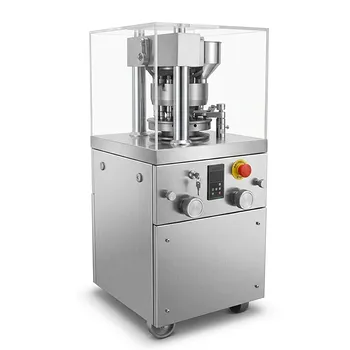
Ordinary Type Rotary Tablet Press for Pharmaceutical Chemical Food Electronic Industries
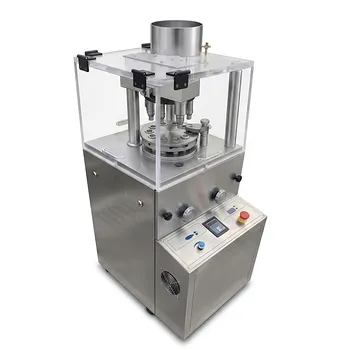
Enhanced 9 Punch Rotary Tablet Press for Powder Compaction
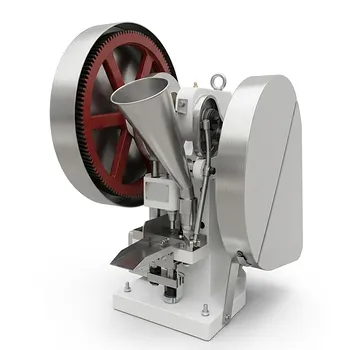
6-Ton Small Single-Punch Tablet Press — Laboratory Powder & Granule Tableting Equipment / Tablet Forming Machine
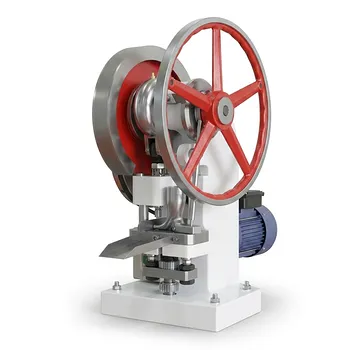
5 Ton Single Punch Tablet Press Laboratory Small Batch Production
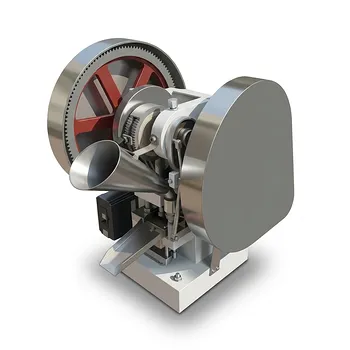
6 Ton Variable Frequency Single Punch Tablet Press
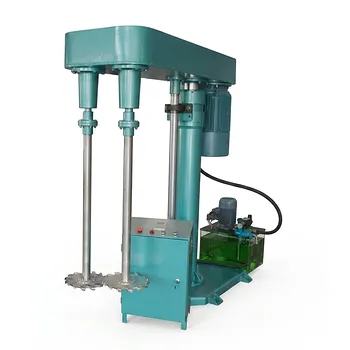
Hydraulic Double Shaft Disperser for High Viscosity Liquid Mixing and Dispersion