How does a laboratory hydraulic press contribute to the initial forming stage of Iron-Based Metal Matrix Composites? Key Roles
Updated 3 months ago
The laboratory hydraulic press serves as the critical bridge between loose powder mixtures and solid composite structures. It performs the initial "cold pressing" stage, transforming a blend of iron powder and reinforcements into a high-density "green compact." This mechanical consolidation is essential for ensuring the composite has the structural integrity and particle contact necessary for the final sintering process.
The primary role of the hydraulic press is to transform loose powders into a cohesive green body by eliminating trapped air and establishing intimate physical contact between particles. This step creates the essential foundation for mass diffusion and structural densification during subsequent heat treatment.
The Mechanics of Green Body Formation
Particle Rearrangement and Plastic Deformation
The hydraulic press applies significant uniaxial pressure—often reaching hundreds of megapascals (MPa)—to force the iron powder and reinforcing particles to rearrange. As the load increases, the particles overcome internal friction and slide into a more efficient packing arrangement. In iron-based composites, this pressure causes the metallic particles to undergo plastic deformation, which increases the "coordination number" or the number of contact points between adjacent particles.
Establishing Physical Bonding
While the material is not yet chemically bonded, the press facilitates initial cohesion through Van der Waals forces and mechanical interlocking. By compressing the mixture within a high-precision die, the press creates a "green body" that is strong enough to be handled and moved to a sintering furnace. This initial strength is vital for maintaining the intended geometry of the specimen before it undergoes high-temperature bonding.
Optimizing Material Density and Structure
Elimination of Trapped Air and Porosity
One of the most critical functions of the press is the exclusion of air bubbles trapped within the powder mixture. Trapped air creates internal voids that act as stress concentrators and prevent the composite from reaching its theoretical density. By expelling this air under high pressure, the press ensures the interstitial spaces are minimized, leading to a cured specimen with high structural strength.
Ensuring Uniform Density Distribution
The consistency of the applied pressure directly determines the density distribution throughout the final metal matrix nanocomposite. Modern laboratory presses allow for precise, stable loading (e.g., 10 kN to 20 kN or more), which prevents localized weak spots. A uniform green density is a prerequisite for achieving predictable shrinkage and dimensional control during the sintering stage.
The Foundation for Effective Sintering
Creating Diffusion Paths for Solid-State Reactions
For an iron-based MMC to achieve its full potential, element diffusion must occur during sintering. The hydraulic press facilitates this by reducing the distance between particles and increasing the contact area. These contact points serve as the physical pathways for solid-state reactions and mass diffusion, which are necessary for the development of high-strength interfaces.
Dimensional Stability and Shape Control
Using high-precision stainless steel molds in conjunction with the press ensures that the composite takes on a standardized geometric shape. This level of control allows researchers to produce specimens of specific thicknesses (e.g., 2mm) or diameters. Precise initial forming ensures that the final product meets the tolerances required for mechanical testing and industrial application.
Understanding the Trade-offs
The Risk of Density Gradients
While high pressure is beneficial, uniaxial pressing can lead to internal density gradients due to friction between the powder and the die walls. The material near the punch often becomes denser than the material in the center of the compact. If these gradients are too severe, they can cause the composite to warp or crack during the sintering process.
Pressure Limits and Material Integrity
Applying excessive pressure (e.g., exceeding 800 MPa unnecessarily) can lead to a phenomenon known as "capping" or lamination. This occurs when stored elastic energy is released upon unloading, causing the green compact to split into layers. Finding the optimal pressure is a balance between maximizing density and preserving the structural integrity of the green body.
How to Apply This to Your Project
Recommendations for Initial Forming
When preparing iron-based metal matrix composites, your approach should be dictated by your specific material goals and equipment capabilities.
- If your primary focus is maximum theoretical density: Utilize higher pressures (up to 800 MPa) to maximize particle coordination and minimize initial porosity before sintering.
- If your primary focus is dimensional precision: Ensure the use of high-precision, hardened steel dies and a press that offers stable, consistent load maintenance to prevent geometric distortion.
- If your primary focus is preventing structural defects: Implement a slow pressure release (decompression) cycle to allow elastic stresses to dissipate without causing laminations or "capping" in the green compact.
By mastering the initial cold-pressing stage, you ensure that the subsequent sintering process can effectively transform a fragile powder compact into a high-performance engineering material.
Summary Table:
| Stage of Formation | Mechanism | Key Contribution to MMC |
|---|---|---|
| Compaction | Particle rearrangement & plastic deformation | Creates high-density green compacts with minimized porosity. |
| Cohesion | Mechanical interlocking & Van der Waals forces | Ensures structural integrity for handling before sintering. |
| De-airing | Displacement of interstitial air | Eliminates internal voids and prevents stress concentrators. |
| Sintering Prep | Increasing particle contact area | Establishes critical pathways for solid-state mass diffusion. |
| Shape Control | Precision die pressing | Provides dimensional stability and standardized geometry for testing. |
Elevate Your Material Science Research with Precision Compaction
Achieving the perfect green body is the foundation of high-performance Iron-Based Metal Matrix Composites. We provide complete laboratory sample preparation solutions tailored for material science, specializing in advanced powder processing and compaction equipment.
From our heavy-duty Standard Lab Presses and XRF Pellet Presses to specialized Cold/Warm Isostatic Presses (CIP/WIP) and Vacuum Hot Presses, we ensure your specimens meet the highest density and uniformity standards. We also offer a full range of support equipment, including:
- Powder Processing: Planetary ball mills, jet mills, and disc mills for optimal particle size.
- Sieve Analysis: Vibratory and air-jet sieve shakers for precise powder classification.
- Mixing Solutions: Specialized powder and defoaming mixers for homogeneous reinforcements.
Ready to optimize your initial forming stage? Contact us today to discuss your material goals and find the ideal equipment for your laboratory.
References
- Azam Beigi Kheradmand, Bejan Hamawandi. Tribological Characterization of Reinforced Fe Matrix Composites with Hybrid Reinforcement of C, Cu, and SiC Particulates. DOI: 10.3390/cryst12050598
Mentioned Products
- 6-Ton Small Single-Punch Tablet Press — Laboratory Powder & Granule Tableting Equipment / Tablet Forming Machine
- 5 Ton Single Punch Tablet Press Laboratory Small Batch Production
- Manual Tablet Press with Dual Scale Pressure Gauge for Pharmaceutical Food Chemical Laboratory Sample Preparation
- 6 Ton Variable Frequency Single Punch Tablet Press
- High Shear Laboratory Emulsifier for Mixing and Homogenization
People Also Ask
- What is the function of a laboratory press in Cr-Ti alloy evaluation? Quantify Fracture Stress & Strength
- What is the function of a laboratory press in assessing the hydrophobic performance of modified vermiculite fillers?
- What is the core function of a laboratory press in the forming of ceramic filter element green bodies? Maximize Density.
- What is the function of a laboratory press in the preparation of ceramic feed rods? Master Density and Precision
- Why is vacuum sealing and flexible packaging necessary for Aluminum Titanate powders during CIP? Ensure Peak Density

Tech Team · PowderPreparation
Last updated on Jun 03, 2026
Related Products
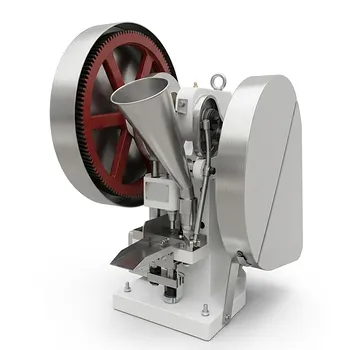
6-Ton Small Single-Punch Tablet Press — Laboratory Powder & Granule Tableting Equipment / Tablet Forming Machine
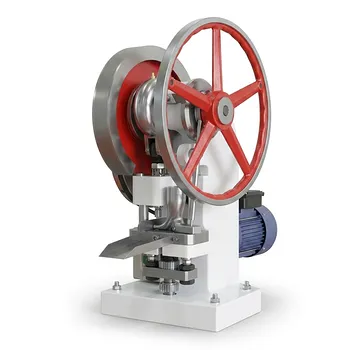
5 Ton Single Punch Tablet Press Laboratory Small Batch Production
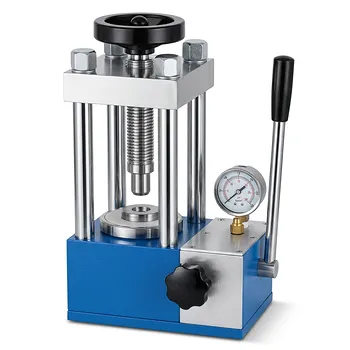
Manual Tablet Press with Dual Scale Pressure Gauge for Pharmaceutical Food Chemical Laboratory Sample Preparation
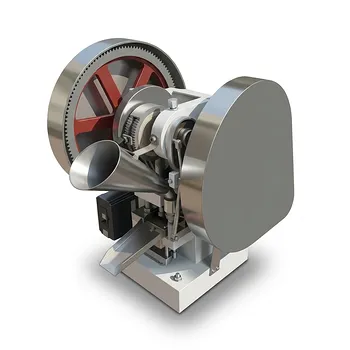
6 Ton Variable Frequency Single Punch Tablet Press
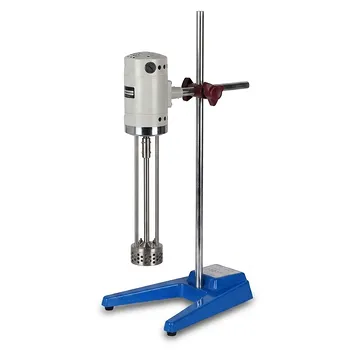
High Shear Laboratory Emulsifier for Mixing and Homogenization
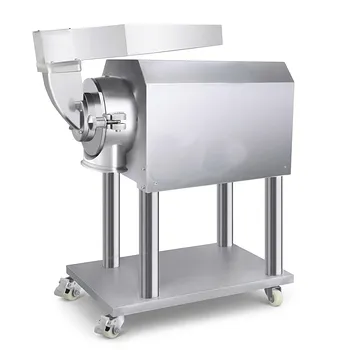
High Speed Small Laboratory Crusher for Dry Material Sample Preparation
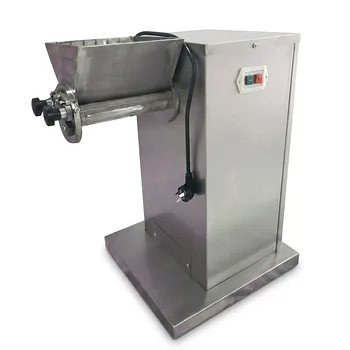
Small Laboratory Oscillating Granulator for Wet and Dry Granulation Processing
High Speed Swing Type Laboratory Pulverizer for Fine Powder Grinding and Sample Preparation