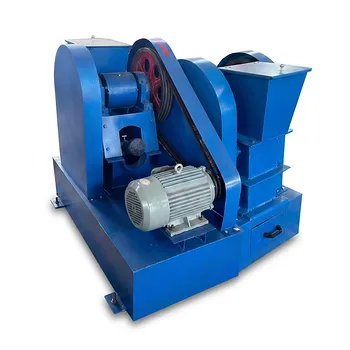
How does a laboratory hydraulic press improve muscovite XRD accuracy? Ensure High-Precision Phase Analysis
Updated 4 months ago
The laboratory hydraulic press is the cornerstone of sample preparation for muscovite XRD analysis. It transforms loose, synthesized powder into a dense pellet with an extremely flat surface, which is essential for eliminating preferred orientation and surface irregularities. This standardization ensures that the resulting diffraction patterns accurately reflect the mineral's true phase composition and lattice parameters rather than preparation artifacts.
By applying high, uniform pressure to create a smooth, high-density pellet, the hydraulic press standardizes the sample geometry. This process directly neutralizes physical variables that would otherwise skew X-ray intensity and compromise the reliability of quantitative phase analysis.
Overcoming Preferred Orientation in Muscovite
The Challenge of Platy Morphologies
Muscovite is a phyllosilicate with a distinct sheet-like crystal habit that naturally tends to align flat when poured into a holder. This preferred orientation causes certain diffraction peaks to appear disproportionately strong while others vanish, making accurate phase identification nearly impossible.
Randomizing Crystallite Direction
The hydraulic press uses high pressure—typically around 20 Tons—to force these microcrystalline sheets into a dense, randomized matrix. By compressing the powder with a binder like cellulose wax, the press locks the particles in place, ensuring the X-ray beam interacts with all crystal planes representatively.
Improving Quantitative Accuracy
When the preferred orientation is eliminated, the relative intensities of the diffraction peaks align with theoretical models. This allows researchers to perform precise quantitative phase analysis and determine the exact purity of the synthesized muscovite.
Enhancing Geometric Precision and Signal Integrity
Achieving Surface Flatness
The use of specialized dies in a hydraulic press produces a pellet with an extremely flat surface. Even minor surface roughness can cause X-ray shadowing or "displacement errors," where the sample surface does not sit perfectly on the instrument's focal plane.
Eliminating Porosity and Voids
High-precision pressure control removes internal pores and ensures a consistent internal density. This compaction minimizes scattering interference and background noise, which significantly improves the signal-to-noise ratio during the scan.
Ensuring Data Repeatability
By standardizing the thickness and density of the pellet, the hydraulic press ensures that every sample is presented to the X-ray source in an identical manner. This geometric consistency is a technical prerequisite for obtaining highly reproducible data across multiple synthesis batches.
Understanding the Trade-offs
The Risk of Phase Transformation
While high pressure is necessary for density, excessive force can occasionally induce mechanical strain or subtle structural changes in sensitive microcrystals. It is critical to calibrate the pressure to the specific requirements of the synthesized material to avoid peak broadening caused by lattice distortion.
Binder Selection and Dilution
Binders are often required to maintain the structural integrity of the pellet, but they act as a diluent. While they help achieve a smooth surface, they can contribute to an amorphous "hump" in the background signal if the binder-to-sample ratio is too high.
Sample Mass Requirements
Creating a high-quality pellet requires a larger volume of material than simple "zero-background" powder mounts. For researchers working with very small synthesis yields, the need for a standardized pellet size may pose a challenge in material management.
How to Apply This to Your XRD Workflow
Recommendations for Success
- If your primary focus is Quantitative Phase Analysis: Use a consistent pressure of 20 T and a standardized binder ratio to ensure peak intensities remain proportional to phase concentration.
- If your primary focus is Lattice Parameter Calculation: Prioritize surface flatness by using high-precision, polished dies to prevent peak shifts caused by sample displacement.
- If your primary focus is Trace Phase Detection: Maximize pellet density to reduce background noise and improve the visibility of low-intensity peaks.
Proper hydraulic pressing turns raw synthesized powder into a high-fidelity analytical specimen, ensuring your XRD results are both scientifically sound and professionally defensible.
Summary Table:
| Feature/Action | Impact on XRD Analysis | Key Benefit for Muscovite |
|---|---|---|
| High-Pressure Compaction | Randomizes platy crystallite direction | Eliminates preferred orientation errors |
| Precision Polished Dies | Produces an extremely flat surface | Prevents peak shifts and displacement errors |
| Controlled Pellet Density | Minimizes internal pores and voids | Improves signal-to-noise ratio and clarity |
| Binder Integration | Locks particles in a dense matrix | Enables reliable quantitative phase analysis |
Elevate Your Analytical Precision with Expert Sample Preparation
Achieving accurate XRD results starts with flawless sample preparation. We provide complete laboratory sample preparation solutions for material science, specializing in high-performance powder processing and compaction equipment.
Our extensive product line supports your entire workflow:
- Processing: Crushers (jaw/roll), liquid nitrogen cryogenic grinders, and advanced mills (planetary ball, jet, rotor).
- Classification & Mixing: Sieve shakers and high-efficiency powder or defoaming mixers.
- Compaction: A full spectrum of hydraulic presses, including Cold/Warm Isostatic Presses (CIP/WIP), standard lab presses, XRF pellet presses, and vacuum hot presses.
Whether you are synthesizing muscovite or developing advanced functional materials, our equipment ensures the geometric consistency and density required for world-class research.
Ready to optimize your lab's performance? Contact us today to discuss your specific requirements!
References
- Hamid Khoshdast, Agnieszka Surowiak. A Novel Open-System Method for Synthesizing Muscovite from a Biotite-Rich Coal Tailing. DOI: 10.3390/min11030269
Mentioned Products
- 6-Ton Small Single-Punch Tablet Press — Laboratory Powder & Granule Tableting Equipment / Tablet Forming Machine
- 5 Ton Single Punch Tablet Press Laboratory Small Batch Production
- Manual Tablet Press with Dual Scale Pressure Gauge for Pharmaceutical Food Chemical Laboratory Sample Preparation
- 6 Ton Variable Frequency Single Punch Tablet Press
- High Shear Laboratory Emulsifier for Mixing and Homogenization
People Also Ask
- What is the function of a laboratory press in Cr-Ti alloy evaluation? Quantify Fracture Stress & Strength
- What is the function of a laboratory press in assessing the hydrophobic performance of modified vermiculite fillers?
- What is the core function of a laboratory press in the forming of ceramic filter element green bodies? Maximize Density.
- What is the function of a laboratory press in the preparation of ceramic feed rods? Master Density and Precision
- Why is vacuum sealing and flexible packaging necessary for Aluminum Titanate powders during CIP? Ensure Peak Density

Tech Team · PowderPreparation
Last updated on Jun 03, 2026
Related Products
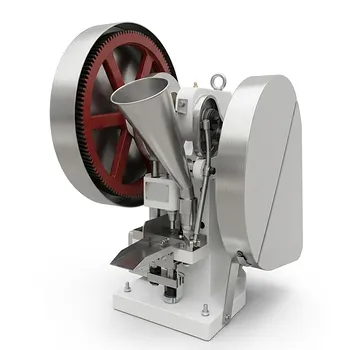
6-Ton Small Single-Punch Tablet Press — Laboratory Powder & Granule Tableting Equipment / Tablet Forming Machine
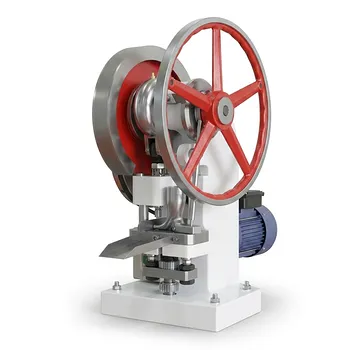
5 Ton Single Punch Tablet Press Laboratory Small Batch Production
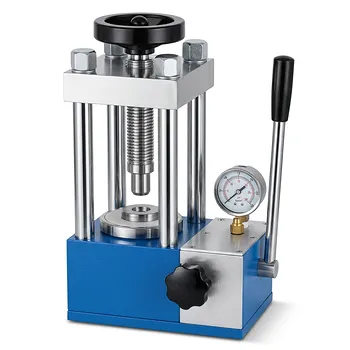
Manual Tablet Press with Dual Scale Pressure Gauge for Pharmaceutical Food Chemical Laboratory Sample Preparation
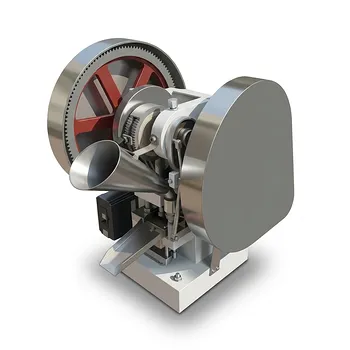
6 Ton Variable Frequency Single Punch Tablet Press
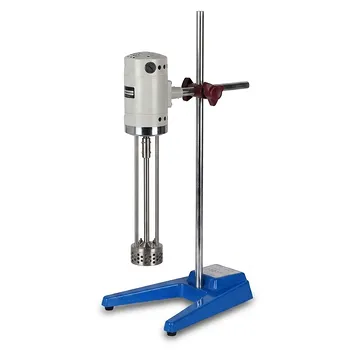
High Shear Laboratory Emulsifier for Mixing and Homogenization
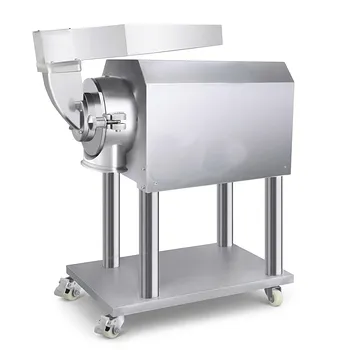
High Speed Small Laboratory Crusher for Dry Material Sample Preparation
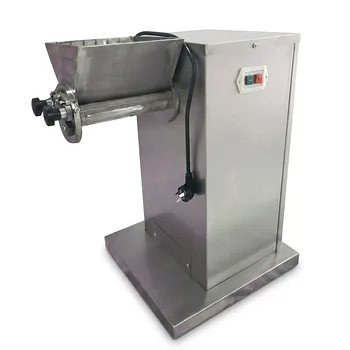
Small Laboratory Oscillating Granulator for Wet and Dry Granulation Processing
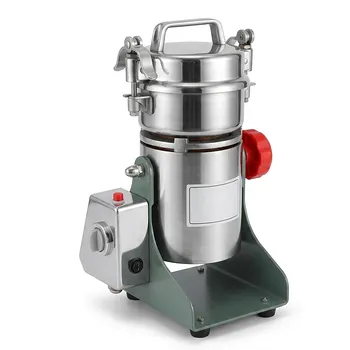
High Speed Swing Type Laboratory Pulverizer for Fine Powder Grinding and Sample Preparation