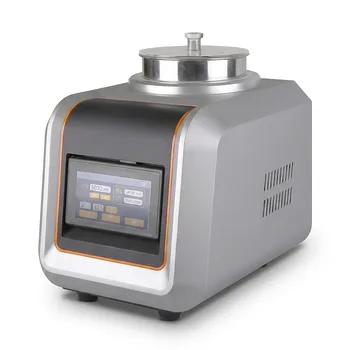
How does a laboratory-grade vibratory sieve shaker contribute to the characterization of iron ore? Optimize Your Process.
Updated 4 months ago
The laboratory-grade vibratory sieve shaker is the foundational tool for quantifying the physical dimensions of iron ore particles. It utilizes high-frequency vibration and standardized test sieves to determine Particle Size Distribution (PSD), identify mineral liberation thresholds, and establish critical parameters for sintering and pelletizing processes.
A laboratory-grade vibratory sieve shaker provides the empirical data necessary to optimize mineral processing by defining precise size fractions. This data informs everything from grinding efficiency and separation effectiveness to the kinetic behavior of metallurgical reactions.
Quantifying Particle Size Distribution (PSD)
Determining Critical Size Indices
Vibratory shakers allow engineers to generate cumulative passing percentage curves and identify indices such as d50, d80, and P80. These values are essential for evaluating the efficiency of crushing and grinding circuits.
Analyzing Fine and Superfine Fractions
The equipment is highly effective at isolating superfines (less than 50 or 100 micrometers). In sintering research, these fines are critical because they form the surface coatings on larger particles, directly affecting the quality of the final sinter.
Calculating the Fineness Modulus
By employing multi-stage screening on materials like river sand or iron ore tailings, the shaker helps calculate the fineness modulus. This physical parameter is vital for studying how tailings can substitute for traditional aggregates in construction materials.
Optimizing Downstream Processing
Assessing Mineral Liberation Characteristics
The shaker divides ground ore into specific micron-level fractions (e.g., -300 μm to -32 μm) to study mineral liberation. This determines the degree to which valuable minerals are freed from the surrounding rock at different sizes.
Guiding Separation Parameters
Precise screening data provides the scientific basis for determining the optimal feed size range. This information is used to calibrate gravity separation, magnetic separation, and flotation processes for maximum recovery.
Determining Industrial Equipment Settings
Data gathered at the laboratory scale is used to select the correct aperture sizes for industrial-scale screening machines. This ensures that the transition from lab-scale testing to full-scale production maintains consistency in material throughput.
Enhancing Sintering and Pelleting Quality
Monitoring Granulation Growth
During the sintering process, the shaker evaluates the growth stages of granulated particles ranging from 0.5 mm to over 8 mm. This monitoring ensures the particles reach the necessary size for efficient processing.
Validating Pelleting Agglomeration
For wet pellets, the vibratory shaker uses a cutoff diameter (often 1 mm) to calculate the fine powder ratio. This metric validates whether the granulation process has reached an ideal state and helps refine moisture estimation models.
Predicting Reaction Kinetics
The PSD data obtained through vibratory screening directly affects the compaction properties of iron ore powder. Furthermore, the size distribution influences the kinetic characteristics of subsequent reduction reactions within the furnace.
Understanding the Trade-offs
Limits of Dry Screening
While highly effective for many stages, dry vibratory screening can face challenges with extremely fine or cohesive powders. Very small particles may adhere to larger ones or the sieve mesh due to electrostatic forces or moisture.
Risk of Sieve Blinding
Continuous use with certain material types can lead to sieve blinding, where particles become wedged in the mesh openings. This requires careful maintenance and the use of de-blinding aids to ensure data accuracy.
Near-Mesh Particle Interference
Accuracy can be compromised by near-mesh particles—those almost exactly the size of the sieve opening. High-frequency vibration helps, but extended sieving times may be necessary to ensure these particles eventually pass through for a true measurement.
How to Apply This to Your Project
Making the Right Choice for Your Goal
To maximize the value of your particle characterization, align your sieving strategy with your primary metallurgical objective.
- If your primary focus is mineral recovery: Use multi-stage screening to identify the specific fraction where mineral liberation is highest to set your magnetic separator feed.
- If your primary focus is sintering quality: Prioritize the measurement of superfines (below 50μm) to ensure there is enough fine material to facilitate effective particle coating.
- If your primary focus is grinding efficiency: Regularly calculate P80 values from the shaker data to monitor mill performance and adjust grinding media as needed.
By integrating precise vibratory sieving into your workflow, you transform raw material into a predictable, high-performing industrial feed.
Summary Table:
| Application Area | Key Contribution | Specific Outcome/Indices |
|---|---|---|
| PSD Analysis | Quantifying particle dimensions | d50, d80, P80 & Fineness Modulus |
| Mineral Liberation | Identifying thresholds | Optimal feed size for recovery |
| Sintering Quality | Monitoring superfines (<50μm) | Improved granulation & coating |
| Process Calibration | Bench-to-industrial scaling | Accurate aperture selection |
| Grinding Efficiency | Circuit evaluation | Energy & media optimization |
Elevate Your Mineral Characterization with Our Laboratory Solutions
Precise data is the backbone of efficient mineral processing. We provide complete laboratory sample preparation solutions tailored for material science and metallurgy, ensuring your results scale seamlessly from the lab to production.
Our extensive equipment line supports every stage of your workflow:
- Powder Processing: High-frequency vibratory sieve shakers, air-jet sieves, and precise test meshes.
- Milling & Grinding: Planetary ball mills, jet mills, and cryogenic grinders for superfine liberation.
- Crushing: Durable jaw and roll crushers for primary sample reduction.
- Compaction & Pressing: A full spectrum of hydraulic presses, including Cold/Warm Isostatic Presses (CIP/WIP), vacuum hot presses, and XRF pellet presses.
- Mixing: Advanced powder and defoaming mixers for homogeneous sample preparation.
Whether you are refining sintering kinetics or optimizing grinding circuits, our tools deliver the precision you need. Contact our technical team today to discuss how we can enhance your laboratory’s capabilities!
References
- Robin Bergstrand, J. F. Garden. The Effect of Marra Mamba Ore Addition on the Granulation Characteristics of Pisolite Based and Hematite Based Sinter Blends. DOI: 10.2355/isijinternational.45.492
Mentioned Products
- Vibratory Sieve Shaker Electromagnetic 3D Motion Powder Particle Size Analyzer for Dry and Wet Sieving
- Laboratory Dry and Wet Three Dimensional Vibratory Sieve Shaker for Particle Analysis
- Stainless Steel Laboratory Vibratory Test Sieve Shaker
- Heavy Duty Dry Three Dimensional Vibratory Sieve Shaker for Particle Separation
- Dry Three Dimensional Vibratory Sieve Shaker
People Also Ask
- How does a vibratory sieve shaker contribute to optimizing the performance of activated carbon? Enhance Adsorption Precision
- Why is a laboratory vibratory sieve shaker necessary for processing magnesium-based borate precursor powders? Boost Activity
- Why use a vibratory sieve shaker to verify coarse aggregate grading in rubberized concrete? Ensure Structural Integrity
- What function do vibratory sieve shakers and standard test sieves serve in the preparation of adsorbents? Key Guide
- What role does a vibratory sieve shaker play in the particle size analysis of ground corn products? Enhance QC Precision

Tech Team · PowderPreparation
Last updated on Jun 03, 2026
Related Products
Vibratory Sieve Shaker Electromagnetic 3D Motion Powder Particle Size Analyzer for Dry and Wet Sieving
Laboratory Dry and Wet Three Dimensional Vibratory Sieve Shaker for Particle Analysis
Stainless Steel Laboratory Vibratory Test Sieve Shaker
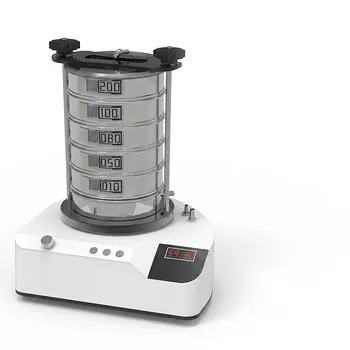
Heavy Duty Dry Three Dimensional Vibratory Sieve Shaker for Particle Separation
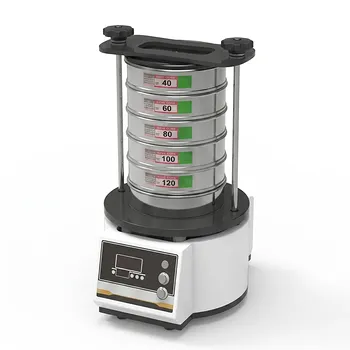
Dry Three Dimensional Vibratory Sieve Shaker
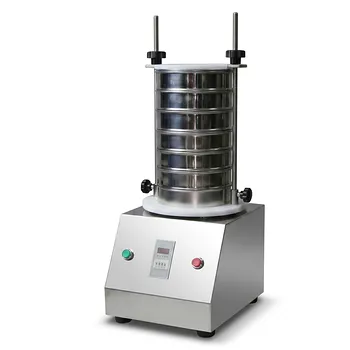
Small Laboratory Vibratory Sieve Shaker for Powder Gradation and Particle Size Analysis
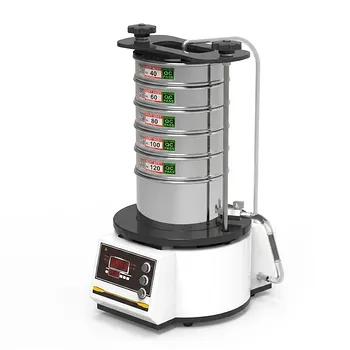
High Frequency Wet Three-Dimensional Vibrating Sieve Shaker for Dry and Wet Particle Size Analysis
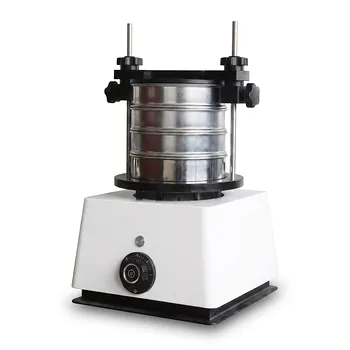
Small Laboratory Vibrating Sieve Shaker for Precise Particle Size Analysis
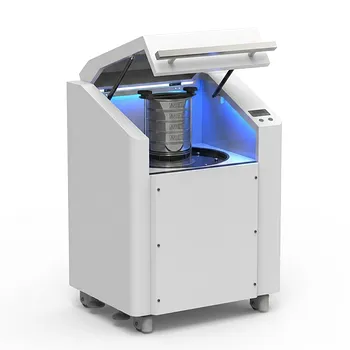
High Frequency Cabinet Type Three-Dimensional Rotary Vibrating Sieve Shaker for Dry Sieving and Particle Classification
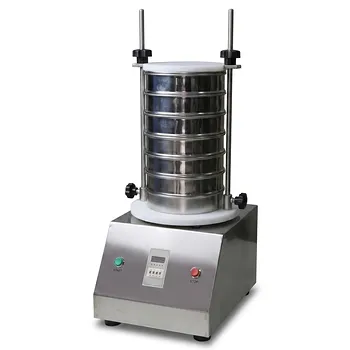
Laboratory Vibratory Test Sieve Shaker for Precision Particle Size Analysis and Powder Grading
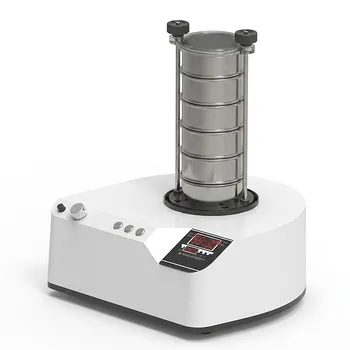
三维电磁微量振动筛分仪
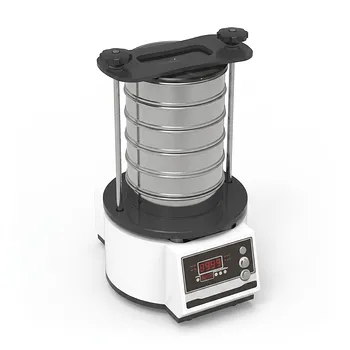
Tapping Oscillating Sieve Shaker for Dry and Wet Particle Size Analysis

Stainless Steel Rotary Vibrating Sieve High Precision Circular Vibratory Separator Industrial Powder Grading Machine Multi Layer Sifting Equipment
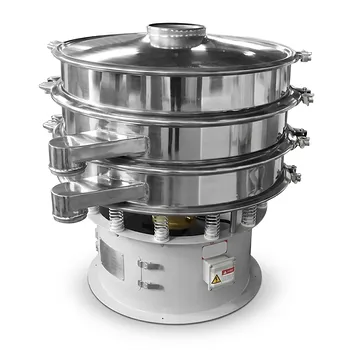
Three Dimensional Rotary Vibrating Sieve
Small Vibrating Ultrafine Grinder for Traditional Chinese Medicine
Automatic Vibrating Powder Feeder for Laboratory Material Processing Precision Vibratory Hopper Feeder for Granular and Powder Material Handling Industrial Grade Vibrating Tray Feeder for Consistent Material Sample Preparation
Vibratory Superfine Grinder for Ultra Fine Laboratory Powder Milling
Vibratory Disc Mill for Rapid Fine Grinding and High Throughput Sample Preparation of Hard and Brittle Materials