How does a high-precision vibratory sieve shaker contribute to determining the raw material grading for artificial stone? Optimize Density & Quality
Updated 5 months ago
A high-precision vibratory sieve shaker is the technical foundation for optimizing the production of artificial stone. It provides the precise classification of crushed waste materials—such as mirror and granite—into specific size ranges required for dense packing. This accuracy allows manufacturers to implement advanced mathematical designs that reduce resin consumption and enhance the structural integrity of the final product.
The core value of a high-precision vibratory sieve shaker lies in its ability to transform raw waste into strictly graded aggregates. This precise grading is essential for achieving maximum packing density, which significantly lowers production costs by reducing the amount of binder needed.
Precision Classification and Material Grading
Segregating Waste for Re-Engineering
In artificial stone production, raw materials like crushed mirror and granite waste must be categorized with high accuracy. The vibratory sieve shaker uses controlled mechanical vibration to ensure these materials pass through standardized mesh apertures without clogging.
Defining Particle Size Thresholds
The equipment typically divides raw materials into three critical ranges: coarse (10-40 mesh), medium (40-200 mesh), and fine (less than 200 mesh). This strict separation is necessary because each size range plays a distinct role in the structural "skeleton" of the artificial stone.
Foundation for Mathematical Design
Precise grading provides the empirical data required for simplex-centroid design analysis. This analysis allows engineers to calculate the exact ratio of particle sizes needed to fill voids perfectly, leading to a more robust composite material.
The Impact of Grading on Material Efficiency
Maximizing Packing Density
By strictly controlling the aggregate grading curves, the sieve shaker helps achieve the highest possible packing density. When particles are sized correctly, smaller grains fill the gaps between larger ones, creating a nearly solid physical structure.
Minimizing Resin and Binder Consumption
Resin is often the most expensive component in artificial stone manufacturing. High-precision grading reduces the total volume of voids between aggregates, which directly minimizes the amount of resin required to bind the mixture.
Ensuring Chemical and Rheological Consistency
Consistent particle size distribution ensures that the "dough" maintains stable rheological properties during processing. This prevents issues like flow blockages or uneven heating during the molding or extrusion phases of production.
Enhancing Structural and Thermal Performance
Controlling Porosity and Strength
Accurate grading ensures the final pavement or stone slab has the appropriate porosity and structural strength. This is vital for guaranteeing that the material can withstand mechanical loads and environmental wear over time.
Preserving Microstructural Integrity
Properly graded aggregates limit the thermal shrinkage of the matrix in high-temperature environments. By optimizing the physical filling of the structure, the sieve shaker helps the material maintain its integrity even after exposure to heat.
Verification of Grinding Efficiency
The shaker is also used to determine the Particle Size Distribution (PSD) and P80 index of ground powders. This allows manufacturers to verify if their grinding processes are reaching the optimal fineness for specific aesthetic or functional finishes.
Understanding the Trade-offs
Equipment Maintenance and Sieve Wear
High-precision sieving requires constant monitoring of the sieve meshes, as abrasive materials like granite can cause wear over time. Any deviation in aperture size due to wear will immediately compromise the accuracy of the grading and the quality of the stone.
Processing Time vs. Accuracy
While higher vibration frequencies lead to faster separation, they can sometimes cause "particle bouncing" which reduces accuracy. Finding the balance between throughput speed and the strictness of the size classification is a constant operational challenge.
Sample Representativeness
A sieve shaker is only as effective as the sample provided; if the raw waste pile is not properly homogenized before testing, the grading data will not accurately reflect the bulk material. This can lead to inconsistent batches even if the shaker itself is highly precise.
Applying Grading Precision to Your Project
Recommendations for Implementation
To achieve the best results in artificial stone production, your approach to material grading should align with your specific manufacturing objectives.
- If your primary focus is cost reduction: Prioritize achieving maximum packing density through precise 3-tier grading to minimize resin usage.
- If your primary focus is structural durability: Focus on matching your grading data to theoretical curves like the Fuller or Bolomey distributions to ensure peak mechanical strength.
- If your primary focus is aesthetic consistency: Use the shaker to strictly monitor the P80 index of fine powders to ensure uniform color and texture across different production runs.
By mastering the science of particle grading through high-precision sieving, you transform raw aggregate into a high-performance engineering material.
Summary Table:
| Key Grading Factor | Size Range / Target | Impact on Artificial Stone Production |
|---|---|---|
| Coarse Aggregates | 10-40 Mesh | Forms the primary structural "skeleton" of the stone. |
| Medium Aggregates | 40-200 Mesh | Fills gaps between coarse particles to increase density. |
| Fine Powders | < 200 Mesh | Minimizes void volume and ensures smooth surface finish. |
| Resin Efficiency | Minimum Voids | Drastically reduces the amount of expensive binder needed. |
| Structural Integrity | Packing Density | Enhances mechanical load resistance and thermal stability. |
Elevate Your Material Production with Precision Engineering
At [Brand Name], we provide complete laboratory sample preparation solutions for material science, specializing in high-performance powder processing and compaction equipment. Whether you are optimizing aggregate grading for artificial stone or developing advanced ceramics, our extensive product line supports every stage of your workflow:
- Precision Grading: Our vibratory and air-jet sieve shakers, equipped with a wide range of test sieves, ensure flawless particle size distribution.
- Advanced Milling & Mixing: From planetary ball mills and jet mills to high-efficiency defoaming mixers, we achieve the exact fineness your project demands.
- Superior Compaction: We manufacture a full spectrum of hydraulic presses, including Cold/Warm Isostatic Presses (CIP/WIP), vacuum hot presses, and XRF pellet presses for robust material forming.
Ready to reduce production costs and maximize structural integrity? Contact our experts today to find the perfect equipment solution for your laboratory or production line!
References
- Thaís Leal da Cruz Silva, Carlos Maurício Fontes Vieira. Characterization of Artificial Stone Developed with the Incorporation of Granite and Mirror Wastes in an Epoxy Matrix. DOI: 10.1590/1980-5373-mr-2022-0561
Mentioned Products
- Vibratory Sieve Shaker Electromagnetic 3D Motion Powder Particle Size Analyzer for Dry and Wet Sieving
- Laboratory Dry and Wet Three Dimensional Vibratory Sieve Shaker for Particle Analysis
- Dry Three Dimensional Vibratory Sieve Shaker
- Stainless Steel Laboratory Vibratory Test Sieve Shaker
- Heavy Duty Dry Three Dimensional Vibratory Sieve Shaker for Particle Separation
People Also Ask
- How does a vibratory sieve shaker contribute to optimizing the performance of activated carbon? Enhance Adsorption Precision
- Why is a laboratory vibratory sieve shaker necessary for processing magnesium-based borate precursor powders? Boost Activity
- Why use a vibratory sieve shaker to verify coarse aggregate grading in rubberized concrete? Ensure Structural Integrity
- What function do vibratory sieve shakers and standard test sieves serve in the preparation of adsorbents? Key Guide
- What role does a vibratory sieve shaker play in the particle size analysis of ground corn products? Enhance QC Precision

Tech Team · PowderPreparation
Last updated on May 14, 2026
Related Products
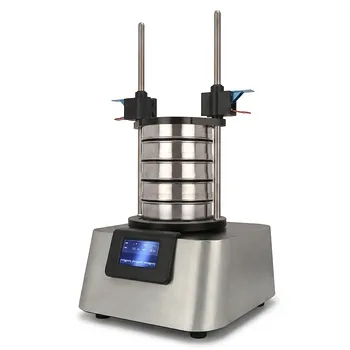
Vibratory Sieve Shaker Electromagnetic 3D Motion Powder Particle Size Analyzer for Dry and Wet Sieving
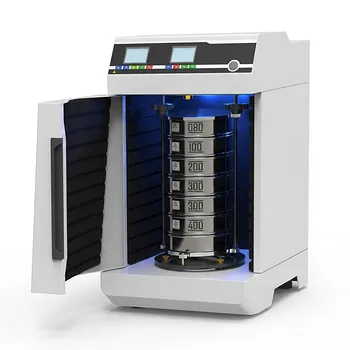
Laboratory Dry and Wet Three Dimensional Vibratory Sieve Shaker for Particle Analysis
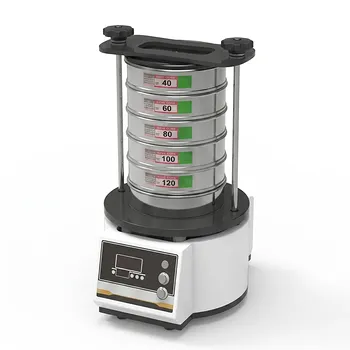
Dry Three Dimensional Vibratory Sieve Shaker
Stainless Steel Laboratory Vibratory Test Sieve Shaker

Heavy Duty Dry Three Dimensional Vibratory Sieve Shaker for Particle Separation
Small Laboratory Vibratory Sieve Shaker for Powder Gradation and Particle Size Analysis

Small Laboratory Vibrating Sieve Shaker for Precise Particle Size Analysis
High Frequency Wet Three-Dimensional Vibrating Sieve Shaker for Dry and Wet Particle Size Analysis
High Frequency Cabinet Type Three-Dimensional Rotary Vibrating Sieve Shaker for Dry Sieving and Particle Classification

Laboratory Vibratory Test Sieve Shaker for Precision Particle Size Analysis and Powder Grading
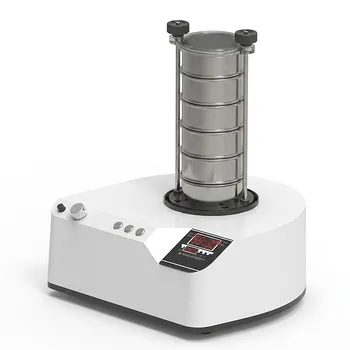
三维电磁微量振动筛分仪

Stainless Steel Rotary Vibrating Sieve High Precision Circular Vibratory Separator Industrial Powder Grading Machine Multi Layer Sifting Equipment
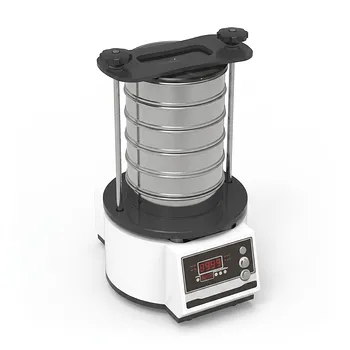
Tapping Oscillating Sieve Shaker for Dry and Wet Particle Size Analysis

Three Dimensional Rotary Vibrating Sieve
Vibratory Superfine Grinder for Ultra Fine Laboratory Powder Milling
Small Vibrating Ultrafine Grinder for Traditional Chinese Medicine
Automatic Vibrating Powder Feeder for Laboratory Material Processing Precision Vibratory Hopper Feeder for Granular and Powder Material Handling Industrial Grade Vibrating Tray Feeder for Consistent Material Sample Preparation