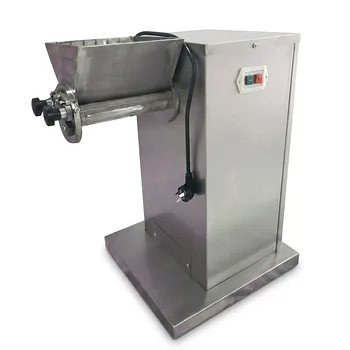
How does a lab pellet press enhance supercapacitor electrodes? Key to conductivity and cycle stability.
Updated 5 months ago
A high-precision laboratory pellet press is the foundational tool for establishing electrical and mechanical contact within an electrode. By applying controlled, unidirectional force, it compacts active materials, conductive agents, and binders onto a current collector. This process reduces internal resistance and secures the material against the physical stresses of rapid energy cycling.
The laboratory press ensures that a supercapacitor's performance is a reflection of its chemical potential rather than physical assembly flaws. It optimizes the interface between the active layer and the current collector to maximize conductivity and structural longevity.
Enhancing Electrical Conductivity
Minimizing Contact Resistance
The primary function of the press is to eliminate gaps between the active material particles and the current collector (such as nickel mesh or carbon cloth). By applying specific pressures—often between 10 MPa and 30 MPa—the press ensures extremely low contact resistance. This allows electrons to flow efficiently from the active layer to the external circuit without significant energy loss.
Optimizing Electron Transport Networks
Within the electrode film itself, high-precision pressure forces conductive carbon black into the voids between larger active material particles. This rearrangement creates a continuous, high-density electronic highway. This internal network is critical for the high-rate performance required by supercapacitors during rapid charge and discharge.
Ensuring Structural Integrity and Longevity
Preventing Active Material Shedding
Supercapacitors undergo mechanical strain as ions move into and out of the electrode structure. A high-precision press creates a strong mechanical bond between the film and the collector, preventing the active material from "shedding" or delaminating. This structural stability directly translates to a significantly extended cycle life for the device.
Consistency and Test Accuracy
In a laboratory setting, repeatability is paramount for valid data. A precision press allows researchers to achieve defined thicknesses and densities across different samples. This physical consistency ensures that variations in electrochemical performance are due to material chemistry rather than inconsistent sample preparation.
Regulating Porosity and Ion Diffusion
Balancing Density and Ion Access
While density is required for conductivity, supercapacitors rely on ion access to the surface area of the material. A high-precision press allows for the fine-tuning of porosity. By regulating the pressure, researchers can achieve a high loading density while still maintaining sufficient pore volume for electrolyte penetration and fast ion transport.
Establishing Efficient Transport Paths
Controlled compaction prevents the formation of "dead zones" where ions might become trapped. By ensuring a uniform internal density, the press helps create optimized diffusion paths. This allows the resulting test data to accurately reflect the intrinsic performance of the material under high-rate conditions.
Understanding the Trade-offs
The Risk of Over-Compaction
Excessive pressure can be as detrimental as insufficient pressure. If the electrode is over-pressed, the porosity can be crushed, significantly hindering ion diffusion and reducing the power density of the supercapacitor. This "choking" effect limits the rate at which the device can charge and discharge.
Stress and Delamination
If pressure is applied inconsistently or if the "green body" is compressed too rapidly, interlaminar stress can build up. This can lead to microscopic cracks or eventual delamination once the electrode is submerged in an electrolyte. Precise, stable pressure control is required to mitigate these mechanical failures.
How to Apply This to Your Project
Depending on your specific research or production goals, your approach to using a pellet press will vary:
- If your primary focus is High Power Density: Apply moderate pressure (10-20 MPa) to maintain high porosity, ensuring that electrolyte ions have rapid access to the active material surfaces.
- If your primary focus is Volumetric Energy Density: Utilize higher pressures (25-35 MPa) to maximize the mass of active material packed into a specific volume, accepting a slight trade-off in ion diffusion speed.
- If your primary focus is Long-Term Cycle Stability: Prioritize the mechanical bond to the current collector by ensuring the binder is fully activated through consistent, even pressure across the entire electrode surface.
Precision in the pressing phase is the critical step that transforms raw chemical potential into a reliable, high-performance energy storage device.
Summary Table:
| Performance Factor | Role of Precision Pressing | Resulting Benefit |
|---|---|---|
| Conductivity | Minimizes contact resistance | Enhanced high-rate performance |
| Durability | Prevents active material shedding | Significantly extended cycle life |
| Ion Transport | Fine-tunes porosity & density | Balanced power and energy density |
| Consistency | Ensures uniform thickness/density | Reliable and repeatable research data |
Elevate Your Material Research with Precision Engineering
At [Brand Name], we provide complete laboratory sample preparation solutions tailored for material science, specializing in high-performance powder processing and compaction equipment. We understand that the transition from raw material to a high-performance device requires absolute precision.
Our Comprehensive Equipment Solutions Include:
- Advanced Hydraulic Presses: A full spectrum featuring Cold/Warm Isostatic Presses (CIP/WIP), standard lab presses, XRF pellet presses, and vacuum hot presses for optimal electrode fabrication.
- Precision Milling & Grinding: Planetary ball mills, jet mills, rotor mills, and liquid nitrogen cryogenic grinders to achieve perfect particle size distribution.
- Material Processing: Sieve shakers (vibratory/air-jet), powder mixers, and defoaming mixers, along with a wide range of test sieves and meshes.
- Size Reduction: Robust jaw and roll crushers for primary material processing.
Don’t let physical assembly flaws overshadow your chemical innovations. Ensure your supercapacitors reach their maximum potential with our industry-leading equipment.
Contact us today to find the perfect solution for your lab!
References
- Celal Avcıoğlu, Suna Avcıoğlu. Recent Advances in Iron‐Containing Perovskites for Supercapacitors. DOI: 10.1002/aesr.202400289
Mentioned Products
- 6-Ton Small Single-Punch Tablet Press — Laboratory Powder & Granule Tableting Equipment / Tablet Forming Machine
- 5 Ton Single Punch Tablet Press Laboratory Small Batch Production
- Manual Tablet Press with Dual Scale Pressure Gauge for Pharmaceutical Food Chemical Laboratory Sample Preparation
- Enhanced 9 Punch Rotary Tablet Press for Powder Compaction
- 6 Ton Variable Frequency Single Punch Tablet Press
People Also Ask
- What is the function of a laboratory press in Cr-Ti alloy evaluation? Quantify Fracture Stress & Strength
- What is the function of a laboratory press in assessing the hydrophobic performance of modified vermiculite fillers?
- What is the core function of a laboratory press in the forming of ceramic filter element green bodies? Maximize Density.
- What is the function of a laboratory press in the preparation of ceramic feed rods? Master Density and Precision
- Why is vacuum sealing and flexible packaging necessary for Aluminum Titanate powders during CIP? Ensure Peak Density

Tech Team · PowderPreparation
Last updated on May 14, 2026
Related Products
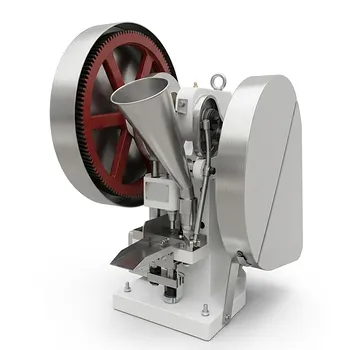
6-Ton Small Single-Punch Tablet Press — Laboratory Powder & Granule Tableting Equipment / Tablet Forming Machine
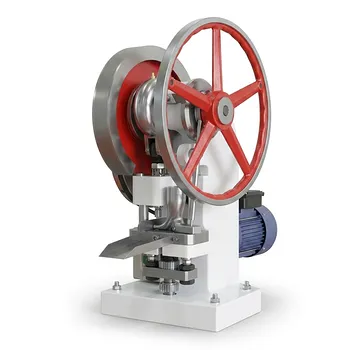
5 Ton Single Punch Tablet Press Laboratory Small Batch Production
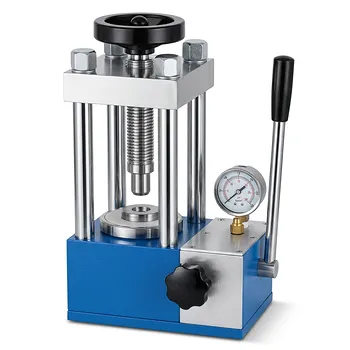
Manual Tablet Press with Dual Scale Pressure Gauge for Pharmaceutical Food Chemical Laboratory Sample Preparation
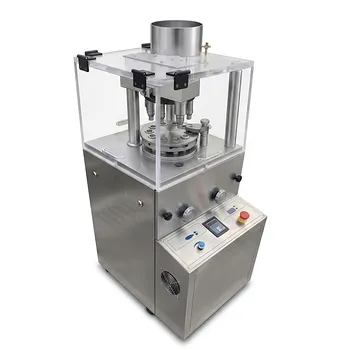
Enhanced 9 Punch Rotary Tablet Press for Powder Compaction
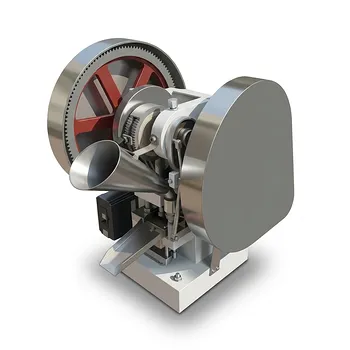
6 Ton Variable Frequency Single Punch Tablet Press
Small High Speed Grinder for Laboratory Sample Preparation
Laboratory Horizontal Pin Nano Sand Mill
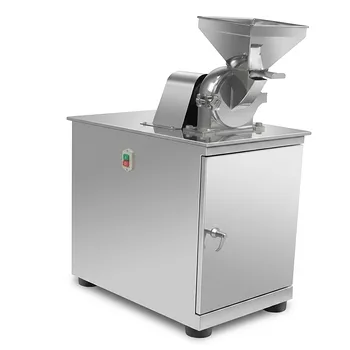
Universal Laboratory Pulverizer Grinder for Small Batch Powder Processing and Material Science Research