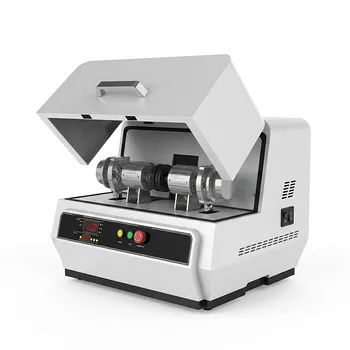
How does a ball mill improve Corn Cob Ash (CCA) & Sunflower Stalk Ash (SSA) grade? Enhance Pozzolanic Reactivity
Updated 5 months ago
A ball mill elevates the quality grade of Corn Cob Ash (CCA) and Sunflower Stalk Ash (SSA) by utilizing high-frequency impact to reduce particles to the micron level. This intensive 120-minute grinding process increases the specific surface area, transforming inert ash into a highly reactive pozzolanic material. By refining the particle size, the mill ensures the ash can effectively react with calcium hydroxide to form the structural gels necessary for high-strength cement.
The ball mill acts as a catalyst for chemical reactivity by physically breaking down the cellular structure of plant ashes. This mechanical refinement is essential for converting raw waste into a "Grade A" mineral admixture that enhances the density and strength of cementitious matrices.
The Physical Transformation of Plant Ash
Particle Size Reduction to the Micron Level
The primary role of the ball mill is to execute superfine grinding through high-frequency impact and friction. For materials like CCA and SSA, a processing time of 120 minutes is typically required to reach the micron level. This reduction is critical because smaller particles can fill the microscopic voids between cement grains.
Dispersing Agglomerated Particles
Raw plant ashes often suffer from agglomeration, where small particles clump together and reduce the material's effectiveness. The ball mill effectively disperses these clusters, showing particular success in refining particles originally in the 125 to 500 μm range. This ensures a more homogenous distribution when the ash is later integrated into a mortar or concrete mix.
Creating a Denser Mortar Matrix
When ash particles are refined, they contribute to a denser internal structure within the cement paste. This physical packing effect helps compensate for the potential loss of mechanical strength that often occurs when replacing cement with raw biomass ash. The result is a more durable material with reduced permeability.
Enhancing Chemical Reactivity
Increasing Specific Surface Area
The grinding action significantly increases the specific surface area of the CCA and SSA. A larger surface area means more of the silica contained within the ash is exposed and available for chemical interaction. This exposure is the fundamental requirement for achieving Grade A plant ash status.
Promoting CSH Gel Formation
Refined ash reacts more effectively with calcium hydroxide, a byproduct of cement hydration. This pozzolanic reaction leads to the formation of additional Calcium Silicate Hydrate (CSH) gel. CSH gel is the primary component responsible for the strength and "glue-like" properties of hardened concrete.
Optimizing Pozzolanic Activity
By reaching the micron level, the ash transitions from a simple filler to an active pozzolan. The ball mill ensures that the chemical potential of the sunflower and corn cob residues is fully unlocked. This allows the ash to contribute chemically to the structural integrity of the project rather than remaining an inert additive.
Understanding the Trade-offs
Energy Consumption vs. Quality
The production of Grade A ash is energy-intensive, requiring long durations of mechanical grinding. Producers must weigh the cost of the electricity and equipment wear against the premium value of the high-grade refined ash.
Processing Time Limits
While grinding increases reactivity, there is a point of diminishing returns. After the 120-minute mark, the additional energy required to further reduce particle size may not result in a proportional increase in strength or reactivity.
Potential Increase in Water Demand
Superfine particles have a high surface area which can sometimes increase the water demand of a concrete mix. While the ash improves the grade and strength, engineers must often adjust chemical admixtures to maintain the desired workability of the wet mortar.
How to Apply This to Your Project
Before implementing ball-milled ash into a large-scale application, consider your specific performance requirements and material goals.
- If your primary focus is Maximum Mechanical Strength: Utilize ash processed for the full 120-minute cycle to ensure the highest CSH gel production and the densest possible matrix.
- If your primary focus is Waste Valorization and Cost: Target the dispersion of 125 to 500 μm agglomerates to improve basic mortar quality without the excessive energy costs of superfine refinement.
- If your primary focus is Durability in Harsh Environments: Prioritize the micron-level refinement to reduce porosity and prevent the ingress of harmful chemicals through the concrete surface.
By strategically using a ball mill to refine CCA and SSA, you transform agricultural waste into a high-performance technical asset for modern construction.
Summary Table:
| Feature | Raw Plant Ash (CCA/SSA) | Ball Milled Ash (120 min) |
|---|---|---|
| Particle Size | 125 – 500 μm (Agglomerated) | Micron Level (Superfine) |
| Specific Surface Area | Low | Extremely High |
| Reactivity Status | Inert / Simple Filler | Active Grade A Pozzolan |
| Structural Impact | High Porosity | Denser Matrix & CSH Gel Formation |
| Primary Benefit | Waste Disposal | Enhanced Mechanical Strength |
Maximize Your Material Performance with Precision Lab Equipment
At [Brand Name], we specialize in providing complete laboratory sample preparation solutions tailored for material science and advanced construction research. Whether you are refining agricultural waste like CCA and SSA or developing high-performance ceramics, our equipment ensures your powders reach the exact specifications required for Grade A results.
Our specialized solutions include:
- Advanced Milling & Grinding: Planetary ball mills, jet mills, disc mills, and rotor mills for achieving micron-level superfine particles.
- Crushing & Sizing: High-durability jaw/roll crushers and vibratory/air-jet sieve shakers for precise particle size distribution.
- Superior Compaction: A full spectrum of hydraulic presses, including Cold/Warm Isostatic Presses (CIP/WIP), vacuum hot presses, and XRF pellet presses.
- Homogeneous Mixing: Specialized powder mixers and defoaming mixers to ensure uniform material blending.
Ready to transform your powder processing workflow? Contact our technical experts today to find the ideal equipment for your laboratory needs!
References
- Adrian Alexandru Şerbănoiu, Bogdan Vasile Șerbănoiu. Corn Cob Ash versus Sunflower Stalk Ash, Two Sustainable Raw Materials in an Analysis of Their Effects on the Concrete Properties. DOI: 10.3390/ma15030868
Mentioned Products
- Heavy Duty Horizontal Planetary Ball Mill for Efficient Industrial Grinding and Sample Preparation
- Vertical Semi Circular Planetary Ball Mill for Laboratory Precision Grinding
- Vertical Square Planetary Ball Mill for Laboratory Sample Preparation and Nanoscale Grinding
- High Energy Planetary Ball Mill for Nano Scale Grinding and Mechanical Alloying
- Vertical Production Planetary Ball Mill for High Throughput Powder Processing
People Also Ask
- Why grind lime-pozzolan specimens for TG/DTA for 3 mins? Master sample prep for high-precision thermal analysis.
- What is the role of a planetary ball mill in the mechanical activation of ZTA powder? Boost Sintering Performance
- What is the function of a planetary ball mill in wollastonite ceramic prep? Achieve Molecular Homogenization & Reactivity
- How does a planetary ball mill contribute to the homogenization of trace elements? Achieve Sub-Micron Uniformity
- What is the function of a high-performance planetary ball mill in AMZ laminates? Master Ceramic Homogenization.

Tech Team · PowderPreparation
Last updated on May 14, 2026
Related Products
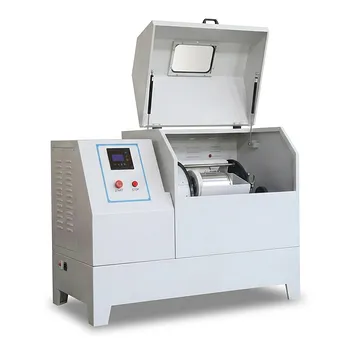
Heavy Duty Horizontal Planetary Ball Mill for Efficient Industrial Grinding and Sample Preparation
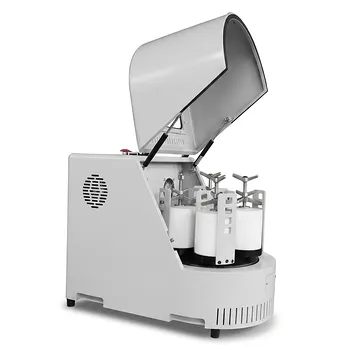
Vertical Semi Circular Planetary Ball Mill for Laboratory Precision Grinding

Vertical Square Planetary Ball Mill for Laboratory Sample Preparation and Nanoscale Grinding
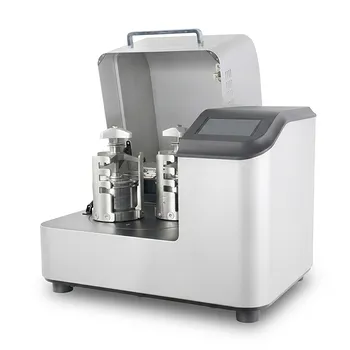
High Energy Planetary Ball Mill for Nano Scale Grinding and Mechanical Alloying
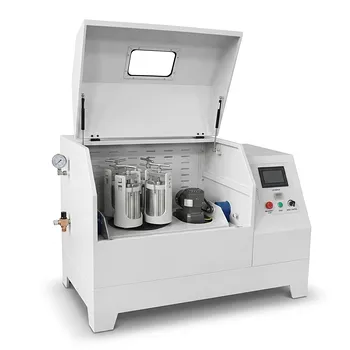
Vertical Production Planetary Ball Mill for High Throughput Powder Processing

Single Tank High Energy Vibratory Ball Mill for Laboratory Grinding and Mixing
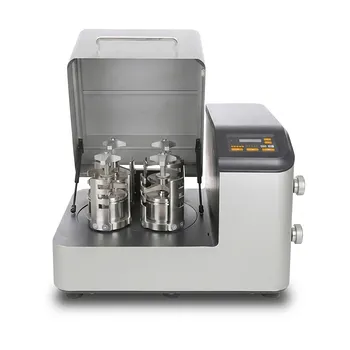
High Energy Planetary Ball Mill for Nano Scale Grinding and Colloidal Mixing in Material Science Research

High Energy Laboratory Planetary Ball Mill for Nano Grinding and Material Science Sample Preparation
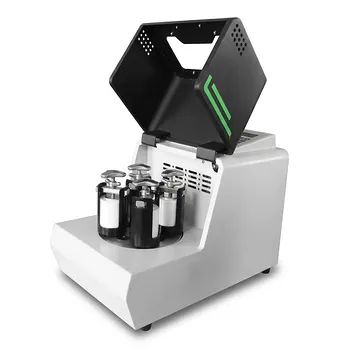
Miniature Planetary Ball Mill with Vacuum Grinding and High Efficiency for Laboratory Sample Preparation
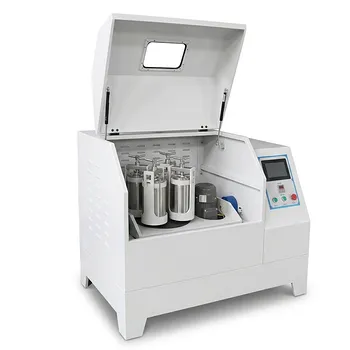
360° Rotating Omnidirectional Laboratory Planetary Ball Mill for Homogeneous Ultra-Fine Grinding and Mixing
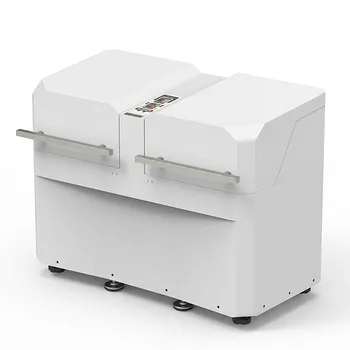
Dual Station Planetary Ball Mill 24L
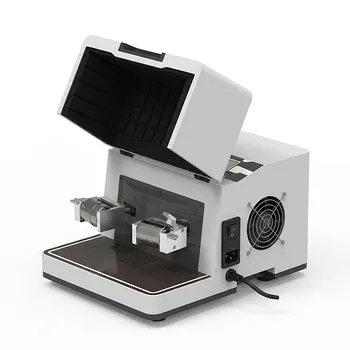
High Energy Hybrid Vibratory Ball Mill for Grinding Mixing and Cell Disruption
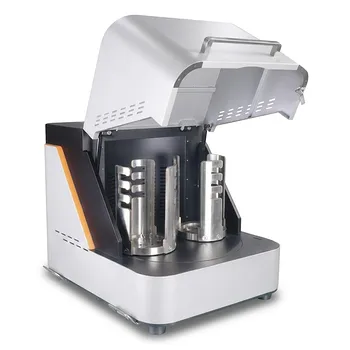
High Energy Laboratory Planetary Ball Mill for Nano Grinding and Colloidal Mixing of Hard and Brittle Materials

High Energy Omnidirectional Planetary Ball Mill 16L
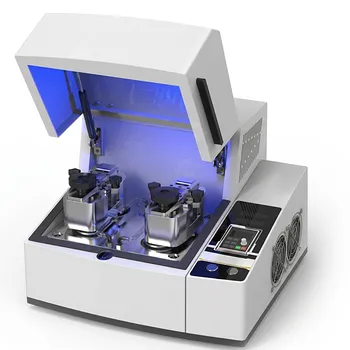
Laboratory Nano High Energy Ball Mill Ultrafine Grinding Mechanical Alloying
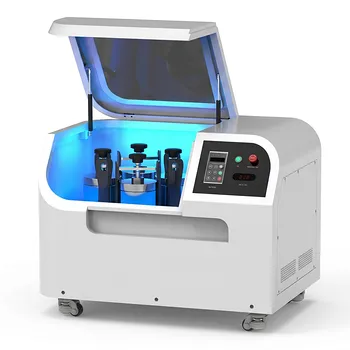
Planetary Ball Mill 12L
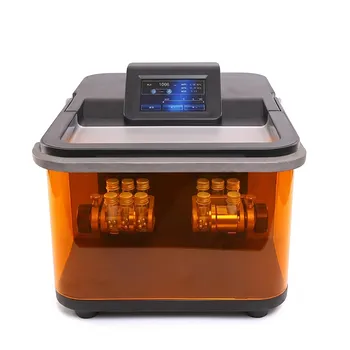
High Throughput Micro Ball Mill for Cryogenic Grinding and Laboratory Cell Disruption
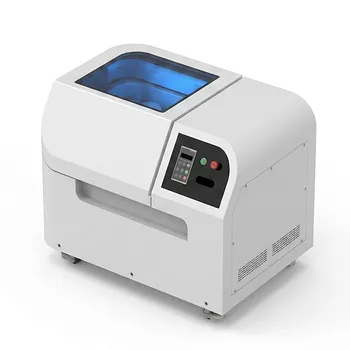
8L Planetary Ball Mill for Laboratory Grinding and Sample Preparation
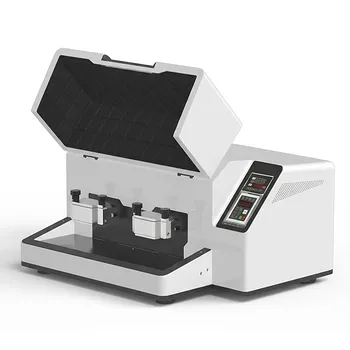
Nanoscale High-Energy Vibratory Ball Mill for Laboratory Sample Preparation, Mechanochemistry, and Mechanical Alloying