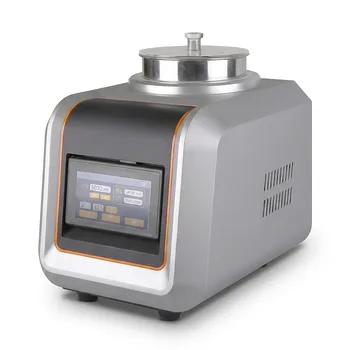
How do vibratory sieve shakers and standard test sieves contribute to the quality of bamboo fiber composites? Boost Integrity
Updated 5 months ago
Precision particle size control is the cornerstone of high-performance natural fiber composites.
Vibratory sieve shakers and standard test sieves are used to isolate homogeneous bamboo particles with precise size distributions from raw crushed material. By removing oversized or irregular fibers, this equipment ensures uniform dispersibility within a polymer or ceramic matrix, which prevents mechanical failure and guarantees consistent material properties across production batches.
Achieving high-quality bamboo fiber composites requires the elimination of raw material unpredictability. Vibratory sieving enforces dimensional uniformity, which is the primary factor in reducing internal stress concentration and improving the mechanical integrity of the final product.
Enhancing Mechanical Integrity and Dispersibility
Prevention of Stress Concentration
Irregular or oversized bamboo particles act as defect sites within a composite matrix, such as silicone rubber or epoxy. Using a vibratory shaker with specific apertures (e.g., 150-micron or 0.25 mm) ensures that the filler integrates smoothly, preventing the localized stress risers that lead to premature cracks.
Uniform Particle Dispersibility
High-quality composites require the bamboo filler to be evenly distributed throughout the material. Vibratory action forces powder through precise meshes, creating a consistent feedstock that avoids clumping and disperses predictably during the mixing or molding phases of manufacturing.
Reduction of Density Fluctuations
Non-uniform fiber sizes can lead to internal density variations, which weaken the structure of the finished specimen. Standardized sieving ensures high fiber uniformity, which stabilizes the internal density and improves the overall reliability of the composite's physical properties.
Scientific Precision and Material Characterization
Control of Fiber Geometry and Aspect Ratios
The geometry of bamboo fibers—specifically the aspect ratio (length-to-diameter)—determines the flexural strength and modulus of the final product. Sieve shakers allow researchers to isolate raw materials with specific ratios (such as 1.6 or 9.6), enabling the engineering of composites with optimized reinforcement geometries.
Repeatability in Experimental Testing
To produce reliable data, every batch of composite must be identical to the last. Standardized sieving removes the variable of particle size fluctuation, ensuring that performance tests reflect the material's true engineering properties rather than random inconsistencies in the raw bamboo supply.
Post-Production Failure Analysis
Sieve shakers are also used to quantitatively characterize the fragmentation of composites following a crush test. By screening debris through a range of apertures, engineers can distinguish between pulverization failure in brittle resins and ductile splaying, providing insight into the material's energy absorption mechanisms.
Understanding the Trade-offs
Limitations of Mechanical Sieving
While highly effective for size classification, sieving cannot account for the surface chemistry or moisture content of the bamboo fibers. These factors are equally critical to the bonding quality between the fiber and the matrix but require different analytical methods to manage.
Potential for Particle Attrition
Excessive vibration time can occasionally lead to particle attrition, where fragile bamboo fibers break down into smaller fragments during the sieving process itself. It is vital to calibrate the shaker's intensity and duration to ensure the classified particles maintain their structural integrity before being added to the matrix.
Optimizing Your Bamboo Composite Production
Selecting the right sieving protocol depends on your specific performance requirements and the nature of your matrix.
- If your primary focus is mechanical strength: Use precision meshes (e.g., 150 µm to 0.25 mm) to eliminate oversized particles that cause stress concentration and structural voids.
- If your primary focus is research and development: Utilize a range of standard sieves to isolate specific aspect ratios and quantitatively study how fiber geometry affects the composite’s flexural modulus.
- If your primary focus is manufacturing consistency: Implement automated vibratory shakers to standardize the filler size distribution across every batch, ensuring repeatable quality and predictable rheological behavior.
Mastering particle size distribution through standardized sieving is the most effective way to transform variable raw bamboo into a reliable, high-performance engineering material.
Summary Table:
| Feature | Benefit for Bamboo Fibers | Impact on Composite Quality |
|---|---|---|
| Precision Size Control | Removes oversized/irregular fibers | Prevents stress concentration & premature cracking |
| Homogeneous Sorting | Ensures uniform dispersibility | Stabilizes internal density and structural reliability |
| Geometry Isolation | Controls fiber aspect ratios | Optimizes flexural strength and reinforcement modulus |
| Standardized Sieving | Guarantees batch repeatability | Ensures consistent engineering data for R&D |
Elevate Your Composite Material Research with Precision Engineering
Achieving high-performance bamboo fiber composites starts with flawless sample preparation. At our core, we provide complete laboratory sample preparation solutions tailored for material science. Whether you are processing raw bamboo or engineering advanced matrices, our equipment ensures the precision your research demands.
Our Specialized Solutions Include:
- Particle Size Control: High-efficiency vibratory and air-jet sieve shakers with a full range of test sieves.
- Fiber Processing: Robust jaw/roll crushers and advanced mills (planetary ball, jet, and cryogenic) for uniform fiber reduction.
- Composite Formation: A full spectrum of hydraulic presses, including Cold/Warm Isostatic Presses (CIP/WIP), hot presses, and vacuum hot presses for superior compaction.
- Mixing Excellence: Specialized powder and defoaming mixers for air-free, uniform filler distribution.
Don't let raw material unpredictability compromise your results. Partner with us to enhance your lab's efficiency and material integrity. Contact our experts today to find the perfect equipment for your application!
References
- Veronica Ordonez, Ricardo J. Rodríguez. Preparation and Characterization of Ecuadorian Bamboo Fiber-Low-Density Polyethylene (LDPE) Biocomposites. DOI: 10.5109/6781037
Mentioned Products
- Vibratory Sieve Shaker Electromagnetic 3D Motion Powder Particle Size Analyzer for Dry and Wet Sieving
- Laboratory Dry and Wet Three Dimensional Vibratory Sieve Shaker for Particle Analysis
- Stainless Steel Laboratory Vibratory Test Sieve Shaker
- Heavy Duty Dry Three Dimensional Vibratory Sieve Shaker for Particle Separation
- Dry Three Dimensional Vibratory Sieve Shaker
People Also Ask
- How does a vibratory sieve shaker contribute to optimizing the performance of activated carbon? Enhance Adsorption Precision
- Why is a laboratory vibratory sieve shaker necessary for processing magnesium-based borate precursor powders? Boost Activity
- Why use a vibratory sieve shaker to verify coarse aggregate grading in rubberized concrete? Ensure Structural Integrity
- What function do vibratory sieve shakers and standard test sieves serve in the preparation of adsorbents? Key Guide
- What role does a vibratory sieve shaker play in the particle size analysis of ground corn products? Enhance QC Precision

Tech Team · PowderPreparation
Last updated on May 14, 2026
Related Products
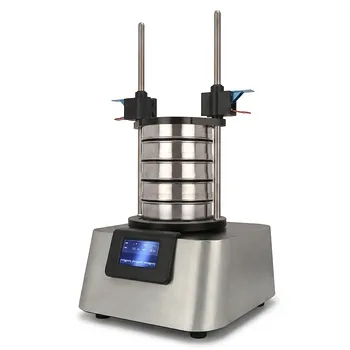
Vibratory Sieve Shaker Electromagnetic 3D Motion Powder Particle Size Analyzer for Dry and Wet Sieving
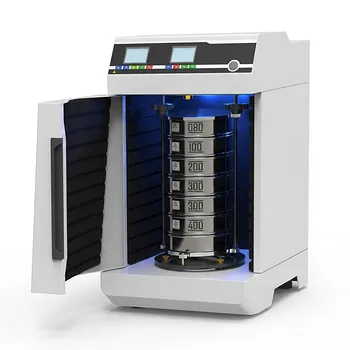
Laboratory Dry and Wet Three Dimensional Vibratory Sieve Shaker for Particle Analysis
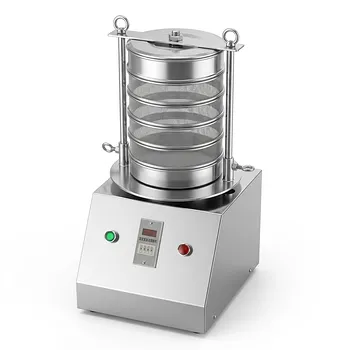
Stainless Steel Laboratory Vibratory Test Sieve Shaker
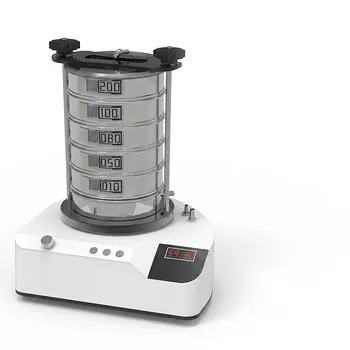
Heavy Duty Dry Three Dimensional Vibratory Sieve Shaker for Particle Separation
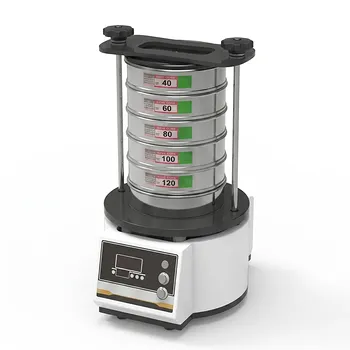
Dry Three Dimensional Vibratory Sieve Shaker
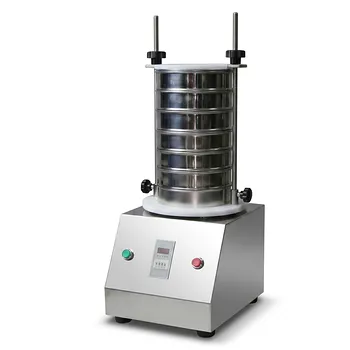
Small Laboratory Vibratory Sieve Shaker for Powder Gradation and Particle Size Analysis
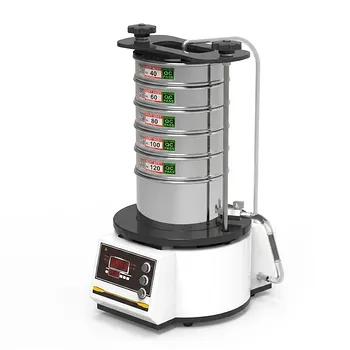
High Frequency Wet Three-Dimensional Vibrating Sieve Shaker for Dry and Wet Particle Size Analysis
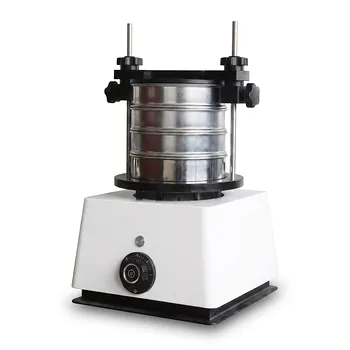
Small Laboratory Vibrating Sieve Shaker for Precise Particle Size Analysis
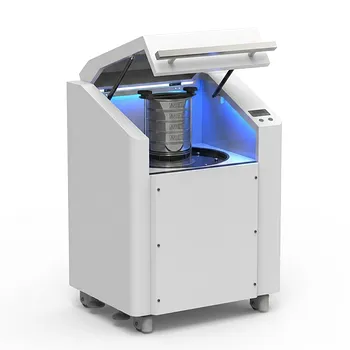
High Frequency Cabinet Type Three-Dimensional Rotary Vibrating Sieve Shaker for Dry Sieving and Particle Classification
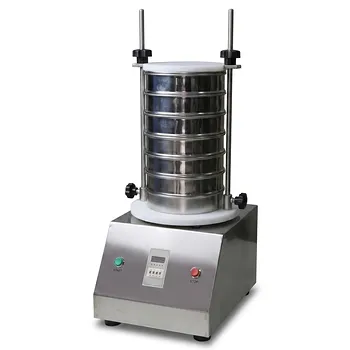
Laboratory Vibratory Test Sieve Shaker for Precision Particle Size Analysis and Powder Grading
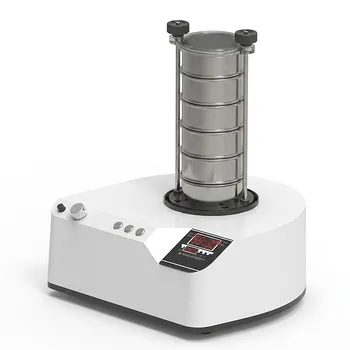
三维电磁微量振动筛分仪
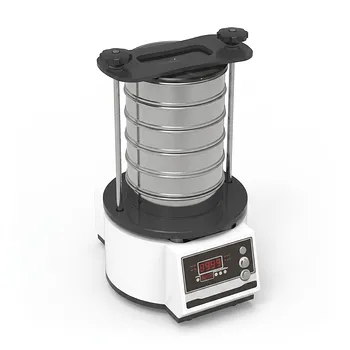
Tapping Oscillating Sieve Shaker for Dry and Wet Particle Size Analysis
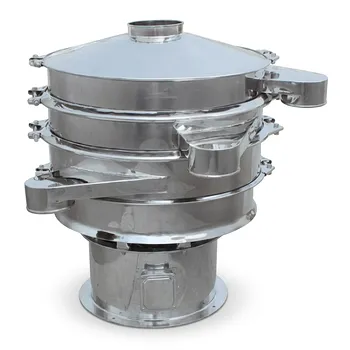
Stainless Steel Rotary Vibrating Sieve High Precision Circular Vibratory Separator Industrial Powder Grading Machine Multi Layer Sifting Equipment
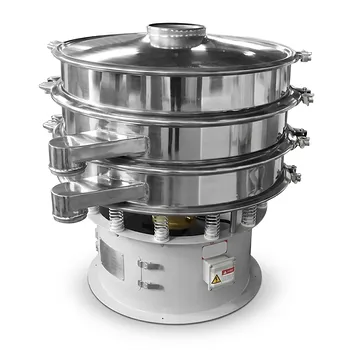
Three Dimensional Rotary Vibrating Sieve
Small Vibrating Ultrafine Grinder for Traditional Chinese Medicine
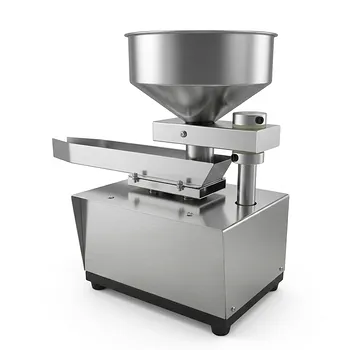
Automatic Vibrating Powder Feeder for Laboratory Material Processing Precision Vibratory Hopper Feeder for Granular and Powder Material Handling Industrial Grade Vibrating Tray Feeder for Consistent Material Sample Preparation
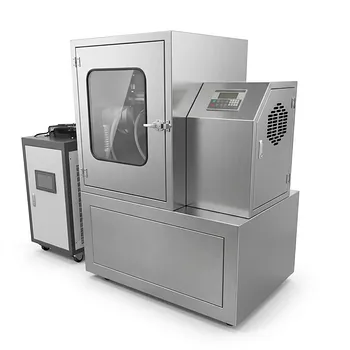
Vibratory Superfine Grinder for Ultra Fine Laboratory Powder Milling
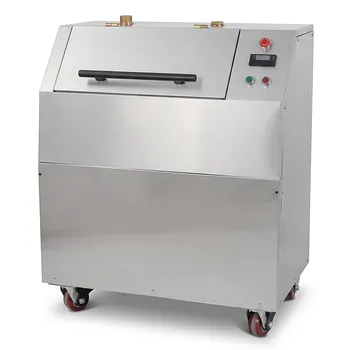
Vibratory Disc Mill for Rapid Fine Grinding and High Throughput Sample Preparation of Hard and Brittle Materials