How do vibratory sieve shakers and standard test sieves contribute to the characterization of calcined minerals?
Updated 3 months ago
Vibratory sieve shakers and standard test sieves provide the quantitative data required to evaluate the physical transformation of minerals during calcination. By utilizing a stack of sieves with discrete apertures (typically ranging from 500 to 1000 microns), these tools perform a detailed Particle Size Distribution (PSD) analysis. This process confirms whether the calcination has successfully altered the grain structure to achieve the necessary fineness for optimal solubility and chemical reactivity.
Core Takeaway: Sieve analysis is the primary method for validating the efficacy of the calcination process, ensuring the mineral reaches a specific particle size profile that dictates its performance in downstream applications like pharmaceutical absorption or industrial granulation.
Quantifying Particle Size Distribution (PSD)
Multi-Layered Fractionation
Vibratory shakers utilize a vertical stack of standard test sieves to separate ground mineral powders into distinct size fractions simultaneously. By measuring the mass retained on each level, technicians can calculate cumulative passing rates and generate a PSD curve.
Mechanical Precision and Reproducibility
Modern shakers employ standardized vibration and tapping actions with adjustable amplitudes and cycle times. This ensures that the results are reproducible and meet international standards, such as ASTM C136, which is critical for maintaining quality control across different batches.
Identifying Critical Indicators
The data generated allows for the determination of the D80 (the size at which 80% of the sample passes) and the economic liberation size. These metrics are essential for deciding if a mineral requires further grinding or if it is ready for chemical processing.
Evaluating the Impact of Calcination
Validating Structural Transformation
Calcination is designed to improve the grain structure of minerals by driving off volatile substances and altering porosity. Sieve analysis quantitatively evaluates this improvement by confirming the proportion of fine particles (often less than 500 microns) created during the process.
Optimization of Solubility and Absorption
The size of the calcined particles directly affects the mineral's solubility and absorption rates in the digestive tract or in chemical reactions. Precise sieving ensures the material is fine enough to meet these functional requirements without being over-processed.
Controlling Granulation and Porosity
For minerals used in fertilizers or catalysts, the PSD influences the inter-particle porosity and compactness of the final granules. Sieve analysis allows for the determination of the optimal ratio of fine powder needed to achieve high-quality granulation.
Process Optimization and Downstream Impact
Defining Feed Ranges for Air Classifiers
Sieving defines the optimal feed range for air classifiers, ensuring that the material entering the system is within the correct dynamic separation range. This prevents system overload and ensures that extremely fine products, such as -400 mesh kaolin, can be isolated efficiently.
Managing Cohesive vs. Non-Cohesive Powders
Shakers help isolate non-cohesive fractions (e.g., 125–180 μm) from cohesive powders (under 53 μm). This distinction is critical for studying mixing uniformity and preventing "clumping" during the manufacturing of mineral-based excipients.
Enhancing Flotation and Separation
In mining contexts, the physical data provided by vibratory sieving assists in selecting the appropriate gravity separation or flotation processes. By knowing the exact size distribution, engineers can optimize the recovery of the calcined mineral from tailings.
Understanding the Trade-offs
Risk of Mesh Blinding
One of the primary challenges is mesh blocking, particularly when dealing with needle-shaped, flat, or fibrous particles. While throw-action shakers mitigate this, extremely fine or moist calcined materials may still require specialized cleaning or wet-sieving techniques to maintain accuracy.
Material Attrition During Testing
The mechanical energy required to separate particles can sometimes cause material attrition, where the particles themselves break down during the test. This can lead to an overestimation of the "fines" in the sample if the vibration time or amplitude is not carefully calibrated.
Limitations with Ultra-Fine Powders
Standard dry sieving loses efficiency as particles drop below the 45–53 micron range due to electrostatic forces and cohesion. For these ultra-fine calcined minerals, vibratory sieving may need to be supplemented by laser diffraction or air-jet sieving for total accuracy.
How to Apply This to Your Process
Making the Right Choice for Your Goal
- If your primary focus is nutritional absorption: Prioritize sieving at the 500-micron threshold to ensure the calcined mineral meets the specific surface area requirements for solubility.
- If your primary focus is industrial granulation: Use the sieve data to calculate the fine-to-coarse ratio, ensuring there is enough fine material to act as a binder during the compaction phase.
- If your primary focus is classification efficiency: Use the shaker to isolate the -400 mesh fraction, verifying that your grinding circuit is producing enough "ready-to-use" product before it reaches the air classifier.
Effective characterization through vibratory sieving transforms calcination from a reactive process into a controlled, data-driven science.
Summary Table:
| Feature/Metric | Contribution to Calcination Characterization | Primary Benefit |
|---|---|---|
| PSD Analysis | Quantifies particle size distribution (e.g., D80) | Validates structural transformation and fineness |
| Sieve Stack | Multi-layered fractionation (500–1000μm) | Identifies optimal solubility and absorption rates |
| Vibration Action | Standardized mechanical precision (ASTM C136) | Ensures reproducibility and quality control |
| Fraction Isolation | Separates cohesive vs. non-cohesive powders | Optimizes air classifier feed and mixing uniformity |
| Mass Retention | Calculates cumulative passing rates | Defines economic liberation size for processing |
Optimize Your Mineral Characterization with Expert Solutions
Ensuring the precision of your calcined mineral analysis requires more than just a sieve—it requires a complete, integrated workflow. At our facility, we provide complete laboratory sample preparation solutions for material science, specializing in high-performance powder processing and compaction equipment.
Whether you are refining grain structures or preparing samples for chemical reactivity tests, our extensive product line supports every stage of your process:
- Particle Size Analysis: Advanced vibratory and air-jet sieve shakers with a wide range of test sieves.
- Sample Preparation: Precision crushers (jaw/roll), liquid nitrogen cryogenic grinders, and diverse mills (planetary ball, jet, rotor).
- Compaction & Granulation: A full spectrum of hydraulic presses, including Cold/Warm Isostatic Presses (CIP/WIP), vacuum hot presses, and XRF pellet presses.
- Mixing: High-efficiency powder and defoaming mixers for uniform sample preparation.
Ready to enhance your lab's efficiency and data accuracy? Contact our technical experts today to find the ideal equipment configuration for your specific material science challenges.
References
- Khalil Khalil, Andri. The Effects of Calcination on Mineral Composition and Physical Properties of Limestones and Oyster Shells Derived from Different Sources. DOI: 10.54203/scil.2021.wvj73
Mentioned Products
- Vibratory Sieve Shaker Electromagnetic 3D Motion Powder Particle Size Analyzer for Dry and Wet Sieving
- Small Laboratory Vibratory Sieve Shaker for Powder Gradation and Particle Size Analysis
- Heavy Duty Dry Three Dimensional Vibratory Sieve Shaker for Particle Separation
- Laboratory Vibratory Test Sieve Shaker for Precision Particle Size Analysis and Powder Grading
- Dry Three Dimensional Vibratory Sieve Shaker
People Also Ask
- How does a vibratory sieve shaker contribute to optimizing the performance of activated carbon? Enhance Adsorption Precision
- Why is a laboratory vibratory sieve shaker necessary for processing magnesium-based borate precursor powders? Boost Activity
- Why use a vibratory sieve shaker to verify coarse aggregate grading in rubberized concrete? Ensure Structural Integrity
- What function do vibratory sieve shakers and standard test sieves serve in the preparation of adsorbents? Key Guide
- What role does a vibratory sieve shaker play in the particle size analysis of ground corn products? Enhance QC Precision

Tech Team · PowderPreparation
Last updated on Jun 03, 2026
Related Products
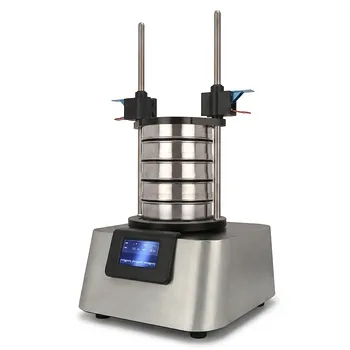
Vibratory Sieve Shaker Electromagnetic 3D Motion Powder Particle Size Analyzer for Dry and Wet Sieving

Small Laboratory Vibratory Sieve Shaker for Powder Gradation and Particle Size Analysis

Heavy Duty Dry Three Dimensional Vibratory Sieve Shaker for Particle Separation

Laboratory Vibratory Test Sieve Shaker for Precision Particle Size Analysis and Powder Grading

Dry Three Dimensional Vibratory Sieve Shaker

Laboratory Dry and Wet Three Dimensional Vibratory Sieve Shaker for Particle Analysis
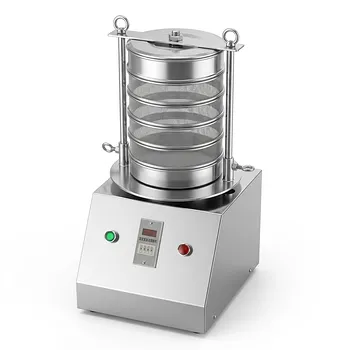
Stainless Steel Laboratory Vibratory Test Sieve Shaker

Small Laboratory Vibrating Sieve Shaker for Precise Particle Size Analysis
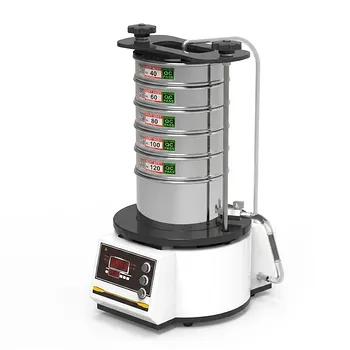
High Frequency Wet Three-Dimensional Vibrating Sieve Shaker for Dry and Wet Particle Size Analysis
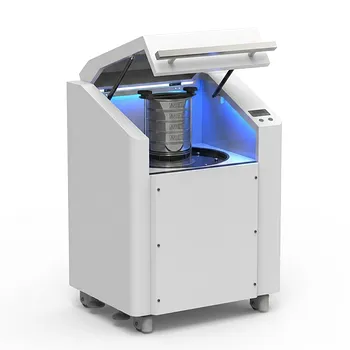
High Frequency Cabinet Type Three-Dimensional Rotary Vibrating Sieve Shaker for Dry Sieving and Particle Classification

三维电磁微量振动筛分仪

Tapping Oscillating Sieve Shaker for Dry and Wet Particle Size Analysis

Stainless Steel Rotary Vibrating Sieve High Precision Circular Vibratory Separator Industrial Powder Grading Machine Multi Layer Sifting Equipment

Three Dimensional Rotary Vibrating Sieve
Automatic Vibrating Powder Feeder for Laboratory Material Processing Precision Vibratory Hopper Feeder for Granular and Powder Material Handling Industrial Grade Vibrating Tray Feeder for Consistent Material Sample Preparation
Small Vibrating Ultrafine Grinder for Traditional Chinese Medicine