How do vibratory sieve shakers and standard test sieves contribute to copper ore flotation? Optimize Mineral Liberation
Updated 5 months ago
Vibratory sieve shakers and standard test sieves serve as the primary tools for particle size classification in copper ore flotation experiments. By utilizing mechanical vibration to drive ground ore through a series of precision mesh layers, researchers can isolate specific size fractions and determine the optimal degree of mineral liberation required for high-accuracy recovery tests.
Core Takeaway: These tools allow technicians to identify the "economic liberation size," ensuring that copper minerals are sufficiently separated from waste rock to maximize flotation efficiency while minimizing energy expenditure in the grinding stage.
Assessing the Degree of Mineral Liberation
Identifying the Economic Liberation Size
For flotation to be effective, the copper minerals must be physically freed from the surrounding gangue (waste rock). Standard test sieves allow researchers to separate ground ore into distinct fractions, such as 75μm or 180μm, to analyze which size yields the highest concentration of exposed copper.
Optimizing Grinding Equipment Runtimes
By precisely controlling the sieving duration, technicians can evaluate the performance of grinding mills. This data reveals how much time is needed to achieve the necessary particle size distribution without over-grinding the material, which would lead to unnecessary energy costs.
Establishing Baseline Particle Distribution
Vibratory shakers provide the data necessary to create particle size distribution curves. These curves act as a roadmap for the entire mineral processing workflow, helping engineers decide if the ore requires further crushing or is ready for the flotation tanks.
Enhancing Flotation Recovery Accuracy
Isolating Target Size Fractions
Researchers often need to test the effectiveness of flotation reagents on specific particle diameters. Using a shaker with sieves ranging from 38μm to 500μm allows for the isolation of these target fractions, ensuring that reagent performance is evaluated under controlled conditions.
Quantifying Metal Distribution
Sieving enables a quantitative analysis of how metal content is distributed across different sizes. This helps technicians understand if the copper is concentrated in the "fines" or the coarser particles, which directly influences the design of the flotation process.
Evaluating Grinding Effectiveness
Consistent mechanical vibrations ensure that the separation process is repeatable and objective. This consistency is vital for determining if the grinding process has achieved the geometric dimensions necessary for the specific chemistry of the flotation reagents to work.
Understanding the Trade-offs
The Risk of Particle Attrition
Extended sieving times in a vibratory shaker can lead to particle attrition, where particles wear down against each other. This can result in an inaccurate representation of the original ground product, potentially skewing the results of the flotation experiment.
Sieve Blinding and Maintenance
Fine copper ore particles can often "blind" or clog the mesh of a standard test sieve. If the sieves are not properly maintained or if the vibration intensity is not correctly calibrated, the classification will be incomplete, leading to errors in the liberation analysis.
Geometric vs. Mineralogical Liberation
While sieving classifies particles by physical dimension, it does not guarantee mineralogical liberation. A particle may fit through a 150μm mesh but still consist of copper locked inside waste rock, requiring researchers to supplement sieving with chemical or microscopic analysis.
Implementing Sieve Analysis in Your Workflow
How to Apply This to Your Project
To get the most value from your sieve analysis, align your methodology with your specific recovery goals.
- If your primary focus is reducing energy costs: Use the vibratory shaker to find the coarsest particle size that still yields acceptable recovery rates, thereby reducing grinding time.
- If your primary focus is maximizing mineral recovery: Focus on isolating the 38μm to 75μm fractions to evaluate how "fine" particles respond to different collector reagents.
- If your primary focus is process scaling: Use the particle size distribution curves to select industrial-scale crushing and classification equipment that mirrors your laboratory results.
Precise particle classification is the foundation of any successful mineral recovery strategy.
Summary Table:
| Function | Role in Flotation Experiment | Key Performance Metric |
|---|---|---|
| Particle Classification | Identifies the economic liberation size for copper | Precision mesh size (μm) |
| Grinding Optimization | Evaluates mill runtime to prevent over-grinding | Sieving duration & frequency |
| Reagent Evaluation | Isolates specific fractions to test chemical response | Particle size distribution curve |
| Metal Distribution | Quantifies copper concentration across size ranges | Weight-to-metal ratio per fraction |
Maximize Your Mineral Recovery with Precision Sample Prep
Achieving the perfect degree of mineral liberation is critical for successful copper flotation. At [Insert Brand Name], we provide complete laboratory sample preparation solutions tailored for material science and mineral processing.
Whether you need to crush raw ore with our jaw and roll crushers, achieve ultra-fine grinding using our planetary ball or jet mills, or ensure perfect classification with our vibratory and air-jet sieve shakers, we have the equipment to optimize your workflow. Our expertise extends to powder processing and compaction, offering a full spectrum of hydraulic presses (CIP/WIP) and vacuum hot presses for advanced material research.
Ready to enhance your lab's efficiency and recovery accuracy? Contact our technical experts today to find the ideal equipment for your specific mineralogy needs!
References
- Yesica L. Botero, Luís A. Cisternas. New insights related to the flotation of covellite in porphyry ores. DOI: 10.1016/j.mineng.2021.107242
Mentioned Products
- Vibratory Sieve Shaker Electromagnetic 3D Motion Powder Particle Size Analyzer for Dry and Wet Sieving
- Laboratory Dry and Wet Three Dimensional Vibratory Sieve Shaker for Particle Analysis
- Dry Three Dimensional Vibratory Sieve Shaker
- Stainless Steel Laboratory Vibratory Test Sieve Shaker
- Heavy Duty Dry Three Dimensional Vibratory Sieve Shaker for Particle Separation
People Also Ask
- How does a vibratory sieve shaker contribute to optimizing the performance of activated carbon? Enhance Adsorption Precision
- Why is a laboratory vibratory sieve shaker necessary for processing magnesium-based borate precursor powders? Boost Activity
- Why use a vibratory sieve shaker to verify coarse aggregate grading in rubberized concrete? Ensure Structural Integrity
- What function do vibratory sieve shakers and standard test sieves serve in the preparation of adsorbents? Key Guide
- What role does a vibratory sieve shaker play in the particle size analysis of ground corn products? Enhance QC Precision

Tech Team · PowderPreparation
Last updated on May 14, 2026
Related Products
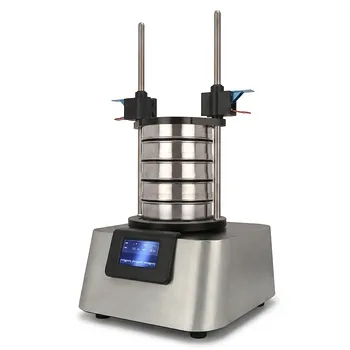
Vibratory Sieve Shaker Electromagnetic 3D Motion Powder Particle Size Analyzer for Dry and Wet Sieving
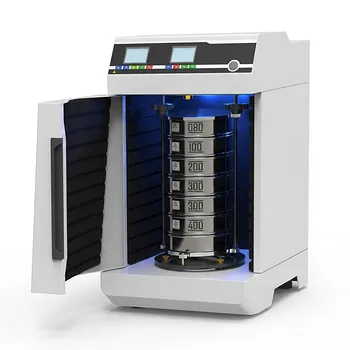
Laboratory Dry and Wet Three Dimensional Vibratory Sieve Shaker for Particle Analysis
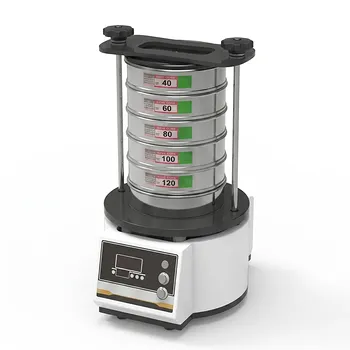
Dry Three Dimensional Vibratory Sieve Shaker
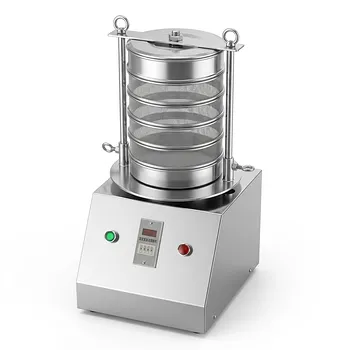
Stainless Steel Laboratory Vibratory Test Sieve Shaker

Heavy Duty Dry Three Dimensional Vibratory Sieve Shaker for Particle Separation
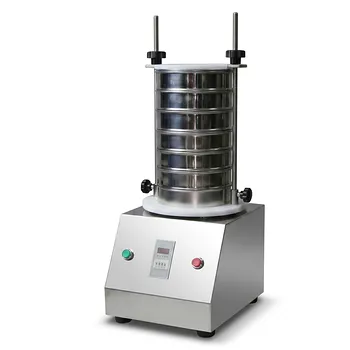
Small Laboratory Vibratory Sieve Shaker for Powder Gradation and Particle Size Analysis

Small Laboratory Vibrating Sieve Shaker for Precise Particle Size Analysis
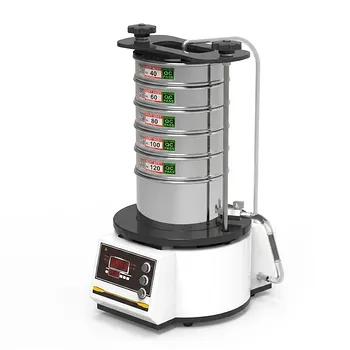
High Frequency Wet Three-Dimensional Vibrating Sieve Shaker for Dry and Wet Particle Size Analysis
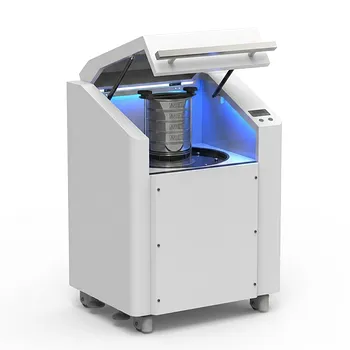
High Frequency Cabinet Type Three-Dimensional Rotary Vibrating Sieve Shaker for Dry Sieving and Particle Classification

Laboratory Vibratory Test Sieve Shaker for Precision Particle Size Analysis and Powder Grading
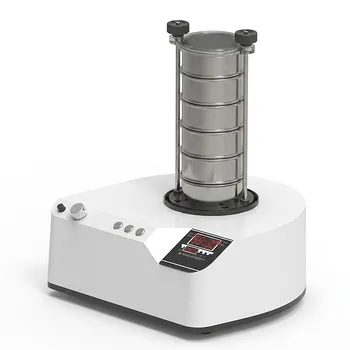
三维电磁微量振动筛分仪

Stainless Steel Rotary Vibrating Sieve High Precision Circular Vibratory Separator Industrial Powder Grading Machine Multi Layer Sifting Equipment
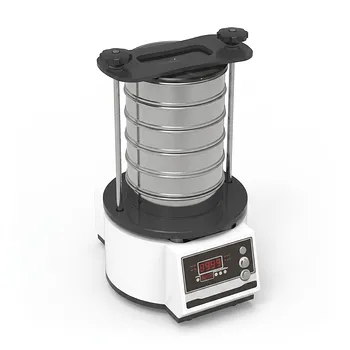
Tapping Oscillating Sieve Shaker for Dry and Wet Particle Size Analysis

Three Dimensional Rotary Vibrating Sieve
Vibratory Superfine Grinder for Ultra Fine Laboratory Powder Milling
Small Vibrating Ultrafine Grinder for Traditional Chinese Medicine
Automatic Vibrating Powder Feeder for Laboratory Material Processing Precision Vibratory Hopper Feeder for Granular and Powder Material Handling Industrial Grade Vibrating Tray Feeder for Consistent Material Sample Preparation