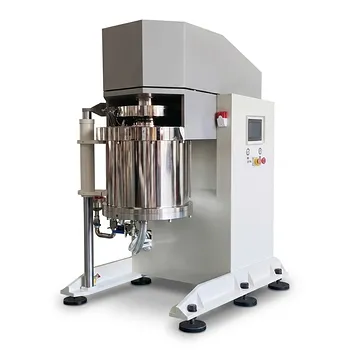
How do planetary ball mills facilitate the preparation of alumina ceramic slurries? Optimize Your Ceramic Homogenization
Updated 5 months ago
Planetary ball mills facilitate alumina ceramic slurry preparation by utilizing high-energy rotation to generate intense collision and shear forces. These mechanical actions achieve forced homogenization of powders, water, and dispersants, effectively breaking down powder agglomerates at a microscopic level. This process results in a physically stable, compositionally consistent suspension essential for high-quality slip casting, 3D printing, and lithography.
High-energy planetary milling is the definitive method for transforming raw alumina into a stable, low-viscosity slurry by eliminating particle agglomeration and ensuring precise chemical homogeneity across the mixture.
The Mechanics of Forced Homogenization
Impact and Shear Force Dynamics
Planetary ball mills operate through a dual-rotation mechanism where the grinding jars revolve around a central axis while simultaneously rotating on their own axes. This motion generates high-intensity impact and shear energy between the grinding media and the material. These forces are significantly more powerful than those in conventional ball mills, allowing for deeper homogenization.
Breakdown of Powder Agglomerates
Raw alumina powder often contains "soft" agglomerates that impede the flow and stability of a slurry. The mechanical energy of the mill effectively disintegrates these clusters, ensuring that sub-micron ceramic particles are individually liberated. This step is critical for achieving a uniform distribution within the liquid medium or resin matrix.
Particle Size Refinement and Surface Reactivity
Beyond simple mixing, the intense friction can refine alumina powder to sub-micron levels, increasing its specific surface area. This increased surface area enhances the chemical reactivity of the powder. Higher reactivity promotes better bonding during the subsequent sintering process, leading to a denser final ceramic.
Optimizing Slurry Properties for Production
Achieving High Solid Loading
One of the primary challenges in ceramic processing is maintaining a high solid content (often up to 70 wt.%) while keeping the slurry pourable. Planetary milling allows for the uniform incorporation of high volumes of powder into a minimal amount of liquid or photosensitive resin. This results in a material that is dense yet maintains the fluidity required for precision molding.
Controlling Viscosity and Fluidity
The uniform dispersion of dispersants and additives achieved through milling reduces the internal friction of the slurry. By ensuring every particle is coated with dispersant, the mill creates a low-viscosity environment. This improved fluidity is essential for complex processes like ceramic lithography and 3D printing.
Integration of Reinforcing Phases
For specialized ceramics, such as tool materials, the mill facilitates the uniform coating of nanoparticles (like nano-zirconia) onto the alumina matrix. This process can even embed reinforcing phases into the ceramic lattice. These structures create subgrain boundaries after sintering, which significantly enhance flexural strength and fracture toughness.
Maintaining Purity and Microstructural Integrity
Preventing Contamination
A critical concern in alumina processing is the introduction of metallic impurities, which can degrade the ceramic's properties. To mitigate this, planetary mills typically utilize alumina grinding jars and balls. Using chemically identical media ensures that any wear remains within the material's own chemical profile, preserving high purity.
Ensuring Molecular-Level Mixing
The high-speed rotation ensures that sintering aids and additives are distributed at a molecular level throughout the primary material. This level of uniformity prevents localized defects in the final product. Consistent distribution is the foundation for achieving a dense, defect-free microstructure during firing.
Understanding the Trade-offs
The Risk of Excessive Heat Generation
The high-energy nature of planetary milling can generate significant heat during extended cycles. If not managed, this heat can degrade photosensitive resins or affect the stability of certain chemical dispersants. Cooling breaks or temperature-controlled milling environments are often necessary for sensitive formulations.
Grinding Media Wear and Maintenance
While using alumina media prevents foreign contamination, the media itself is still subject to wear over time. This wear can alter the particle size distribution or the chemistry of the slurry if not accounted for. Regular inspection and replacement of grinding balls are required to maintain process consistency.
How to Apply This to Your Project
Making the Right Choice for Your Goal
Achieving the perfect slurry requires balancing milling intensity with the specific needs of your manufacturing process.
- If your primary focus is High-Purity Applications: Use high-purity alumina jars and balls and limit milling time to the minimum required for homogenization to reduce media wear.
- If your primary focus is 3D Printing or Lithography: Prioritize high-speed milling to ensure sub-micron particles are perfectly dispersed within the resin matrix for low viscosity.
- If your primary focus is Maximizing Mechanical Strength: Utilize extended milling times (up to 15 hours) to ensure the thorough embedding of nano-reinforcing phases and sintering aids.
The strategic use of planetary ball milling ensures that your alumina ceramic slurry possesses the stability and uniformity required for high-performance engineering applications.
Summary Table:
| Feature | Mechanical Impact | Preparation Benefit |
|---|---|---|
| Homogenization | Dual-rotation shear forces | Breaks down sub-micron powder agglomerates |
| Solid Loading | Uniform dispersion | Achieves up to 70 wt.% solids with low viscosity |
| Particle Size | Intense friction | Refines powder to sub-micron for better sintering |
| Purity Control | Alumina jars/media | Prevents metallic contamination during milling |
| Microstructure | Molecular-level mixing | Ensures uniform distribution of sintering aids |
Elevate Your Material Science Research with Precision Preparation
Achieving the perfect alumina slurry requires more than just a mill—it requires a complete sample preparation strategy. Contact us today to discover how our expertise can streamline your laboratory workflow.
We provide complete laboratory sample preparation solutions tailored for material science, specializing in advanced powder processing and compaction equipment. Our extensive product lines include:
- Milling & Grinding: High-energy planetary ball mills, jet mills, disc mills, and liquid nitrogen cryogenic grinders.
- Crushing & Sieving: Jaw/roll crushers and vibratory/air-jet sieve shakers for precise particle size control.
- Mixing: High-efficiency powder mixers and vacuum defoaming mixers.
- Compaction & Pressing: A full spectrum of hydraulic presses, including Cold/Warm Isostatic Presses (CIP/WIP), standard lab presses, vacuum hot presses, and XRF pellet presses.
Whether you are focusing on ceramic 3D printing, high-purity lithography, or advanced sintering, we deliver the tools needed for a dense, defect-free microstructure. Reach out now to discuss your specific requirements with our technical team!
References
- Irena Žmak, Lidija Ćurković. Improving Sustainability of Technical Ceramics Production: Synergistic Approach. DOI: 10.54820/jojw7514
Mentioned Products
- Vertical Square Planetary Ball Mill for Laboratory Sample Preparation and Nanoscale Grinding
- Vertical Semi Circular Planetary Ball Mill for Laboratory Precision Grinding
- Planetary Ball Mill 12L
- 8L Planetary Ball Mill for Laboratory Grinding and Sample Preparation
- Heavy Duty Horizontal Planetary Ball Mill for Efficient Industrial Grinding and Sample Preparation
People Also Ask
- What is the function of a planetary ball mill in wollastonite ceramic prep? Achieve Molecular Homogenization & Reactivity
- How does a planetary ball mill contribute to the homogenization of trace elements? Achieve Sub-Micron Uniformity
- Why grind lime-pozzolan specimens for TG/DTA for 3 mins? Master sample prep for high-precision thermal analysis.
- What role does a planetary ball mill play in the synthesis of Li6PS5Cl (LPSCl)? Unlock High Ionic Conductivity
- What role does a planetary ball mill play in KNTO ceramic refinement? Optimize Homogeneity & Reactivity

Tech Team · PowderPreparation
Last updated on May 14, 2026
Related Products

Vertical Square Planetary Ball Mill for Laboratory Sample Preparation and Nanoscale Grinding
Vertical Semi Circular Planetary Ball Mill for Laboratory Precision Grinding
Planetary Ball Mill 12L
8L Planetary Ball Mill for Laboratory Grinding and Sample Preparation
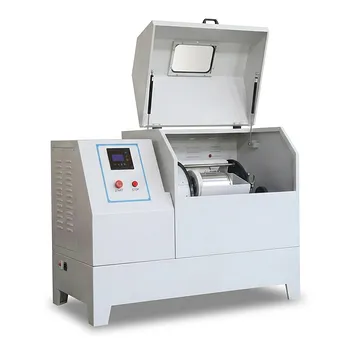
Heavy Duty Horizontal Planetary Ball Mill for Efficient Industrial Grinding and Sample Preparation
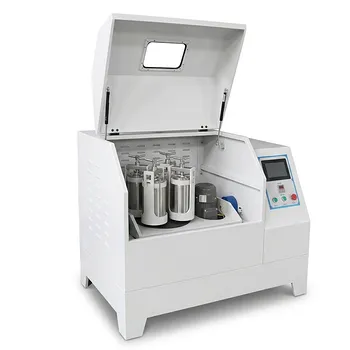
360° Rotating Omnidirectional Laboratory Planetary Ball Mill for Homogeneous Ultra-Fine Grinding and Mixing

Miniature Planetary Ball Mill with Vacuum Grinding and High Efficiency for Laboratory Sample Preparation
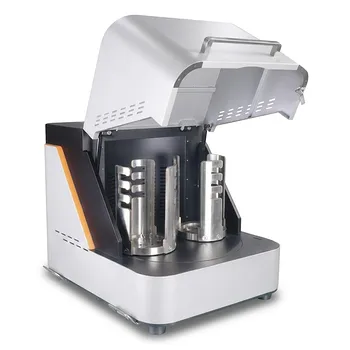
High Energy Laboratory Planetary Ball Mill for Nano Grinding and Colloidal Mixing of Hard and Brittle Materials
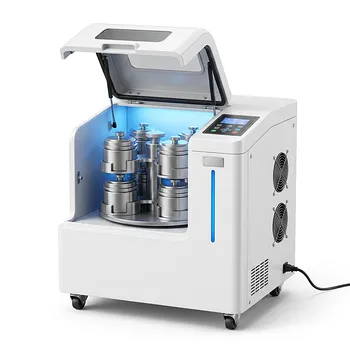
High Energy Omnidirectional Planetary Ball Mill 20L
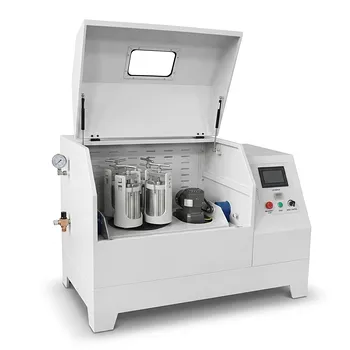
Vertical Production Planetary Ball Mill for High Throughput Powder Processing
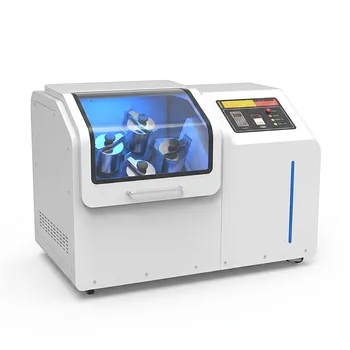
High Energy Omnidirectional Planetary Ball Mill 16L

High Energy Laboratory Planetary Ball Mill for Nano Grinding and Material Science Sample Preparation
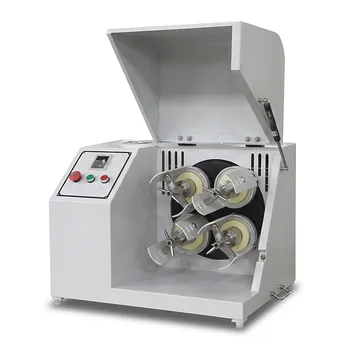
Horizontal Light Duty Planetary Ball Mill for Laboratory Sample Preparation

High Energy Planetary Ball Mill for Nano Scale Grinding and Mechanical Alloying
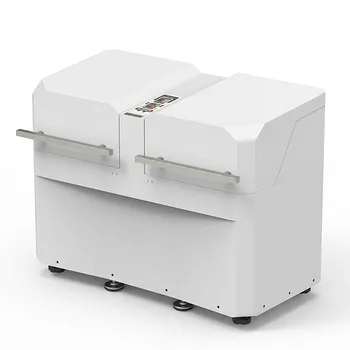
Dual Station Planetary Ball Mill 24L
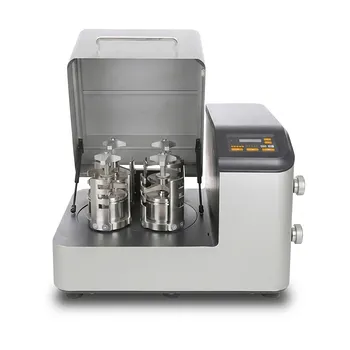
High Energy Planetary Ball Mill for Nano Scale Grinding and Colloidal Mixing in Material Science Research
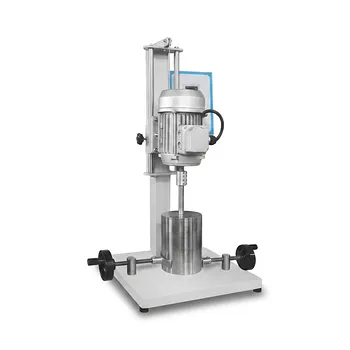
Laboratory Basket Sand Mill for Wet Grinding and Dispersion of Viscous Slurries
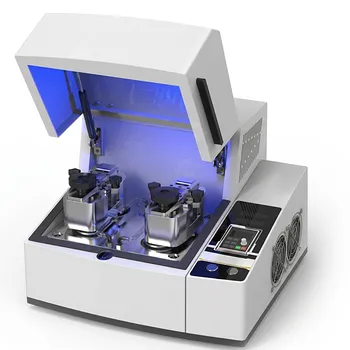
Laboratory Nano High Energy Ball Mill Ultrafine Grinding Mechanical Alloying
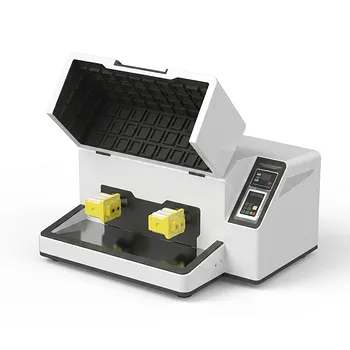
Multi-Platform Nanoscale High-Energy Vibratory Ball Mill