How do mechanical vibratory sieve shakers assist in the analysis of particle size distribution for silicate minerals? Guide
Updated 5 months ago
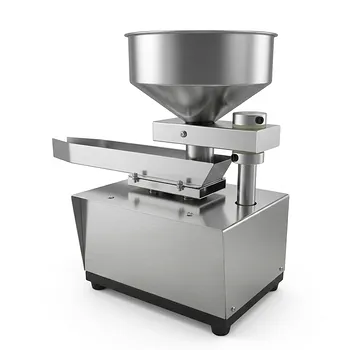
Mechanical vibratory sieve shakers automate the physical separation of mineral powders by applying consistent, high-frequency vibrations to a stack of standardized mesh screens. This process allows technicians to precisely quantify the weight percentage of specific particle size fractions within silicate minerals like red mud, diatomaceous earth, and silica gel, which is essential for predicting material reactivity and ensuring product uniformity.
By utilizing standardized vibration amplitudes and durations, these shakers provide a repeatable, quantitative method for determining particle size distribution (PSD) curves and statistical metrics such as D50 and D90, which serve as the "ground truth" for material classification and industrial processing.
The Mechanics of Automated Separation
Standardized Vibration Parameters
Mechanical shakers remove human error by applying preset time parameters and constant vibration amplitudes. This ensures that the powder sample is distributed evenly across the screen surface, allowing every particle the maximum opportunity to pass through the mesh apertures.
The Stacked Sieve Hierarchy
The equipment utilizes a vertical stack of standard analytical sieves, typically ranging from 4 mesh to 400 mesh (roughly 4.75mm to 38μm). As the vibration drives the sample downward, particles are trapped by sieves with apertures smaller than their diameter, effectively grading the non-uniform mineral into distinct size fractions.
Quantifying Silicate Mineral Characteristics
Predicting Reactivity in Ceramic Production
For minerals like red mud and diatomaceous earth, the fineness characteristics determined by sieving directly correlate to chemical reactivity. Smaller particle sizes increase the surface area available for reaction, which is a critical factor for technical personnel when adjusting formulas during ceramic production.
Establishing Ground Truth for Geological Modeling
In sediment and soil analysis, the shaker provides the raw data needed to generate cumulative distribution curves (D10, D50, D90). These precise measurements act as the foundation for training deep learning models and identifying the proportion of fine sediments (less than 63 micrometers) that influence organic carbon storage potential.
Evaluating Material Uniformity
By comparing the particle size distribution width (P10-P90) of recycled minerals against commercial-grade standards, laboratories can detect fluctuations in mechanical performance. This is particularly important for silica gel powders used in composite materials where uniformity impacts the final product’s structural integrity.
Understanding the Trade-offs
Limitations with Ultra-Fine Particles
While highly effective for dry sieving of coarse and medium fractions, mechanical vibratory shakers may struggle with electrostatic clumping in ultra-fine powders (below 20-30 micrometers). In these cases, the dry mechanical method may need to be supplemented with wet sieving or laser diffraction to maintain accuracy.
Equipment Wear and Calibration
The precision of the analysis is entirely dependent on the integrity of the mesh screens. Over time, mechanical vibration can cause mesh tension to sag or wires to fray, leading to "near-size" particles becoming stuck (blinding) or passing through incorrectly, which necessitates regular calibration and screen replacement.
Optimizing Your Mineral Analysis Workflow
To achieve the most accurate results when analyzing silicate minerals, your approach should be tailored to the specific industrial or geological application.
- If your primary focus is ceramic manufacturing: Prioritize the 75–150 μm range and monitor the cumulative weight of fines to ensure consistent chemical reactivity during firing.
- If your primary focus is geological classification: Utilize a full stack of sieves from 2mm down to 63μm to accurately calculate D-values and identify the storage potential of fine-grained sediments.
- If your primary focus is composite material quality: Compare the P10-P90 distribution width of your raw mineral inputs to ensure they meet the strict uniformity standards required for mechanical stability.
Mechanical vibratory sieve shakers transform a complex physical sorting task into a precise, repeatable scientific measurement that is fundamental to mineralogy and industrial chemistry.
Summary Table:
| Key Feature | Benefit for Silicate Minerals | Key Metrics |
|---|---|---|
| Automated Vibration | Ensures repeatable, error-free separation of mineral powders. | Weight %, D50, D90 |
| Stacked Sieves | Grades minerals (4 to 400 mesh) into distinct fractions. | Mesh Aperture Size |
| Precise Quantification | Predicts chemical reactivity and ensures product uniformity. | Cumulative PSD Curves |
| Standardized Testing | Provides "ground truth" for geological and composite analysis. | P10-P90 Width |
Elevate Your Material Research with Professional Sample Prep Solutions
Precise particle size distribution is the foundation of quality in silicate mineral processing. Whether you are optimizing ceramic reactivity or refining geological models, our professional laboratory solutions provide the high-performance equipment needed for accurate, "ground truth" results.
As specialists in material science powder processing and compaction, we offer a complete range of equipment:
- Particle Separation: Vibratory and air-jet sieve shakers with a full selection of high-precision test sieves and meshes.
- Milling & Grinding: Planetary ball mills, jet mills, disc mills, and liquid nitrogen cryogenic grinders.
- Crushing: Industrial-grade jaw and roll crushers for primary sample reduction.
- Compaction & Forming: A full spectrum of hydraulic presses, including Cold/Warm Isostatic Presses (CIP/WIP), vacuum hot presses, and XRF pellet presses.
- Mixing: High-efficiency powder mixers and defoaming mixers.
Contact us today to discover how our specialized solutions can enhance your laboratory’s efficiency and the structural integrity of your materials!
References
- Ivyleen Bernardo-Arugay, Raymond V. Rivera Virtudazo. Evaluation of Linamon Red Clay, Salvador Black Cinder and Kapatagan Diatomaceous Earth of the Southern Philippines. DOI: 10.3390/min13020252
Mentioned Products
- Vibratory Sieve Shaker Electromagnetic 3D Motion Powder Particle Size Analyzer for Dry and Wet Sieving
- Small Laboratory Vibratory Sieve Shaker for Powder Gradation and Particle Size Analysis
- Laboratory Dry and Wet Three Dimensional Vibratory Sieve Shaker for Particle Analysis
- Laboratory Vibratory Test Sieve Shaker for Precision Particle Size Analysis and Powder Grading
- Dry Three Dimensional Vibratory Sieve Shaker
People Also Ask
- How does a vibratory sieve shaker contribute to optimizing the performance of activated carbon? Enhance Adsorption Precision
- Why is a laboratory vibratory sieve shaker necessary for processing magnesium-based borate precursor powders? Boost Activity
- Why use a vibratory sieve shaker to verify coarse aggregate grading in rubberized concrete? Ensure Structural Integrity
- What function do vibratory sieve shakers and standard test sieves serve in the preparation of adsorbents? Key Guide
- What role does a vibratory sieve shaker play in the particle size analysis of ground corn products? Enhance QC Precision

Tech Team · PowderPreparation
Last updated on May 14, 2026
Related Products
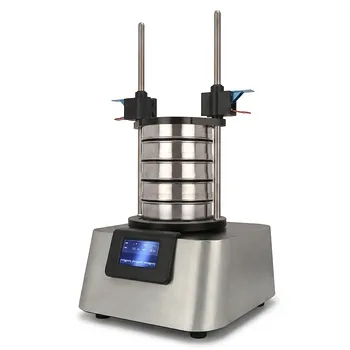
Vibratory Sieve Shaker Electromagnetic 3D Motion Powder Particle Size Analyzer for Dry and Wet Sieving
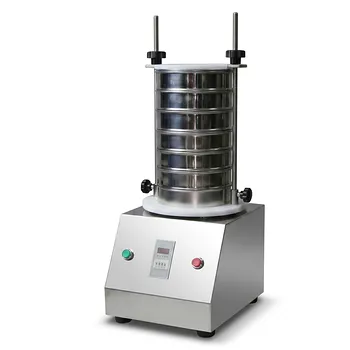
Small Laboratory Vibratory Sieve Shaker for Powder Gradation and Particle Size Analysis
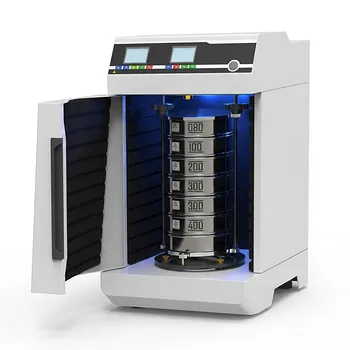
Laboratory Dry and Wet Three Dimensional Vibratory Sieve Shaker for Particle Analysis
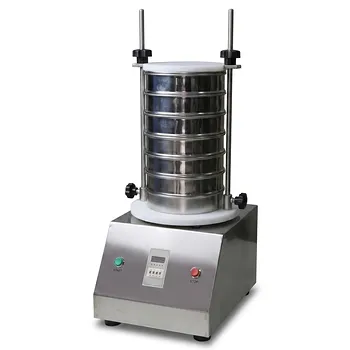
Laboratory Vibratory Test Sieve Shaker for Precision Particle Size Analysis and Powder Grading
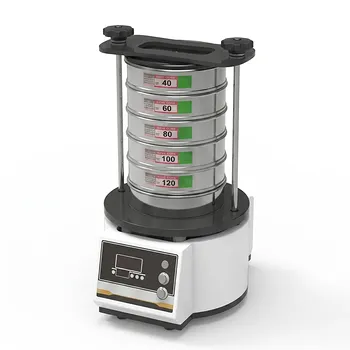
Dry Three Dimensional Vibratory Sieve Shaker
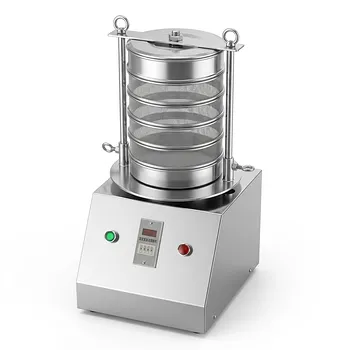
Stainless Steel Laboratory Vibratory Test Sieve Shaker
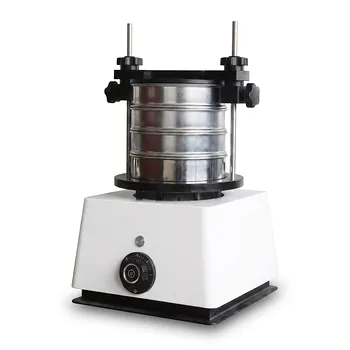
Small Laboratory Vibrating Sieve Shaker for Precise Particle Size Analysis
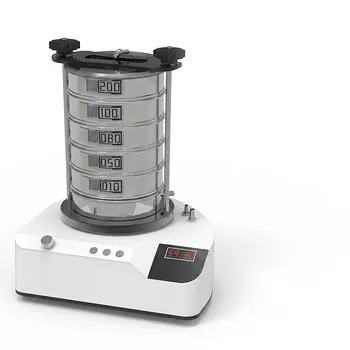
Heavy Duty Dry Three Dimensional Vibratory Sieve Shaker for Particle Separation
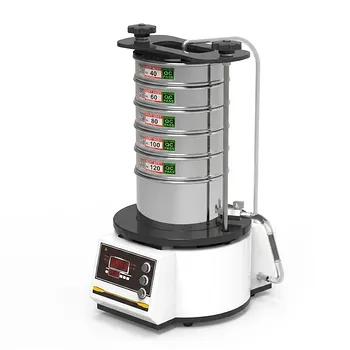
High Frequency Wet Three-Dimensional Vibrating Sieve Shaker for Dry and Wet Particle Size Analysis
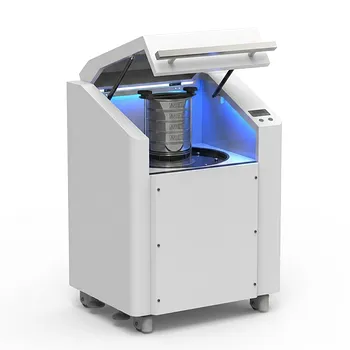
High Frequency Cabinet Type Three-Dimensional Rotary Vibrating Sieve Shaker for Dry Sieving and Particle Classification
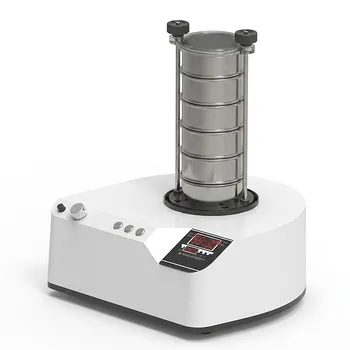
三维电磁微量振动筛分仪
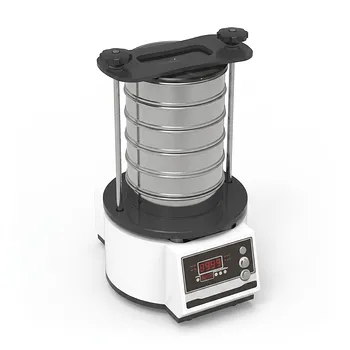
Tapping Oscillating Sieve Shaker for Dry and Wet Particle Size Analysis
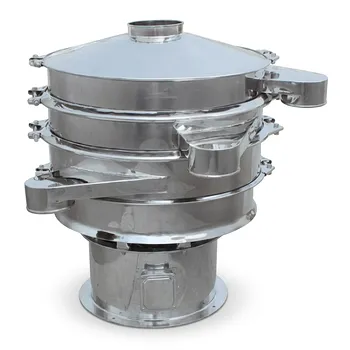
Stainless Steel Rotary Vibrating Sieve High Precision Circular Vibratory Separator Industrial Powder Grading Machine Multi Layer Sifting Equipment
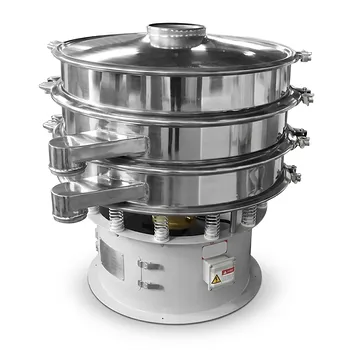
Three Dimensional Rotary Vibrating Sieve