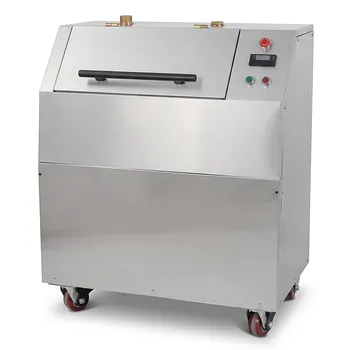
How do mechanical vibratory sieve shakers assist in coal particle size distribution? Optimize Coal Characterization.
Updated 4 months ago
Mechanical vibratory sieve shakers are the precision standard for coal characterization. By utilizing programmed vibration frequencies and standardized mesh layers, these devices facilitate the accurate classification of coal samples into discrete particle size intervals. This process is fundamental for calculating particle size distribution (PSD) and determining the degree of liberation, which directly dictates the efficiency of impurity removal and downstream chemical processing.
Mechanical vibratory sieve shakers provide the standardized mechanical power necessary to overcome particle cohesion and ensure accurate size grading. This data is critical for evaluating the economic liberation of coal from impurities and for ensuring consistency in laboratory experiments and industrial-scale washing processes.
Characterizing Particle Size Distribution (PSD)
Standardizing Physical Grading
Vibratory sieve shakers employ multi-directional mechanical movement to cause coal particles to move across a series of standard test sieves. This ensures that particles smaller than the specific mesh aperture pass through efficiently, allowing for precise physical grading of pulverized coal powder.
Eliminating Analysis Deviations
By removing particles of unqualified sizes, these shakers ensure that the samples used for chemical experiments possess high consistency. This standardization eliminates deviations in analytical results that typically arise from uneven particle size distribution, ensuring that data comparisons between different coal types remain valid.
Quantifying Gradation Status
In mining overburden analysis, these shakers are used to classify dried samples to calculate the uniformity coefficient and curvature coefficient. These metrics allow for a quantitative evaluation of material gradation, which is essential for determining the structural stability of materials used in dump construction.
Assessing Mineral Liberation and Separation Efficiency
Determining Liberation Degrees
The equipment is the primary tool for identifying both economic and actual liberation degrees. This helps researchers understand how effectively coal can be separated from its associated minerals and impurities during the preparation and washing stages.
Optimizing Impurity Removal
Precise size classification is critical for studying the impact of particle diameter on ash and sulfur reduction rates. By providing highly consistent size intervals, shakers enable the quantitative analysis of flotation efficiency and the evaluation of overall impurity removal performance.
Controlling Pore Diffusion Resistance
In specialized coal studies, such as those involving activated carbon, vibratory shakers eliminate inconsistencies in pore diffusion resistance caused by size variations. This allows for an accurate study of how particle size influences activation efficiency and heavy metal adsorption capacity.
Specialized Research and Safety Applications
Wet Sieving for Fine Particles
For fine coal powder that tends to cluster, laboratory vibratory shakers provide stable power for wet sieving processes. By using controlled parameters, such as a 2mm amplitude, the shaker prevents the agglomeration of fine particles and ensures thorough dispersion through the mesh.
Evaluating Explosion Risks
Shakers can separate complex coal mixtures into extremely narrow intervals, such as 45 μm, 63 μm, and 94 μm. This level of precision is fundamental for determining the critical particle size thresholds that trigger dust explosions across different dispersion levels.
Understanding Technical Limitations and Pitfalls
The Risk of Particle Degradation
One common pitfall is the potential for particle attrition during the shaking process. Excessive vibration duration or intensity can cause friable coal particles to break down into smaller fragments, leading to a "fines" bias that does not accurately reflect the original sample distribution.
Addressing Sieve Blinding
In dry sieving applications, fine particles often wedge themselves into the mesh apertures, a phenomenon known as blinding. If not monitored, blinding reduces the effective screening area, resulting in incomplete separation and inaccurate mass distribution data.
Material Moisture Interference
High moisture content in coal samples can lead to caking or sticking, which prevents particles from passing through the sieves. In these instances, relying solely on dry vibratory sieving will yield flawed results, necessitating a transition to wet sieving protocols.
Making the Right Choice for Your Goal
To maximize the utility of mechanical vibratory sieve shakers, your approach should align with your specific analytical objectives.
- If your primary focus is industrial coal washing: Use the shaker to determine the economic liberation degree to optimize the settings for gravity separation and flotation circuits.
- If your primary focus is laboratory chemical analysis: Ensure the removal of all unqualified particle sizes to eliminate deviations in ash, sulfur, and volatile matter results.
- If your primary focus is safety and explosion prevention: Utilize narrow-interval sieving (below 100 μm) to identify the specific particle size thresholds that correlate with high dispersion and explosion risk.
- If your primary focus is fine powder characterization: Opt for wet sieving parameters with a controlled amplitude to prevent particle agglomeration and ensure accurate mass data.
The mechanical vibratory sieve shaker remains the definitive tool for transforming raw coal samples into the precise data points required for both academic research and industrial optimization.
Summary Table:
| Application Area | Key Function | Primary Benefit |
|---|---|---|
| PSD Analysis | Standardized mechanical grading | Accurate mass distribution & consistency |
| Mineral Liberation | Determining liberation degrees | Optimizes coal washing & impurity removal |
| Chemical Research | Eliminating size deviations | Ensures valid analytical & flotation data |
| Safety Testing | Narrow-interval sieving (<100μm) | Identifies dust explosion risk thresholds |
| Fine Powder Prep | Controlled wet sieving | Prevents agglomeration & particle caking |
Elevate Your Coal Analysis with Precision Equipment
At [Brand Name], we provide complete laboratory sample preparation solutions for material science, specializing in the high-precision equipment needed for accurate coal characterization. Whether you are conducting liberation studies or optimizing industrial washing processes, our expert-grade tools ensure reliable, reproducible data.
Our Specialized Range Includes:
- Size Reduction: Heavy-duty jaw and roll crushers, and liquid nitrogen cryogenic grinders.
- Precision Sifting: Vibratory and air-jet sieve shakers with a full range of standardized test sieves.
- Advanced Milling: Planetary ball, jet, and rotor mills for ultra-fine coal powder preparation.
- Compaction & Processing: A full spectrum of hydraulic presses (CIP/WIP, hot presses) and high-efficiency powder mixers.
Ready to optimize your laboratory workflow? Contact us today to discuss your coal processing requirements and discover how our solutions can enhance your research accuracy.
References
- O. O. Alabi, O. S. Osaghae. Assessment of Ovbiomu Coal for Industrial Application. DOI: 10.52589/ajste-ewgvmpjk
Mentioned Products
- Vibratory Sieve Shaker Electromagnetic 3D Motion Powder Particle Size Analyzer for Dry and Wet Sieving
- Laboratory Dry and Wet Three Dimensional Vibratory Sieve Shaker for Particle Analysis
- Dry Three Dimensional Vibratory Sieve Shaker
- Stainless Steel Laboratory Vibratory Test Sieve Shaker
- Heavy Duty Dry Three Dimensional Vibratory Sieve Shaker for Particle Separation
People Also Ask
- How does a vibratory sieve shaker contribute to optimizing the performance of activated carbon? Enhance Adsorption Precision
- Why is a laboratory vibratory sieve shaker necessary for processing magnesium-based borate precursor powders? Boost Activity
- Why use a vibratory sieve shaker to verify coarse aggregate grading in rubberized concrete? Ensure Structural Integrity
- What function do vibratory sieve shakers and standard test sieves serve in the preparation of adsorbents? Key Guide
- What role does a vibratory sieve shaker play in the particle size analysis of ground corn products? Enhance QC Precision

Tech Team · PowderPreparation
Last updated on Jun 03, 2026
Related Products
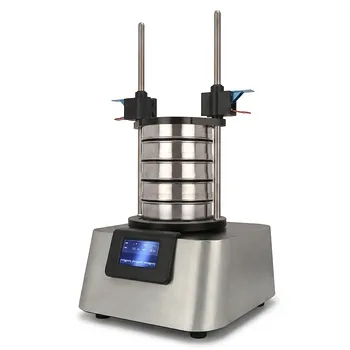
Vibratory Sieve Shaker Electromagnetic 3D Motion Powder Particle Size Analyzer for Dry and Wet Sieving
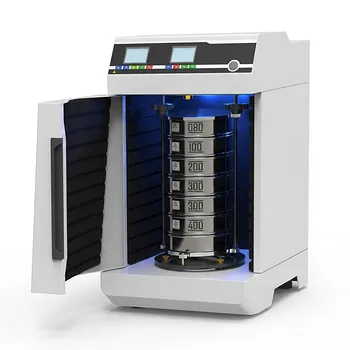
Laboratory Dry and Wet Three Dimensional Vibratory Sieve Shaker for Particle Analysis

Dry Three Dimensional Vibratory Sieve Shaker
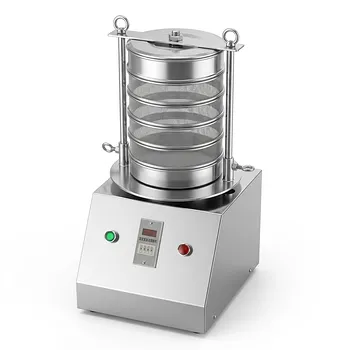
Stainless Steel Laboratory Vibratory Test Sieve Shaker

Heavy Duty Dry Three Dimensional Vibratory Sieve Shaker for Particle Separation
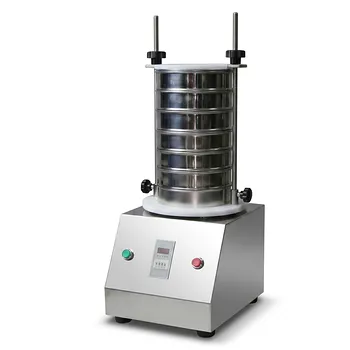
Small Laboratory Vibratory Sieve Shaker for Powder Gradation and Particle Size Analysis
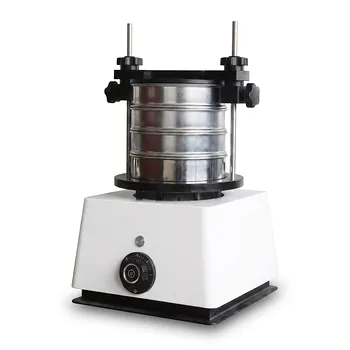
Small Laboratory Vibrating Sieve Shaker for Precise Particle Size Analysis
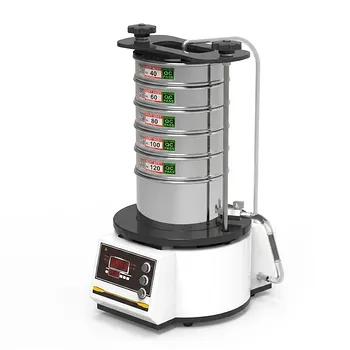
High Frequency Wet Three-Dimensional Vibrating Sieve Shaker for Dry and Wet Particle Size Analysis
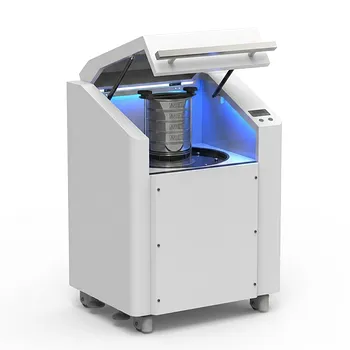
High Frequency Cabinet Type Three-Dimensional Rotary Vibrating Sieve Shaker for Dry Sieving and Particle Classification

Laboratory Vibratory Test Sieve Shaker for Precision Particle Size Analysis and Powder Grading
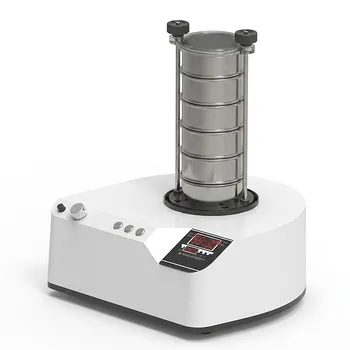
三维电磁微量振动筛分仪

Stainless Steel Rotary Vibrating Sieve High Precision Circular Vibratory Separator Industrial Powder Grading Machine Multi Layer Sifting Equipment
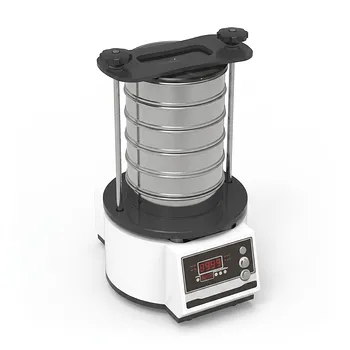
Tapping Oscillating Sieve Shaker for Dry and Wet Particle Size Analysis
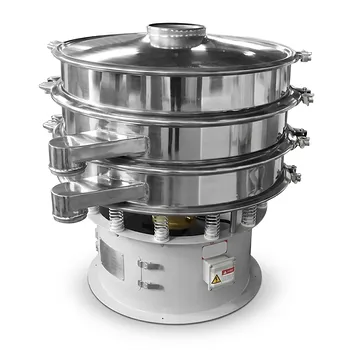
Three Dimensional Rotary Vibrating Sieve
Vibratory Superfine Grinder for Ultra Fine Laboratory Powder Milling
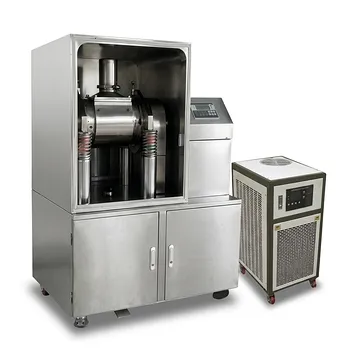
Small Vibrating Ultrafine Grinder for Traditional Chinese Medicine
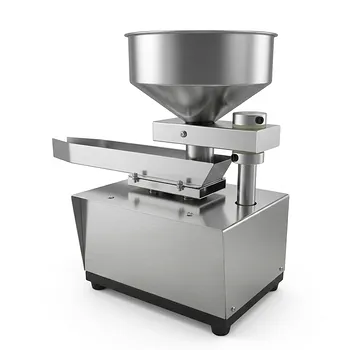
Automatic Vibrating Powder Feeder for Laboratory Material Processing Precision Vibratory Hopper Feeder for Granular and Powder Material Handling Industrial Grade Vibrating Tray Feeder for Consistent Material Sample Preparation