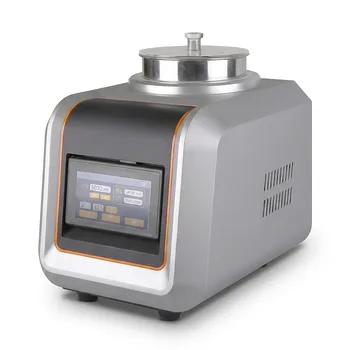
How do laboratory vibratory sieve shakers contribute to the classification and study of high-plasticity clays? Guide
Updated 5 months ago
The precise mechanical separation of fine-grained particles is the technical cornerstone for understanding soil behavior. Laboratory vibratory sieve shakers provide the controlled, repeatable energy necessary to isolate fine content from coarser fractions. This data is the primary empirical input required to quantify the proportions of clay and silt, which directly informs soil classification and the prediction of engineering properties like the plasticity index.
Core Takeaway: Vibratory sieve shakers automate the classification of high-plasticity clays by accurately determining the percentage of particles passing through critical thresholds (like the No. 200 sieve). This data provides the material science basis for predicting soil stability and determining the necessity of chemical modifiers.
Quantifying Granular Composition for Soil Classification
Identifying the Fines Fraction
The primary role of the vibratory shaker is to determine the percentage of a sample that passes through a No. 200 sieve (0.075 mm). In geotechnical engineering, this specific fraction defines whether a soil is classified as "fine-grained."
For high-plasticity clays, knowing the exact weight of these fines is essential. This data allows researchers to distinguish between silts and clays, which may appear similar but behave differently under load.
Adherence to Standardized Systems
Precise sieving data is required to categorize soils according to the Unified Soil Classification System (USCS) or AASHTO standards. These systems use the passing rate of fine particles to identify problematic soil groups, such as A-7-5 group clay.
Without the automated agitation of a shaker, manual sieving often fails to provide the consistency needed for these rigorous classifications. The shaker ensures that every sample is subjected to the same frequency and duration, eliminating human error.
Predictive Modeling and Material Science
Regression Analysis and Plasticity Index
A critical contribution of the sieve shaker is its role in regression analysis. By accurately measuring the proportions of clay and silt, researchers can develop mathematical models to predict the plasticity index.
These predictions help engineers understand how a soil will react to moisture changes. High-plasticity clays are prone to significant swelling and shrinking, making this predictive data vital for structural safety.
Optimizing Stabilization Strategies
In many civil engineering projects, high-plasticity clay must be modified with stabilizers like zeolite, bagasse ash, or lime. The particle size distribution curves generated by sieving allow technicians to calculate the optimal mixing ratios for these additives.
By understanding the "feed range" of the raw soil, engineers can ensure that the chemical reactions between the clay and the stabilizers are efficient. This leads to more stable foundations and reduced material waste.
Enhancing Experimental Consistency
Automation and Repeatability
Vibratory shakers utilize programmed frequencies and time controls to ensure that each test is performed under identical conditions. This repeatability is essential for longitudinal studies where soil characteristics are monitored over time or across different geographic deposits.
Compared to manual methods, mechanical vibration more effectively breaks down small aggregates. This ensures that fine particles are not "trapped" on larger sieves, which would otherwise lead to an underestimation of the clay content.
Preparing Samples for Advanced Analysis
The shaker is often the first step in a larger analytical workflow. By isolating specific fractions, such as the 150 µm size, researchers can identify the "critical particle size" that best represents the average characteristics of a deposit.
These isolated fractions are then used for subsequent chemical and physical analysis. This ensures that further testing is performed on material that is physically representative of the entire soil mass.
Understanding the Trade-offs
The Limitations of Dry Sieving
While vibratory shakers are highly efficient, dry sieving high-plasticity clays can be challenging due to inter-particle cohesion. Clay particles often "clump" together, which can lead to inaccurate readings if the material is not properly prepared or pre-dried.
Particle Size Lower Limits
Mechanical sieving has a practical lower limit, typically around the -400 mesh (38 µm) range. For extremely fine-grained clays that require sub-micron analysis, vibratory sieving must be supplemented by other methods like hydrometer testing or laser diffraction.
Potential for Particle Degradation
The high-frequency vibration used to separate particles can sometimes cause mechanical degradation of soft or brittle materials. If the vibration is too intense or the duration too long, it may artificially increase the "fines" count by breaking down larger particles into smaller ones.
Applying This Data to Your Project
Recommendations for Soil Study and Classification
To achieve the most accurate results when working with high-plasticity clays, your methodology should align with your specific project goals.
- If your primary focus is AASHTO or USCS classification: Use a standardized stack of sieves including the No. 200 to accurately quantify the percentage of fines in your sample.
- If your primary focus is predicting soil expansion or plasticity: Utilize the fine-content data as an input for regression models to estimate the plasticity index and physical component characteristics.
- If your primary focus is soil stabilization and modification: Use particle size distribution curves to determine the precise volume of bagasse ash, lime, or zeolite needed to treat the specific clay fraction.
- If your primary focus is industrial processing (like Kaolin production): Employ the shaker to define the feed range for air classifiers, ensuring that coarse impurities are removed before the material reaches the dynamic separation stage.
By leveraging the precision of laboratory vibratory sieve shakers, researchers can transform raw soil samples into the quantitative data required for advanced geotechnical engineering.
Summary Table:
| Application Phase | Key Technical Metric | Engineering & Research Impact |
|---|---|---|
| Classification | No. 200 Sieve (0.075 mm) Passing Rate | Essential for USCS and AASHTO soil categorization |
| Predictive Modeling | Granular Distribution Data | Regression analysis to predict Plasticity Index (PI) |
| Soil Stabilization | Optimal Feed Range | Calculating precise mixing ratios for lime or zeolite |
| Analysis Prep | Critical Particle Size Isolation | Preparing uniform samples for chemical/physical testing |
| Quality Control | Vibration Frequency & Duration | Ensures experimental repeatability and removes human error |
Elevate Your Material Research with Precision Sample Prep
At [Company Name], we provide complete laboratory sample preparation solutions tailored for material science and geotechnical engineering. Whether you are classifying high-plasticity clays or developing advanced composites, our specialized equipment ensures the accuracy and repeatability your data demands.
Our extensive product range includes:
- Sieve Shakers: Vibratory and air-jet models with precision test sieves for rigorous particle size analysis.
- Milling & Grinding: Planetary ball mills, jet mills, and liquid nitrogen cryogenic grinders for ultrafine powder processing.
- Crushing: Industrial-grade jaw and roll crushers for primary material reduction.
- Hydraulic Presses: A full spectrum of Cold/Warm Isostatic Presses (CIP/WIP), standard lab presses, and vacuum hot presses for superior sample compaction.
- Mixing Solutions: High-efficiency powder mixers and defoaming mixers.
Ready to optimize your laboratory workflow? Contact our technical experts today to find the perfect equipment for your specific application requirements and experience the precision of professional material processing.
References
- Zülal Akbay Arama, İlknur Dalyan. Estimation of consistency limits of fine-grained soils via regression analysis: A special case for high and very high plastic clayey soils in Istanbul. DOI: 10.35860/iarej.735529
Mentioned Products
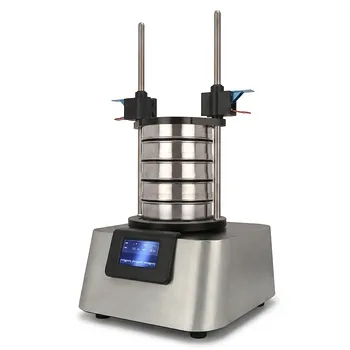
- Vibratory Sieve Shaker Electromagnetic 3D Motion Powder Particle Size Analyzer for Dry and Wet Sieving
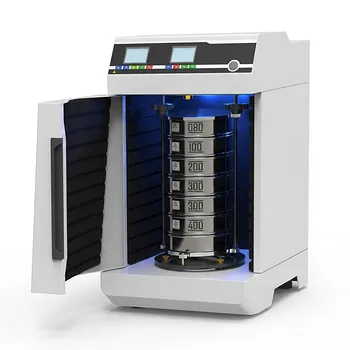
- Laboratory Dry and Wet Three Dimensional Vibratory Sieve Shaker for Particle Analysis
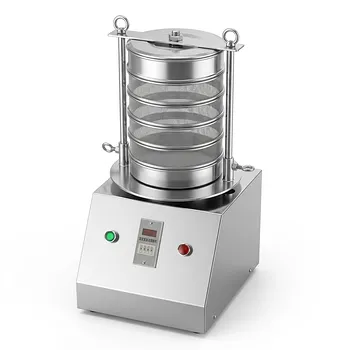
- Stainless Steel Laboratory Vibratory Test Sieve Shaker
- Heavy Duty Dry Three Dimensional Vibratory Sieve Shaker for Particle Separation
- Dry Three Dimensional Vibratory Sieve Shaker
People Also Ask
- How does a vibratory sieve shaker contribute to optimizing the performance of activated carbon? Enhance Adsorption Precision
- Why is a laboratory vibratory sieve shaker necessary for processing magnesium-based borate precursor powders? Boost Activity
- Why use a vibratory sieve shaker to verify coarse aggregate grading in rubberized concrete? Ensure Structural Integrity
- What function do vibratory sieve shakers and standard test sieves serve in the preparation of adsorbents? Key Guide
- What role does a vibratory sieve shaker play in the particle size analysis of ground corn products? Enhance QC Precision

Tech Team · PowderPreparation
Last updated on May 14, 2026
Related Products
Vibratory Sieve Shaker Electromagnetic 3D Motion Powder Particle Size Analyzer for Dry and Wet Sieving
Laboratory Dry and Wet Three Dimensional Vibratory Sieve Shaker for Particle Analysis
Stainless Steel Laboratory Vibratory Test Sieve Shaker
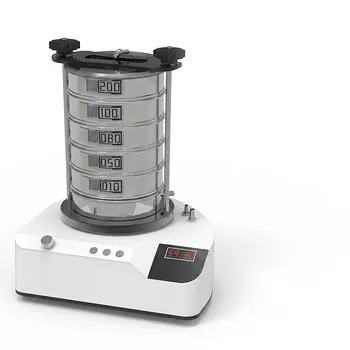
Heavy Duty Dry Three Dimensional Vibratory Sieve Shaker for Particle Separation
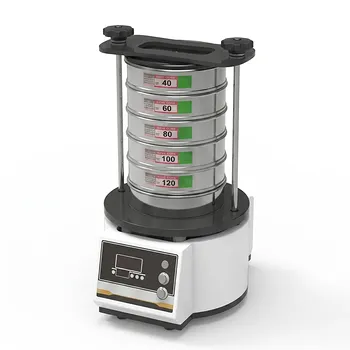
Dry Three Dimensional Vibratory Sieve Shaker
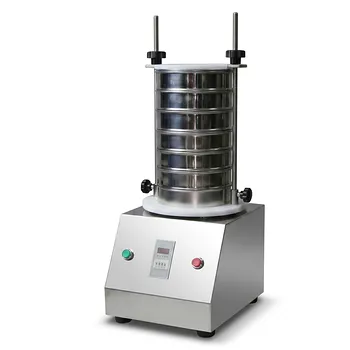
Small Laboratory Vibratory Sieve Shaker for Powder Gradation and Particle Size Analysis
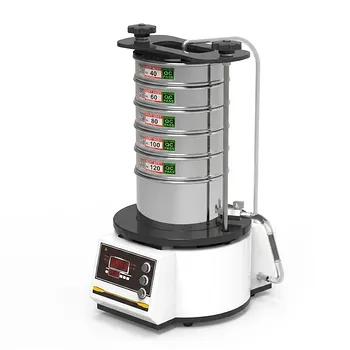
High Frequency Wet Three-Dimensional Vibrating Sieve Shaker for Dry and Wet Particle Size Analysis
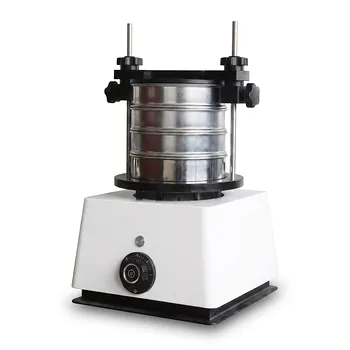
Small Laboratory Vibrating Sieve Shaker for Precise Particle Size Analysis
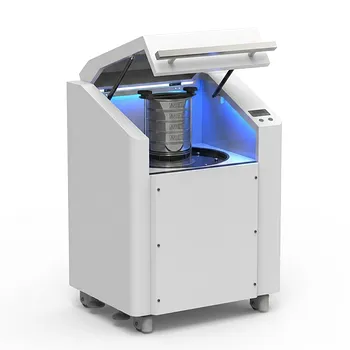
High Frequency Cabinet Type Three-Dimensional Rotary Vibrating Sieve Shaker for Dry Sieving and Particle Classification
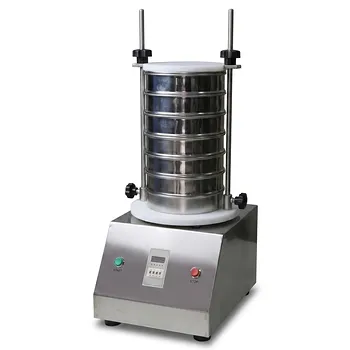
Laboratory Vibratory Test Sieve Shaker for Precision Particle Size Analysis and Powder Grading
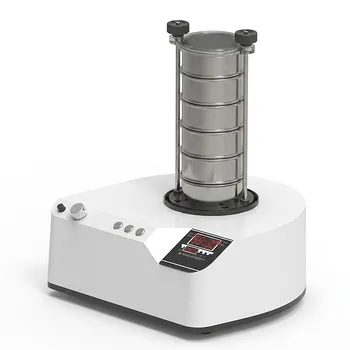
三维电磁微量振动筛分仪
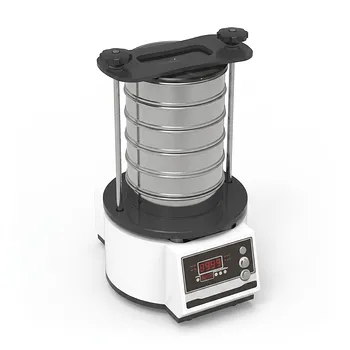
Tapping Oscillating Sieve Shaker for Dry and Wet Particle Size Analysis
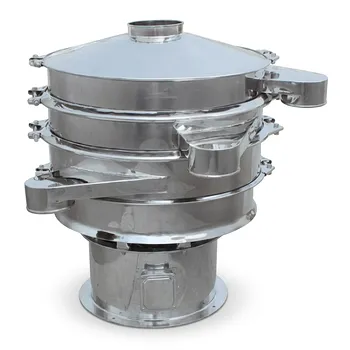
Stainless Steel Rotary Vibrating Sieve High Precision Circular Vibratory Separator Industrial Powder Grading Machine Multi Layer Sifting Equipment
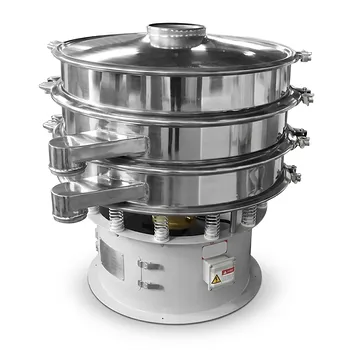
Three Dimensional Rotary Vibrating Sieve
Small Vibrating Ultrafine Grinder for Traditional Chinese Medicine
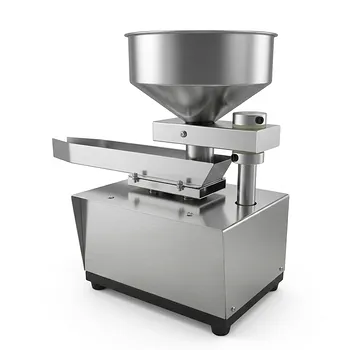
Automatic Vibrating Powder Feeder for Laboratory Material Processing Precision Vibratory Hopper Feeder for Granular and Powder Material Handling Industrial Grade Vibrating Tray Feeder for Consistent Material Sample Preparation
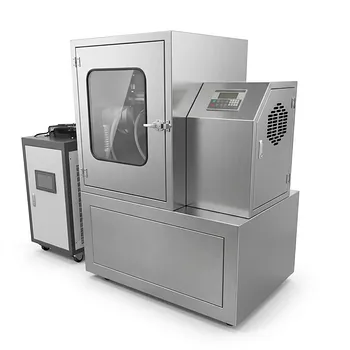
Vibratory Superfine Grinder for Ultra Fine Laboratory Powder Milling
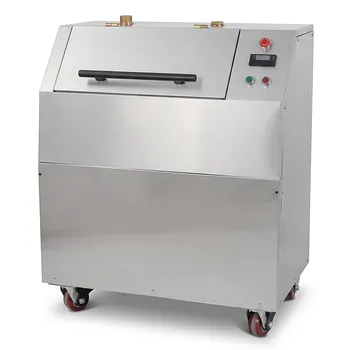
Vibratory Disc Mill for Rapid Fine Grinding and High Throughput Sample Preparation of Hard and Brittle Materials