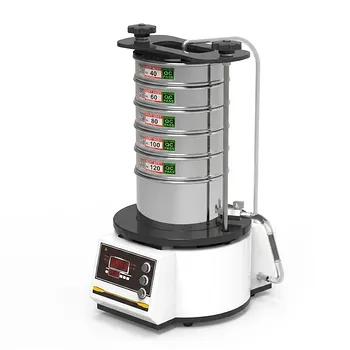
How does mechanical sieving help determine pavement's air quality impact? Precise Lab Prep Solutions
Updated 4 months ago
Mechanical sieving acts as the critical bridge between raw pavement debris and actionable environmental data.
By utilizing high-precision laboratory sample preparation, researchers can isolate specific particle fractions from bulk road dust. This process identifies the concentration of particles smaller than 100 micrometers, which serve as direct precursors to PM10 air pollution. Understanding these distributions allows engineers to quantify how different pavement compositions, such as concrete or asphalt, contribute to local atmospheric degradation.
Laboratory sample preparation through mechanical sieving provides the empirical foundation for environmental impact assessments by isolating the microscopic particles that influence air quality. This data-driven approach enables infrastructure planners to select pavement materials and design mitigation strategies that minimize the release of harmful particulate matter.
Quantifying the Source of Air Pollution
The Role of Mechanical Separation
Mechanical sieving transforms chaotic, bulk road samples into structured particle size distribution (PSD) data. By passing samples through a series of increasingly fine meshes, laboratories can isolate the specific mass of particles that are small enough to become airborne.
Identifying PM10 Precursors
The primary focus of this preparation is the isolation of particles smaller than 100 micrometers. These particles are the precursors to PM10, the regulated category of particulate matter that poses significant risks to respiratory health.
Precision Weighing and Data Integrity
Coupling mechanical sieving with precision weighing ensures that the resulting data is analytically sound. This accuracy is vital for creating the "evidence-based environmental data" required for regulatory compliance and public health assessments.
Comparative Analysis of Pavement Materials
Distinguishing Concrete and Asphalt
Different pavement materials exhibit unique wear patterns and dust-generation profiles. Mechanical sieving reveals how concrete and asphalt differ in their production of fine particles under simulated or actual traffic stress.
Informing Infrastructure Design
Data derived from sieving processes does more than just identify the "cleanest" material. It informs the placement and design of noise barriers and other roadside structures intended to mitigate the spread of dust.
Long-Term Environmental Modeling
By establishing a baseline of particle production for various materials, planners can model the long-term air quality impact of a transportation project. This allows for proactive environmental management rather than reactive troubleshooting.
Understanding the Trade-offs
The Challenge of Sample Representativeness
A primary pitfall in sample preparation is failing to collect a representative bulk sample from the road surface. If the initial sample is biased, even the most precise mechanical sieving will yield misleading data regarding air quality impacts.
Limits of Physical Sieving
While mechanical sieving is excellent for identifying PM10 precursors (up to 100 micrometers), it has physical limits. Analyzing much finer particles, such as PM2.5, often requires supplementary techniques beyond traditional dry sieving to ensure complete accuracy.
Energy and Time Variables
The duration and intensity of the mechanical sieving process can influence the results. Over-sieving may cause particle degradation, leading to an overestimation of fine dust, while under-sieving leaves fine particles trapped in larger clusters.
Applying Data to Infrastructure Goals
How to Use Sieving Data for Your Project
To maximize the value of laboratory sample preparation, you must align the sieving protocol with the specific environmental objectives of your infrastructure project.
- If your primary focus is Material Selection: Use sieving data to compare the PM10 precursor generation of various asphalt and concrete mixes to choose the lowest-impact option.
- If your primary focus is Mitigation Planning: Analyze particle size distributions to determine the height and density required for noise barriers to effectively trap localized dust.
- If your primary focus is Regulatory Compliance: Ensure sieving and weighing are performed to high-precision standards to provide a defensible audit trail of environmental impact.
By transforming raw road dust into precise particle data, mechanical sieving empowers engineers to build transportation networks that prioritize both structural integrity and atmospheric health.
Summary Table:
| Feature | Role in Sample Preparation | Environmental Impact Value |
|---|---|---|
| Fractionation | Separates bulk debris into size-specific grades | Isolates hazardous PM10 precursors (<100μm) |
| PSD Analysis | Delivers precise Particle Size Distribution data | Enables accurate atmospheric pollution modeling |
| Material Testing | Compares wear profiles of asphalt vs. concrete | Guides selection of low-emission road materials |
| Mitigation | Quantifies fine particle volume and dispersion | Informs the design of roadside dust barriers |
Enhance Your Environmental Research with Precision Sample Prep
At our core, we provide complete laboratory sample preparation solutions tailored for material science and environmental engineering. Understanding the impact of pavement materials on air quality requires more than just raw data—it requires precision equipment that ensures sample integrity.
We specialize in a full range of high-performance tools to support your research:
- Sieving & Separation: High-precision vibratory and air-jet sieve shakers with a variety of test sieves and meshes for accurate PM10 precursor isolation.
- Milling & Grinding: Advanced planetary ball mills, jet mills, and cryogenic grinders for consistent material processing.
- Crushing: Durable jaw and roll crushers for initial processing of road debris and pavement samples.
- Compaction & Pressing: A full spectrum of hydraulic presses, including Cold/Warm Isostatic Presses (CIP/WIP), hot presses, and pellet presses for material characterization.
Whether you are a researcher identifying pollution sources or a distributor seeking reliable OEM/ODM support and certified equipment, we provide the expertise and supply reliability you need.
Contact us today to discover how our powder processing and compaction solutions can optimize your infrastructure projects and environmental assessments!
References
- Magdalena Penkała, Natalia Iwanicka. Exploring the Relationship between Particulate Matter Emission and the Construction Material of Road Surface: Case Study of Highways and Motorways in Poland. DOI: 10.3390/ma16031200
Mentioned Products
- 三维电磁微量振动筛分仪
- Stainless Steel Rotary Vibrating Sieve High Precision Circular Vibratory Separator Industrial Powder Grading Machine Multi Layer Sifting Equipment
- High Frequency Cabinet Type Three-Dimensional Rotary Vibrating Sieve Shaker for Dry Sieving and Particle Classification
- Laboratory Air Jet Sieving Machine for Fine Powder Particle Size Analysis and Deagglomeration
- Vibratory Sieve Shaker Electromagnetic 3D Motion Powder Particle Size Analyzer for Dry and Wet Sieving
People Also Ask
- Why is a standard sieve shaker essential for CBA powders in geopolymers? Enhance Reactivity & Material Strength
- Why are standard metal sieves and sieve shakers necessary for 5-aminotetrazole mixtures? Optimize Thermal & Kinetic Data
- Why Use Sieve Shakers for Gangue Slurry Experiments? Optimize Particle Grading for Superior Results
- What are the advantages of mechanical vs. manual sieving for road dust analysis? Achieve Superior Data Standardization.
- How do high-precision sieve shakers and powder mixers facilitate material circularity in metal PBF? Optimize AM Cycles

Tech Team · PowderPreparation
Last updated on May 14, 2026
Related Products

三维电磁微量振动筛分仪

Stainless Steel Rotary Vibrating Sieve High Precision Circular Vibratory Separator Industrial Powder Grading Machine Multi Layer Sifting Equipment
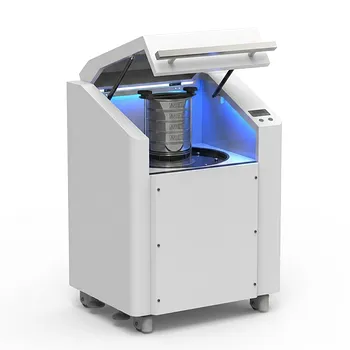
High Frequency Cabinet Type Three-Dimensional Rotary Vibrating Sieve Shaker for Dry Sieving and Particle Classification
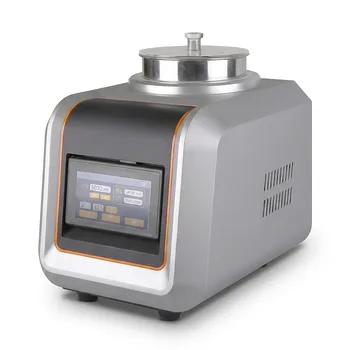
Laboratory Air Jet Sieving Machine for Fine Powder Particle Size Analysis and Deagglomeration
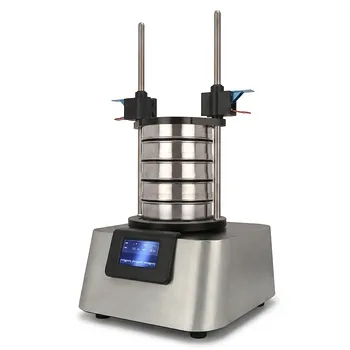
Vibratory Sieve Shaker Electromagnetic 3D Motion Powder Particle Size Analyzer for Dry and Wet Sieving

Three Dimensional Rotary Vibrating Sieve

Small Laboratory Vibratory Sieve Shaker for Powder Gradation and Particle Size Analysis

Laboratory Dry and Wet Three Dimensional Vibratory Sieve Shaker for Particle Analysis

Dry Three Dimensional Vibratory Sieve Shaker

Heavy Duty Dry Three Dimensional Vibratory Sieve Shaker for Particle Separation
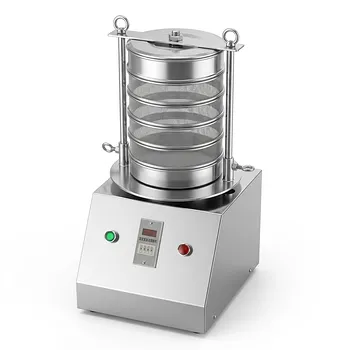
Stainless Steel Laboratory Vibratory Test Sieve Shaker

Tapping Oscillating Sieve Shaker for Dry and Wet Particle Size Analysis

Laboratory Vibratory Test Sieve Shaker for Precision Particle Size Analysis and Powder Grading

Small Laboratory Vibrating Sieve Shaker for Precise Particle Size Analysis