How do laboratory hydraulic presses contribute to geopolymer molding? Enhance Density and Strength for Research
Updated 5 months ago
Laboratory hydraulic and manual presses serve as the primary mechanism for densification and air expulsion during the geopolymer molding process. By applying controlled mechanical force, these tools compress the geopolymer mixture within a mold to purge entrapped air and force particles into a high-density arrangement. This immediate compaction creates a stable "green body" with sufficient initial strength to maintain its geometric shape during demolding and throughout the subsequent heat-curing stage.
Core Takeaway: The use of a laboratory press transforms a loose geopolymer mixture into a high-density structural component by minimizing internal porosity and maximizing particle-to-binder contact, which is essential for achieving superior mechanical strength and repeatable experimental data.
The Mechanics of Densification and Air Removal
Eliminating Entrapped Air
During the mixing phase, air bubbles are inevitably trapped within the geopolymer paste or mortar. Mechanical pressing forces these voids out of the mixture, preventing them from becoming permanent pores in the hardened material.
Optimizing Particle-to-Liquid Contact
The pressure applied by a hydraulic press promotes intimate contact between the precursor powder (such as fly ash or metakaolin) and the alkali-activated liquid. This ensures a more efficient chemical reaction and a more homogeneous geopolymer matrix.
Reducing Inter-particle Voids
High-pressure molding, often reaching loads up to 20 kN or specific pressures like 4 MPa, ensures that the liquid phase fully occupies the interstitial spaces between solid particles. This reduction in void space is the fundamental driver of high-volume stability and density.
Ensuring Structural Integrity and Geometric Precision
Formation of the 'Green Body'
A "green body" refers to the specimen in its un-cured state. The press provides the initial structural integrity required for the specimen to be demolded immediately without Slumping or losing its defined dimensions.
Uniformity and Dimensional Accuracy
Using a precision mold in tandem with a hydraulic press ensures that the specimen has regular geometric dimensions. This is a prerequisite for accurate mechanical testing, as irregular surfaces can lead to stress concentrations and false strength readings.
Stability of the Internal Density
A stable and uniform pressure field minimizes density fluctuations that are common in manual hand-tamping methods. This consistency is vital when researchers need to isolate the effects of specific variables, such as the addition of polypropylene or basalt fibers.
The Impact on Long-Term Material Performance
Minimizing Internal Porosity
By significantly reducing internal porosity, the pressing process directly enhances the compressive strength and durability of the geopolymer. Low porosity limits the pathways through which moisture and aggressive chemicals can penetrate the material.
Enhancing Composite Bonding
In fiber-reinforced geopolymers, the press ensures a tight bond between the reinforcement (such as short fibers) and the geopolymer matrix. This pressure-induced bonding is critical for improving the Young's modulus and the overall toughness of the composite.
Elimination of Residual Stresses
Advanced hydraulic systems allow for specific sequences, such as degassing phases followed by high-pressure holding. This controlled application of force helps eliminate residual stresses that could otherwise lead to micro-cracking during the thermal curing process.
Understanding the Trade-offs and Technical Limitations
Manual vs. Hydraulic Precision
While manual presses are cost-effective, they often lack the load-holding stability of hydraulic systems. This can result in inconsistent compaction between batches, which undermines the reliability of comparative material studies.
Risk of Material Squeeze-out
Applying excessive pressure too rapidly can cause the alkali-activated liquid to be forced out of the mold, altering the liquid-to-solid ratio. Finding the optimal pressure—high enough to densify but low enough to retain the binder—is a critical calibration step.
Equipment Sensitivity
High-precision laboratory presses require regular calibration to ensure the uniformity of the pressure field. An unevenly applied load can create a density gradient within the specimen, leading to premature failure during compressive testing.
Making the Right Choice for Your Goal
To achieve the best results in geopolymer molding, the application of pressure should be tailored to the specific objectives of the project.
- If your primary focus is Maximum Compressive Strength: Utilize a high-precision hydraulic press to reach pressures of at least 4 MPa to minimize porosity and maximize matrix density.
- If your primary focus is Research Reproducibility: Opt for a hydraulic system with an automated pressure-holding phase to ensure every specimen starts with an identical internal density.
- If your primary focus is Fiber-Reinforced Composites: Use a pressing sequence that includes a degassing period to ensure the geopolymer matrix fully encapsulates the fibers without trapping air at the interface.
Effective use of laboratory pressing ensures that the physical foundation of a geopolymer specimen is as robust as its chemical composition.
Summary Table:
| Feature | Function in Geopolymer Molding | Impact on Material Performance |
|---|---|---|
| Mechanical Pressing | Forceful air expulsion and void removal | Prevents internal porosity and weak spots |
| Controlled Pressure | Optimizes precursor-to-liquid contact | Ensures efficient chemical reaction & homogeneity |
| Densification | Reduces inter-particle spacing | Maximizes compressive strength and volume stability |
| Green Body Formation | Provides initial structural integrity | Maintains geometric precision for accurate testing |
| Load Stability | Minimizes density fluctuations | Enhances reproducibility of experimental data |
Elevate Your Material Research with Precision Compaction
Achieving repeatable, high-strength geopolymer specimens requires more than just the right chemistry—it requires precision engineering. At [Your Brand Name], we provide complete laboratory sample preparation solutions tailored for material science.
Whether you are focusing on maximizing compressive strength or developing fiber-reinforced composites, our extensive range of equipment ensures your specimens meet the highest standards:
- Hydraulic Presses: Full spectrum including Cold/Warm Isostatic Presses (CIP/WIP), standard lab presses, XRF pellet presses, and vacuum hot presses for superior densification.
- Powder Processing: Advanced crushers (jaw/roll), liquid nitrogen cryogenic grinders, and various mills (planetary ball, jet, disc, rotor) for optimal precursor preparation.
- Mixing & Sizing: High-performance powder mixers, defoaming mixers, and vibratory/air-jet sieve shakers.
Ready to optimize your molding process and ensure superior experimental accuracy?
Contact our technical experts today to find the perfect equipment solution for your laboratory needs.
References
- Sungil Hong, Hyo Kim. Effects of Microwave Energy on Fast Compressive Strength Development of Coal Bottom Ash-Based Geopolymers. DOI: 10.1038/s41598-019-52160-2
Mentioned Products
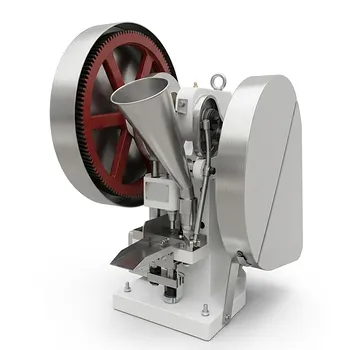
- 6-Ton Small Single-Punch Tablet Press — Laboratory Powder & Granule Tableting Equipment / Tablet Forming Machine
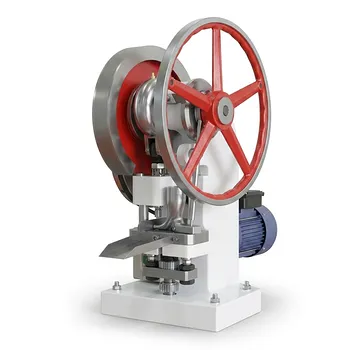
- 5 Ton Single Punch Tablet Press Laboratory Small Batch Production
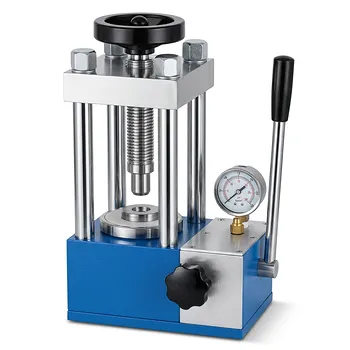
- Manual Tablet Press with Dual Scale Pressure Gauge for Pharmaceutical Food Chemical Laboratory Sample Preparation
- 6 Ton Variable Frequency Single Punch Tablet Press
- High Shear Laboratory Emulsifier for Mixing and Homogenization
People Also Ask
- What is the function of a laboratory press in Cr-Ti alloy evaluation? Quantify Fracture Stress & Strength
- What is the function of a laboratory press in assessing the hydrophobic performance of modified vermiculite fillers?
- What is the core function of a laboratory press in the forming of ceramic filter element green bodies? Maximize Density.
- What is the function of a laboratory press in the preparation of ceramic feed rods? Master Density and Precision
- Why is vacuum sealing and flexible packaging necessary for Aluminum Titanate powders during CIP? Ensure Peak Density

Tech Team · PowderPreparation
Last updated on May 14, 2026
Related Products
6-Ton Small Single-Punch Tablet Press — Laboratory Powder & Granule Tableting Equipment / Tablet Forming Machine
5 Ton Single Punch Tablet Press Laboratory Small Batch Production
Manual Tablet Press with Dual Scale Pressure Gauge for Pharmaceutical Food Chemical Laboratory Sample Preparation
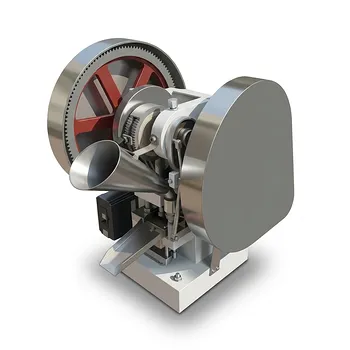
6 Ton Variable Frequency Single Punch Tablet Press
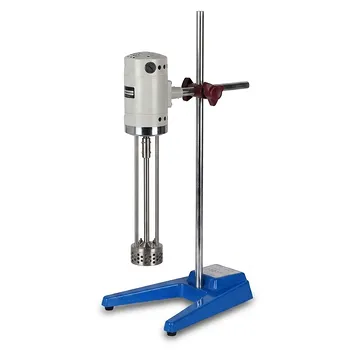
High Shear Laboratory Emulsifier for Mixing and Homogenization
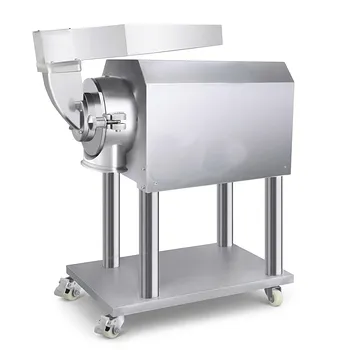
High Speed Small Laboratory Crusher for Dry Material Sample Preparation
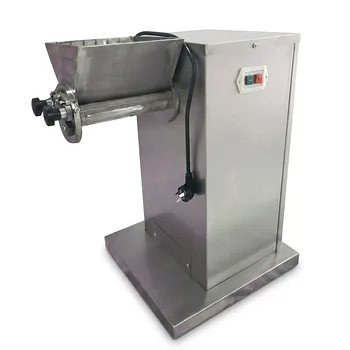
Small Laboratory Oscillating Granulator for Wet and Dry Granulation Processing
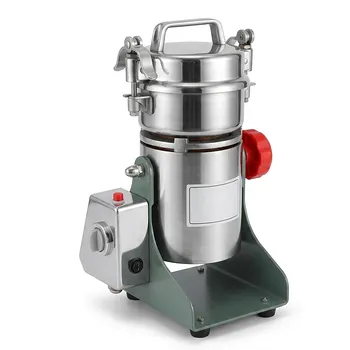
High Speed Swing Type Laboratory Pulverizer for Fine Powder Grinding and Sample Preparation