How do laboratory hydraulic presses contribute to the production of high-density deposition targets? Essential Guide
Updated 4 months ago
Laboratory hydraulic presses are the essential catalysts for material densification. They transform loose, powdered raw materials into highly compacted "green bodies" by applying massive axial force within a mold. This initial compaction is the critical first step in achieving the near-theoretical density required for high-performance deposition targets used in advanced thin-film technologies like Pulsed Laser Deposition (PLD).
The laboratory hydraulic press creates the physical foundation for high-quality targets by extruding entrapped air and forcing particle rearrangement under precise pressure. This process results in a low-porosity "green body" that is structurally prepared for the final sintering stage, ensuring the resulting target achieves maximum relative density and uniformity.
The Mechanics of Particle Compaction
Particle Rearrangement and Air Extrusion
At the onset of the pressing cycle, high-tonnage axial pressure forces individual composite particles to overcome internal friction and slide into a more efficient packing arrangement. This movement extrudes entrapped air from the powder matrix, significantly reducing the initial volume and eliminating internal voids. By removing these air pockets at room temperature, the press prevents the formation of large pores that would otherwise compromise the target's integrity.
Mechanical Deformation and Interlocking
As pressure increases—often reaching levels between 130 MPa and 450 MPa—the particles undergo mechanical deformation and elastic-plastic shifts. This causes the particles to interlock, creating a solid mass with enough initial strength to be handled without breaking. This mechanical bond is vital for maintaining the structural density of the material before it ever enters a furnace.
Density and Volume Fraction Enhancement
The application of constant, unidirectional pressure can dramatically increase the volume fraction of the material. For example, in ceramic composites, pressing can shift the volume fraction from a loose 28% to a dense 67% or higher. This densification is the only way to ensure the final product can reach the 99% relative density required for high-end industrial applications.
The Role of the "Green Body" in Target Manufacturing
Creating a Foundation for Sintering
The "green body" is the term for the compacted pellet before it undergoes high-temperature treatment. A hydraulic press ensures this body has low porosity and high initial density, which are prerequisites for successful sintering. Without a high-quality green body, the subsequent heating process may result in uneven shrinkage or structural cracks.
Achieving Geometric Precision
Laboratory presses allow for the creation of targets with high geometric precision and stable dimensions. By using specialized molds and precise pressure-holding stability, researchers can produce pellets that meet exact specifications. This consistency is critical for ensuring the target fits perfectly into the deposition vacuum chamber.
Improving Volumetric Stability
By forcing a tight bond between the raw materials, the hydraulic press improves the volumetric stability of the final target. This means the target will not warp or change shape significantly during the intense thermal stresses of the deposition process. High stability leads to longer target lifespans and more predictable results in the lab.
Understanding the Trade-offs and Limitations
Pressure Limits and Material Stress
Applying excessive pressure can lead to internal stresses within the green body, which may cause it to "cap" or delaminate upon release from the mold. Each material has an optimal pressure threshold; exceeding it can damage the microscopic structure rather than densify it. Finding the balance between maximum density and structural integrity is a common challenge.
Friction and Density Gradients
Friction between the powder and the mold walls can cause density gradients, where the center of the pellet is less dense than the edges. This inhomogeneity can lead to uneven erosion during the sputtering or laser deposition process, potentially contaminating the thin film. Using lubricants or double-action pressing techniques is often necessary to mitigate this effect.
Optimizing Your Pressing Process for Target Production
To achieve the best results when producing deposition targets, the pressing strategy must be tailored to the specific material properties and the intended deposition method.
- If your primary focus is Maximum Film Purity: Use ultra-high pressures to reach near-theoretical density, as higher density targets minimize "splashing" and particulate contamination during the pulsed laser deposition process.
- If your primary focus is Structural Integrity: Implement a gradual pressure-release (dwell) cycle to allow the material to stabilize, preventing the formation of micro-cracks that can lead to target failure under thermal stress.
- If your primary focus is Research Consistency: Utilize a high-precision hydraulic press with a digital gauge to ensure that every target is produced under identical pressure-holding conditions for reproducible experimental data.
By mastering the compaction of raw powders into dense green bodies, laboratory hydraulic presses provide the essential starting point for all high-performance deposition technologies.
Summary Table:
| Compaction Phase | Mechanism & Action | Key Benefit for Deposition Targets |
|---|---|---|
| Initial Pressing | Particle Rearrangement & Air Extrusion | Eliminates internal voids and reduces porosity. |
| High-Pressure Cycle | Mechanical Deformation (130-450 MPa) | Creates interlocking particles and a strong 'green body'. |
| Densification | Volume Fraction Enhancement | Enables material to reach up to 99% relative density. |
| Precision Control | Pressure Stability & Specialized Molds | Ensures geometric accuracy and volumetric stability. |
Achieve Near-Theoretical Density in Your Material Research
Maximize the performance of your thin-film deposition targets with high-precision compaction solutions. As experts in material science sample preparation, we provide the complete workflow to ensure your targets meet the highest industrial standards for purity and density.
Our extensive equipment line includes:
- Powder Processing: Crushers, cryogenic grinders, and advanced mills (planetary ball, jet, and rotor) for ideal particle sizing.
- Mixing & Homogenization: Powder and defoaming mixers for uniform material distribution.
- Advanced Compaction: A full spectrum of hydraulic presses, including Cold/Warm Isostatic Presses (CIP/WIP), standard lab presses, XRF pellet presses, and vacuum hot presses.
Whether you are aiming for maximum film purity or structural stability, our team is ready to help you select the right equipment for your specific material needs.
Contact us today to optimize your laboratory workflow!
References
- Astrid Marchewka, Rainer Waser. Determination of the electrostatic potential distribution in Pt/Fe:SrTiO3/Nb:SrTiO3 thin-film structures by electron holography. DOI: 10.1038/srep06975
Mentioned Products
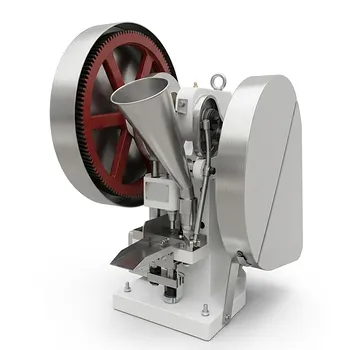
- 6-Ton Small Single-Punch Tablet Press — Laboratory Powder & Granule Tableting Equipment / Tablet Forming Machine
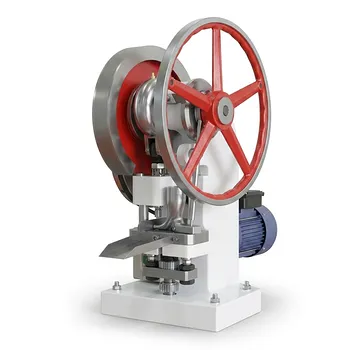
- 5 Ton Single Punch Tablet Press Laboratory Small Batch Production
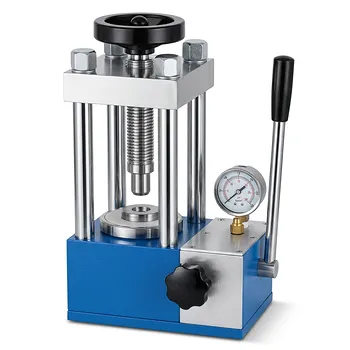
- Manual Tablet Press with Dual Scale Pressure Gauge for Pharmaceutical Food Chemical Laboratory Sample Preparation
- 6 Ton Variable Frequency Single Punch Tablet Press
- High Shear Laboratory Emulsifier for Mixing and Homogenization
People Also Ask
- What is the function of a laboratory press in Cr-Ti alloy evaluation? Quantify Fracture Stress & Strength
- What is the function of a laboratory press in assessing the hydrophobic performance of modified vermiculite fillers?
- What is the core function of a laboratory press in the forming of ceramic filter element green bodies? Maximize Density.
- What is the function of a laboratory press in the preparation of ceramic feed rods? Master Density and Precision
- Why is vacuum sealing and flexible packaging necessary for Aluminum Titanate powders during CIP? Ensure Peak Density

Tech Team · PowderPreparation
Last updated on Jun 03, 2026
Related Products
6-Ton Small Single-Punch Tablet Press — Laboratory Powder & Granule Tableting Equipment / Tablet Forming Machine
5 Ton Single Punch Tablet Press Laboratory Small Batch Production
Manual Tablet Press with Dual Scale Pressure Gauge for Pharmaceutical Food Chemical Laboratory Sample Preparation
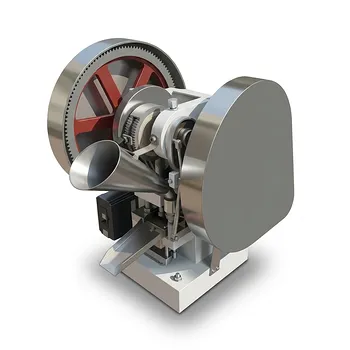
6 Ton Variable Frequency Single Punch Tablet Press
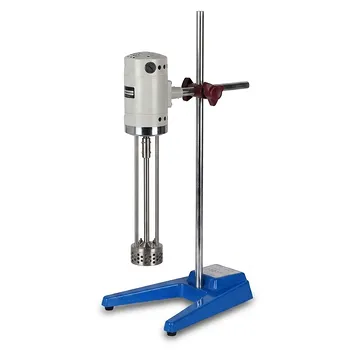
High Shear Laboratory Emulsifier for Mixing and Homogenization
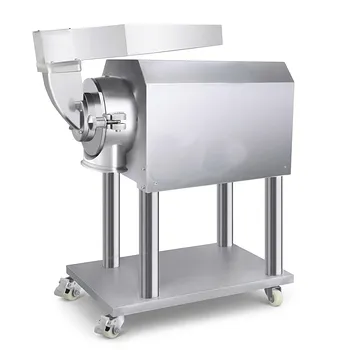
High Speed Small Laboratory Crusher for Dry Material Sample Preparation
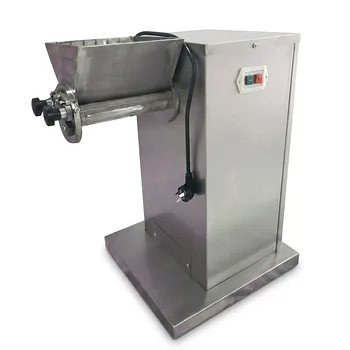
Small Laboratory Oscillating Granulator for Wet and Dry Granulation Processing
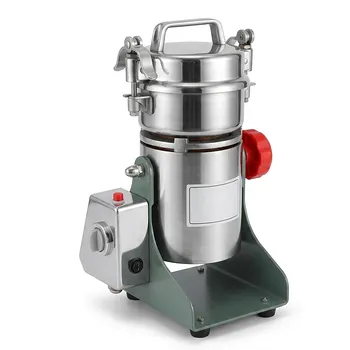
High Speed Swing Type Laboratory Pulverizer for Fine Powder Grinding and Sample Preparation