How do laboratory hydraulic presses and specialized molds contribute to shaping SiOC/ZrB2/ZrO2? Achieve High-Density Green Bodies
Updated 4 months ago
The precision shaping of SiOC/ZrB2/ZrO2 ceramic composites relies on the synergy between laboratory hydraulic presses and high-strength molds to create stable "green bodies." These tools apply controlled mechanical force to compress loose composite powders into dense, geometrically accurate preforms. This process is essential for establishing the structural integrity and uniform density required to prevent cracking, warping, or deformation during the subsequent high-temperature pyrolysis and sintering stages.
Core Takeaway: Laboratory hydraulic presses and specialized molds transform loose ceramic powders into high-density green bodies by eliminating internal voids and maximizing particle contact, providing the necessary physical foundation for successful high-temperature chemical transformation.
The Mechanics of Preforming and Particle Rearrangement
Overcoming Friction and Particle Displacement
The primary function of a laboratory hydraulic press is to apply unidirectional mechanical force to powder mixtures contained within a mold. This force allows individual particles of SiOC precursors, ZrB2, and ZrO2 to overcome internal friction, prompting displacement and rearrangement. As particles shift, they fill interstitial spaces, creating a compact disc or "green body" with specific initial dimensions.
Eliminating Internal Voids and Porosity
High-pressure molding, often reaching levels like 40 MPa to 120 MPa, effectively excludes air bubbles trapped within the powder mixture. By reducing porosity and decreasing the distance between particles, the press ensures that any binder or resin fully occupies the spaces between the ceramic reinforcements. This reduction in large internal pores is critical for achieving a high-density bulk sample.
Maximizing Particle Contact Area
The compression process increases the contact area between the diverse powder particles. This close contact is vital because it establishes the physical foundation for mass diffusion and solid-state reactions. By minimizing the voids, the press effectively lowers the activation energy required for grain growth and bonding during the final heat treatment.
Ensuring Structural Integrity for High-Temperature Processing
Ensuring Geometric Stability During Pyrolysis
Precise pressure control is the most critical factor for ensuring the geometric stability of the green body. If the pressure is inconsistent, the resulting density gradients can lead to catastrophic failure. Uniform compaction ensures the composite can withstand the internal stresses of high-temperature pyrolysis without cracking or deforming.
Preventing Warping and Non-Uniform Growth
Inconsistent density within a ceramic preform often leads to warping or non-uniform grain growth during sintering processes that can exceed 1500 K. A laboratory hydraulic press eliminates these density gradients, ensuring that shrinkage occurs uniformly across the entire component. This consistency is what allows for the production of ceramic composites with high dielectric strength and thermal stability.
Creating High-Activity Reaction Surfaces
For advanced composites like SiOC/ZrB2/ZrO2, the press creates high-activity solid-state reaction surfaces. By forcing particles into tight contact, the press facilitates the chemical transitions necessary to turn a pre-ceramic polymer and powder mix into a fully dense ceramic. This is particularly important for research environments where thermal conductivity and mechanical testing require high-density samples.
Understanding the Trade-offs and Technical Limits
Mold Material and Pressure Constraints
While higher pressure generally leads to higher density, it places immense stress on the specialized molds. High-strength steel or graphite molds must be selected based on the required load to prevent mold deformation or "galling." Using excessive pressure beyond the mold's yield strength can contaminate the ceramic powder with metallic or carbonaceous debris.
The Challenge of Wall Friction
As the press applies vertical force, wall friction between the powder and the mold can lead to pressure drop-off at the center or bottom of the sample. This can result in a "density gradient" where the top of the pellet is denser than the bottom. Specialized lubricants or double-action pressing techniques are often required to mitigate this effect in thicker samples.
Air Entrapment in Rapid Compression
Compressing powders too quickly can trap air within the structure, leading to delamination or "capping" when the pressure is released. A controlled, gradual increase in pressure allows air to escape through the clearances in the mold. This ensures the internal structural integrity of the SiOC/ZrB2/ZrO2 composite remains intact after it is removed from the press.
How to Apply These Tools to Your Composite Project
Making the Right Choice for Your Goal
- If your primary focus is maximizing final density: Utilize high-pressure molding (up to 120 MPa) to eliminate large pores and increase particle contact area before sintering.
- If your primary focus is preventing crack formation: Prioritize precise pressure control and a slow decompression cycle to ensure the green body maintains internal structural consistency.
- If your primary focus is geometric precision: Invest in high-strength steel molds with tight tolerances to ensure the green body matches the predetermined dimensions required for your application.
- If your primary focus is chemical purity: Select mold materials, such as high-purity graphite or lined steel, that will not react with the SiOC or ZrB2 powders during the pressing stage.
By mastering the balance of pressure, containment, and compression rate, you ensure that your SiOC/ZrB2/ZrO2 composites achieve the high performance and structural reliability demanded by advanced ceramic engineering.
Summary Table:
| Key Factor | Function in Shaping | Impact on Final Ceramic |
|---|---|---|
| Unidirectional Force | Overcomes particle friction and displacement | Creates stable, geometrically accurate green bodies |
| High-Pressure (40-120 MPa) | Eliminates internal voids and air bubbles | Maximizes density and prevents cracking during sintering |
| Particle Rearrangement | Increases contact area between powders | Lowers activation energy for solid-state reactions |
| Precise Pressure Control | Ensures uniform density gradients | Prevents warping and non-uniform grain growth |
| Specialized Molds | Provides structural containment | Ensures dimensional precision and prevents contamination |
Elevate Your Material Science Research with Precision Sample Preparation
Achieving the perfect green body for advanced SiOC/ZrB2/ZrO2 composites requires high-performance equipment that guarantees consistency and density. At [Company Name], we provide complete laboratory sample preparation solutions specifically designed for the rigorous demands of material science.
Our extensive range of equipment empowers researchers to master powder processing and compaction:
- Advanced Compaction: A full spectrum of hydraulic presses, including Standard Lab Presses, XRF Pellet Presses, Hot Presses, and Vacuum Hot Presses, plus Cold/Warm Isostatic Presses (CIP/WIP) for uniform density.
- Powder Processing: High-efficiency crushers (jaw/roll), liquid nitrogen cryogenic grinders, and a variety of mills (planetary ball, jet, sand/bead, disc, rotor).
- Sizing & Mixing: Sieve shakers (vibratory/air-jet) with precise test sieves, along with powder mixers and defoaming mixers for perfect precursor homogeneity.
Whether you are focusing on maximizing final density or preventing crack formation during high-temperature pyrolysis, our expert-grade tools provide the reliability you need.
Ready to optimize your ceramic shaping process? Contact us today to find the perfect equipment for your lab!
References
- Yujun Jia, Chengying Xu. Polymer-derived SiOC reinforced with core–shell nanophase structure of ZrB2/ZrO2 for excellent and stable high-temperature microwave absorption (up to 900 °C). DOI: 10.1038/s41598-023-27541-3
Mentioned Products
- 6-Ton Small Single-Punch Tablet Press — Laboratory Powder & Granule Tableting Equipment / Tablet Forming Machine
- 5 Ton Single Punch Tablet Press Laboratory Small Batch Production
- Manual Tablet Press with Dual Scale Pressure Gauge for Pharmaceutical Food Chemical Laboratory Sample Preparation
- 6 Ton Variable Frequency Single Punch Tablet Press
- High Shear Laboratory Emulsifier for Mixing and Homogenization
People Also Ask
- What is the function of a laboratory press in Cr-Ti alloy evaluation? Quantify Fracture Stress & Strength
- What is the function of a laboratory press in assessing the hydrophobic performance of modified vermiculite fillers?
- What is the core function of a laboratory press in the forming of ceramic filter element green bodies? Maximize Density.
- What is the function of a laboratory press in the preparation of ceramic feed rods? Master Density and Precision
- Why is vacuum sealing and flexible packaging necessary for Aluminum Titanate powders during CIP? Ensure Peak Density

Tech Team · PowderPreparation
Last updated on May 14, 2026
Related Products
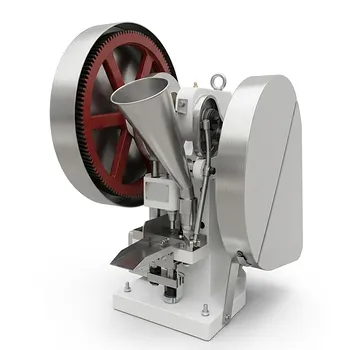
6-Ton Small Single-Punch Tablet Press — Laboratory Powder & Granule Tableting Equipment / Tablet Forming Machine
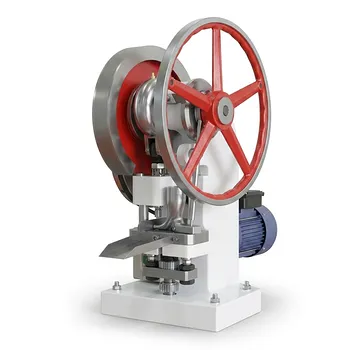
5 Ton Single Punch Tablet Press Laboratory Small Batch Production
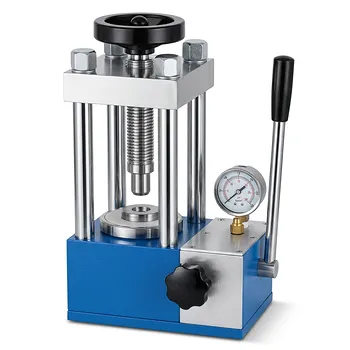
Manual Tablet Press with Dual Scale Pressure Gauge for Pharmaceutical Food Chemical Laboratory Sample Preparation
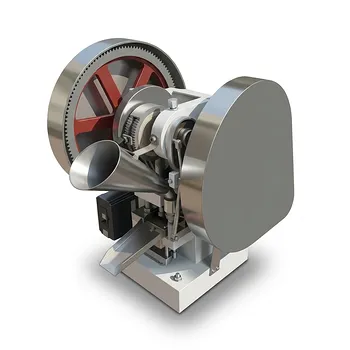
6 Ton Variable Frequency Single Punch Tablet Press
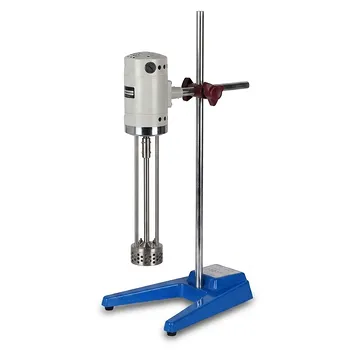
High Shear Laboratory Emulsifier for Mixing and Homogenization
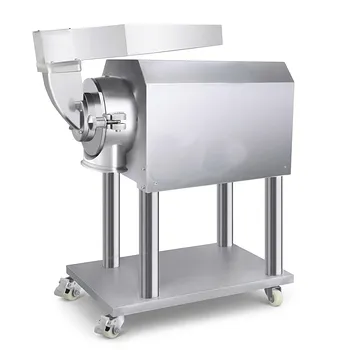
High Speed Small Laboratory Crusher for Dry Material Sample Preparation
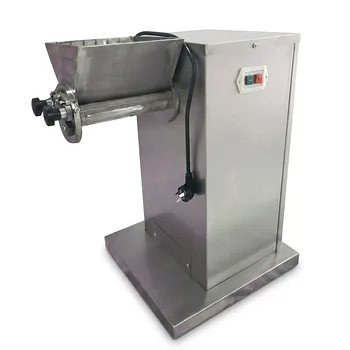
Small Laboratory Oscillating Granulator for Wet and Dry Granulation Processing
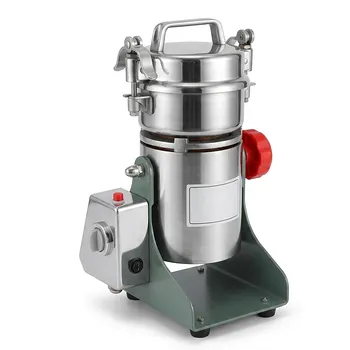
High Speed Swing Type Laboratory Pulverizer for Fine Powder Grinding and Sample Preparation