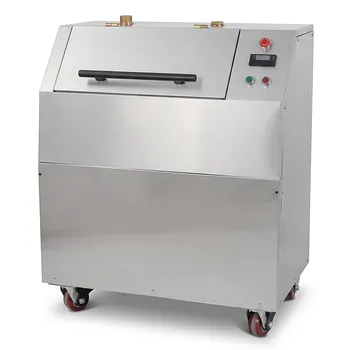
How do high-precision vibratory sieve shakers contribute to the assessment of torrefied biomass physical properties?
Updated 5 months ago
High-precision vibratory sieve shakers are the standard for quantifying the particle size distribution (PSD) of torrefied biomass. These devices utilize mechanical vibration and graduated mesh layers to separate crushed material into distinct fractions based on dimensions. This classification is essential for ensuring material uniformity, optimizing chemical reaction kinetics during processing, and predicting the performance of the biomass in downstream applications like combustion or pelletization.
High-precision vibratory sieve shakers provide the foundational physical data required to characterize and standardize torrefied biomass. By accurately mapping particle size distribution, these tools allow operators to control energy absorption, mechanical strength, and combustion efficiency.
Enhancing Process Stability and Chemical Kinetics
Ensuring Uniform Energy Absorption
High-precision sieving ensures that biomass particles, such as Empty Fruit Bunch (EFB), achieve a high degree of size uniformity, typically under 1.0 mm. This uniformity is critical for maintaining consistent energy absorption during thermal treatments like microwave radiation heating.
Standardized particle sizes prevent localized over-reaction or incomplete processing. When dimensions are irregular, heat distribution becomes uneven, which can compromise the chemical reaction kinetics and the quality of the final torrefied product.
Regulating Reaction Kinetics
By classifying biochar into specific ranges—such as 20, 30, 40, or 50 mesh—researchers can stabilize the rate of chemical transformations. Precise grading ensures that the surface area available for reactions is predictable.
This level of control is necessary for industrial scaling. It allows for a repeatable process where the physical state of the output remains consistent across different batches of raw material.
Optimizing Mechanical Properties and Manufacturing
Structural Integrity in Pellets and Boards
In the production of fuel pellets, the configuration of particle sizes directly influences the molding effect. Finer particles can help achieve partial densification under lower pressure, which significantly reduces the energy consumption required for forming.
A reasonable grading of particles enhances the filling density and mechanical interlocking strength within the pellets. This results in a more durable product that resists crumbling during transport.
Controlling Binder Consumption
For high-density particleboard manufacturing, sieving is used to remove excessive dust and oversized coarse fibers. This prevents fine powders from consuming excessive amounts of binder.
Properly graded particles ensure a stable mechanical structure. By eliminating oversized fibers that cause loose board structures, manufacturers can maintain higher density and better structural integrity.
Soil Modification and Aggregate Stability
When torrefied biomass is used as a soil modifier, its particle size determines how it fills gaps between soil particles. This contributes directly to the stability of the soil aggregate structure.
Understanding the proportion of different size components allows for better prediction of water retention and aeration. High-precision shakers quantify these proportions to ensure the modifier functions as intended in environmental applications.
Impact on Thermal Performance and Combustion
Maximizing Combustion Efficiency
Particle size directly impacts the combustion efficiency and conveying performance of biomass fuels in industrial boilers. Standardized sieving provides the physical indicators necessary to optimize burner feeding systems.
Consistent sizing allows for precise adjustment of combustion parameters. This leads to more efficient energy release and reduces the risk of clogging or uneven burning in large-scale energy systems.
Accurate Thermal Analysis
Precise particle classification (typically in the 100 to 200 µm range) ensures a consistent surface area-to-volume ratio during thermal analysis. This is vital for obtaining accurate measurements of ignition and burnout temperatures.
By avoiding internal diffusion limitations caused by oversized particles, researchers can establish a clear quantitative relationship between particle size and minimum ignition temperatures. This data is critical for fire safety and fuel grading.
Understanding the Trade-offs
Mechanical Degradation Risks
While high-frequency vibration is necessary for separation, excessive duration can lead to particle attrition. The mechanical stress may cause fragile torrefied particles to break down further during the test itself.
This can result in a "fines bias," where the data suggests a higher percentage of dust than was present in the original sample. Operators must calibrate vibration amplitude and time to minimize this impact.
Shape Sensitivity and Mesh Blindness
Vibratory sieves classify based on the smallest cross-section of a particle. Long, needle-like fibers may pass through a mesh vertically, leading to an inaccurate representation of their true volume.
Additionally, sticky or resinous biomass can cause mesh blinding, where particles clog the sieve apertures. This requires the use of sieving aids, such as balls or brushes, which may further risk altering the sample's physical state.
How to Apply Sieve Analysis to Your Project
Recommendations for Goal-Oriented Assessment
- If your primary focus is Industrial Fuel Production: Prioritize 20-50 mesh grading to ensure stable bulk density and reliable performance in automated feeding systems.
- If your primary focus is Material Science Research: Utilize 100-200 µm apertures to eliminate diffusion limitations and ensure accurate kinetic modeling during thermal analysis.
- If your primary focus is High-Density Manufacturing: Use sieving to strictly remove fines below 0.5 mm to minimize binder waste and improve the mechanical strength of the final product.
- If your primary focus is Soil Amendment: Focus on the "gap-filling" capacity by measuring the ratio of coarse to fine particles to optimize soil aggregate stability.
By integrating high-precision vibratory sieving into the characterization workflow, you transform raw biomass data into actionable intelligence for process optimization and product quality control.
Summary Table:
| Application Area | Key Physical Impact | Sieve Shaker Benefit |
|---|---|---|
| Thermal Processing | Uniform energy absorption | Ensures particles are consistently under 1.0 mm |
| Pelletization | Mechanical integrity | Optimizes grading for higher filling density |
| Combustion | Burner efficiency | Provides standardized sizing for steady feeding |
| Chemical Kinetics | Reaction stability | Regulates surface area-to-volume ratios |
| Soil Modification | Aggregate stability | Quantifies gap-filling capacity of biomass |
Elevate Your Material Analysis with Expert Solutions
Are you looking to achieve pinpoint accuracy in your biomass characterization? At [Brand Name], we provide complete laboratory sample preparation solutions specifically designed for material science.
We specialize in high-performance powder processing and compaction equipment to streamline your workflow:
- Sieve Analysis: High-precision vibratory and air-jet sieve shakers for flawless particle size distribution.
- Size Reduction: Advanced crushers (jaw/roll) and mills (planetary ball, jet, rotor, and cryogenic grinders).
- Sample Preparation: A full spectrum of hydraulic presses, including Cold/Warm Isostatic Presses (CIP/WIP), XRF pellet presses, and vacuum hot presses.
- Mixing: Specialized powder and defoaming mixers for material uniformity.
Whether you are optimizing combustion efficiency or developing high-density pellets, our technical team is ready to help you select the right tools for your specific application. Contact us today to request a quote or consultation!
References
- Tatsuki Ogura, Jun Kikuchi. Improvement of physical, chemical and biological properties of aridisol from Botswana by the incorporation of torrefied biomass. DOI: 10.1038/srep28011
Mentioned Products
- Vibratory Sieve Shaker Electromagnetic 3D Motion Powder Particle Size Analyzer for Dry and Wet Sieving
- Laboratory Dry and Wet Three Dimensional Vibratory Sieve Shaker for Particle Analysis
- Dry Three Dimensional Vibratory Sieve Shaker
- Stainless Steel Laboratory Vibratory Test Sieve Shaker
- Heavy Duty Dry Three Dimensional Vibratory Sieve Shaker for Particle Separation
People Also Ask
- How does a vibratory sieve shaker contribute to optimizing the performance of activated carbon? Enhance Adsorption Precision
- Why is a laboratory vibratory sieve shaker necessary for processing magnesium-based borate precursor powders? Boost Activity
- Why use a vibratory sieve shaker to verify coarse aggregate grading in rubberized concrete? Ensure Structural Integrity
- What function do vibratory sieve shakers and standard test sieves serve in the preparation of adsorbents? Key Guide
- What role does a vibratory sieve shaker play in the particle size analysis of ground corn products? Enhance QC Precision

Tech Team · PowderPreparation
Last updated on May 14, 2026
Related Products
Vibratory Sieve Shaker Electromagnetic 3D Motion Powder Particle Size Analyzer for Dry and Wet Sieving
Laboratory Dry and Wet Three Dimensional Vibratory Sieve Shaker for Particle Analysis
Dry Three Dimensional Vibratory Sieve Shaker
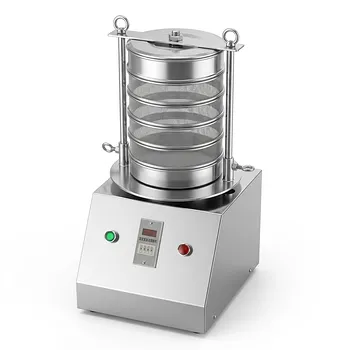
Stainless Steel Laboratory Vibratory Test Sieve Shaker
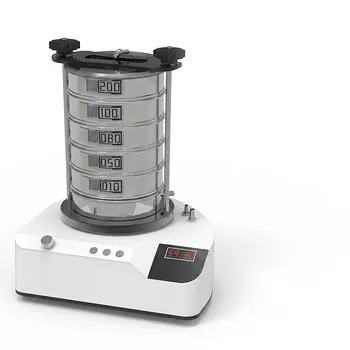
Heavy Duty Dry Three Dimensional Vibratory Sieve Shaker for Particle Separation
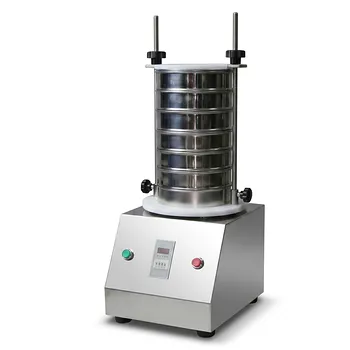
Small Laboratory Vibratory Sieve Shaker for Powder Gradation and Particle Size Analysis
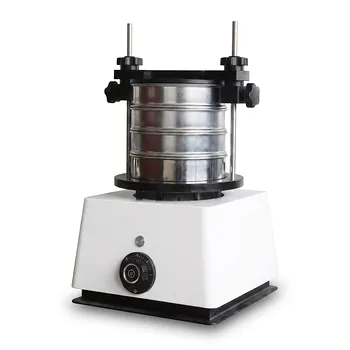
Small Laboratory Vibrating Sieve Shaker for Precise Particle Size Analysis
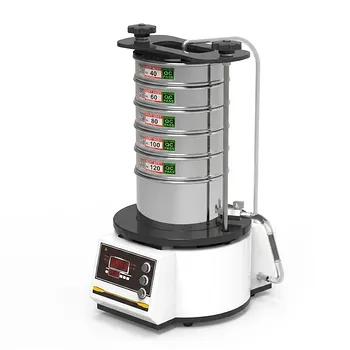
High Frequency Wet Three-Dimensional Vibrating Sieve Shaker for Dry and Wet Particle Size Analysis
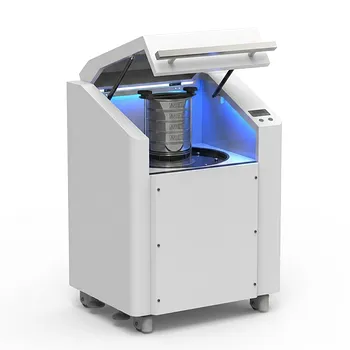
High Frequency Cabinet Type Three-Dimensional Rotary Vibrating Sieve Shaker for Dry Sieving and Particle Classification
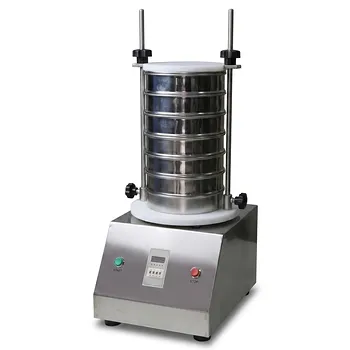
Laboratory Vibratory Test Sieve Shaker for Precision Particle Size Analysis and Powder Grading
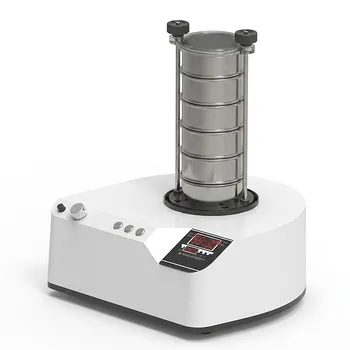
三维电磁微量振动筛分仪
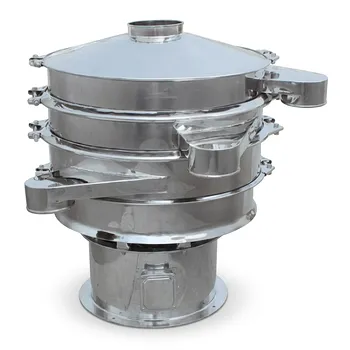
Stainless Steel Rotary Vibrating Sieve High Precision Circular Vibratory Separator Industrial Powder Grading Machine Multi Layer Sifting Equipment
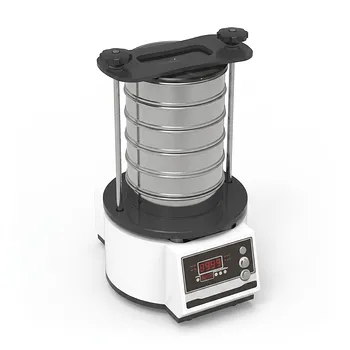
Tapping Oscillating Sieve Shaker for Dry and Wet Particle Size Analysis
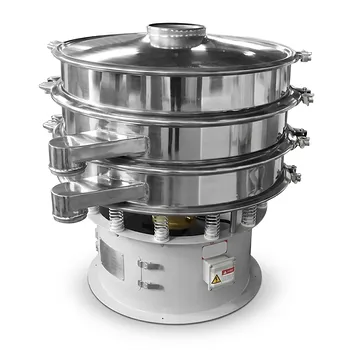
Three Dimensional Rotary Vibrating Sieve
Vibratory Superfine Grinder for Ultra Fine Laboratory Powder Milling
Small Vibrating Ultrafine Grinder for Traditional Chinese Medicine
Automatic Vibrating Powder Feeder for Laboratory Material Processing Precision Vibratory Hopper Feeder for Granular and Powder Material Handling Industrial Grade Vibrating Tray Feeder for Consistent Material Sample Preparation