How do a vibratory sieve shaker and standard test sieves contribute to bamboo fiber QC? Optimize Composite Performance
Updated 5 months ago
Standard test sieves and vibratory sieve shakers are the primary tools used to classify ground bamboo powder into precise particle size fractions. By applying mechanical vibration, these tools force raw bamboo fibers through specific mesh apertures (such as 0.25 mm), ensuring the resulting material has high consistency and a uniform distribution. This process is critical because it prevents stress concentration within composite materials and ensures that the fibers can be dispersed evenly throughout a matrix, such as silicone rubber or polymer resins.
Core Takeaway: Vibratory sieving transforms irregular, raw bamboo fibers into a standardized technical material. This precise classification is essential for maintaining the mechanical integrity of composites and ensuring that experimental results are repeatable and accurate.
Achieving Uniformity in Composite Matrices
Eliminating Internal Stress Concentration
Irregular or oversized bamboo particles can act as "weak points" within a composite structure. When a vibratory shaker removes these outliers, it prevents stress concentration—a phenomenon where force accumulates around large particles, leading to premature material failure.
Enhancing Fiber Dispersibility
A consistent particle size allows bamboo fibers to distribute evenly within a polymer or silicone matrix. This homogeneity ensures that the final product has uniform physical properties, preventing "clumping" that could degrade the material's overall mechanical performance.
Controlling the Particle Size Distribution (PSD)
Technicians use various mesh sizes (from 80 micrometers to 1.18 mm) to determine the cumulative distribution percentage. By quantifying exactly how much material passes through each sieve, manufacturers can optimize their grinding processes and adhere to strict technical specifications.
Ensuring Data Reliability and Repeatability
Precise Grading for Research Variables
In research and development, isolating a specific particle size is a prerequisite for studying the particle size effect on mechanical properties. A vibratory shaker allows researchers to control this variable accurately, ensuring that data on tensile, flexural, and impact strength is reliable across different batches.
Removing Hard Agglomerates
During the processing of fine powders, bamboo fibers can sometimes form "hard agglomerates" or clumps. The mechanical energy of a vibratory sieve shaker breaks down or isolates these clusters, ensuring the "green body" or initial mixture has an optimal packing density.
Improving Material Workability
Just as in concrete or ceramic production, the correct grading of bamboo fibers reduces the internal void ratio. A better fit between particles of different sizes (controlled grading) leads to a denser, stronger material that requires less binder or resin to achieve structural integrity.
Understanding the Technical Trade-offs
The Challenge of Fiber Geometry
Standard test sieves are designed for spherical or granular particles, but bamboo fibers often have high aspect ratios (long and thin). This means a fiber might pass through a mesh vertically that it would otherwise be blocked by horizontally, leading to slight variations in "true" size versus "sieve" size.
Mesh Blinding and Maintenance
Fine bamboo powder can easily "blind" or clog the sieve mesh, particularly at sizes below 100 micrometers. Continuous use requires regular cleaning and calibration of the sieves to ensure that wear and tear hasn't subtly altered the aperture size, which would compromise quality control.
Processing Time vs. Accuracy
While longer vibration times generally lead to more accurate separation, excessive vibration can cause particle attrition. Over-shaking may cause fragile bamboo fibers to break down into smaller pieces during the test itself, leading to an inaccurate representation of the original sample.
Strategic Implementation for Quality Control
How to Apply This to Your Project
- If your primary focus is Maximum Mechanical Strength: Use a narrow range of sieve sizes to eliminate both oversized "stress risers" and excessive "fines" that can weaken the composite matrix.
- If your primary focus is Research and Development: Utilize a full stack of standard test sieves to map the entire cumulative distribution, allowing for a precise correlation between particle size and performance data.
- If your primary focus is Production Efficiency: Implement a vibratory shaker with a specific "pass/fail" sieve (e.g., 0.25 mm) to quickly verify that raw material batches meet minimum consistency standards before processing.
By integrating these tools into a standard quality control workflow, manufacturers can move from unpredictable natural materials to highly engineered bamboo-fiber composites.
Summary Table:
| Feature | Function in Bamboo Processing | Impact on Quality Control |
|---|---|---|
| Mechanical Vibration | Breaks agglomerates and ensures flow | Enhances fiber dispersibility in matrices |
| Precise Mesh Sizing | Filters fibers by specific aperture (e.g., 0.25mm) | Eliminates stress concentration points |
| PSD Analysis | Maps cumulative distribution percentage | Ensures experimental data repeatability |
| Controlled Grading | Optimizes fit between different particle sizes | Reduces void ratio and increases density |
Elevate Your Material Consistency with Expert Preparation Solutions
Achieving the perfect particle size distribution is critical for high-performance composites. At [Your Brand Name], we provide complete laboratory sample preparation solutions tailored for material science.
Whether you are processing natural fibers or advanced ceramics, our specialized equipment ensures precision at every stage:
- Classification & Analysis: High-performance vibratory and air-jet sieve shakers with a full range of precision test sieves.
- Advanced Milling: Planetary ball mills, jet mills, and cryogenic grinders for ultra-fine powder processing.
- Compaction Excellence: A full spectrum of hydraulic presses, including Cold Isostatic Presses (CIP), vacuum hot presses, and XRF pellet presses.
- Homogeneous Mixing: Specialized powder and defoaming mixers for uniform matrix distribution.
Ready to optimize your lab's workflow and material integrity? Contact our technical team today to find the ideal equipment for your specific application.
References
- Nurrul Amilin Zainal Abidin, Nor Nabilah Che Abd Rahim. Physical and mechanical properties of bamboo-silicone biocomposites (BaSiCs). DOI: 10.15376/biores.17.3.4432-4443
Mentioned Products
- Vibratory Sieve Shaker Electromagnetic 3D Motion Powder Particle Size Analyzer for Dry and Wet Sieving
- Laboratory Dry and Wet Three Dimensional Vibratory Sieve Shaker for Particle Analysis
- Dry Three Dimensional Vibratory Sieve Shaker
- Stainless Steel Laboratory Vibratory Test Sieve Shaker
- Heavy Duty Dry Three Dimensional Vibratory Sieve Shaker for Particle Separation
People Also Ask
- How does a vibratory sieve shaker contribute to optimizing the performance of activated carbon? Enhance Adsorption Precision
- Why is a laboratory vibratory sieve shaker necessary for processing magnesium-based borate precursor powders? Boost Activity
- Why use a vibratory sieve shaker to verify coarse aggregate grading in rubberized concrete? Ensure Structural Integrity
- What function do vibratory sieve shakers and standard test sieves serve in the preparation of adsorbents? Key Guide
- What role does a vibratory sieve shaker play in the particle size analysis of ground corn products? Enhance QC Precision

Tech Team · PowderPreparation
Last updated on May 14, 2026
Related Products
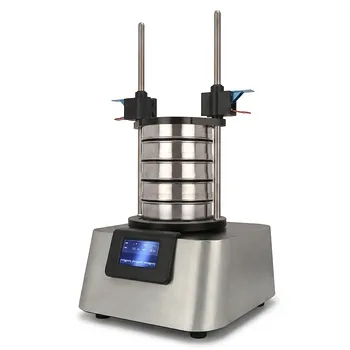
Vibratory Sieve Shaker Electromagnetic 3D Motion Powder Particle Size Analyzer for Dry and Wet Sieving
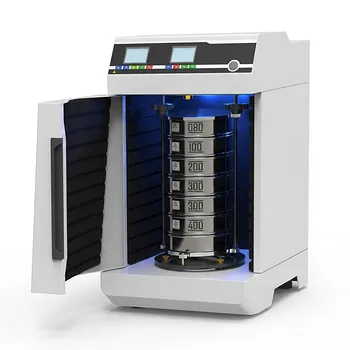
Laboratory Dry and Wet Three Dimensional Vibratory Sieve Shaker for Particle Analysis

Dry Three Dimensional Vibratory Sieve Shaker
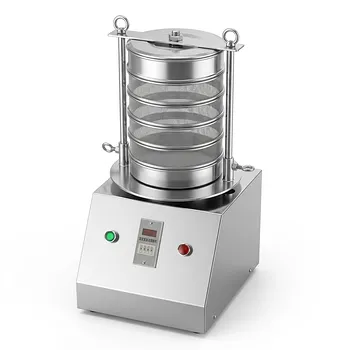
Stainless Steel Laboratory Vibratory Test Sieve Shaker

Heavy Duty Dry Three Dimensional Vibratory Sieve Shaker for Particle Separation
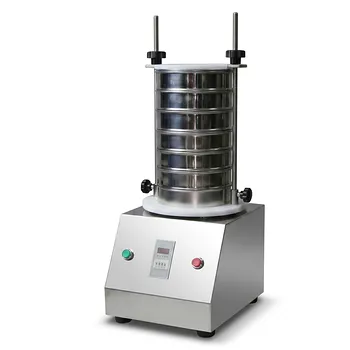
Small Laboratory Vibratory Sieve Shaker for Powder Gradation and Particle Size Analysis
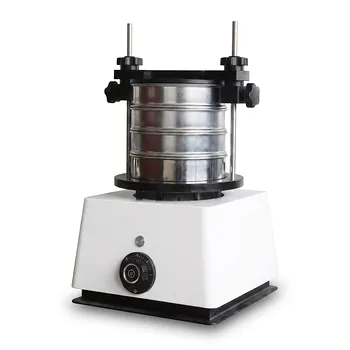
Small Laboratory Vibrating Sieve Shaker for Precise Particle Size Analysis
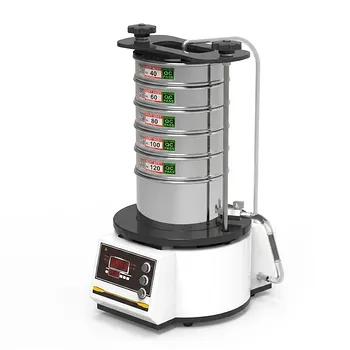
High Frequency Wet Three-Dimensional Vibrating Sieve Shaker for Dry and Wet Particle Size Analysis
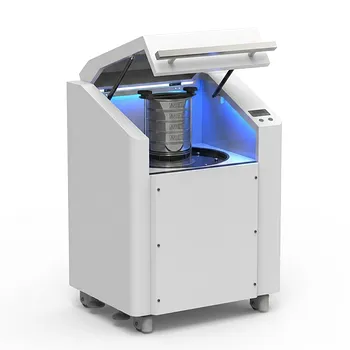
High Frequency Cabinet Type Three-Dimensional Rotary Vibrating Sieve Shaker for Dry Sieving and Particle Classification

Laboratory Vibratory Test Sieve Shaker for Precision Particle Size Analysis and Powder Grading
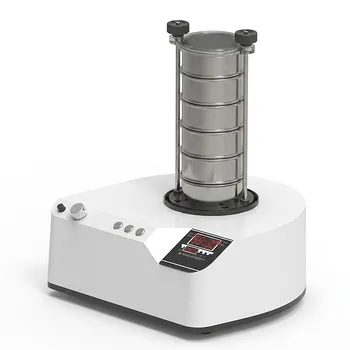
三维电磁微量振动筛分仪

Stainless Steel Rotary Vibrating Sieve High Precision Circular Vibratory Separator Industrial Powder Grading Machine Multi Layer Sifting Equipment
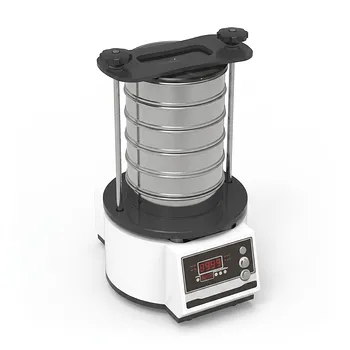
Tapping Oscillating Sieve Shaker for Dry and Wet Particle Size Analysis
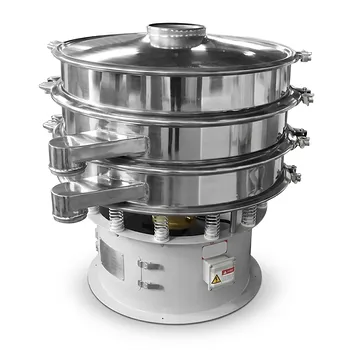
Three Dimensional Rotary Vibrating Sieve
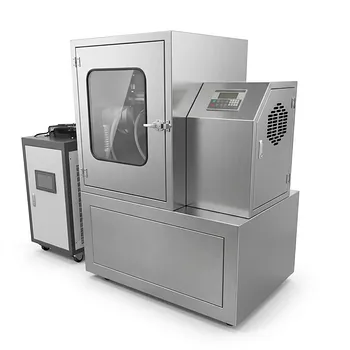
Vibratory Superfine Grinder for Ultra Fine Laboratory Powder Milling
Small Vibrating Ultrafine Grinder for Traditional Chinese Medicine
Automatic Vibrating Powder Feeder for Laboratory Material Processing Precision Vibratory Hopper Feeder for Granular and Powder Material Handling Industrial Grade Vibrating Tray Feeder for Consistent Material Sample Preparation