How are vibratory sieve shakers used to characterize powders produced by plasma arc atomization? Optimize Your PSD
Updated 5 months ago
Vibratory sieve shakers characterize plasma arc atomized powders by physically separating them through a vertical stack of graduated mesh screens to establish a precise particle size distribution (PSD). This method allows laboratory-scale operations to quantify yield rates for critical ranges—such as the 15 to 160 μm interval—ensuring the powder meets the stringent flowability and density requirements of additive manufacturing and plasma spraying.
Vibratory sieving provides a definitive, mass-based measurement of powder fractions, allowing engineers to validate the efficiency of plasma arc atomization and ensure consistent performance in downstream applications.
The Mechanics of Physical Classification
Multi-Stage Graduated Sieve Stacks
The process begins by loading the powder into a stack of standard test sieves, typically ranging from 25 to 500 μm. These sieves are arranged in descending order of aperture size, allowing the material to be progressively refined as it moves downward through the stack.
Controlled High-Frequency Vibration
The shaker drives the stack using high-frequency vibration with specific amplitudes and cycle times. This mechanical energy ensures that particles are continuously agitated, providing them with multiple opportunities to pass through the mesh apertures without becoming trapped.
Establishing the Physical Foundation
This separation serves as the physical foundation for all subsequent analysis. By strictly controlling the particle size range, manufacturers can ensure a stable powder feed rate, which is critical for achieving uniform coating thickness during processes like plasma spraying.
Analytical Outputs for Quality Control
Generating Cumulative Distribution Curves
After the vibration cycle is complete, the material retained on each sieve is weighed. This data is used to generate a cumulative particle size distribution curve, which serves as a key indicator of the atomization process's efficiency and the uniformity of the resulting powder morphology.
Calculating Yield and Recovery Rates
Engineers use the results to evaluate the recovery rate for specific particle size fractions. For plasma arc atomization, this often involves isolating the 15 to 160 μm range, which is the standard requirement for most industrial additive manufacturing hardware.
Determining Mass Mean Diameter
The process provides quantitative data on the mass mean particle diameter. This statistical analysis is essential for optimizing industrial processing parameters and ensuring that the atomization process does not result in "over-grinding" or excessive fine content.
Understanding the Technical Trade-offs
The Limitations of Fine Particle Cohesion
Vibratory sieving encounters significant challenges when dealing with cohesive powders, generally those smaller than 53 μm. At these scales, inter-particle forces can cause clumping or "blinding" of the mesh, which may lead to inaccurate data if not managed with specific amplitudes or anti-blinding aids.
Orientation and Sphericity Bias
While sieving is a reliable measure of the minimum cross-section of a particle, it does not provide data on particle shape or sphericity. Because plasma arc atomization is chosen specifically for its ability to produce spherical particles, sieving must often be paired with optical microscopy to confirm the powder's geometric quality.
Sample Size Constraints
Physical sieving is highly effective for laboratory-scale batches, but it can be time-consuming for large-scale industrial production. It requires careful cleaning and maintenance of the sieves to prevent cross-contamination and ensure the integrity of the mesh apertures over time.
How to Apply This to Your Process
To maximize the utility of vibratory sieve shakers in your powder characterization workflow, consider the following recommendations:
- If your primary focus is Additive Manufacturing: Prioritize the isolation and weighing of the 15 to 160 μm fraction to calculate the exact yield and ensure compatibility with laser powder bed fusion systems.
- If your primary focus is Process Optimization: Use the data to generate uniformity indices (Iθ) and cumulative curves to identify if adjustments are needed in the plasma arc intensity or gas flow rates.
- If your primary focus is Coating Consistency: Focus on the fine content analysis to prevent fluctuations in the feed rate, which can lead to porous or uneven microstructures in plasma-sprayed coatings.
By integrating precise vibratory sieving into your quality control protocol, you ensure that every batch of atomized powder meets the rigorous physical standards required for high-performance applications.
Summary Table:
| Feature | Specification/Detail | Application Benefit |
|---|---|---|
| Target PSD Range | 15 to 160 μm | Ensures compatibility with additive manufacturing & plasma spraying |
| Sieve Stack Range | 25 to 500 μm | Precise physical classification of atomized metal powders |
| Key Output | Cumulative PSD Curve | Validates atomization efficiency and powder uniformity |
| Statistical Metric | Mass Mean Diameter | Prevents "over-grinding" and optimizes process parameters |
| Critical Limitation | Cohesion below 53 μm | Informs the need for anti-blinding aids or specific amplitudes |
Precision Powder Analysis Starts with KINTEK
Achieving the perfect particle size distribution is critical for high-performance additive manufacturing and material science. KINTEK provides complete laboratory sample preparation solutions tailored for advanced powder processing.
Whether you need precision vibratory or air-jet sieve shakers, high-durability test sieves, or specialized planetary ball mills and jet mills, our equipment ensures your plasma arc atomized powders meet the most stringent industry standards. Beyond characterization, we offer a full spectrum of powder compaction technology, including Cold/Warm Isostatic Presses (CIP/WIP) and Vacuum Hot Presses to bring your materials to their final form.
Ready to enhance your lab's efficiency and product quality? Contact KINTEK today for expert guidance and tailored equipment solutions!
References
- Shiyi Gao, O.S. Tereshchenko. Features of the process of formation and dispersion of a liquid layer and formation of powder particles in plasma-arc atomization of current-conducting solid and flux-cored wires. DOI: 10.12913/22998624/201362
Mentioned Products
- Small Laboratory Vibratory Sieve Shaker for Powder Gradation and Particle Size Analysis
- Vibratory Sieve Shaker Electromagnetic 3D Motion Powder Particle Size Analyzer for Dry and Wet Sieving
- Laboratory Vibratory Test Sieve Shaker for Precision Particle Size Analysis and Powder Grading
- Stainless Steel Laboratory Vibratory Test Sieve Shaker
- Heavy Duty Dry Three Dimensional Vibratory Sieve Shaker for Particle Separation
People Also Ask
- Why use a 450 μm vibratory sieve shaker for MLO? Ensure Superior Particle Uniformity & Adsorption Performance
- Why is a laboratory vibratory sieve shaker essential for coconut cake fiber? Achieve Precise Particle Size Analysis
- What is the role of laboratory vibratory sieve shakers in waste PUR foam recycling? Optimize Particle Size and Density
- How does a laboratory vibratory sieve shaker contribute to the pre-treatment of PCB powders before sorting? Boost Yields
- What is the primary function of a laboratory vibratory sieve shaker in the evaluation of sand liquefaction potential?

Tech Team · PowderPreparation
Last updated on May 14, 2026
Related Products

Small Laboratory Vibratory Sieve Shaker for Powder Gradation and Particle Size Analysis

Vibratory Sieve Shaker Electromagnetic 3D Motion Powder Particle Size Analyzer for Dry and Wet Sieving

Laboratory Vibratory Test Sieve Shaker for Precision Particle Size Analysis and Powder Grading
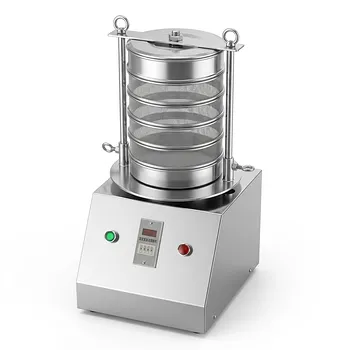
Stainless Steel Laboratory Vibratory Test Sieve Shaker

Heavy Duty Dry Three Dimensional Vibratory Sieve Shaker for Particle Separation

Small Laboratory Vibrating Sieve Shaker for Precise Particle Size Analysis
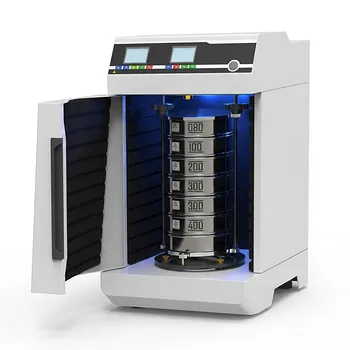
Laboratory Dry and Wet Three Dimensional Vibratory Sieve Shaker for Particle Analysis

Dry Three Dimensional Vibratory Sieve Shaker

三维电磁微量振动筛分仪
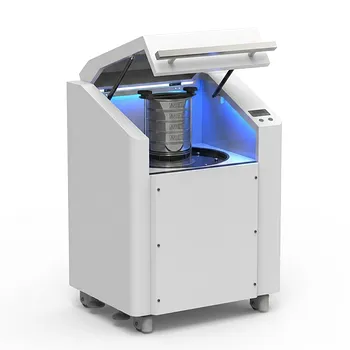
High Frequency Cabinet Type Three-Dimensional Rotary Vibrating Sieve Shaker for Dry Sieving and Particle Classification

Stainless Steel Rotary Vibrating Sieve High Precision Circular Vibratory Separator Industrial Powder Grading Machine Multi Layer Sifting Equipment

Three Dimensional Rotary Vibrating Sieve
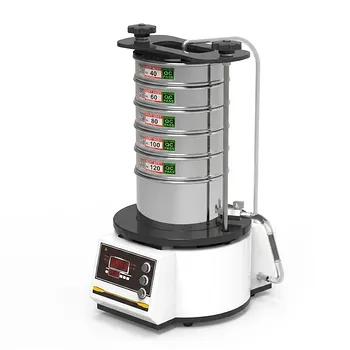
High Frequency Wet Three-Dimensional Vibrating Sieve Shaker for Dry and Wet Particle Size Analysis
Automatic Vibrating Powder Feeder for Laboratory Material Processing Precision Vibratory Hopper Feeder for Granular and Powder Material Handling Industrial Grade Vibrating Tray Feeder for Consistent Material Sample Preparation
Vibratory Superfine Grinder for Ultra Fine Laboratory Powder Milling

Tapping Oscillating Sieve Shaker for Dry and Wet Particle Size Analysis
Laboratory Air Jet Sieving Machine for Fine Powder Particle Size Analysis and Deagglomeration
V-Type Powder Mixer for Uniform Blending of Dry Powders and Granules
Industrial High Speed Small Sample Pulverizer Swing Type Laboratory Grinder for Powder Processing