How are vibratory sieve shakers and standard test sieves utilized to evaluate sample uniformity? Master Particle Analysis
Updated 5 months ago
Vibratory sieve shakers and standard test sieves evaluate sample uniformity by physically segregating a bulk material into distinct size fractions through controlled mechanical energy. By passing a sample through a vertical stack of sieves with progressively smaller apertures, the system quantifies the mass distribution of particles. This data allows operators to calculate a cumulative particle size distribution (PSD), providing a definitive mathematical profile of the material's consistency.
Sieve analysis transforms physical separation into actionable data by weighing the residue on each sieve layer to determine if a sample meets specific uniformity thresholds. It is a direct, economical, and non-destructive method for assessing the efficiency of grinding, granulation, and classification processes.
The Mechanics of Physical Separation
How Vibration Drives the Sifting Process
Vibratory sieve shakers utilize mechanical vibration, ultrasonic waves, or air-jet assistance to move particles across the sieve surface. This energy ensures that every particle has multiple opportunities to present itself to the sieve apertures, minimizing the "blinding" of the mesh. High-frequency vibration is particularly effective for driving finer particles through the stack, ensuring a high-precision classification.
The Role of Standardized Sieve Apertures
The process relies on a stack of standard test sieves arranged in descending order of aperture size, such as 2.36mm down to 0.075mm. These sieves act as precise physical benchmarks, ensuring that the separation is repeatable and globally comparable. By using standardized mesh sizes, labs can ensure that a sample's uniformity is measured against recognized industry thresholds, such as a required 850-micrometer limit.
Quantifying Uniformity through Data Analysis
Mass Distribution and Cumulative Curves
Once the vibration cycle is complete, the mass percentage of residue on each sieve layer is weighed and recorded. This raw data is used to generate a cumulative particle size distribution curve, which serves as a visual representation of the material's physical morphology. A steep curve indicates high uniformity, while a shallow curve suggests a broad range of particle sizes.
Calculating Key Statistical Metrics
Advanced evaluation goes beyond simple weighing to calculate the Geometric Mean Diameter (GMD) and Geometric Standard Deviation (GSD). These metrics provide a quantitative value for the "sorting" of the sample, helping technicians understand the intensity of the grinding process. In environmental or geological contexts, this data also reveals parameters like skewness and kurtosis, which reflect the hydrodynamic conditions that shaped the material.
The Impact of Uniformity on Process Control
Eliminating Variables in Research
In specialized fields like biosorbent research, ensuring a highly consistent particle size is critical for scientific validity. By using vibratory shakers to isolate specific ranges (e.g., 80 µm), researchers eliminate differences in diffusion resistance. This ensures that adsorption kinetics and equilibrium studies are influenced by the material's properties rather than inconsistent particle sizes.
Optimizing Industrial Granulation
For industrial applications like granulation or biomass crushing, sieving data allows for the optimization of process parameters. Technicians can quantify how raw material size influences the final output by measuring the percentage of material passing through a specific "target" sieve. This feedback loop ensures the final product adheres to strict physical specifications and maintains workability and packing density.
Understanding the Trade-offs
Limitations of Particle Shape
Sieve analysis assumes particles are spherical or nearly spherical, which can lead to inaccuracies with elongated or needle-like materials. Long, thin particles may pass through a mesh "end-on," appearing smaller than they actually are. This limitation requires careful interpretation when analyzing samples with irregular physical morphology.
Minimum Size Thresholds and Blinding
While highly effective for many materials, standard vibratory sieving struggles with ultra-fine powders (typically below 20-30 micrometers) where electrostatic forces cause particles to clump. Furthermore, damp or "sticky" materials can cause sieve blinding, where particles plug the apertures and prevent accurate separation. In these cases, supplementary techniques like wet sieving or air-jet assistance are necessary to maintain accuracy.
How to Apply This to Your Project
Making the Right Choice for Your Goal
To effectively evaluate uniformity, your approach must align with the specific requirements of your material and industry standards.
- If your primary focus is Quality Control in Grinding: Use a standard stack of sieves to monitor the mass percentage of residue against a 850-micrometer threshold to ensure consistent reduction.
- If your primary focus is Scientific Research and Kinetics: Isolate a narrow particle size range using high-frequency vibration to eliminate diffusion resistance as a variable in your data.
- If your primary focus is Civil Engineering or Soil Classification: Establish a full particle size distribution curve to calculate the proportions of sand, silt, and clay for accurate soil classification.
- If your primary focus is Industrial Process Optimization: Calculate the Geometric Standard Deviation (GSD) from your sieving data to quantitatively measure the intensity and efficiency of your granulation equipment.
By integrating vibratory sieve shakers into your workflow, you move from subjective observation to a mathematically rigorous understanding of material uniformity.
Summary Table:
| Component/Step | Function in Evaluation | Impact on Uniformity |
|---|---|---|
| Vibratory Shaker | Applies mechanical, ultrasonic, or air-jet energy | Ensures particles present to apertures correctly, reducing blinding. |
| Sieve Stack | Vertical arrangement of descending aperture sizes | Provides precise physical benchmarks for repeatable classification. |
| Mass Distribution | Weighing residue on each sieve layer | Quantifies the physical morphology and particle size distribution. |
| Statistical Metrics | Calculation of GMD, GSD, and PSD curves | Offers a mathematical profile of sorting intensity and consistency. |
Elevate Your Sample Consistency with Expert Preparation Solutions
Achieving precise sample uniformity is the foundation of scientific validity and industrial quality. We provide complete laboratory sample preparation solutions tailored for material science, specializing in high-performance powder processing and compaction equipment.
Our extensive range includes vibratory and air-jet sieve shakers equipped with high-precision test sieves, alongside advanced crushers, planetary ball mills, jet mills, and powder mixers. To complete your workflow, we manufacture a full spectrum of hydraulic presses, including Cold/Warm Isostatic Presses (CIP/WIP), XRF pellet presses, and vacuum hot presses, ensuring your materials are processed to exact specifications.
Ready to optimize your laboratory efficiency? Contact us today to discuss your specific requirements and find the perfect equipment for your project!
References
- Kai Zhang, Grace Reichard. Opinion Piece: Tools for Particle-Size-Based Homogeneity Assessments in Mycotoxin Analysis. DOI: 10.3390/foods14193294
Mentioned Products
- Vibratory Sieve Shaker Electromagnetic 3D Motion Powder Particle Size Analyzer for Dry and Wet Sieving
- Laboratory Dry and Wet Three Dimensional Vibratory Sieve Shaker for Particle Analysis
- Dry Three Dimensional Vibratory Sieve Shaker
- Stainless Steel Laboratory Vibratory Test Sieve Shaker
- Heavy Duty Dry Three Dimensional Vibratory Sieve Shaker for Particle Separation
People Also Ask
- How does a vibratory sieve shaker contribute to optimizing the performance of activated carbon? Enhance Adsorption Precision
- Why is a laboratory vibratory sieve shaker necessary for processing magnesium-based borate precursor powders? Boost Activity
- Why use a vibratory sieve shaker to verify coarse aggregate grading in rubberized concrete? Ensure Structural Integrity
- What function do vibratory sieve shakers and standard test sieves serve in the preparation of adsorbents? Key Guide
- What role does a vibratory sieve shaker play in the particle size analysis of ground corn products? Enhance QC Precision

Tech Team · PowderPreparation
Last updated on May 14, 2026
Related Products
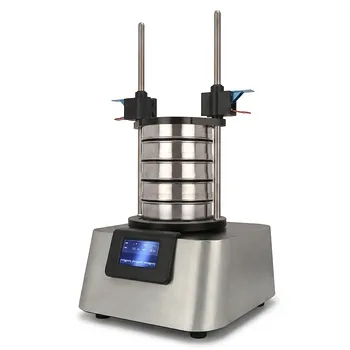
Vibratory Sieve Shaker Electromagnetic 3D Motion Powder Particle Size Analyzer for Dry and Wet Sieving
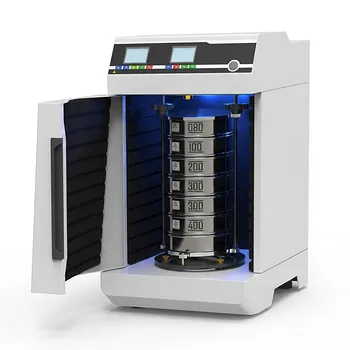
Laboratory Dry and Wet Three Dimensional Vibratory Sieve Shaker for Particle Analysis
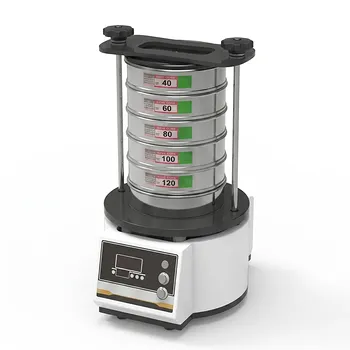
Dry Three Dimensional Vibratory Sieve Shaker
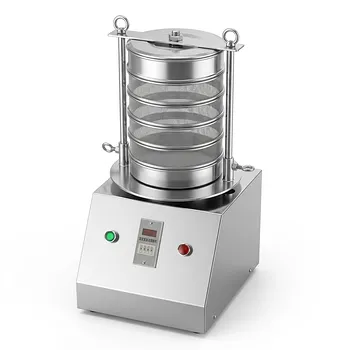
Stainless Steel Laboratory Vibratory Test Sieve Shaker
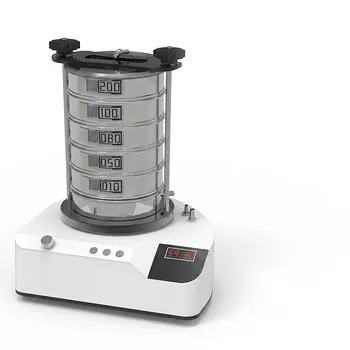
Heavy Duty Dry Three Dimensional Vibratory Sieve Shaker for Particle Separation
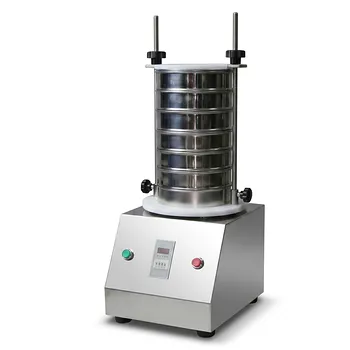
Small Laboratory Vibratory Sieve Shaker for Powder Gradation and Particle Size Analysis
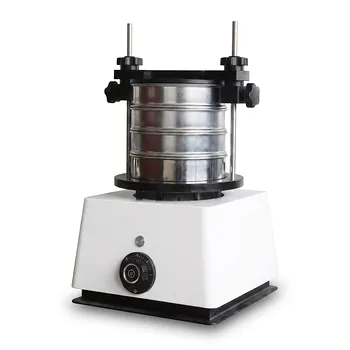
Small Laboratory Vibrating Sieve Shaker for Precise Particle Size Analysis
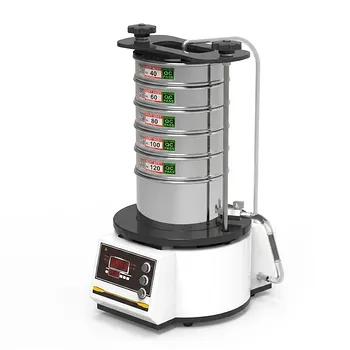
High Frequency Wet Three-Dimensional Vibrating Sieve Shaker for Dry and Wet Particle Size Analysis
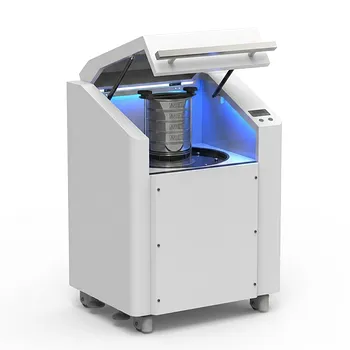
High Frequency Cabinet Type Three-Dimensional Rotary Vibrating Sieve Shaker for Dry Sieving and Particle Classification
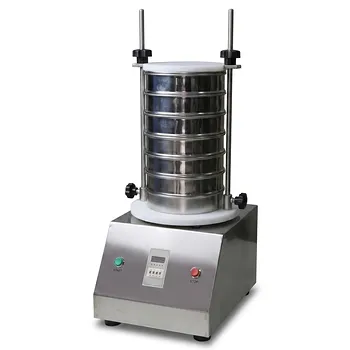
Laboratory Vibratory Test Sieve Shaker for Precision Particle Size Analysis and Powder Grading
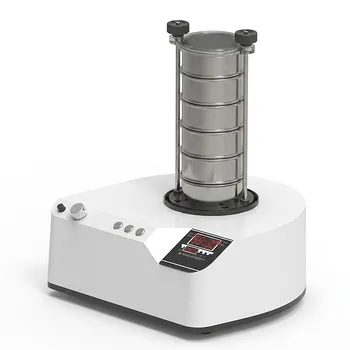
三维电磁微量振动筛分仪
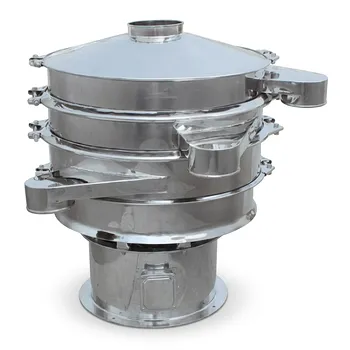
Stainless Steel Rotary Vibrating Sieve High Precision Circular Vibratory Separator Industrial Powder Grading Machine Multi Layer Sifting Equipment
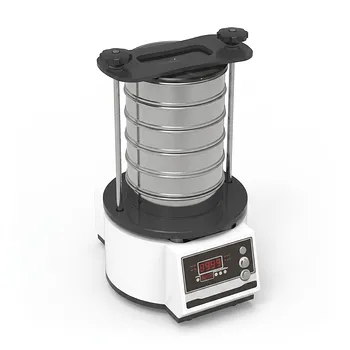
Tapping Oscillating Sieve Shaker for Dry and Wet Particle Size Analysis
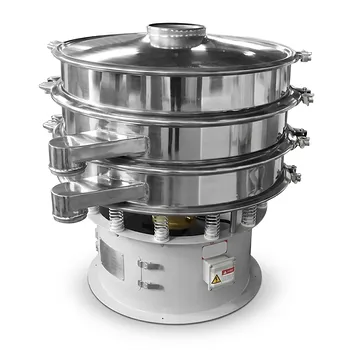
Three Dimensional Rotary Vibrating Sieve
Vibratory Superfine Grinder for Ultra Fine Laboratory Powder Milling
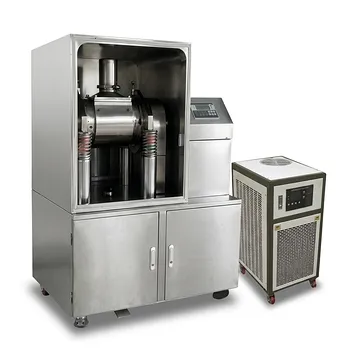
Small Vibrating Ultrafine Grinder for Traditional Chinese Medicine
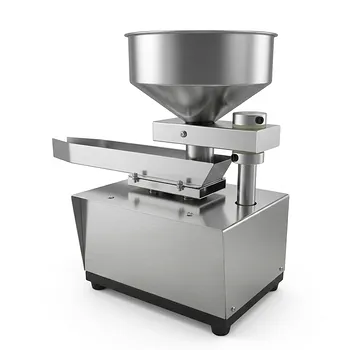
Automatic Vibrating Powder Feeder for Laboratory Material Processing Precision Vibratory Hopper Feeder for Granular and Powder Material Handling Industrial Grade Vibrating Tray Feeder for Consistent Material Sample Preparation