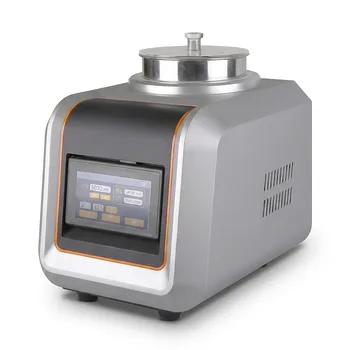
How are vibratory sieve shakers and test sieves used for spherical drugs? Optimize Particle Size & Dose Accuracy
Updated 4 months ago
Vibratory sieve shakers and standard test sieves are used to mechanically classify and physically characterize spherical crystallization drugs by separating agglomerates into specific particle size ranges. This process involves placing dried drug particles onto a stack of precision mesh screens and applying controlled vibration to drive them through the apertures. The resulting mass distribution data is used to calculate the average particle size, which is critical for ensuring dose accuracy, flowability, and consistent drug release in the final pharmaceutical product.
Sieve analysis provides a direct, non-destructive method for quantifying particle size distribution (PSD), serving as a core detection method to verify process uniformity. By measuring the mass percentage of residue on each sieve layer, manufacturers can ensure that the crystallization process meets strict physical specifications for downstream production.
The Mechanism of Particle Size Classification
Controlled Vibration and Layered Separation
Vibratory sieve shakers utilize mechanical oscillation, often combined with tapping or ultrasonic assistance, to move spherical agglomerates across multiple layers of standard test sieves. Each sieve in the stack has a specific mesh size (ranging from 10 to 120 mesh), allowing particles to be graded based on their geometric dimensions.
Mass-Based Distribution Analysis
After a set vibration duration and amplitude, the mass of the microspheres retained on each sieve is measured. This data allows for the calculation of the cumulative distribution percentage and the modal size, which are essential parameters for evaluating the success of the granulation or crystallization process.
Verification of Size Thresholds
The equipment helps determine if a grinding or crystallization process has reached a required particle size threshold, such as 850 micrometers. This physical separation is a standard method used to minimize sampling errors and ensure the overall uniformity of the granules.
Critical Impacts on Pharmaceutical Performance
Ensuring Dosage Accuracy and Filling Uniformity
High particle size uniformity is a critical indicator for ensuring filling accuracy during the tablet compression process. Consistent particle sizes minimize weight variation, which is vital for maintaining the correct therapeutic dosage in every unit produced.
Optimizing Flowability and Compression
The size and shape of spherical aggregates directly influence their flowability in industrial machinery. Sieve analysis helps technicians predict how well the drug will move through hoppers and dies, which is essential for efficient direct tablet compression.
Predicting Drug Release Kinetics
The particle size distribution determined by sieving serves as a predictor for drug release kinetics. Because surface area-to-volume ratios change with particle size, maintaining a specific range ensures the drug dissolves at a consistent and predictable rate within the patient.
Process Optimization and Quality Control
Evaluating Crystallization Parameters
Sieve evaluation allows manufacturers to see how variables like stirring intensity and the dosage of stabilizers affect granulation results. By analyzing the final particle sizes, technicians can optimize the polymerization or dispersion formula to reach target outcomes.
Monitoring Process Repeatability
The use of standardized sieving paths helps evaluate the repeatability of the melt dispersion or spherical crystallization process. Consistent sieve results across different batches indicate a stable manufacturing environment and a reliable final product.
Understanding the Trade-offs
Particle Attrition and Fragility
One significant risk of mechanical sieving is particle attrition, where the vibration force causes fragile spherical crystals to break apart. This can lead to an inaccurate representation of the particle size distribution, showing a higher percentage of "fines" than were originally present.
Sieve Blinding and Material Loss
Electrostatic charges or residual moisture in the drug particles can lead to sieve blinding, where the mesh openings become clogged. If the equipment is not properly maintained or if the vibration amplitude is incorrect, it can result in incomplete separation and inaccurate mass calculations.
How to Apply Sieve Analysis to Your Evaluation
- If your primary focus is Dosage Consistency: Use sieve analysis to minimize weight variation during tablet compression by ensuring the majority of particles fall within a narrow, uniform size range.
- If your primary focus is Process Optimization: Utilize the mass distribution data to adjust stirring speeds and stabilizer concentrations until the target modal size is consistently achieved.
- If your primary focus is Dissolution Profiling: Correlate sieve-based particle size data with drug release tests to establish a reliable physical threshold for predictable therapeutic performance.
By mastering the use of vibratory shakers and standard sieves, you gain the precise physical data required to transform a crystallization process into a predictable, high-quality pharmaceutical operation.
Summary Table:
| Application Area | Key Metric Measured | Impact on Pharmaceutical Performance |
|---|---|---|
| Size Classification | Particle Size Distribution (PSD) | Ensures process uniformity and repeatability |
| Quality Control | Modal Size & Mass Percentage | Guarantees dosage accuracy and filling uniformity |
| Flow Analysis | Geometric Dimensions | Optimizes powder movement and tablet compression |
| Kinetic Prediction | Surface Area-to-Volume Ratio | Controls drug dissolution and release rates |
| Process Tuning | Cumulative Distribution | Validates stirring intensity and stabilizer dosage |
Elevate Your Material Analysis with Precision Lab Solutions
Achieving consistent particle size in spherical crystallization is vital for drug efficacy. At [Company Name], we provide complete laboratory sample preparation solutions designed for rigorous material science and pharmaceutical requirements.
Our expertise spans the entire powder processing workflow, offering:
- Sieving Excellence: Vibratory and air-jet sieve shakers with high-precision test sieves for accurate PSD analysis.
- Advanced Milling: Planetary ball mills, jet mills, and cryogenic grinders for superior particle refinement.
- Compaction & Pressing: A full spectrum of hydraulic presses, including Cold/Warm Isostatic Presses (CIP/WIP), vacuum hot presses, and XRF pellet presses.
- Mixing Technology: Specialized powder and defoaming mixers to ensure uniform formulation.
Ready to optimize your lab's efficiency and product quality? Contact our technical experts today to find the perfect equipment for your application!
References
- Hema Latha B, P Hyma. SPHERICAL CRYSTALLIZATION: A TOOL TO IMPROVE SOLUBILITY OF DRUGS. DOI: 10.55218/jasr.2022131105
Mentioned Products
- Vibratory Sieve Shaker Electromagnetic 3D Motion Powder Particle Size Analyzer for Dry and Wet Sieving
- Heavy Duty Dry Three Dimensional Vibratory Sieve Shaker for Particle Separation
- Laboratory Dry and Wet Three Dimensional Vibratory Sieve Shaker for Particle Analysis
- Dry Three Dimensional Vibratory Sieve Shaker
- Stainless Steel Laboratory Vibratory Test Sieve Shaker
People Also Ask
- How does a vibratory sieve shaker contribute to optimizing the performance of activated carbon? Enhance Adsorption Precision
- Why is a laboratory vibratory sieve shaker necessary for processing magnesium-based borate precursor powders? Boost Activity
- Why use a vibratory sieve shaker to verify coarse aggregate grading in rubberized concrete? Ensure Structural Integrity
- What function do vibratory sieve shakers and standard test sieves serve in the preparation of adsorbents? Key Guide
- What role does a vibratory sieve shaker play in the particle size analysis of ground corn products? Enhance QC Precision

Tech Team · PowderPreparation
Last updated on Jun 03, 2026
Related Products
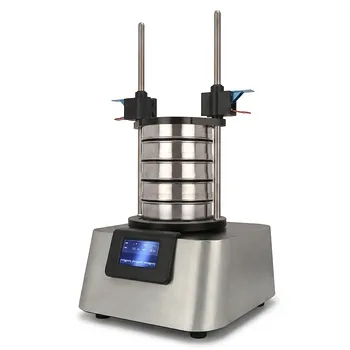
Vibratory Sieve Shaker Electromagnetic 3D Motion Powder Particle Size Analyzer for Dry and Wet Sieving

Heavy Duty Dry Three Dimensional Vibratory Sieve Shaker for Particle Separation
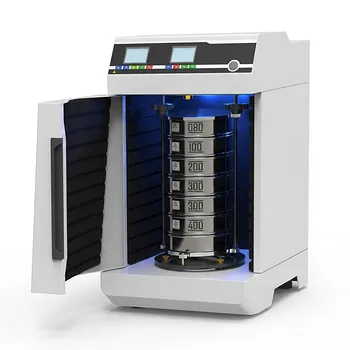
Laboratory Dry and Wet Three Dimensional Vibratory Sieve Shaker for Particle Analysis

Dry Three Dimensional Vibratory Sieve Shaker
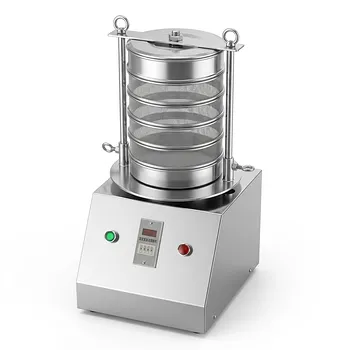
Stainless Steel Laboratory Vibratory Test Sieve Shaker
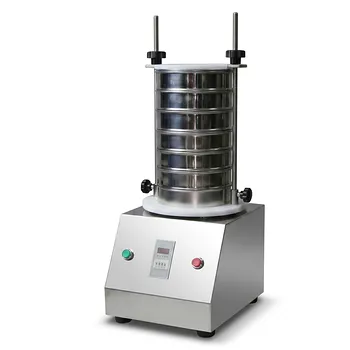
Small Laboratory Vibratory Sieve Shaker for Powder Gradation and Particle Size Analysis
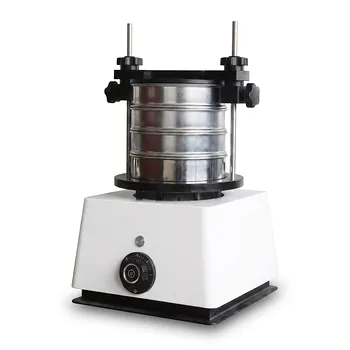
Small Laboratory Vibrating Sieve Shaker for Precise Particle Size Analysis
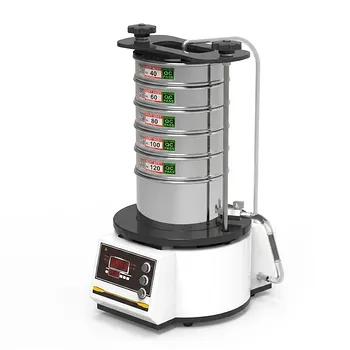
High Frequency Wet Three-Dimensional Vibrating Sieve Shaker for Dry and Wet Particle Size Analysis
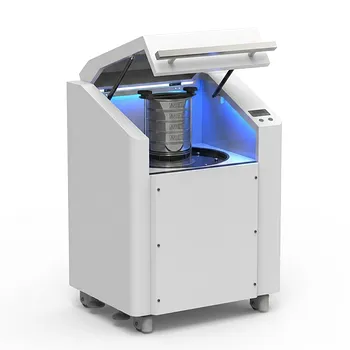
High Frequency Cabinet Type Three-Dimensional Rotary Vibrating Sieve Shaker for Dry Sieving and Particle Classification

Laboratory Vibratory Test Sieve Shaker for Precision Particle Size Analysis and Powder Grading
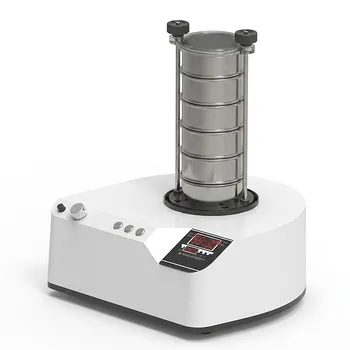
三维电磁微量振动筛分仪
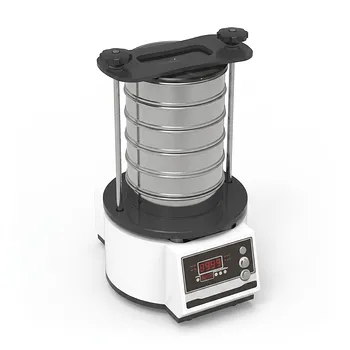
Tapping Oscillating Sieve Shaker for Dry and Wet Particle Size Analysis

Stainless Steel Rotary Vibrating Sieve High Precision Circular Vibratory Separator Industrial Powder Grading Machine Multi Layer Sifting Equipment
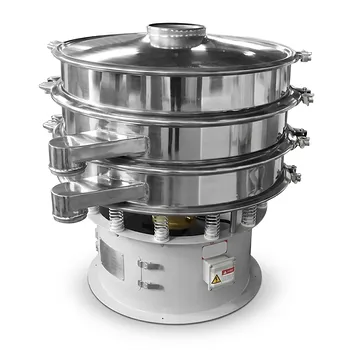
Three Dimensional Rotary Vibrating Sieve
Small Vibrating Ultrafine Grinder for Traditional Chinese Medicine
Automatic Vibrating Powder Feeder for Laboratory Material Processing Precision Vibratory Hopper Feeder for Granular and Powder Material Handling Industrial Grade Vibrating Tray Feeder for Consistent Material Sample Preparation
Vibratory Superfine Grinder for Ultra Fine Laboratory Powder Milling
Vibratory Disc Mill for Rapid Fine Grinding and High Throughput Sample Preparation of Hard and Brittle Materials