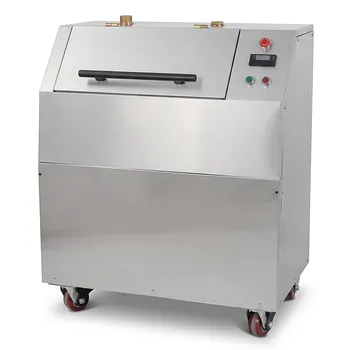
How are vibratory sieve shakers and standard test sieves used to optimize the talc grinding process? Achieve Precision.
Updated 5 months ago
Optimizing talc grinding depends on precise particle size feedback. Vibratory sieve shakers and standard test sieves, typically including 106-micron (150 mesh) screens, provide the quantitative data needed to adjust mill rotation speed, material filling rates, and grinding duration. By measuring the percentage of material passing through specific mesh sizes, operators can calibrate the process to hit exact fineness targets and maximize mechanical efficiency.
Sieve analysis converts physical grinding results into actionable data. By calculating passing rates and particle size distributions, technicians can systematically adjust mechanical variables to minimize energy waste and ensure the final talc product meets strict industrial specifications.
Benchmarking Grinding Efficiency
The Role of the 106-Micron Sieve
In primary grinding stages, the 106-micron (150 mesh) sieve serves as a critical benchmark for evaluating ball mill performance. This specific aperture allows operators to determine the ratio of adequately ground material to oversized particles.
Tracking the Passing Rate
The core metric for optimization is the percentage of material that passes through the sieve. By calculating this value, technical operators can quantify the "fineness" of the talc and determine if the current settings are achieving the desired size reduction.
Establishing the Base Line
Sieve analysis provides the foundational data required to plot the relationship between grinding time and particle size. This is essential for ensuring the talc reaches the necessary fineness for downstream processes like flotation or chemical additive mixing.
Advanced Metrics for Quality Control
Establishing Particle Size Distribution (PSD)
Vibratory shakers using a stack of multiple sieves—ranging from 125 to 5600 micrometers—reveal the full Particle Size Distribution. This comprehensive view shows not just the average size, but the range of sizes present in the talc sample.
Utilizing D50 and D90 Indicators
By weighing the mass retained on each sieve level, technicians can calculate critical indicators such as the median particle size (D50) and the D90 (the size at which 90% of the sample is finer). These metrics are the primary technical indicators for evaluating the efficiency of different grinding technologies.
Measuring Uniformity
A narrow distribution indicates a high uniformity coefficient, which is often desirable in talc processing to ensure consistent performance in end-user applications. Sieve analysis allows operators to identify "slime" (excessively fine particles) versus target-sized particles to build more accurate process prediction models.
Correlating Variables with Results
Adjusting Mill Speed and Filling Rates
The data gathered from a vibratory sieve shaker directly informs how to adjust mill rotation speed and material filling rates. If the passing rate is too low, operators may need to reduce the filling rate or increase the rotation speed to enhance the impact energy within the mill.
Determining Optimal Grinding Duration
Continuous sieving tests help identify the exact point of diminishing returns for grinding duration. Finding this optimal time ensures that the mill is not consuming excess energy to produce material that is already within the target specification.
Isolating Test Fractions
For specialized testing, shakers are used to isolate specific fractions, such as the range between 1.18mm and 0.600mm. This allows for controlled grinding experiments that help determine the Hardgrove Grindability Index (HGI), a measure of how easily the raw talc can be pulverized.
Understanding the Trade-offs
Dry vs. Wet Sieve Analysis
While dry sieving is faster and more convenient for many powders, talc's hydrophobic nature and tendency to agglomerate can sometimes lead to inaccurate results. Wet sieving may be required for finer mesh sizes (e.g., 75μm) to ensure particles are properly dispersed and pass through the mesh.
Sieve Blinding and Wear
Standard test sieves are precision instruments that suffer from blinding, where particles become wedged in the mesh. Regular cleaning and calibration are necessary; otherwise, the data will suggest a coarser grind than actually exists, leading to incorrect mill adjustments.
Limits of Mechanical Sieving
Mechanical vibration classification is highly effective down to approximately 25 μm to 63 μm. For ultra-fine talc products requiring sub-micron sizes, standard sieving reaches its physical limit, and laser diffraction or other advanced technologies must supplement the data.
Applying This Insights to Your Project
Making the Right Choice for Your Goal
- If your primary focus is maximizing throughput: Use a single 106-micron sieve to rapidly monitor the passing rate and adjust the mill filling rate in real-time.
- If your primary focus is product consistency: Employ a multi-layer sieve stack (63μm to 250μm) to calculate the D50 and uniformity coefficient for every batch.
- If your primary focus is energy efficiency: Conduct timed grinding studies using a vibratory shaker to find the shortest duration required to reach your target passing percentage.
- If your primary focus is downstream process performance: Focus on the percentage of solids passing through a 75μm sieve to ensure optimal flotation efficiency.
Precise sieve analysis transforms the grinding process from an estimation into a controlled, data-driven operation.
Summary Table:
| Optimization Focus | Sieve/Metric Used | Actionable Outcome |
|---|---|---|
| Grinding Efficiency | 106-micron (150 mesh) | Adjust mill rotation speed and filling rates |
| Product Consistency | D50 & D90 Indicators | Ensure uniform particle size for end-user apps |
| Energy Saving | Timed Grinding Studies | Identify point of diminishing returns to save power |
| Process Calibration | 1.18mm - 0.600mm | Determine Hardgrove Grindability Index (HGI) |
| Quality Control | Sieve Stack (63μm - 250μm) | Calculate uniformity and identify 'slime' levels |
Elevate Your Powder Processing Precision
Optimizing talc grinding requires more than just data—it requires reliable, high-precision equipment. We provide complete laboratory sample preparation solutions tailored for material science, specializing in the entire lifecycle of powder processing and compaction.
Our extensive product range includes:
- Size Reduction: Jaw/roll crushers, liquid nitrogen cryogenic grinders, and high-energy mills (planetary, jet, sand, disc, and rotor).
- Classification: Vibratory and air-jet sieve shakers with a full range of precision test sieves.
- Mixing & Preparation: Powder mixers and advanced defoaming mixers.
- Compaction: A full spectrum of hydraulic presses, including Cold/Warm Isostatic Presses (CIP/WIP), standard lab presses, and vacuum hot presses.
Whether you are refining industrial minerals or developing advanced materials, our expertise ensures your lab achieves maximum efficiency and repeatable results. Contact us today to find the perfect solution for your workflow!
References
- Ömer GÜLEÇ, Metin Uçurum. Combination of Conventional Ball Mill and Stirred Mill to Obtain Ultra-Fine Talc. DOI: 10.21605/cukurovaumfd.1377725
Mentioned Products
- Vibratory Sieve Shaker Electromagnetic 3D Motion Powder Particle Size Analyzer for Dry and Wet Sieving
- Laboratory Dry and Wet Three Dimensional Vibratory Sieve Shaker for Particle Analysis
- Dry Three Dimensional Vibratory Sieve Shaker
- Stainless Steel Laboratory Vibratory Test Sieve Shaker
- Heavy Duty Dry Three Dimensional Vibratory Sieve Shaker for Particle Separation
People Also Ask
- How does a vibratory sieve shaker contribute to optimizing the performance of activated carbon? Enhance Adsorption Precision
- Why is a laboratory vibratory sieve shaker necessary for processing magnesium-based borate precursor powders? Boost Activity
- Why use a vibratory sieve shaker to verify coarse aggregate grading in rubberized concrete? Ensure Structural Integrity
- What function do vibratory sieve shakers and standard test sieves serve in the preparation of adsorbents? Key Guide
- What role does a vibratory sieve shaker play in the particle size analysis of ground corn products? Enhance QC Precision

Tech Team · PowderPreparation
Last updated on May 14, 2026
Related Products
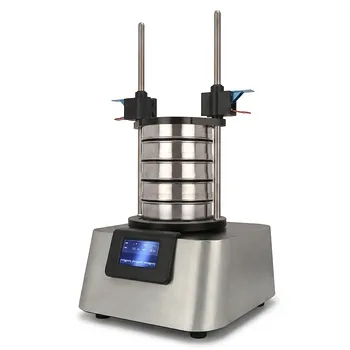
Vibratory Sieve Shaker Electromagnetic 3D Motion Powder Particle Size Analyzer for Dry and Wet Sieving
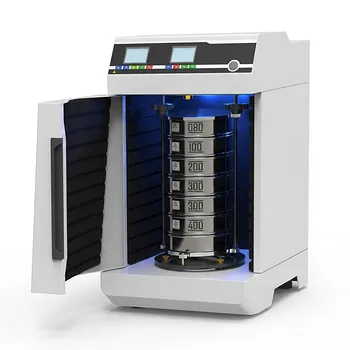
Laboratory Dry and Wet Three Dimensional Vibratory Sieve Shaker for Particle Analysis
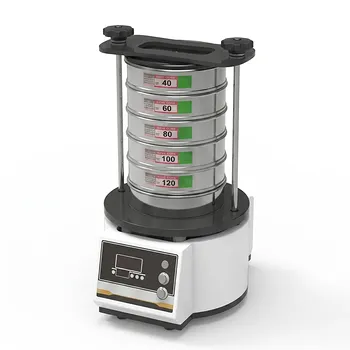
Dry Three Dimensional Vibratory Sieve Shaker
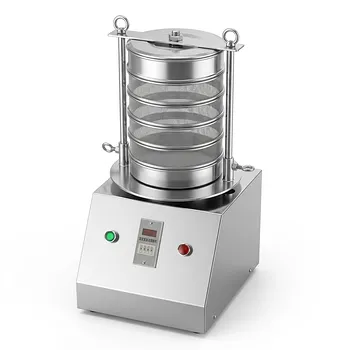
Stainless Steel Laboratory Vibratory Test Sieve Shaker
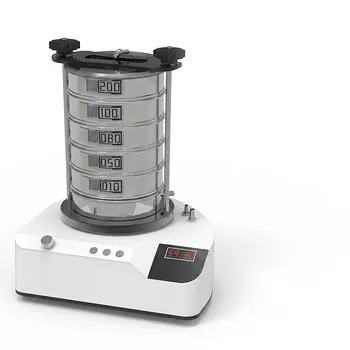
Heavy Duty Dry Three Dimensional Vibratory Sieve Shaker for Particle Separation
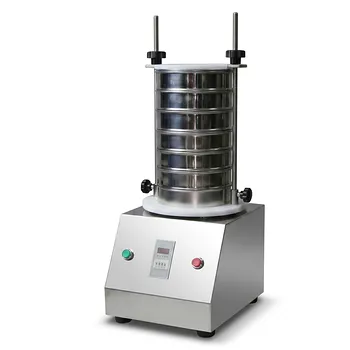
Small Laboratory Vibratory Sieve Shaker for Powder Gradation and Particle Size Analysis
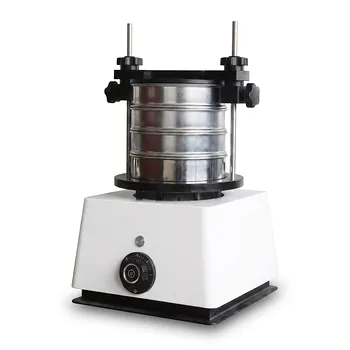
Small Laboratory Vibrating Sieve Shaker for Precise Particle Size Analysis
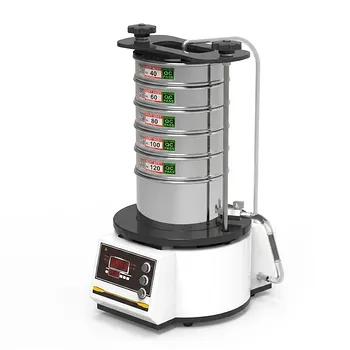
High Frequency Wet Three-Dimensional Vibrating Sieve Shaker for Dry and Wet Particle Size Analysis
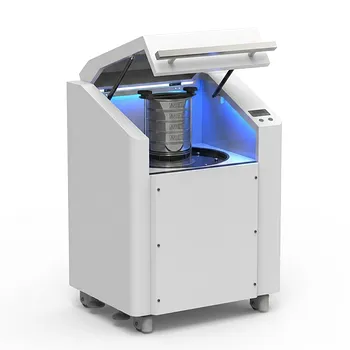
High Frequency Cabinet Type Three-Dimensional Rotary Vibrating Sieve Shaker for Dry Sieving and Particle Classification
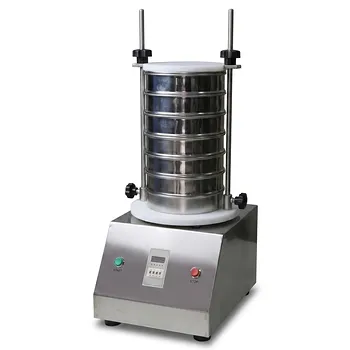
Laboratory Vibratory Test Sieve Shaker for Precision Particle Size Analysis and Powder Grading
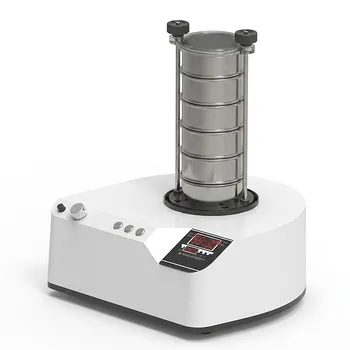
三维电磁微量振动筛分仪
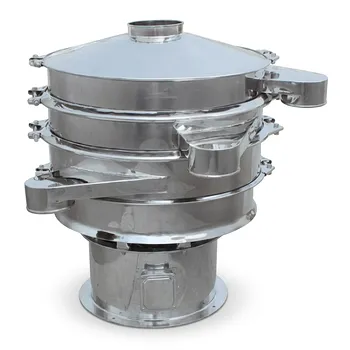
Stainless Steel Rotary Vibrating Sieve High Precision Circular Vibratory Separator Industrial Powder Grading Machine Multi Layer Sifting Equipment
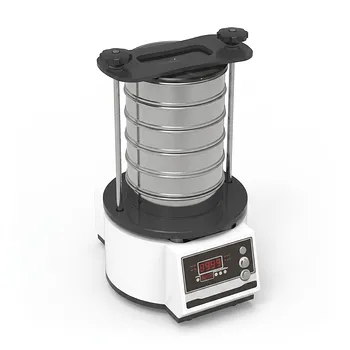
Tapping Oscillating Sieve Shaker for Dry and Wet Particle Size Analysis
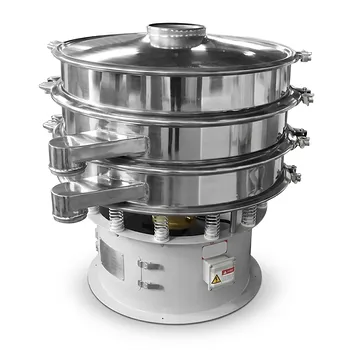
Three Dimensional Rotary Vibrating Sieve
Vibratory Superfine Grinder for Ultra Fine Laboratory Powder Milling
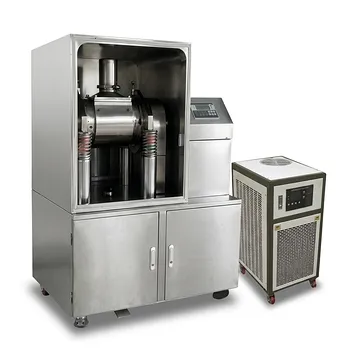
Small Vibrating Ultrafine Grinder for Traditional Chinese Medicine
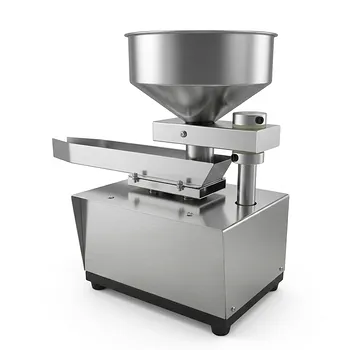
Automatic Vibrating Powder Feeder for Laboratory Material Processing Precision Vibratory Hopper Feeder for Granular and Powder Material Handling Industrial Grade Vibrating Tray Feeder for Consistent Material Sample Preparation