How are vibratory sieve shakers and standard test sieves used to evaluate the effectiveness of rubber pulverization? PSD Guide
Updated 3 months ago
The evaluation of rubber pulverization relies on precise particle size distribution (PSD) analysis. Vibratory sieve shakers and standard test sieves work in tandem to physically separate rubber powders into specific size fractions, allowing for the precise quantification of material fineness. This data is essential for determining how different additives or mixing equipment influence the final powder quality and for optimizing industrial process parameters.
This equipment provides a standardized, non-destructive method to determine the mass distribution of rubber particles across various mesh sizes. By calculating metrics like the median particle size (d50) and uniformity coefficient, engineers can objectively measure the efficiency of grinding processes and ensure product consistency.
Quantifying Pulverization Efficiency
Determining Particle Size Distribution (PSD)
Vibratory sieve shakers utilize a stack of standard test sieves with decreasing aperture sizes to categorize rubber particles by their physical dimensions. This "grading" process identifies the mass percentage of material retained on each level, creating a clear map of the powder's composition.
Calculating Core Performance Metrics
The data collected from the sieving process allows for the calculation of critical indicators such as the Geometric Mean Diameter (GMD) and the Span value. These metrics provide a mathematical basis for evaluating the stability and reproducibility of the production line.
Measuring Process Uniformity
By analyzing the Geometric Standard Deviation (GSD), technical personnel can assess the "tightness" of the particle distribution. A lower deviation indicates a more uniform pulverization process, which is often required for high-performance rubber-cement composites or recycled rubber applications.
Optimizing the Industrial Process
Evaluating Mixing and Additive Impact
Sieve analysis allows researchers to quantify how specific additive sequences or carbon black content influence the final particle size. This enables the fine-tuning of chemical formulations to achieve the desired degree of rubber breakdown during dynamic vulcanization.
Calibrating Pulverization Intensity
The physical separation of particles reveals whether a grinding technology—such as a hammer mill or roller mill—has reached the required particle size threshold. If the residue on the upper sieves is too high, it indicates that the grinding intensity or duration needs adjustment.
Ensuring Structural Integrity
In specialized applications like rubber-cement composites, sieve shakers ensure the aggregate packing density is optimized. Precise particle size control is necessary to maintain the structural uniformity and mechanical properties of the final composite material.
The Physical Mechanism of Separation
Sieve Stacking and Aperture Precision
Standardized sieves, often ranging from 38 μm to 5 mm, are stacked in a specific order to ensure systematic classification. High-precision stainless steel mesh ensures that the results are repeatable and meet international standards for material testing.
Mechanical Vibration and Energy Transfer
The shaker uses mechanical oscillation, and sometimes ultrasonic waves or air-jet assistance, to drive the rubber sample through the sieve stack. This energy overcomes the friction and static electricity common in fine rubber powders, ensuring that every particle finds its appropriate size fraction.
Understanding the Trade-offs
Material Limitations and Clogging
Fine rubber particles are often prone to agglomeration or "blinding" the sieve mesh due to their elastic nature and static charge. This can lead to inaccurate weight measurements and requires careful monitoring or the use of anti-blinding aids.
Sampling Errors
The accuracy of the evaluation is highly dependent on the representativeness of the sample. Because pulverization results can vary across a large batch, small-scale laboratory sieving may not always capture the full variance of a continuous industrial process.
Shape Factor Sensitivity
Sieve analysis assumes particles are spherical, but pulverized rubber is often irregular or elongated. This can lead to "near-size" particles passing through or being retained based on their orientation, slightly skewing the perceived distribution.
How to Apply This to Your Project
To maximize the value of your particle analysis, align your sieving strategy with your specific production goals.
- If your primary focus is material uniformity: Prioritize the calculation of the Span value and GSD to ensure your grinding process is producing a consistent, repeatable output.
- If your primary focus is optimizing chemical additives: Use high-precision sieves (below 250μm) to detect subtle shifts in particle fineness caused by different vulcanization agents or carbon black grades.
- If your primary focus is industrial throughput: Use sieve analysis to identify the minimum grinding time required to meet your D50 threshold, thereby reducing energy consumption and increasing efficiency.
Mastering the use of vibratory shakers ensures that your rubber pulverization process is guided by objective data rather than guesswork.
Summary Table:
| Evaluation Metric | Description | Industrial Benefit |
|---|---|---|
| PSD Analysis | Physical separation into size fractions | Maps powder composition and fineness |
| d50 & GMD | Median and mean particle size calculation | Quantifies pulverization intensity |
| Span & GSD | Measuring particle size spread/deviation | Assesses process stability and uniformity |
| Sieve Stacking | Precision mesh from 38 μm to 5 mm | Ensures repeatable, standardized results |
| Mechanical Vibration | High-energy oscillation / Ultrasonic | Overcomes static charge and agglomeration |
Elevate Your Material Research with Expert Sample Preparation
Achieving precise particle size distribution is critical for high-performance rubber composites. At [Brand Name], we provide complete laboratory sample preparation solutions for material science, specializing in high-precision powder processing and compaction equipment.
Our extensive product line is designed to streamline your workflow:
- Sieve Analysis: Vibratory and air-jet sieve shakers with a full range of high-precision test sieves.
- Pulverization: Liquid nitrogen cryogenic grinders, planetary ball mills, and jet mills for optimal rubber breakdown.
- Compaction & Forming: A full spectrum of hydraulic presses, including Cold/Warm Isostatic Presses (CIP/WIP), vacuum hot presses, and XRF pellet presses.
Whether you are a researcher optimizing chemical formulations or a distributor looking for reliable OEM/ODM support, we deliver the consistency your lab demands. Contact us today to find the perfect equipment for your rubber pulverization and analysis needs!
References
- Koji Okamoto, Michiharu Toh. Breaking Behavior of Elastomer in Rubber Mixers (2). DOI: 10.2324/gomu.91.177
Mentioned Products
- Stainless Steel Laboratory Vibratory Test Sieve Shaker
- Laboratory Vibratory Test Sieve Shaker for Precision Particle Size Analysis and Powder Grading
- Vibratory Sieve Shaker Electromagnetic 3D Motion Powder Particle Size Analyzer for Dry and Wet Sieving
- Small Laboratory Vibrating Sieve Shaker for Precise Particle Size Analysis
- Small Laboratory Vibratory Sieve Shaker for Powder Gradation and Particle Size Analysis
People Also Ask
- What function does a laboratory vibratory sieve shaker serve in the production process of metakaolin? Optimize Reactivity
- Why is a precision laboratory vibratory sieve shaker necessary for particle size control? Optimize Biomass Carbonization
- What is the function of a laboratory vibratory sieve shaker? Enhance Coal Particle Size Distribution (PSD) Analysis
- What role do laboratory vibratory sieve shakers and test sieves play before the molding of Nb-Cu composite powders?
- What is the primary function of a laboratory vibratory sieve shaker in the evaluation of sand liquefaction potential?

Tech Team · PowderPreparation
Last updated on Jun 03, 2026
Related Products
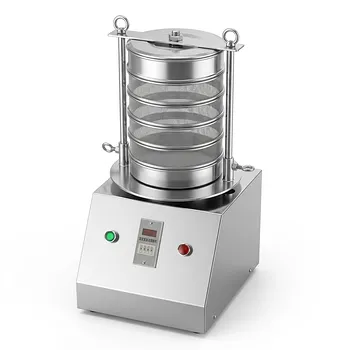
Stainless Steel Laboratory Vibratory Test Sieve Shaker
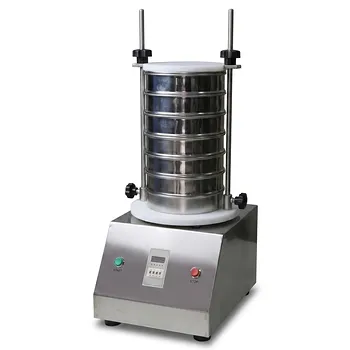
Laboratory Vibratory Test Sieve Shaker for Precision Particle Size Analysis and Powder Grading
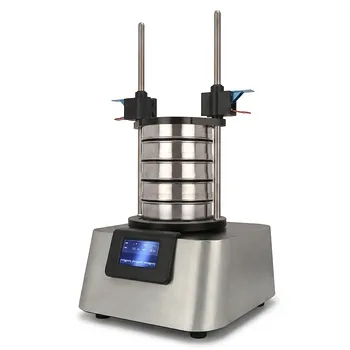
Vibratory Sieve Shaker Electromagnetic 3D Motion Powder Particle Size Analyzer for Dry and Wet Sieving
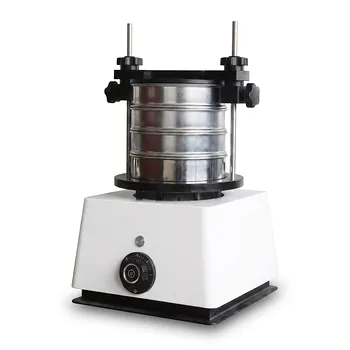
Small Laboratory Vibrating Sieve Shaker for Precise Particle Size Analysis
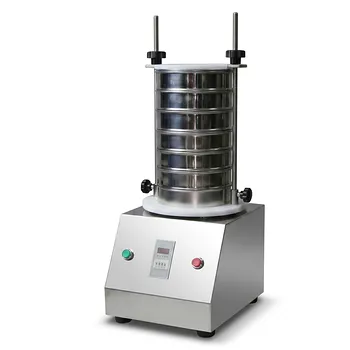
Small Laboratory Vibratory Sieve Shaker for Powder Gradation and Particle Size Analysis
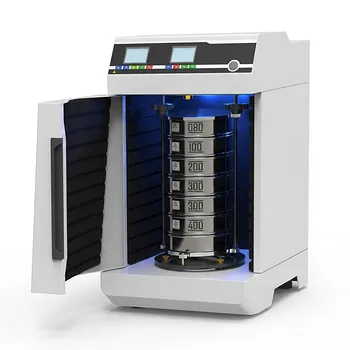
Laboratory Dry and Wet Three Dimensional Vibratory Sieve Shaker for Particle Analysis
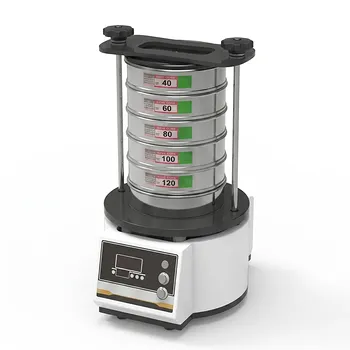
Dry Three Dimensional Vibratory Sieve Shaker
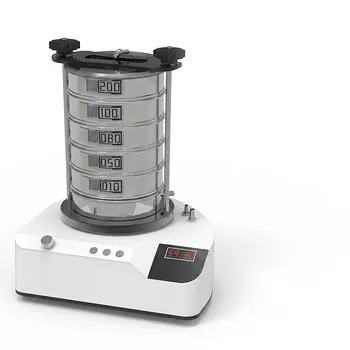
Heavy Duty Dry Three Dimensional Vibratory Sieve Shaker for Particle Separation
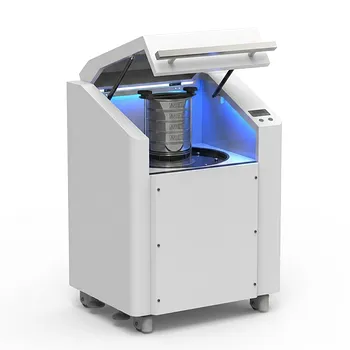
High Frequency Cabinet Type Three-Dimensional Rotary Vibrating Sieve Shaker for Dry Sieving and Particle Classification
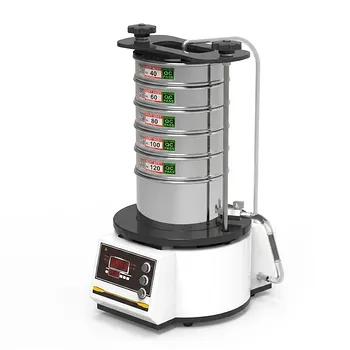
High Frequency Wet Three-Dimensional Vibrating Sieve Shaker for Dry and Wet Particle Size Analysis
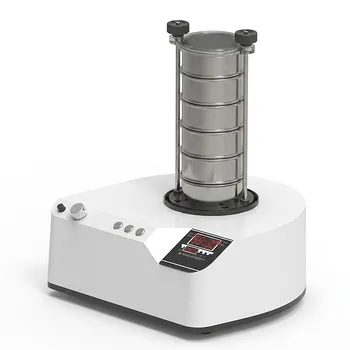
三维电磁微量振动筛分仪
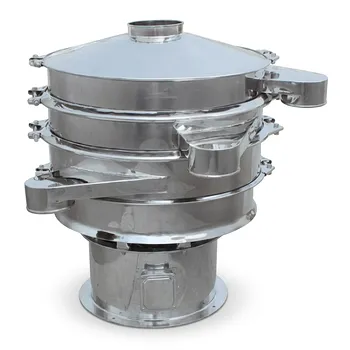
Stainless Steel Rotary Vibrating Sieve High Precision Circular Vibratory Separator Industrial Powder Grading Machine Multi Layer Sifting Equipment
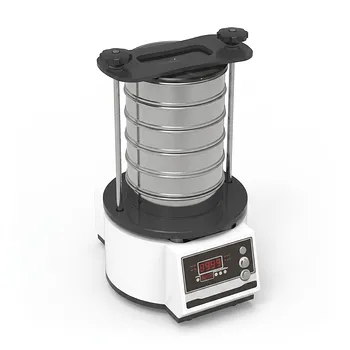
Tapping Oscillating Sieve Shaker for Dry and Wet Particle Size Analysis
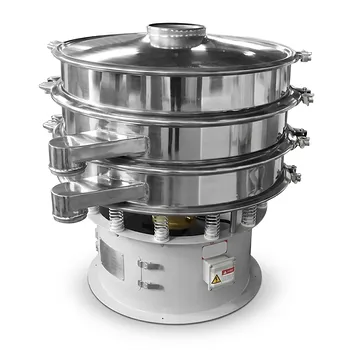
Three Dimensional Rotary Vibrating Sieve
Vibratory Superfine Grinder for Ultra Fine Laboratory Powder Milling
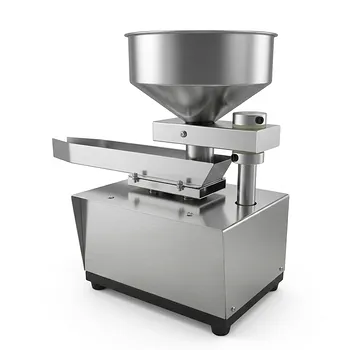
Automatic Vibrating Powder Feeder for Laboratory Material Processing Precision Vibratory Hopper Feeder for Granular and Powder Material Handling Industrial Grade Vibrating Tray Feeder for Consistent Material Sample Preparation