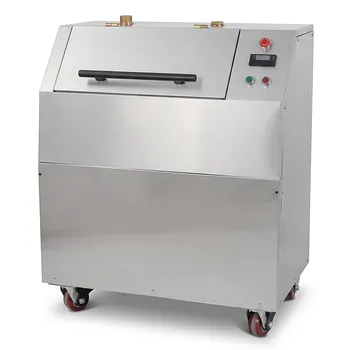
How are vibratory sieve shakers used in cement separation? Master Phase Isolation & Grading for Superior Results
Updated 4 months ago
Separating cement components requires a high-precision approach that leverages physical properties beyond just particle size. Vibratory sieve shakers, when paired with micro-mesh sieves as fine as 11 micrometers, allow for the isolation of cement clinker from sulfate additives like gypsum by exploiting differences in material hardness. This process is essential for phase isolation, precise grading analysis, and ensuring the mechanical integrity of the final cementitious product.
Core Takeaway: Vibratory sieving technology enables the physical separation of cement phases and the precise grading of aggregates, which is fundamental for optimizing packing density, controlling hydration rates, and meeting rigorous engineering standards.
Phase Isolation Through Physical Properties
Leveraging Differential Hardness
The primary use of micro-mesh sieves in cement analysis is the physical separation of components based on their abrasiveness and hardness. Because cement clinker is significantly harder than additives such as gypsum, high-precision sieving can effectively sort these materials.
Enrichment of the Clinker Phase
When subjected to vibratory action, the harder clinker particles resist breakdown and are enriched in the coarser fractions of the sieve stack. This allows researchers to isolate the clinker phase from the softer sulfate additives, which tend to pass through finer apertures.
The Role of Micro-Mesh Apertures
Utilizing apertures as small as 11 micrometers ensures that even the finest variations in particle size and material composition are captured. This level of precision is necessary for detailed chemical and physical analysis of the cement's constituent parts.
Particle Size Distribution and Material Performance
Optimizing Packing Density
Vibratory shakers perform critical grading analysis of sand and aggregates used in cement mortar. By achieving a continuous grading of particles, manufacturers can optimize the packing density, which reduces porosity and increases the final strength of the material.
Controlling Hydration and Setting Times
The fineness of cement—often controlled using 120-150 mesh sieves—directly impacts the hydration heat and setting times. Precise control of particles in the 106-125 micrometer range ensures that the pozzolanic reactions occur at a predictable and optimal rate.
Breaking Down Agglomerates
Fine materials like calcium carbide residue often form soft agglomerates that can skew grading data. The high-frequency mechanical force of a vibratory shaker effectively breaks these clusters, ensuring the resulting distribution curve reflects the true physical characteristics of the raw material.
Understanding the Trade-offs
Mesh Blinding and Maintenance
Micro-mesh sieves are highly susceptible to blinding, where fine particles lodge in the apertures and restrict flow. While vibratory shakers use a "throw" action to minimize this, the delicate nature of high-mesh screens requires frequent cleaning and careful handling to maintain accuracy.
Accuracy vs. Material Throughput
While high-frequency vibration increases efficiency compared to manual sieving, the process for micro-fine particles is inherently slower. Achieving a truly representative separation often requires longer cycle times, which may conflict with high-volume production demands.
Equipment Wear and Calibration
The mechanical intensity required to separate hard clinker particles can lead to sieve wear over time. To remain compliant with standards like ASTM C136, equipment must be regularly calibrated to ensure that the vibration amplitude and frequency remain within specified tolerances.
How to Apply This to Your Project
Making the Right Choice for Your Goal
To maximize the utility of your sieving equipment, align your configuration with your specific technical objective:
- If your primary focus is Phase Analysis: Utilize high-precision micro-mesh sieves (e.g., 11μm) and low-amplitude vibration to isolate clinker from softer additives without causing excessive particle degradation.
- If your primary focus is Mechanical Strength: Prioritize continuous grading of aggregates using a full stack of standard test sieves to achieve the highest possible packing density in your mortar or concrete mix.
- If your primary focus is Hydration Control: Use 120-150 mesh sieves to monitor the fineness modulus of your cement, ensuring consistent setting times and heat evolution across batches.
- If your primary focus is Regulatory Compliance: Ensure your vibratory shaker uses digital, reproducible settings to meet ASTM and civil engineering standards for aggregate and asphalt design.
Precision sieving is the technical foundation upon which the density, durability, and chemical stability of modern cement are built.
Summary Table:
| Application Objective | Key Mechanism | Recommended Mesh/Equipment |
|---|---|---|
| Phase Isolation | Differential hardness (Clinker vs. Gypsum) | Micro-mesh sieves (down to 11μm) |
| Mechanical Strength | Optimized packing density & grading | Full stack vibratory test sieves |
| Hydration Control | Monitoring fineness modulus | 120-150 mesh (106-125μm) |
| Data Accuracy | Breaking soft agglomerates | High-frequency vibratory action |
| Compliance | Reproducible digital settings | ASTM C136 compliant shakers |
Elevate Your Material Analysis with Precision Preparation
Achieving accurate cement component separation requires more than just a sieve—it demands a complete sample preparation ecosystem. At our core, we provide complete laboratory sample preparation solutions for material science, specializing in high-performance powder processing and compaction equipment designed to meet rigorous engineering standards like ASTM C136.
Whether you are isolating phases or optimizing mechanical integrity, our extensive product line supports every stage of your workflow:
- Size Reduction: Jaw/roll crushers and liquid nitrogen cryogenic grinders.
- Fine Milling: Planetary ball, jet, sand/bead, disc, and rotor mills.
- Precision Classification: Vibratory and air-jet sieve shakers with a full range of high-precision test sieves.
- Mixing & Compaction: Powder and defoaming mixers, plus a full spectrum of hydraulic presses including CIP/WIP, hot presses, and XRF pellet presses.
Ready to optimize your lab’s efficiency and accuracy? Contact our technical experts today to find the perfect solution for your specific material challenges.
References
- Anera Kazlagić, Gregor J. G. Gluth. Development of a sample preparation procedure for Sr isotope analysis of Portland cements. DOI: 10.1007/s00216-021-03821-7
Mentioned Products
- Vibratory Sieve Shaker Electromagnetic 3D Motion Powder Particle Size Analyzer for Dry and Wet Sieving
- Laboratory Dry and Wet Three Dimensional Vibratory Sieve Shaker for Particle Analysis
- Dry Three Dimensional Vibratory Sieve Shaker
- Stainless Steel Laboratory Vibratory Test Sieve Shaker
- Heavy Duty Dry Three Dimensional Vibratory Sieve Shaker for Particle Separation
People Also Ask
- How does a vibratory sieve shaker contribute to optimizing the performance of activated carbon? Enhance Adsorption Precision
- Why is a laboratory vibratory sieve shaker necessary for processing magnesium-based borate precursor powders? Boost Activity
- Why use a vibratory sieve shaker to verify coarse aggregate grading in rubberized concrete? Ensure Structural Integrity
- What function do vibratory sieve shakers and standard test sieves serve in the preparation of adsorbents? Key Guide
- What role does a vibratory sieve shaker play in the particle size analysis of ground corn products? Enhance QC Precision

Tech Team · PowderPreparation
Last updated on May 14, 2026
Related Products
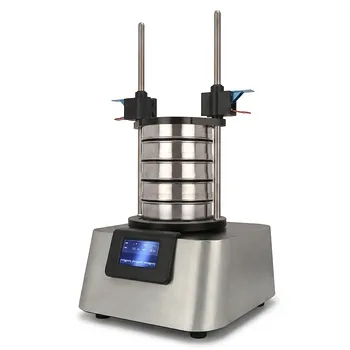
Vibratory Sieve Shaker Electromagnetic 3D Motion Powder Particle Size Analyzer for Dry and Wet Sieving

Laboratory Dry and Wet Three Dimensional Vibratory Sieve Shaker for Particle Analysis

Dry Three Dimensional Vibratory Sieve Shaker
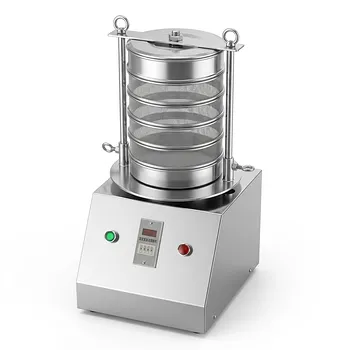
Stainless Steel Laboratory Vibratory Test Sieve Shaker

Heavy Duty Dry Three Dimensional Vibratory Sieve Shaker for Particle Separation

Small Laboratory Vibratory Sieve Shaker for Powder Gradation and Particle Size Analysis

Small Laboratory Vibrating Sieve Shaker for Precise Particle Size Analysis
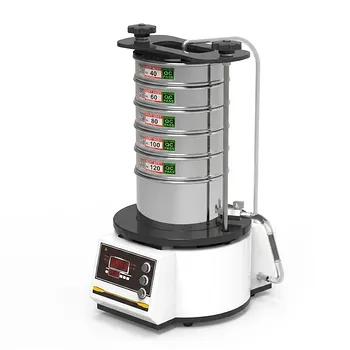
High Frequency Wet Three-Dimensional Vibrating Sieve Shaker for Dry and Wet Particle Size Analysis
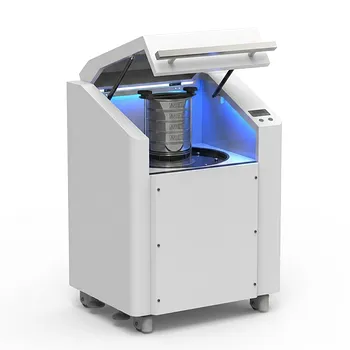
High Frequency Cabinet Type Three-Dimensional Rotary Vibrating Sieve Shaker for Dry Sieving and Particle Classification

Laboratory Vibratory Test Sieve Shaker for Precision Particle Size Analysis and Powder Grading

三维电磁微量振动筛分仪

Stainless Steel Rotary Vibrating Sieve High Precision Circular Vibratory Separator Industrial Powder Grading Machine Multi Layer Sifting Equipment

Tapping Oscillating Sieve Shaker for Dry and Wet Particle Size Analysis

Three Dimensional Rotary Vibrating Sieve
Vibratory Superfine Grinder for Ultra Fine Laboratory Powder Milling
Small Vibrating Ultrafine Grinder for Traditional Chinese Medicine
Automatic Vibrating Powder Feeder for Laboratory Material Processing Precision Vibratory Hopper Feeder for Granular and Powder Material Handling Industrial Grade Vibrating Tray Feeder for Consistent Material Sample Preparation