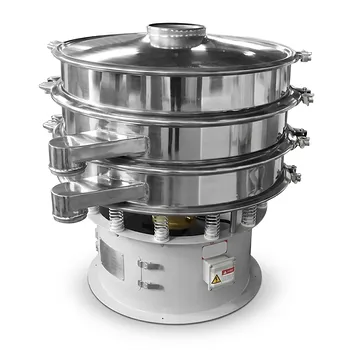
How are laboratory sieve shakers and standard test sieves utilized to characterize the properties of fuels? Optimize PSD
Updated 5 months ago
Laboratory sieve shakers and standard test sieves provide the foundational physical data required to predict fuel behavior and combustion performance.
By utilizing a stack of sieves with varying mesh sizes (typically ranging from 0.075mm to 4.75mm), these tools determine the Particle Size Distribution (PSD) of solid fuels. This data is essential for calculating average particle size, which directly influences combustion efficiency, boiler slagging, and the concentration of gaseous emissions like CO, NOx, and SO2.
Mechanical sieving allows for the precise classification of fuel particles to ensure consistent surface area-to-volume ratios. This physical standardization is the prerequisite for accurate thermal analysis and the identification of high-quality fuel fractions with lower ash content.
The Role of Particle Size in Combustion Dynamics
Impact on Efficiency and Slagging
The physical dimensions of fuel particles dictate how they interact with oxygen and heat within a furnace. Larger particles can lead to incomplete combustion and contribute to boiler slagging, which reduces the operational lifespan of industrial equipment.
Influence on Gaseous Emissions
Sieve analysis allows researchers to study how specific particle size intervals correlate with environmental pollutants. By controlling the PSD, operators can better predict and mitigate the release of Nitrogen Oxides (NOx) and Sulfur Dioxide (SO2) during the burn cycle.
Surface Area-to-Volume Ratios
Vibratory shakers ensure that fuel samples reach a consistent surface area-to-volume ratio. This consistency is vital because it determines the rate at which volatile matter is released and how quickly the remaining fixed carbon ignites.
Enhancing Accuracy in Thermal Analysis
Eliminating Heat Transfer Lag
In processes like Thermogravimetric Analysis (TGA), non-uniform particles can cause "heat transfer lag," where the core of a particle is significantly cooler than its surface. Precise sieving (often to ranges like 45 to 200 µm) ensures that heat penetrates the sample uniformly, preventing experimental errors.
Defining Ignition and Burnout Temperatures
Strict control of particle size is necessary to measure scientific parameters such as the Ignition Temperature of Fixed Carbon (ITFC). By removing oversized particles that cause internal diffusion limitations, researchers obtain representative data for ignition and burnout indices.
Consistency in Reaction Rates
Standardized sieving prevents variations in reaction rates that would otherwise occur in a sample with a wide size range. This allows for the scientific comparison of different fuel types under identical experimental conditions.
Correlating Particle Size with Fuel Quality
Chemical Variance Across Size Fractions
Physical classification often reveals that different size intervals contain different chemical properties. In many biomass fuels, finer particles (those passing through a 100 mesh screen) frequently exhibit lower ash content and higher fixed carbon, marking them as higher-quality fuel components.
Optimizing Biomass Utilization
For carbonized biomass, vibratory shakers help identify the optimal particle size for specific applications. This grading process is essential for identifying which fractions will provide the most energy-dense and "clean" burn.
Application in Fuel Composites
When fuels are integrated into composites, such as wood-plastic blends, sieving provides the discrete fiber components needed for testing. The size of these fibers influences the rheological behavior and mechanical strength of the final fuel product.
Understanding the Trade-offs
Material Loss and Fine Particle Adhesion
While mechanical sieving is highly effective, very fine particles (smaller than 53 μm) can become cohesive or adhere to the mesh and the shaker walls. This can lead to a slight loss of sample mass, potentially skewing the distribution data if not managed with proper amplitude and cycle times.
Limitations of Mesh Shape
Standard test sieves measure the "second smallest" dimension of a particle, meaning elongated or needle-like fuel particles may pass through a mesh that does not accurately reflect their total volume. This requires researchers to be mindful of particle morphology when interpreting PSD curves.
Making the Right Choice for Your Goal
How to Apply This to Your Project
- If your primary focus is emissions reduction: Use a wide range of sieves (0.075mm to 4.75mm) to identify which particle size fractions contribute most to CO and NOx spikes.
- If your primary focus is experimental accuracy (TGA/STA): Restrict your sample to a narrow band, such as 100 to 200 µm, to eliminate heat transfer lag and diffusion limitations.
- If your primary focus is fuel quality grading: Analyze the ash and carbon content of different mesh fractions to locate the "sweet spot" where fuel purity is highest.
By mastering the physical classification of fuels through standardized sieving, you ensure that both your laboratory data and your industrial combustion processes are optimized for maximum efficiency.
Summary Table:
| Application Goal | Impact on Fuel Performance | Recommended Sieve Range |
|---|---|---|
| Combustion Efficiency | Optimizes surface area-to-volume ratio to reduce slagging. | 0.075mm – 4.75mm |
| Emission Control | Correlates particle size with NOx, SO2, and CO release. | Full PSD Range |
| Thermal Analysis (TGA) | Eliminates heat transfer lag for accurate burnout indices. | 45µm – 200µm |
| Quality Grading | Identifies fractions with lower ash and higher fixed carbon. | Fine Mesh (<100 Mesh) |
Optimize Your Fuel Characterization Workflow
Precision in particle size distribution is critical for predictable combustion and high-quality material science research. As experts in complete laboratory sample preparation solutions, we provide the high-performance equipment you need to ensure consistent, repeatable results.
From vibratory and air-jet sieve shakers equipped with precision test sieves to our extensive lines of crushers (jaw/roll), planetary ball mills, and jet mills, we offer the tools required to master fuel processing. Additionally, our specialized hydraulic presses (CIP/WIP) and hot presses support the creation of advanced fuel composites and pellets.
Ready to enhance your lab's efficiency and accuracy? Contact our technical team today to discuss how our powder processing and compaction equipment can support your specific research goals.
References
- Mohammad Siddique, Sylvain Tomé. Lignite Coal Co-combustion Performance with Banana Tree Waste, Tree Leaves and Cow Dung Manure Blends for Emission Reduction During Power Generation. DOI: 10.31284/j.jmesi.2024.v4i1.5346
Mentioned Products
- Vibratory Sieve Shaker Electromagnetic 3D Motion Powder Particle Size Analyzer for Dry and Wet Sieving
- 三维电磁微量振动筛分仪
- Stainless Steel Laboratory Vibratory Test Sieve Shaker
- Small Laboratory Vibrating Sieve Shaker for Precise Particle Size Analysis
- Heavy Duty Dry Three Dimensional Vibratory Sieve Shaker for Particle Separation
People Also Ask
- How does a vibratory sieve shaker contribute to optimizing the performance of activated carbon? Enhance Adsorption Precision
- Why is a laboratory vibratory sieve shaker necessary for processing magnesium-based borate precursor powders? Boost Activity
- Why use a vibratory sieve shaker to verify coarse aggregate grading in rubberized concrete? Ensure Structural Integrity
- What function do vibratory sieve shakers and standard test sieves serve in the preparation of adsorbents? Key Guide
- What role does a vibratory sieve shaker play in the particle size analysis of ground corn products? Enhance QC Precision

Tech Team · PowderPreparation
Last updated on May 14, 2026
Related Products
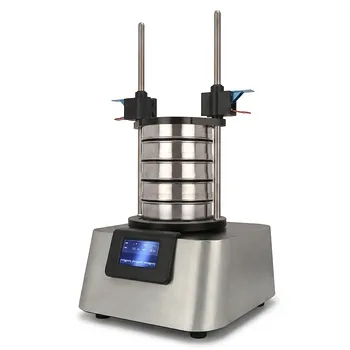
Vibratory Sieve Shaker Electromagnetic 3D Motion Powder Particle Size Analyzer for Dry and Wet Sieving
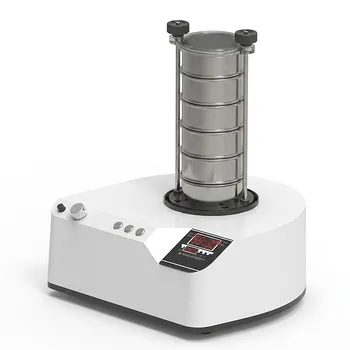
三维电磁微量振动筛分仪
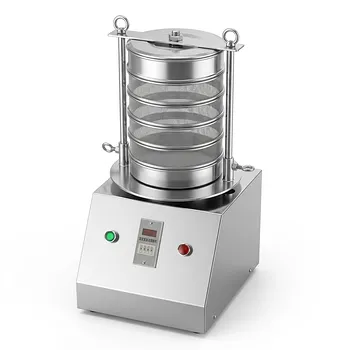
Stainless Steel Laboratory Vibratory Test Sieve Shaker
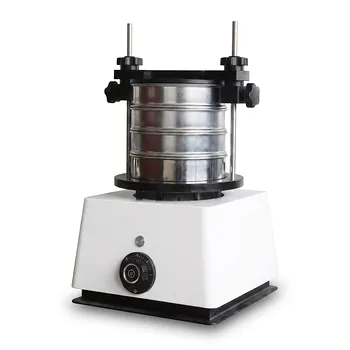
Small Laboratory Vibrating Sieve Shaker for Precise Particle Size Analysis
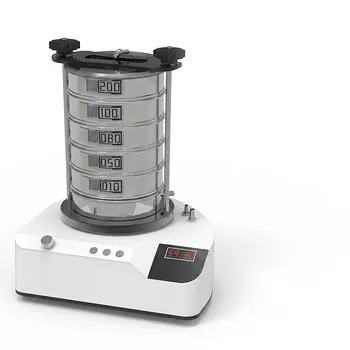
Heavy Duty Dry Three Dimensional Vibratory Sieve Shaker for Particle Separation
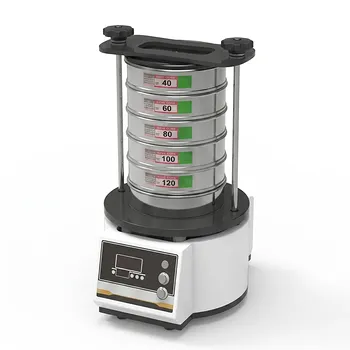
Dry Three Dimensional Vibratory Sieve Shaker
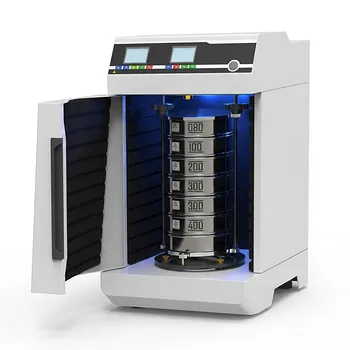
Laboratory Dry and Wet Three Dimensional Vibratory Sieve Shaker for Particle Analysis
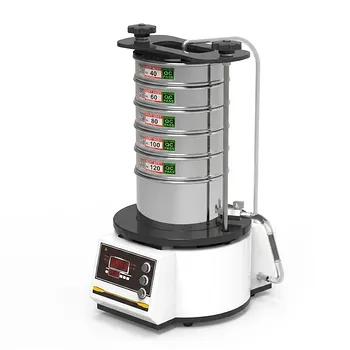
High Frequency Wet Three-Dimensional Vibrating Sieve Shaker for Dry and Wet Particle Size Analysis
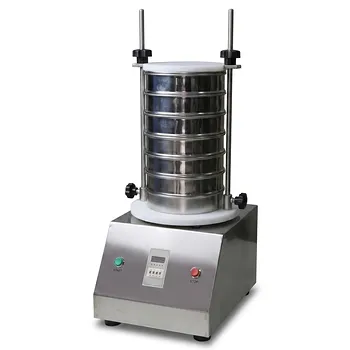
Laboratory Vibratory Test Sieve Shaker for Precision Particle Size Analysis and Powder Grading
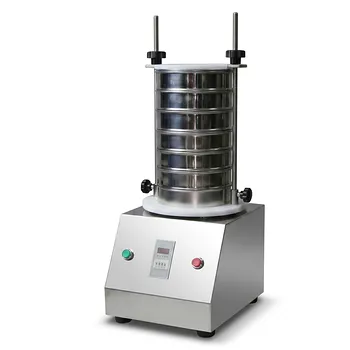
Small Laboratory Vibratory Sieve Shaker for Powder Gradation and Particle Size Analysis
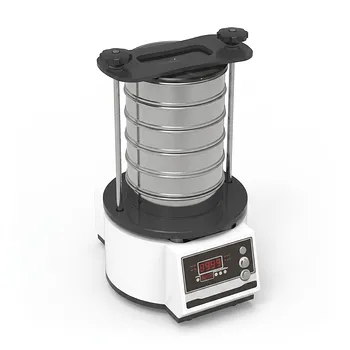
Tapping Oscillating Sieve Shaker for Dry and Wet Particle Size Analysis
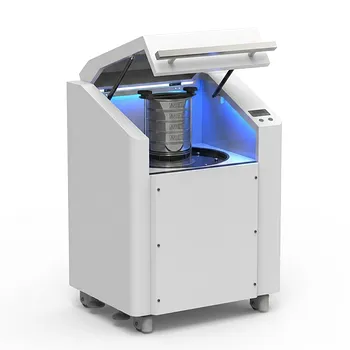
High Frequency Cabinet Type Three-Dimensional Rotary Vibrating Sieve Shaker for Dry Sieving and Particle Classification
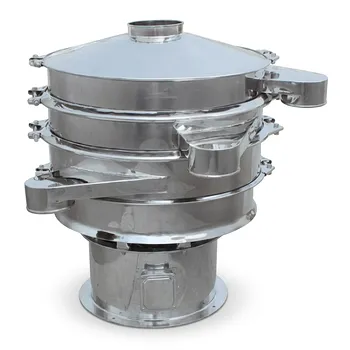
Stainless Steel Rotary Vibrating Sieve High Precision Circular Vibratory Separator Industrial Powder Grading Machine Multi Layer Sifting Equipment
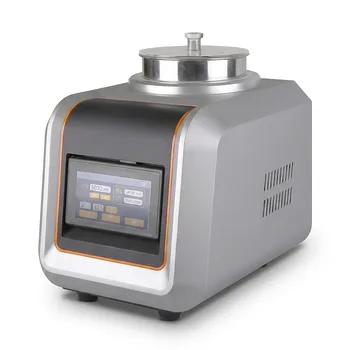
Laboratory Air Jet Sieving Machine for Fine Powder Particle Size Analysis and Deagglomeration