How are air-jet sieve shakers used in cement fineness testing? Achieve Precise PSD & Optimize Mill Efficiency
Updated 5 months ago
Testing cement fineness with air-jet sieve shakers is a standardized method for quantifying the precise particle size distribution of binder materials. High-precision air-jet sieve shakers utilize controlled airflow to draw cement particles through fine meshes—typically 40μm (R40) as per EN 196-6—to determine the "sieve residue." This residue measurement provides a physical metric that technical personnel use to evaluate grinding efficiency, calibrate industrial separators, and predict the 28-day compressive strength of the cement.
Air-jet sieving provides a precise physical measurement of cement particle distribution that directly correlates to hydration kinetics and mill performance. By isolating specific residues on fine meshes, laboratories can ensure materials comply with grade-specific quality standards and optimize the chemical reactivity of the binder.
The Mechanism of Air-Jet Separation
Leveraging Controlled Airflow
Unlike traditional mechanical shaking, an air-jet sieve shaker uses a rotating nozzle to generate a controlled stream of air that de-agglomerates the powder. This airflow carries particles toward the mesh, ensuring that only those smaller than the aperture pass through, while preventing the mesh from blinding.
Precision with Fine-Mesh Sieves
Testing typically employs high-precision meshes with apertures such as 20μm, 32μm, and 40μm. These specific sizes allow for the granular analysis of the cement's finest fractions, which are the most chemically active during the initial stages of hydration.
Impact on Grinding and Production Efficiency
Monitoring Mill Classification
The amount of residue left on a 40-micron sieve (R40) is a direct reflection of the classification efficiency of cement mills and separators. By monitoring this value, operators can adjust mill parameters in real-time to maintain a stable particle size distribution and avoid energy waste.
Quantifying Material Fractions
Air-jet separation allows technical personnel to calculate how different components, such as clinker, gypsum, and mineral additives, are distributed across various fineness ranges. This data is essential for determining the optimal sulfate requirements and the physical contribution of additives to the overall mixture.
Predicting Performance and Hydration
The Role of the R40 Parameter
The R40 parameter serves as a key independent variable in mathematical models used to predict the compressive strength of concrete. Because fineness dictates the surface area available for chemical reaction, it directly influences the hydration reaction rate and early strength development.
Consistency in Cement Grades
Using standard test sieves ensures that materials comply with specific cement grade requirements or pozzolanic activity standards, such as Class S or Class N. This rigorous quality control eliminates inconsistencies that could otherwise interfere with the mechanical strength and flowability of the final concrete or mortar.
Understanding the Trade-offs
Mechanical vs. Air-Jet Sieving
While vibratory sieve shakers are effective for coarse aggregates and determining the Fineness Modulus (FM), they often struggle with fine powders due to particle clumping. Air-jet sieving is the superior choice for materials under 45μm because the pneumatic action effectively breaks down inter-particle forces.
Sensitivity to Environmental Factors
A primary limitation of high-precision sieving is its sensitivity to ambient humidity. If the cement powder absorbs moisture, it may clog the fine mesh or lead to inaccurate residue readings, requiring the use of dried samples and climate-controlled laboratory environments.
How to Apply This to Your Project
Effective particle size analysis requires selecting the right equipment and mesh based on your specific quality control goals.
- If your primary focus is Strength Prediction: Use an air-jet shaker with a 40μm (R40) sieve to gather data for your compressive strength models and hydration rate calculations.
- If your primary focus is Mill Optimization: Regularly monitor the sieve residue to calibrate your separators, ensuring the grinding process remains within efficient technical specifications.
- If your primary focus is Regulatory Compliance: Ensure your sieving protocol strictly follows the EN 196-6 standard to verify that your cement meets the necessary classification levels for industrial use.
Precise fineness control is the cornerstone of predictable cement performance and industrial manufacturing efficiency.
Summary Table:
| Key Feature | Method / Specification | Impact on Cement Quality |
|---|---|---|
| Air-Jet Technology | Pneumatic de-agglomeration | Prevents mesh blinding; accurate for particles <45μm. |
| Core Parameter | R40 (40μm Sieve Residue) | Key variable for predicting 28-day compressive strength. |
| Standard Meshes | 20μm, 32μm, 40μm | Ensures compliance with EN 196-6 quality standards. |
| Mill Optimization | Real-time classification | Calibrates separators to reduce energy waste & cost. |
Master Your Cement Quality Control with Our Expert Solutions
Precision in particle size distribution is the cornerstone of predictable hydration and material performance. At [Company Name], we provide complete laboratory sample preparation solutions for material science, specializing in high-performance powder processing and compaction equipment.
Whether you are calibrating industrial separators or predicting compressive strength, our high-precision air-jet sieve shakers and fine-mesh test sieves deliver the accuracy your lab demands. Our extensive product line supports your entire workflow:
- Size Reduction & Milling: Jaw/roll crushers, liquid nitrogen cryogenic grinders, and various mills (planetary ball, jet, disc, and rotor).
- Sieving & Mixing: Vibratory and air-jet sieve shakers, powder mixers, and defoaming mixers.
- Advanced Compaction: A full spectrum of hydraulic presses, including Cold/Warm Isostatic Presses (CIP/WIP), XRF pellet presses, and vacuum hot presses.
Optimize your material testing accuracy and production efficiency—contact our technical team today to find the perfect equipment for your application!
References
- Dimitris Tsamatsoulis. Improving the Prediction of Cement Compressive Strength by Coupling of Dynamical Models. DOI: 10.15255/cabeq.2015.2298
Mentioned Products
- Laboratory Air Jet Sieving Machine for Fine Powder Particle Size Analysis and Deagglomeration
- Vibratory Sieve Shaker Electromagnetic 3D Motion Powder Particle Size Analyzer for Dry and Wet Sieving
- Stainless Steel Laboratory Vibratory Test Sieve Shaker
- Small Laboratory Vibrating Sieve Shaker for Precise Particle Size Analysis
- 三维电磁微量振动筛分仪
People Also Ask
- What role do laboratory test sieves play in the nanocrystallization process of iron powder? Ensure Uniform Refinement
- What is the function of a laboratory test sieve in the river sediment sample preparation process? Ensure Precise Data
- What is the purpose of using 0.038 mm sieves in magnetite grinding? Quantify Kinetics and Boost Grinding Efficiency
- How do laboratory test sieves contribute to the analysis of soil texture composition? Optimize Particle Grading Accuracy
- Why is a 0.08mm standard sieve required for testing the fineness of cement? Optimize Recycled Pervious Concrete Quality

Tech Team · PowderPreparation
Last updated on May 14, 2026
Related Products
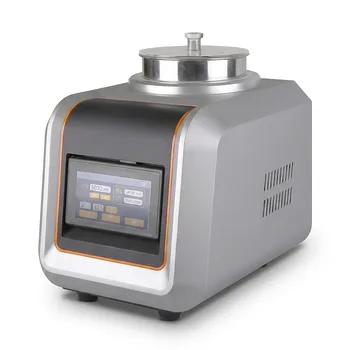
Laboratory Air Jet Sieving Machine for Fine Powder Particle Size Analysis and Deagglomeration
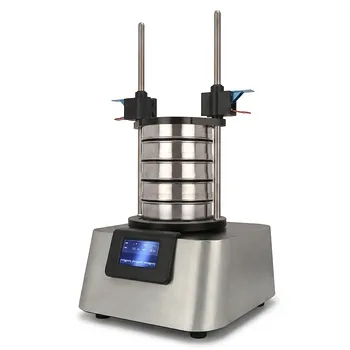
Vibratory Sieve Shaker Electromagnetic 3D Motion Powder Particle Size Analyzer for Dry and Wet Sieving
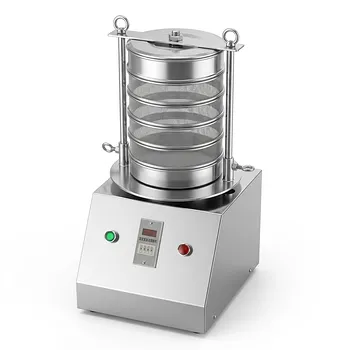
Stainless Steel Laboratory Vibratory Test Sieve Shaker

Small Laboratory Vibrating Sieve Shaker for Precise Particle Size Analysis
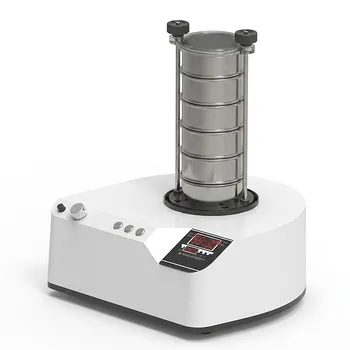
三维电磁微量振动筛分仪
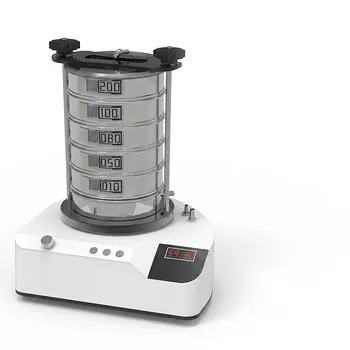
Heavy Duty Dry Three Dimensional Vibratory Sieve Shaker for Particle Separation
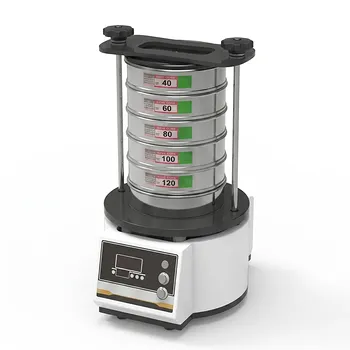
Dry Three Dimensional Vibratory Sieve Shaker
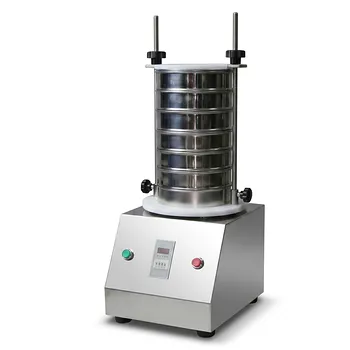
Small Laboratory Vibratory Sieve Shaker for Powder Gradation and Particle Size Analysis
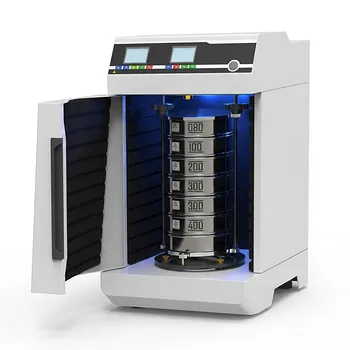
Laboratory Dry and Wet Three Dimensional Vibratory Sieve Shaker for Particle Analysis

Laboratory Vibratory Test Sieve Shaker for Precision Particle Size Analysis and Powder Grading
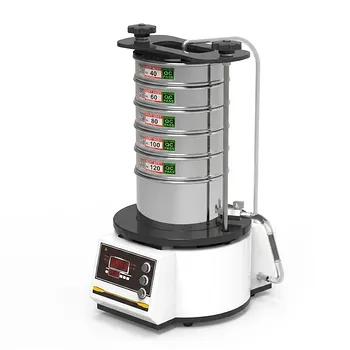
High Frequency Wet Three-Dimensional Vibrating Sieve Shaker for Dry and Wet Particle Size Analysis
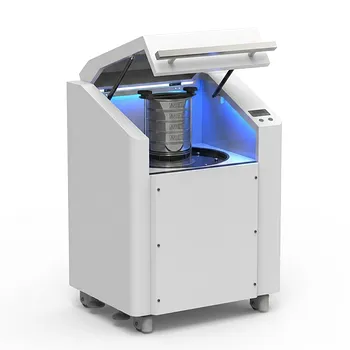
High Frequency Cabinet Type Three-Dimensional Rotary Vibrating Sieve Shaker for Dry Sieving and Particle Classification
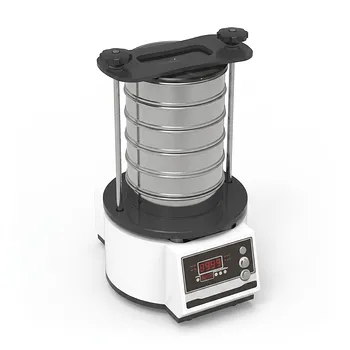
Tapping Oscillating Sieve Shaker for Dry and Wet Particle Size Analysis
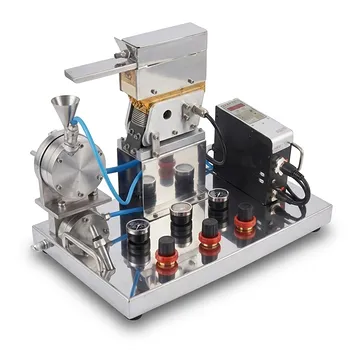
Benchtop Micro Air Jet Mill for Ultrafine Grinding of High Value Powders
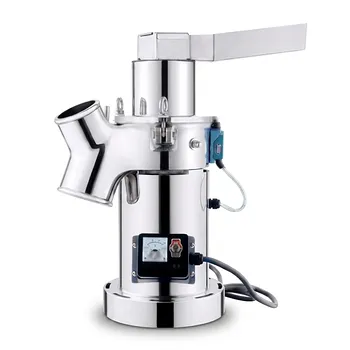
Airflow Ultrafine Pulverizer for Laboratory Ultra-fine Grinding
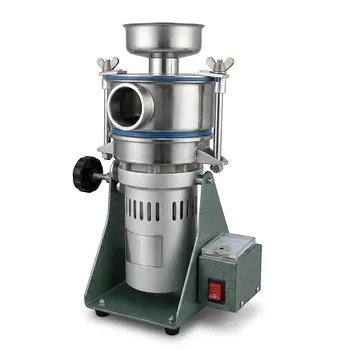
Small Airflow Ultra-Fine Grinder for Laboratory Sample Preparation
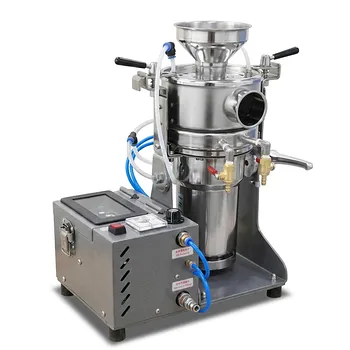
Water Cooled Pulse Jet Ultrafine Grinder