When Two Extra Minutes Define a Skyscraper: The Precision Mixing Protocol That Nanomaterials Demand
May 31, 2026
The Fracture That Started a Quiet Obsession
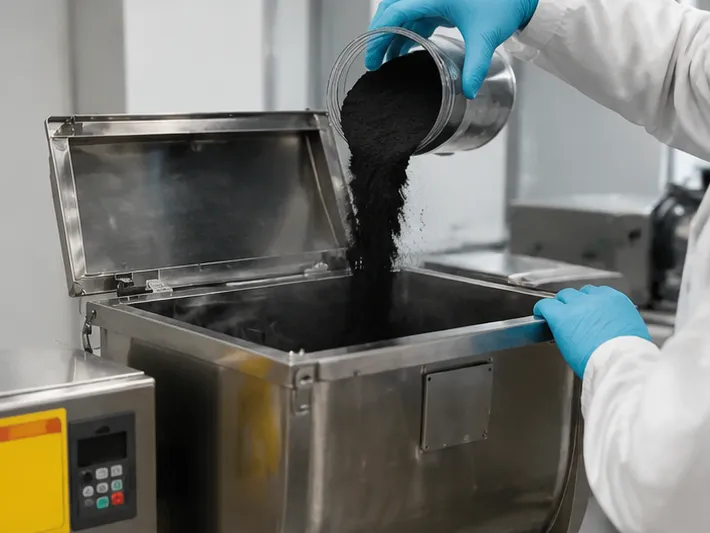
In a materials lab in Surabaya, a PhD student held a fractured concrete cylinder. The numbers were wrong. A composite doped with rice husk ash and carbon nanotubes should have shown a steep rise in compressive strength, but the micrographs told a different story: dark islands of entangled nanotubes surrounded by barren paste.
The protocol had been followed—ingredients weighed, timers set. But nobody had asked how energy moved through the powder bed, or why a few extra revolutions could spell the difference between a skyscraper and a pile of debris.
That fracture wasn’t a material failure. It was a mixing failure. And like most invisible failures, it began long before anyone poured water.
The System That Hides in Plain Sight
Concrete looks monolithic. Under a scanning electron microscope, it is an archipelago of cement grains, silica fume, and now—in high-performance designs—latticed particles of rice husk ash and carbon nanotubes.
The trouble is thermodynamic: nanoparticles hate being alone. Van der Waals forces pull them into clusters. Left undisturbed, a carbon nanotube suspension behaves less like a reinforcement and more like a storm of miniature knots.
Engineers, being human, want a simple fix. Just stir longer. Just crank the speed.
Both instincts are wrong. The solution is a tightly choreographed, two-stage protocol—and a laboratory mixer precise enough to honor it.
The Two-Stage Protocol: Why Sequence Is Everything
The mixing process for nanomaterial-integrated rice husk ash concrete is deceptively simple.
- Dry mixing: 2 minutes
- Wet mixing: 5 minutes
But the simplicity is a trap. Every second matters.
The 2-Minute Dry Mix: Teaching Powders to Cooperate
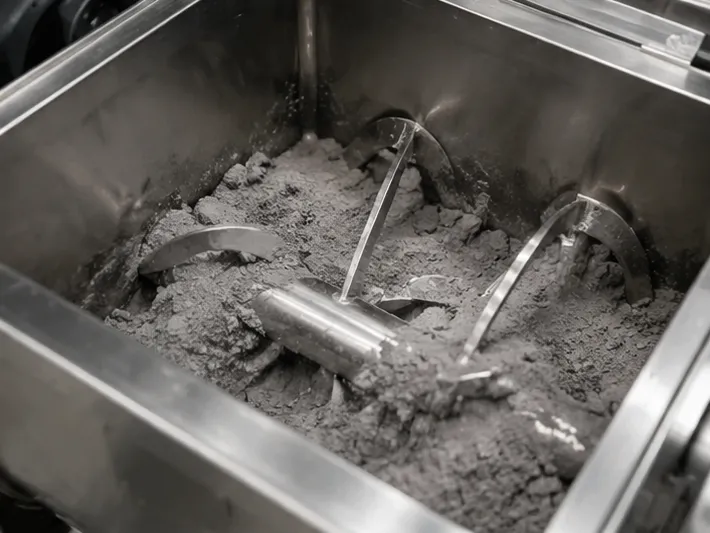
Before any liquid enters the bowl, aggregates, cement, and rice husk ash spin together. Mechanical shear forces spread the ultra-fine RHA particles across the surface of larger cement grains.
Think of it as a rehearsal. If rice husk ash isn’t pre-distributed, it will later absorb water unevenly, creating localized hydration zones that no wet mixing can rescue. The mixer’s job here isn’t just blending—it’s pre-architecting the microstructure.
The 5-Minute Wet Mix: Where the Network Is Born
Once the carbon nanotube suspension is introduced, the protocol enters its most vulnerable phase.
Nanotubes want to collapse inward. The wet mixing window must be long enough to shatter those clumps, yet short enough to avoid over-shearing that can break the delicate pozzolanic bonds forming around the RHA.
Maintaining a constant low rotation speed becomes critical. High speeds generate heat, trap air, and degrade the nanotube suspension. Low-speed controlled agitation preserves the stability of the suspension while giving nano-scale particles the time they need to bridge micro-scale voids. The result is a dense, electrically connected network—not isolated islands.
The Microscopic Payoff
When the protocol is respected, three transformations occur.
The Micro-Filler Effect Activates Fully
Rice husk ash particles, now evenly distributed, fill the spaces between cement grains. This isn’t just about density. It’s about drastically reducing permeability, blocking the pathways that allow corrosion and chemical attack.
Agglomeration Is Defeated
The 5-minute wet mixing window is calibrated to match the energy required to overcome van der Waals forces in a specific volume of paste. Shorten it by a minute, and you’ve left thousands of micro-clumps. Lengthen it carelessly, and you may re-agglomerate or shear-thin the suspension into oblivion.
Conductive Pathways Form Reliable Sensor Networks
For researchers embedding concrete with self-sensing capabilities, uniform nanotube distribution isn’t optional. It’s the difference between a stable, readable electrical signal and chaotic noise. The mixing protocol is the first circuit design.
Three Ways We Sabotage Our Own Experiments
Morgan Housel once wrote that risk is what’s left over after you think you’ve thought of everything. In the lab, our psychological quirks become physical defects.
The Shortcut of Impatience
A researcher watches the clock. “Surely four minutes is enough.” It isn’t. Reducing total mixing time below 7 minutes creates local accumulation zones—stress concentrators that reduce compressive strength and durability. The data becomes unreproducible, and you blame the material. But the culprit was human impatience.
The Sequencing Illusion
Adding the nanotube suspension before the dry blend is homogenous feels efficient. In practice, it starves the rice husk ash of the early dispersion it needs. The RHA rushes to absorb water, locking nanotubes into pockets they can never escape. You end up with concrete that looks right but fails young.
The Speed Fetish
High-speed agitation looks decisive. It’s also a quiet destroyer. Excess rotation whips air into the mix, creates frictional heat, and disrupts the low-energy bonds that give RHA its pozzolanic magic. Controlled, low-speed mixing is the harder discipline because it requires trust in the protocol, not the knob.
Where the Laboratory Mixer Becomes the Real Precision Instrument
A mixing protocol is only as good as the instrument that executes it. This is where off-the-shelf assumptions break. Not all mixers can hold a stable low RPM under load. Not all can apply consistent shear across a powder bed. And very few are designed to transition seamlessly from dry dispersion to wet paste without leaving dead zones in the bowl.
Modern laboratory powder mixers—especially those engineered for multi-phase processing—address these failures at the hardware level.
- Precision torque control ensures that even during the dry phase, shear force stays constant, spreading rice husk ash particles evenly before the first drop of water.
- Sealed, defoaming-capable mixing systems prevent air entrapment during the critical wet stage, preserving the integrity of the nanotube network.
- Programmable multi-step protocols replace human guesswork with automated sequencing: 2 minutes dry, 5 minutes wet, at a controlled rotation that never overshoots.
When the mixer becomes a programmable instrument, the protocol becomes repeatable. And repeatability is the foundation of reliable science.
Matching the Protocol to Your Research Goal
Not every experiment demands the same outcome. The beauty of a defined protocol is that you can bias it toward what you care about most.
| Objective | Key Protocol Emphasis | Equipment Requirement |
|---|---|---|
| Maximizing compressive strength | Strict 5-minute wet mixing to fully activate the RHA micro-filler effect | Consistent low-speed control, no thermal drift |
| Self-sensing or conductive composites | Gradual, steady introduction of CNT suspension during wet phase | High-torque stability to prevent network breakage |
| High replacement ratios of rice husk ash | Extra attention to the dry mixing stage to prevent ultra-fine powder agglomeration | Powerful dry-blending shear without damaging particles |
In every case, the protocol doesn’t just guide the mixing—it reveals the limits of the mixer itself.
Beyond the Mix: Completing the Sample Workflow
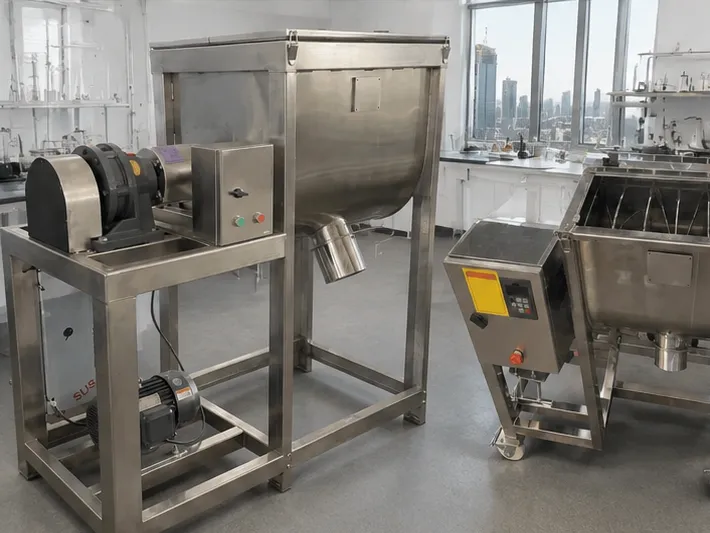
If mixing builds the nanostructure, compaction immortalizes it. Once the paste is prepared, the final test samples must be pressed into repeatable geometries without disturbing the microscopic network.
That’s why integrated laboratory workflows matter. High-density pellets for XRF analysis, cylindrical specimens for compression tests, and thin discs for conductivity measurements all require pressing systems that match the precision of the mix.
- Cold isostatic presses (CIP) eliminate density gradients, preserving the uniform nanotube dispersion formed during mixing.
- Vacuum hot presses remove residual moisture and bind the cementitious matrix without introducing microfractures.
- Specialized XRF pellet presses ensure flat, parallel surfaces for chemical mapping—critical when verifying the elemental distribution of rice husk ash.
When the mixer and the press come from a single engineering philosophy, there is no gap where a poorly compacted sample can undo a perfectly mixed paste.
The Engineer’s Romance: Trusting the Process
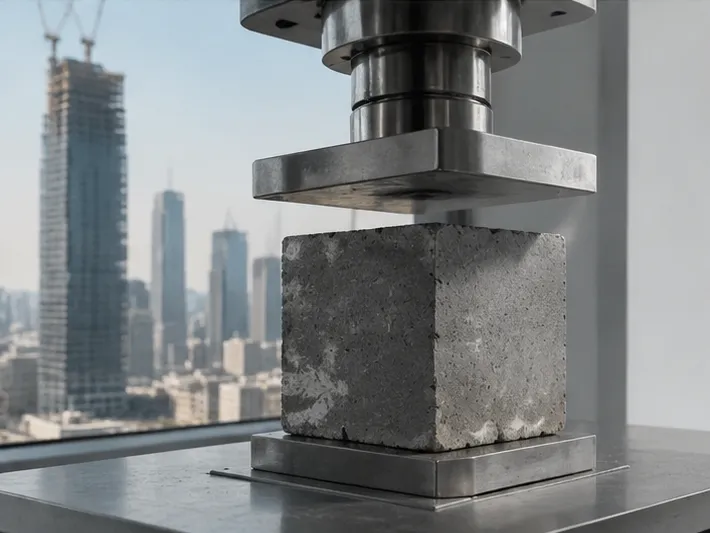
There is a quiet elegance in timing a mix the way you’d time a chemical reaction. A commitment to seven minutes, a controlled rotation, and the belief that the particles know what they’re doing—if only we stop interfering.
The civil engineers who build for the century ahead aren’t just designing stronger concrete. They are designing systems of discipline. The laboratory mixer isn’t a peripheral tool in that system; it is the first architect of the finished product.
When the protocol is right and the instrument is worthy, the micrograph comes back clean. No dark islands. No barren zones. Just a dense, interlocking network that was born in a bowl, one revolution at a time.
Are you ready to give your nanomaterials the mixing precision they deserve? Contact Our Experts
Quick Links
Suggested Products
Horizontal Ribbon Mixer for Uniform Powder and Slurry Mixing High Efficiency Vacuum Planetary Centrifugal Mixer and Defoaming Machine for Industrial Material Research and Precise Laboratory Powder Dispersion High Viscosity Planetary Centrifugal Mixing and Vacuum Defoaming Machine for Laboratory Material Preparation High Shear Laboratory Emulsifier for Mixing and Homogenization Three-Dimensional Motion Mixer for Laboratory Powder and Granule BlendingFurther Reading
The Micrometer Trigger: Why a Laboratory Powder Mixer Defines Effervescent Tablet Success The Invisible Split: Why a Coating’s Failure Is Decided Hours Before It’s Applied The Invisible Variable: Why Your Soil Test Data Is Lying to You The Mixing Fallacy: Why Your Composite Flour’s Uniform Color Is a Costly Illusion The 81:19 Gamble: Why Imperfect Mixing Silently Kills Your Optical Ceramic
PowderPreparation
Last updated on May 15, 2026
Related Products
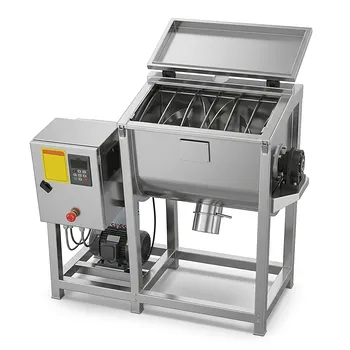
Horizontal Ribbon Mixer for Uniform Powder and Slurry Mixing
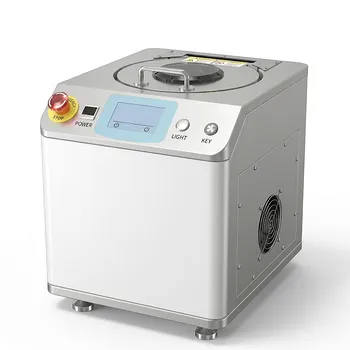
High Efficiency Vacuum Planetary Centrifugal Mixer and Defoaming Machine for Industrial Material Research and Precise Laboratory Powder Dispersion

High Viscosity Planetary Centrifugal Mixing and Vacuum Defoaming Machine for Laboratory Material Preparation

High Shear Laboratory Emulsifier for Mixing and Homogenization
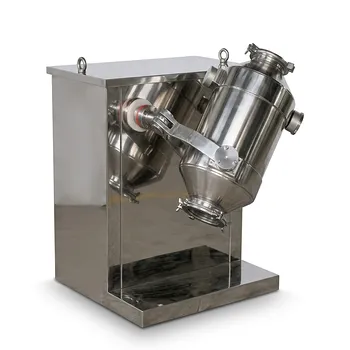
Three-Dimensional Motion Mixer for Laboratory Powder and Granule Blending
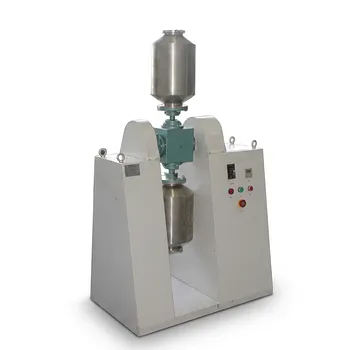
Multi Dimensional Universal Mixer for High Uniformity Powder Blending

Dual Cup Vacuum Centrifugal Mixer Planetary Paste Defoaming Machine Industrial Material Processor
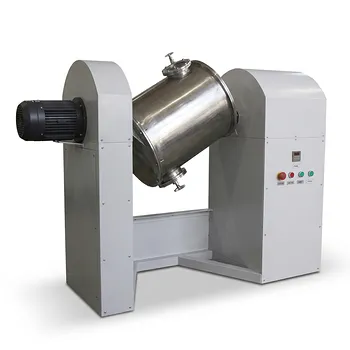
Inclined Mixer for Homogeneous Powder Blending and Grinding
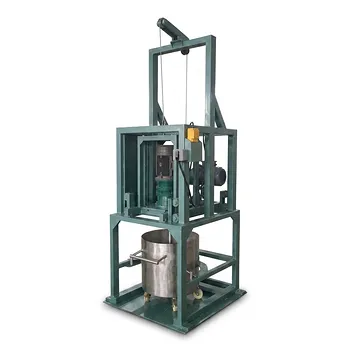
High-Speed Simple Disperser for Efficient Mixing, Dispersion, and Emulsification

360° Rotating Omnidirectional Laboratory Planetary Ball Mill for Homogeneous Ultra-Fine Grinding and Mixing
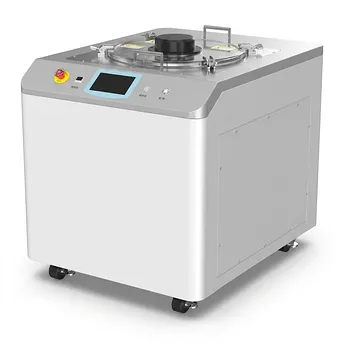
Industrial Planetary Centrifugal Vacuum Defoaming Mixer for High Viscosity Paste and Powder Homogenization
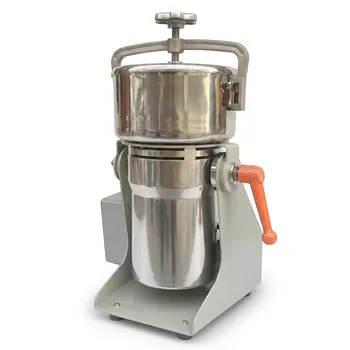
High Speed Laboratory Grinder Efficient Stainless Steel Powder Pulverizer Universal Material Science Mill for Sample Preparation
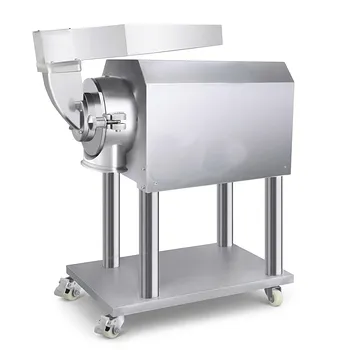
High Speed Small Laboratory Crusher for Dry Material Sample Preparation

Industrial Planetary Centrifugal Vacuum Defoaming Mixer for High Viscosity Paste and Advanced Material Science
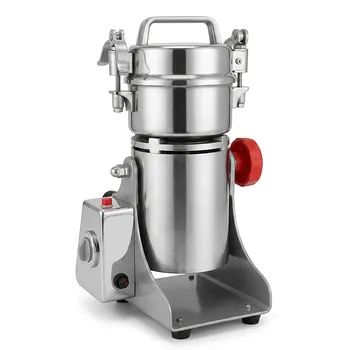
Industrial High Speed Small Sample Pulverizer Swing Type Laboratory Grinder for Powder Processing
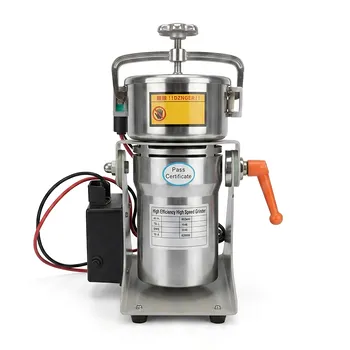
High Efficiency High Speed Grinder Laboratory Mill 1300W 25000rpm
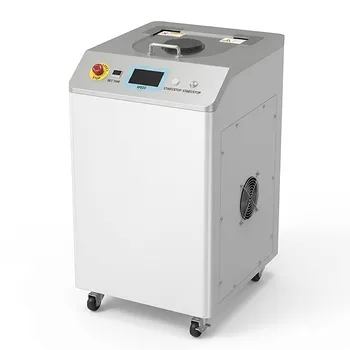
High Viscosity Planetary Centrifugal Vacuum Mixer for Material Defoaming and Uniform Mixing
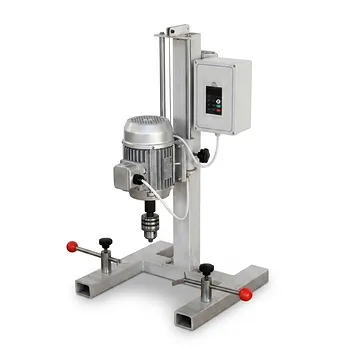
Laboratory Disperser and Sand Mill for Grinding Dispersing Emulsifying
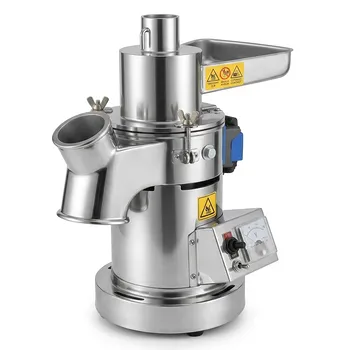
Continuous Feeding Grinder High Efficiency Pulverizer for Lab Sample Preparation