The One-Inch Port That Decides Whether Your Lab Wins or Loses a Batch
Jul 05, 2026
The Moment a Perfect Formulation Goes Wrong
The lab technician followed every step. Raw powders were weighed to the milligram. The mixing time was precise. But when the XRF pellet came out of the press, the readings drifted. Not by much—just enough to fail the QA spec. The culprit wasn’t the formula. It was a handful of powder stuck in a dead zone near the wall of the mixer. Those few grams carried yesterday’s batch into today’s sample.
In material science, contamination isn’t always a dramatic failure. It’s often quiet, statistical, and capable of eroding trust in an entire line of research. That’s why the discharge port at the bottom of your horizontal screw mixer matters far more than its size suggests.
A bottom discharge port isn’t just an outlet. It’s a statement about how seriously you treat batch integrity, cycle speed, and the psychology of your operators.
Two Kinds of Empty
What “Clean” Really Means
An operator can open a mixer and declare it empty. But visual inspection lies. Fine powders adhere to corners, cling around shaft seals, and compact into what engineers call “heels.” Those heels become ghost residues that haunt the next batch.
A side-discharge system relies on persuasion. You tilt, you vibrate, you hope. A bottom discharge design relies on a force that never takes a day off: gravity.
Gravity as a Low-Tech Superpower
When the discharge point is at the very bottom of the vessel, the bulk of your material doesn’t need to be lifted or coerced. It falls. That changes the thermodynamics of patience for the operator, who isn’t watching and waiting while a machine struggles to spit out the last 10% of a batch. It also changes the arithmetic of throughput.
The technical win is this: a bottom port, combined with a reversible bottom screw, turns discharge from a passive drain into an actively driven evacuation. The screw pushes material toward the port while gravity pulls it down. There’s no fight. There’s just flow.
The Psychology of Complete Evacuation
Morgan Housel often writes that the most underestimated risk is the one you stop noticing. In powder processing, residual material is exactly that risk. Once operators learn to live with heels, they start compensating—longer cleaning routines, extra test runs, manual scraping. They normalize deviation.
A bottom discharge port resets expectations. It makes 99.9% evacuation the boring, everyday normal. The effect on the team’s mindset is tangible:
- Trust in the batch: They know the formulation inside the mixer is what comes out.
- Trust in the schedule: Cycle times become predictable because unloading isn’t a variable anymore.
- Trust in the cleaning routine: When rinse fluids drain toward the lowest point, clean-in-place protocols actually work without leaving dirty pockets.
This isn’t just engineering. It’s operational peace of mind.
The Engineer’s Compromise (And Why It’s Worth It)
Vertical Real Estate
Bottom discharge valves demand space beneath the mixer. You might need a raised platform, a pit, or a mezzanine structure to fit conveyors or collection bins. That’s a real facility-planning cost. But facility planners who prioritize vertical clearance for gravity-assisted discharge end up with fewer process variables to manage later. It’s a one-time spatial investment that pays for itself in repeatable quality.
Seals Under Siege
A valve at the bottom carries the full weight of the batch. Fine powders are opportunistic explorers; they will find a weak seal and leak out slowly, contaminating the workspace. That’s why flush-fitting, precision-engineered valves and regular seal maintenance aren’t optional—they’re part of the design contract. When the valve holds, the entire system earns its reputation.
Designing Out the Dead Zones
Beyond the port location, the mating of screw flights and vessel geometry matters. A well-designed horizontal mixer with bottom discharge doesn’t just empty—it empties completely. The screw clearance, the end-plate profiles, and the surface finish all collaborate to make residue a theoretical concept, not a daily frustration.
From One Smart Port to a Complete Sample Preparation Logic
A bottom discharge mixer solves a specific problem: how to get everything out, fast and clean. But in a modern material science lab, that problem sits inside a chain of decisions. Before mixing, you crush, grind, and sieve. After mixing, you compact, press, and analyze.
If any link in that chain has its own version of a “dead zone”—a crusher that overheats your sample, a mill that cross-contaminates, a press that misaligns—the mixer’s perfect discharge alone can’t save the result. The real solution is systems thinking.
We build complete laboratory sample preparation solutions precisely for this reason. Our horizontal powder mixers and defoaming mixers incorporate bottom discharge ports engineered for total batch evacuation. But they don’t work in isolation. Upstream, our jaw crushers, roll crushers, liquid nitrogen cryogenic grinders, planetary ball mills, jet mills, and bead mills prepare feedstock to exact specifications. Our sieve shakers and test sieves validate particle size. Downstream, our hydraulic presses—from cold/warm isostatic presses (CIP/WIP) to XRF pellet presses, hot presses, and vacuum hot presses—turn clean, homogeneous powder into analysis-ready specimens that truly represent the original material.
When every piece of equipment shares a design philosophy—minimum residue, maximum purity, predictable cycle times—the lab stops fighting contamination. It starts producing data that holds up under scrutiny.
The Bottom Line (Literally)
A bottom discharge port is a small feature with enormous leverage. It saves minutes per batch, prevents cross-contamination events, and gives technicians the confidence that what they put in is what they get out. If your lab still tolerates “heels” as normal, it’s time to ask whether your mixer’s discharge philosophy matches your quality ambitions.
The path to reliable powder processing doesn’t need a technological revolution. Sometimes, it just needs a port in the right place, and a team that understands why that matters. Contact Our Experts
Quick Links
Suggested Products
Horizontal Trough Mixer for Uniform Powder and Paste Blending Horizontal Ribbon Mixer for Uniform Powder and Slurry Mixing Horizontal Ribbon Mixer for Dry Powder and Slurry Blending 非介入式材料均质机真空脱泡行星搅拌高粘度混合设备 Horizontal Jaw Crusher Medium Hard Material Crushing Laboratory Sample Preparation EquipmentFurther Reading
The Invisible Variable: Why Your Soil Test Data Is Lying to You The Mixing Fallacy: Why Your Composite Flour’s Uniform Color Is a Costly Illusion The 81:19 Gamble: Why Imperfect Mixing Silently Kills Your Optical Ceramic The Micrometer Trigger: Why a Laboratory Powder Mixer Defines Effervescent Tablet Success The Silent Choreographer: How 3D Powder Mixing Dictates the Purity of Ti₂SnC MAX Phases
PowderPreparation
Last updated on May 14, 2026
Related Products
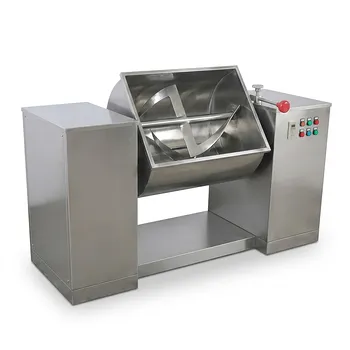
Horizontal Trough Mixer for Uniform Powder and Paste Blending
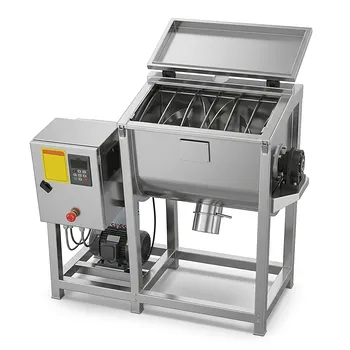
Horizontal Ribbon Mixer for Uniform Powder and Slurry Mixing
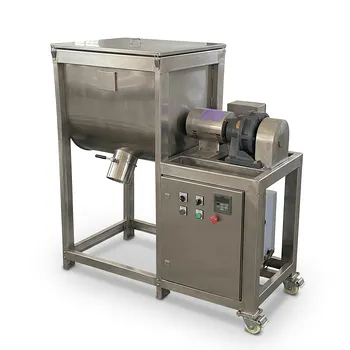
Horizontal Ribbon Mixer for Dry Powder and Slurry Blending
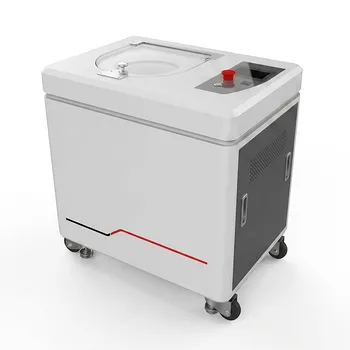
非介入式材料均质机真空脱泡行星搅拌高粘度混合设备
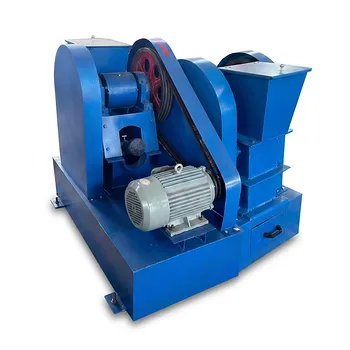
Horizontal Jaw Crusher Medium Hard Material Crushing Laboratory Sample Preparation Equipment
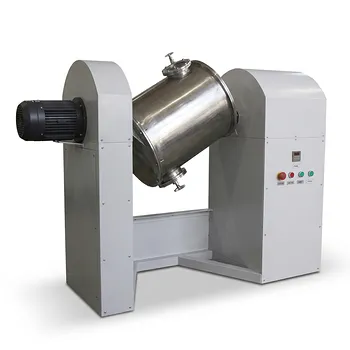
Inclined Mixer for Homogeneous Powder Blending and Grinding
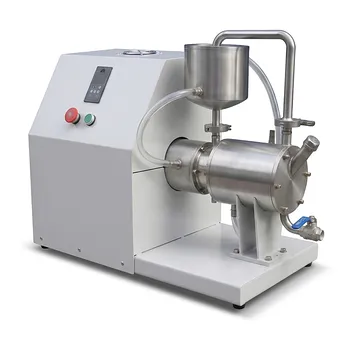
Laboratory Small Horizontal Sand Mill for Nano Materials Wet Grinding
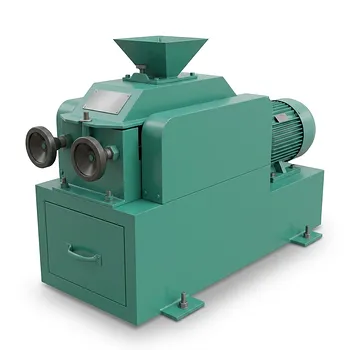
Horizontal Double Roll Crusher for Medium Fine Crushing of Coal Limestone and Ores
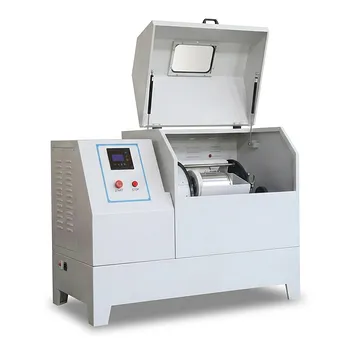
Heavy Duty Horizontal Planetary Ball Mill for Efficient Industrial Grinding and Sample Preparation
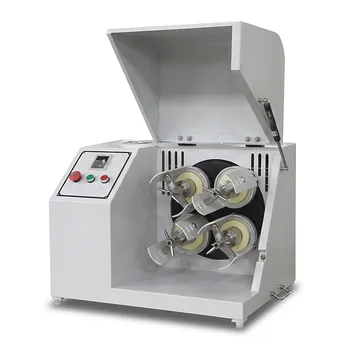
Horizontal Light Duty Planetary Ball Mill for Laboratory Sample Preparation
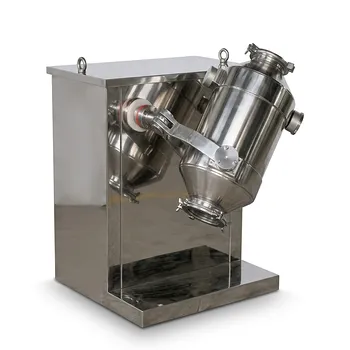
Three-Dimensional Motion Mixer for Laboratory Powder and Granule Blending
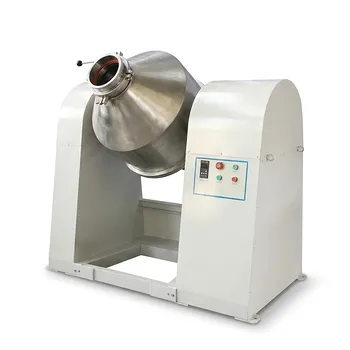
Industrial Double Cone Mixer for Powder Blending and Homogeneous Mixing
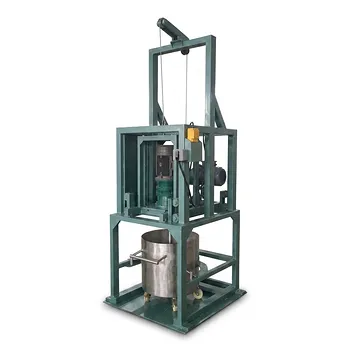
High-Speed Simple Disperser for Efficient Mixing, Dispersion, and Emulsification
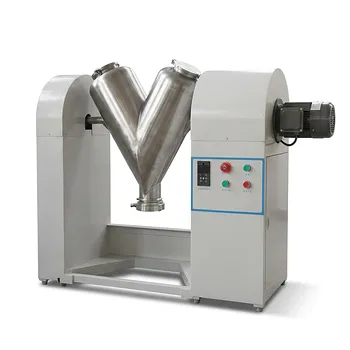
V-Type Powder Mixer for Uniform Blending of Dry Powders and Granules
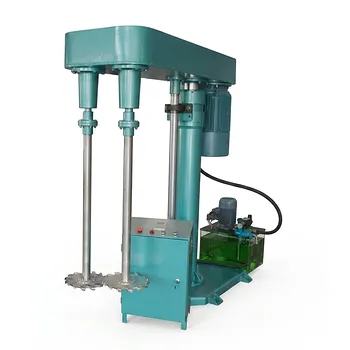
Hydraulic Double Shaft Disperser for High Viscosity Liquid Mixing and Dispersion
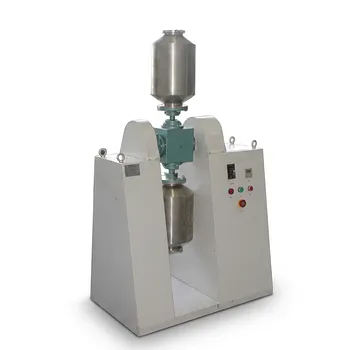
Multi Dimensional Universal Mixer for High Uniformity Powder Blending
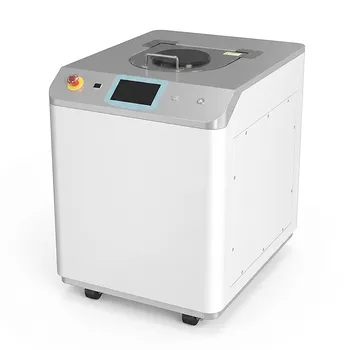
Industrial Planetary Centrifugal Vacuum Defoaming Mixer for High Viscosity Paste and Advanced Material Science
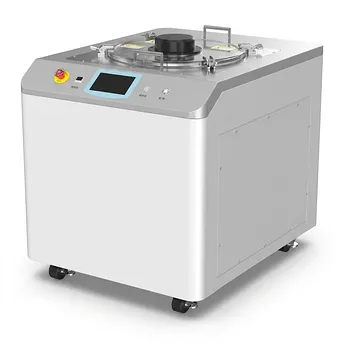
Industrial Planetary Centrifugal Vacuum Defoaming Mixer for High Viscosity Paste and Powder Homogenization
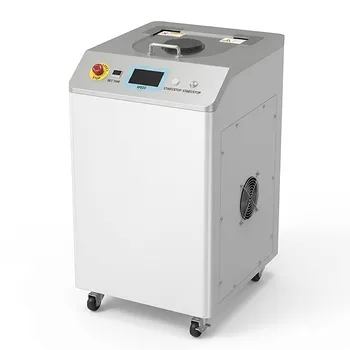
High Viscosity Planetary Centrifugal Vacuum Mixer for Material Defoaming and Uniform Mixing