The Micrometer Trigger: Why a Laboratory Powder Mixer Defines Effervescent Tablet Success
Jun 21, 2026
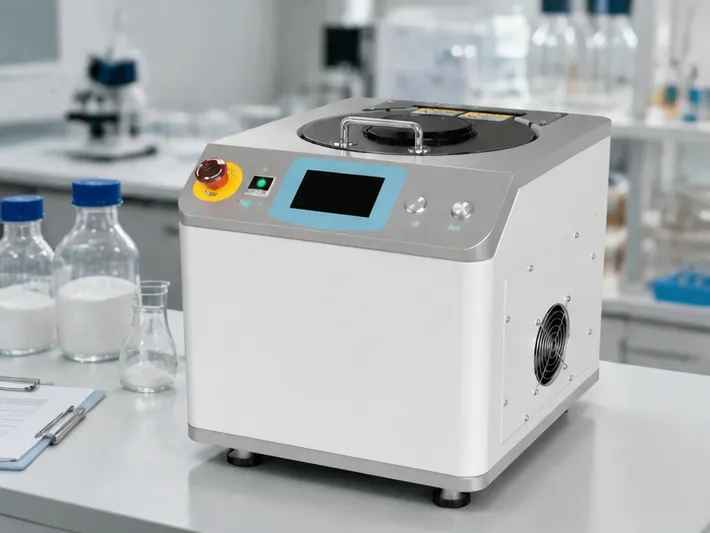
The Invisible Failure
A researcher once showed me a batch of effervescent tablets. The formulation was textbook: citric acid, sodium bicarbonate, a precisely calculated binder system. The compression force was perfect. Yet half the tablets fizzed violently in seconds while the others took minutes and left a grainy residue. The problem, she told me, “must be the raw materials.”
It wasn’t. The raw materials were identical. The problem was invisible to the eye. It lived in the chaotic architecture of the powder bed—a world where reactions are decided not by what you put in, but by what each particle touches.
Most of us misunderstand mixing.
We imagine a uniform gray color in a blender. But color is a liar. A powder can look perfectly homogeneous while its reactive ingredients remain segregated in micron-sized neighborhoods, each waiting to create a different tablet failure. The laboratory powder mixer, when chosen and operated correctly, is the tool that dissolves these neighborhoods and builds a continuous matrix where every micro-reaction starts on time.
The Real Job of a Dry Mix
It’s Not About “Mixing.” It’s About Geometry.
The effervescent reaction is a chemical handshake between an acid and a base. In the dry state, this handshake hasn’t happened yet. But its probability is being written into the powder geometry. Think of it like a city. If you cluster all the fire stations in one district, most of the city will burn before help arrives. If you spread them evenly, every fire gets addressed within seconds.
That’s what a high-performance laboratory mixer does. It distributes the acid “fire stations” and alkali “fuel depots” at the micrometer level so that when water invades the tablet, the reaction ignites everywhere simultaneously.
Preserving the Messenger
Particle size matters. A mixer that grinds the acid crystals into finer dust might look more homogeneous, but it changes dissolution kinetics. The three-dimensional rocking mixer solves this with a different kind of intelligence: spatial motion without particle attrition. It rearranges whole grains like a gentle architect, preserving original grain size and crystallinity so researchers can study the real material behavior, not an artifact of the mixing process.
The Testing Gateway
Advanced process analytics like Terahertz spectroscopy rely on a truly random mixture. If microcrystalline cellulose and the active ingredient are not uniformly distributed, the spectral map will misattribute density and porosity. A bad mix doesn’t just ruin the tablet; it ruins the experiment that was supposed to guide your scale-up. Precision mixing is the physical prerequisite for honest data.
The Wet Massing Moment
Fifteen Percent Moisture, a Hundred Percent of Your Problems
The transition to wet mixing is where most formulation projects stall. You add about 15% binder solution, and suddenly the powder isn’t powder anymore. It’s a plastic mass that can either become a perfect sphere in spheronization or an unrecoverable paste.
Homogeneity here is a time-sensitive puzzle. If the mixer doesn’t force uniform liquid distribution in the first moments, you get micro-regions of over-wetting and under-wetting. The over-wetted areas become sticky granules that grow too fast. The dry spots never bind. Later, during extrusion, the paste will vary in density, creating pellets that disintegrate at different rates. The root cause is always the same: the liquid didn’t meet all the powder at the same time.
Rotation Speed as a Chemical Variable
Speed control is not just an engineering feature; it’s a formulation parameter. A gentle rotation might allow the liquid to penetrate by capillary action, which is fine for some granulations. A higher shear rate forces penetration and breaks nascent lumps, which is essential for dense effervescent masses. But go too fast, and you knead heat into the system—enough, sometimes, to activate the acid-base surface reaction prematurely. When you see faintly pitted tablet surfaces, you’re looking at a micro-history of localized pre-reactions inside the mixer.
The Tablest that Remembers
An effervescent tablet’s performance is a memory of its mixing history.
Reaction Synchronicity
If acid and base are neighbors everywhere, water ingress triggers a synchronized cascade. The entire tablet disintegrates in seconds, releasing the active ingredient in a clean, controlled cloud. If they are segregated, the tablet fractures unevenly. One side breaks away early, the other sits stubbornly on the spoon. Users blame the brand. The real culprit was the mixing time cut short.
Preventing the Ghost Defects
Segregation doesn’t only cause chemical problems. It causes mechanical defects that haunt sintering or compression. Regions rich in hard, brittle crystals compact differently than regions rich in soft binders. The result is internal stress points that become cracks during storage or transport. Deep homogenization builds a continuous network—not just of chemistry, but of mechanical integrity. A well-mixed tablet doesn’t just fizz reliably; it survives the journey from your lab to the patient’s hand.
The Psychobiology of Mixing Choice
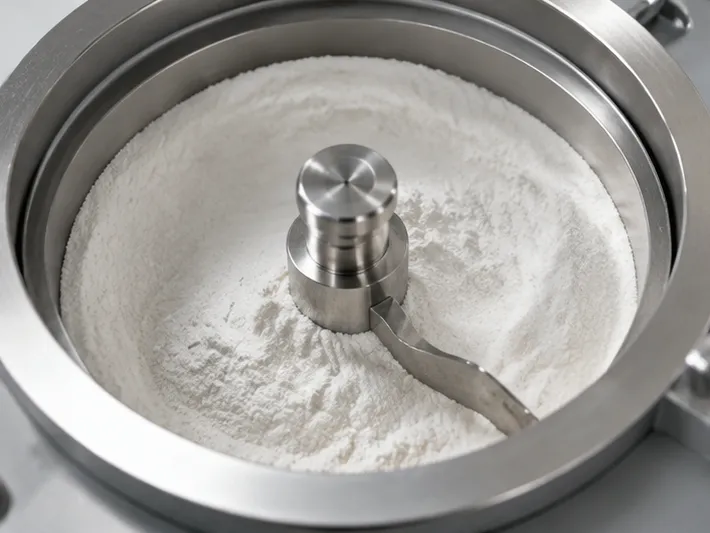
Engineers often fall for the myth of the “obvious variable.” We obsess over active ingredient purity, dissolution media pH, or compression force—because those are the variables we can measure with calibrated instruments. Mixing quality feels subjective. It feels like art. But it is the most deterministic variable in the entire process chain.
The Over-Blending Paradox
The psychological trap: if some mixing is good, more must be better. But powders have a memory for mechanical history. Over-blend a mixture of particles with different densities, and you’ll watch them un-mix—the heavier particles sink, the lighter ones rise, undoing all your work. Or you’ll generate charge that makes particles clump after discharge. The optimal mixing window is a Goldilocks zone, and finding it requires a mixer that gives you precise control over intensity and time.
Shear Force Is a Scalpel, Not a Hammer
High-shear mixing is seductive. It breaks lumps fast. But it can also shatter fragile drug crystals, increase amorphous content, and shift stability profiles. A formulator’s choice must be guided by this single question: Am I protecting the chemistry or forcing the structure? If the active ingredient is damage-sensitive, the gentle spatial motion of a three-dimensional mixer—a movement pattern that looks almost like a planetary ballet—may be the only way to achieve homogeneity without violence.
Building the Complete Truth Machine
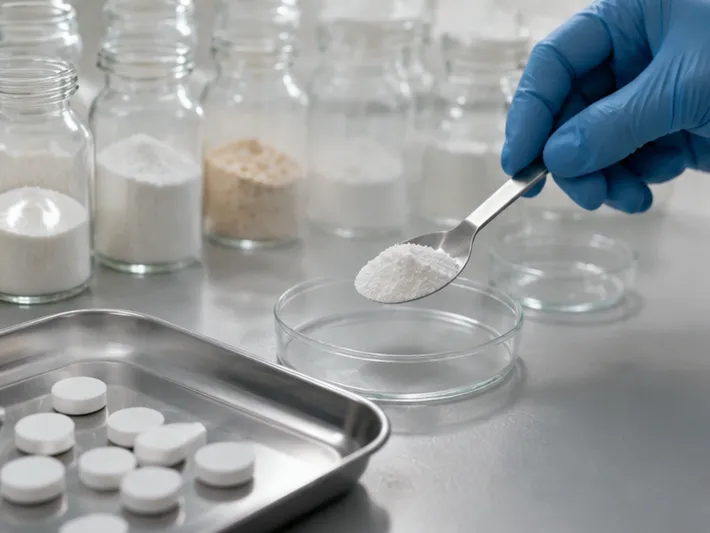
The mixer is not an island. In material science, every process step leaves a fingerprint on the final dosage form. The particle size distribution from your crusher or jet mill becomes the raw geography the mixer must homogenize. The efficiency of your sieve shaker determines whether oversized agglomerates return to haunt the mix. And the hydraulic press at the end of the line—whether a standard lab press, an XRF pellet press, or a vacuum hot press—transforms your carefully mixed powder into a physical solid whose density distribution must reflect the uniformity you built upstream.
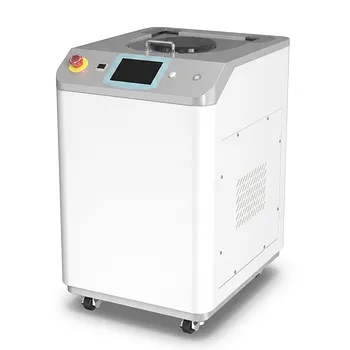
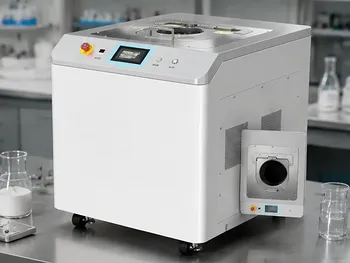
Our laboratory powder mixers and defoaming mixers are designed to sit at the heart of this ecosystem. They are engineered for the critical moment when raw ingredients stop being isolated compounds and start becoming a material system—a reactive continuum that will behave predictably under compression, under moisture, and under the patient’s tongue.
But we also provide the instruments that frame the mixer’s work: jaw and roll crushers to start the size reduction, liquid nitrogen cryogenic grinders for heat-sensitive pre-milling, planetary ball mills and air-jet mills for precision micronization, vibratory and air-jet sieve shakers for tight classification, and the full spectrum of Cold/Warm Isostatic Presses and hot presses to compact the final product. This is not a catalog. This is a chain of reliability that turns a mixing protocol into a predictable, repeatable, scalable result.
The Trigger in Your Hand
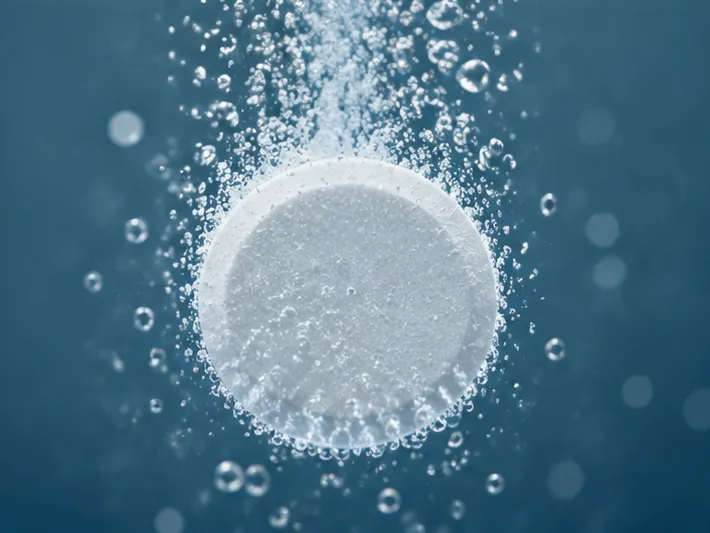
When the effervescent tablet hits the water, it becomes a timepiece. The lag before fizzing, the speed of disintegration, the completeness of dispersion—all of these are set in stone during the mixing steps you ran days or weeks before. A laboratory powder mixer is nothing less than the device that calibrates this chemical clock.
Get the mixing right, and the tablet performs exactly the same way, every single time. Get it wrong, and you’ll spend months chasing ghosts in your dissolution data, your stability chambers, and your patient feedback.
The micrometer-level arrangement of your particles is not a side detail. It is the architecture of the reaction itself. And the right mixing equipment is how you build that architecture with intention, not luck.
Quick Links
Suggested Products
High Efficiency Vacuum Planetary Centrifugal Mixer and Defoaming Machine for Industrial Material Research and Precise Laboratory Powder Dispersion Horizontal Ribbon Mixer for Uniform Powder and Slurry Mixing Three-Dimensional Motion Mixer for Laboratory Powder and Granule Blending Multi Dimensional Universal Mixer for High Uniformity Powder Blending High Speed Laboratory Powder Grinder Small Batch Sample Preparation MillFurther Reading
The Hidden Disorder in Your Battery Slurry—and the Precision Tool That Destroys It The Invisible Architect of Failure: Why a Bubble in Your Resin-GelMA Mix Casts a Shadow on Your Entire Print The 3-Minute Transformation: How Mixing Speed Reveals the Hidden Architecture of Next-Gen Batteries When Two Extra Minutes Define a Skyscraper: The Precision Mixing Protocol That Nanomaterials Demand The Most Important Mixer in Your Lab Isn’t a Mixer. It’s an Insurance Policy Against Defects.
PowderPreparation
Last updated on May 15, 2026
Related Products
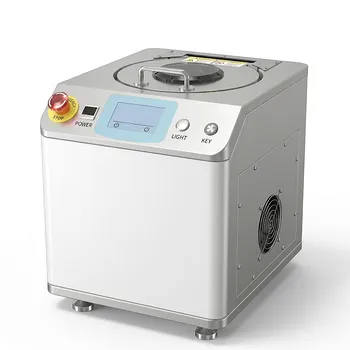
High Efficiency Vacuum Planetary Centrifugal Mixer and Defoaming Machine for Industrial Material Research and Precise Laboratory Powder Dispersion
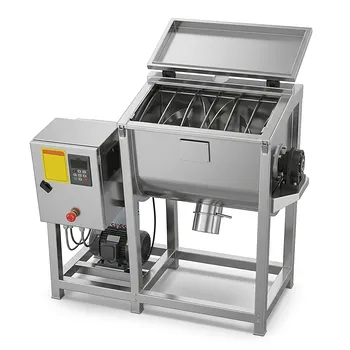
Horizontal Ribbon Mixer for Uniform Powder and Slurry Mixing
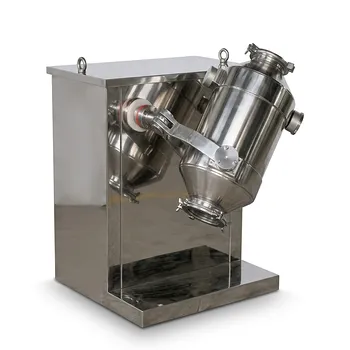
Three-Dimensional Motion Mixer for Laboratory Powder and Granule Blending
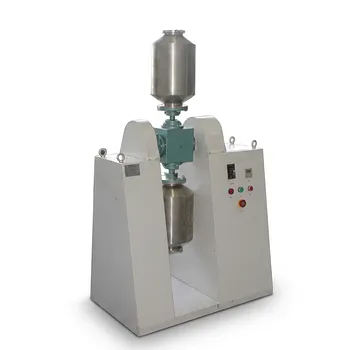
Multi Dimensional Universal Mixer for High Uniformity Powder Blending
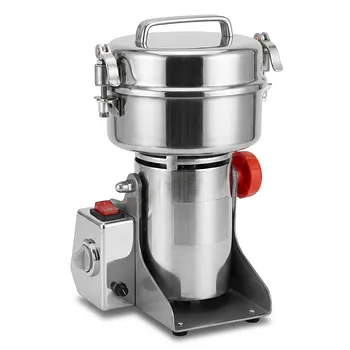
High Speed Laboratory Powder Grinder Small Batch Sample Preparation Mill
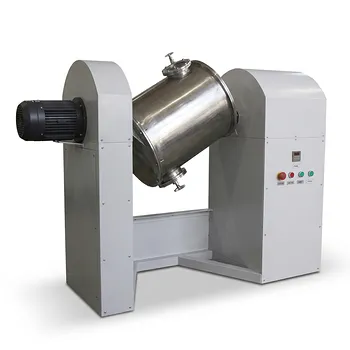
Inclined Mixer for Homogeneous Powder Blending and Grinding
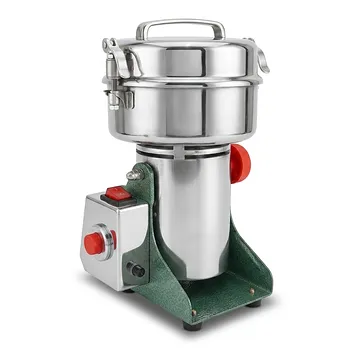
Small High-Speed Laboratory Grinder for Powder Processing
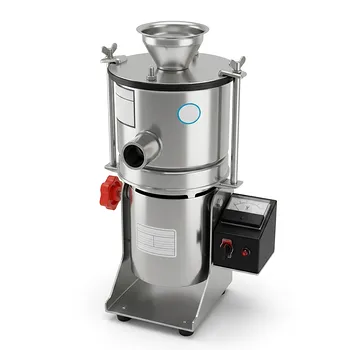
Air Guided Ultrafine Pulverizer High Speed Laboratory Powder Grinder for Chemical and Material Processing
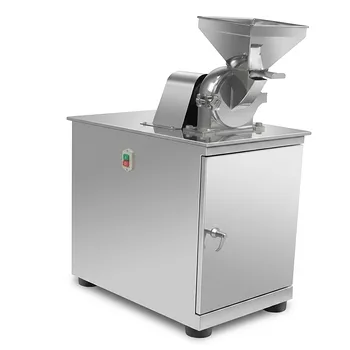
Universal Laboratory Pulverizer Grinder for Small Batch Powder Processing and Material Science Research
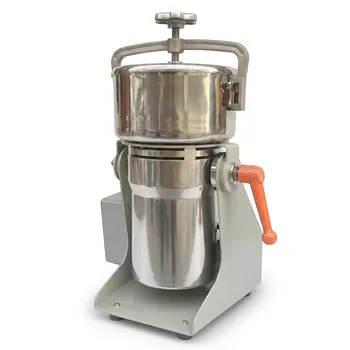
High Speed Laboratory Grinder Efficient Stainless Steel Powder Pulverizer Universal Material Science Mill for Sample Preparation
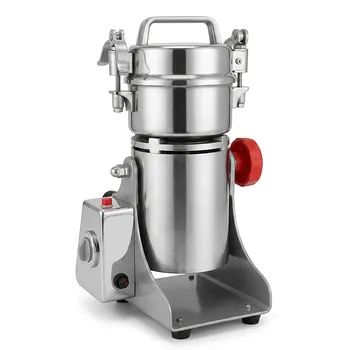
Industrial High Speed Small Sample Pulverizer Swing Type Laboratory Grinder for Powder Processing
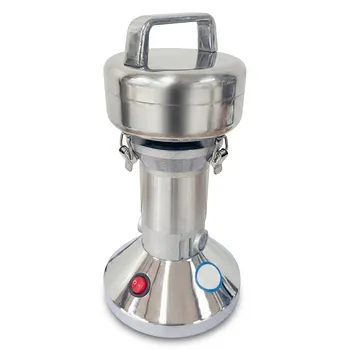
Small Trace Sample High Speed Pulverizer Grinder Laboratory Powder Mill
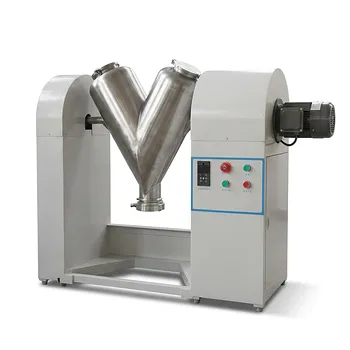
V-Type Powder Mixer for Uniform Blending of Dry Powders and Granules
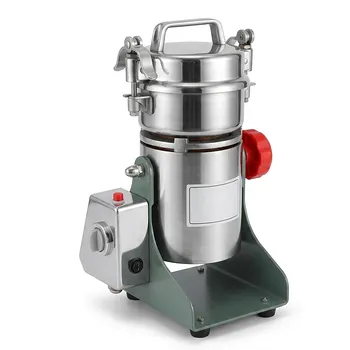
High Speed Swing Type Laboratory Pulverizer for Fine Powder Grinding and Sample Preparation
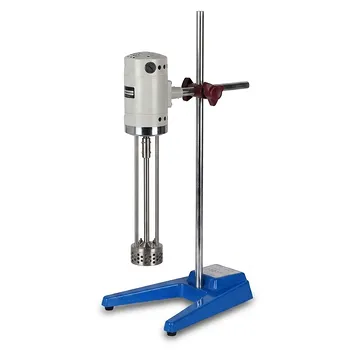
High Shear Laboratory Emulsifier for Mixing and Homogenization
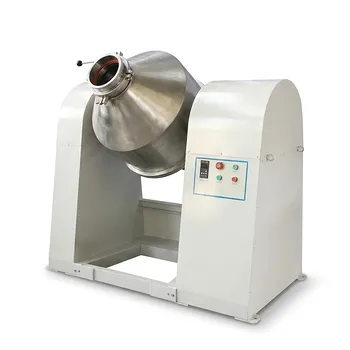
Industrial Double Cone Mixer for Powder Blending and Homogeneous Mixing
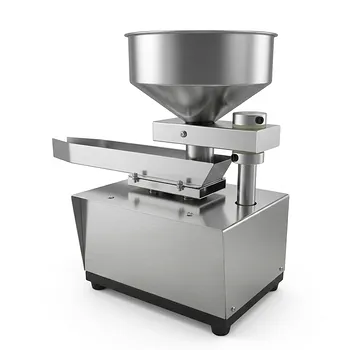
Automatic Vibrating Powder Feeder for Laboratory Material Processing Precision Vibratory Hopper Feeder for Granular and Powder Material Handling Industrial Grade Vibrating Tray Feeder for Consistent Material Sample Preparation
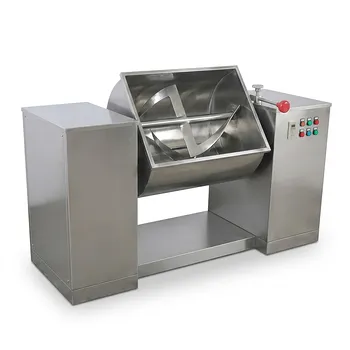
Horizontal Trough Mixer for Uniform Powder and Paste Blending
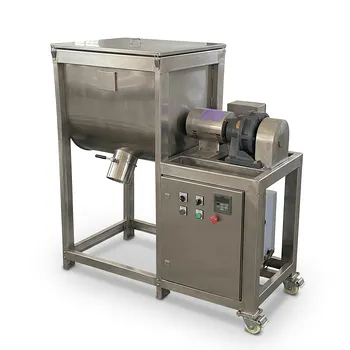
Horizontal Ribbon Mixer for Dry Powder and Slurry Blending