The Hidden Variable: Why Your Composite’s Fate is Decided Before the Sintering Furnace Even Warms Up
Jul 22, 2026
The Moment of Truth in a Ceramic Core
A high-performance composite inside a precision device fails. Not with a dramatic crack, but a subtle inconsistency in electrical conductivity. The sintering logs are perfect. The raw materials are 99.9% pure. The mystery lies not in the chemistry, but in the silence of the mixing bay.
The mixture looked fine to the human eye. But at the microscopic level, it was a mosaic of missed connections. Graphene platelets, clinging to each other out of van der Waals fear, created barren patches in the Alumina matrix. Tiny pools of Indium, meant to be a uniform sintering aid, expanded into voids during the heat cycle.
The sintering furnace is a revealer of secrets, not a fixer of mistakes.
Perfect pressure and precise temperature cannot correct for a flawed spatial arrangement of particles. When you press "start" on a hydraulic press or a sintering cycle, the final structure of your material has already been 90% determined.
What Actually Happens Inside the Mixing Vessel
We often treat mixing as a preliminary checkmark—a necessary but unglamorous step. For simple systems, this is fine. But for a ceramic-metal-2D material triad like Alumina-Indium-Graphene Nanoplatelet (GNP) composites, it is the entire foundation of property development.
The job of a three-dimensional (3D) powder mixer is deceptively subtle: it must manipulate three fundamentally different personalities without changing who they are.
The Ceramic Base (Alumina). Rigid, hard, brittle. It needs to form the continuous skeleton but requires the other components to fill its interstitial gaps perfectly.
The Sintering Aid (Indium). Soft, ductile, and cursed with a melting point so low (156.6 °C) that the friction of a standard high-shear mixer can turn it into droplets. Once liquid, it coalesces. Once coalesced, it leaves micro-porosity.
The Nanoscale Reinforcement (Graphene Nanoplatelets). Incredible aspect ratio. Unimaginable strength. And yet, physically clingy. Layers stack via van der Waals forces, forming agglomerates that act not as strength adders, but as critical flaws.
The 3D mixer must disentangle this triad without flattening the soft metal or smashing the ceramic structure.
The Physics of Convincing Powders to Cooperate
A standard V-blender or a drum tumbler works on the logic of gravity. It lifts and drops. It creates a single, predictable flow path. For this, it creates "dead zones"—sanctuaries where light, fluffy Graphene hides and heavy Indium settles.
Why “Random” Motion Isn’t Actually Random Enough
What we call "mixing" in a 3D system is better described as a forced spatial randomization. The vessel doesn’t just spin on an axis; it tumbles, rocks, and rotates. The combined motion creates a chaotic velocity field.
A packet of Indium powder experiences a moment of weightlessness at the top of a rotation, then is sheared through a cluster of ceramic particles at the bottom. The Graphene, which experiences drag forces even in air due to its massive surface area, is gently pulled apart by this turbulence rather than being impacted.
The result is not just a dispersed mixture. It is a statistically uniform ensemble.
The Psychology of Process Control
There is a psychological trap in material science: the desire to see immediate, energetic change. A ball mill screams with noise and obliterates particle size. It feels productive. A 3D powder mixer, by contrast, moves almost peacefully. It operates on a basis of gentle persuasion, not brute force.
This is where the [planetary ball mill] and the [3D powder mixer] diverge philosophically in your company’s product line. One is for size reduction and mechanical alloying. The other is for preservation and homogenization.
To choose the 3D mixer is to make a deliberate bet: that the original particle morphology is a feature to be preserved, not a defect to be ground away.
The Three Engineering Battles Inside the Tank
Let’s look at what happens when you mismatch the mixing technology to the material problem.
1. The Agglomeration Paradox
Graphene Nanoplatelets are most effective when they are single, well-dispersed sheets. Add them to a high-shear environment, and you risk rolling them into tight scrolls or simply breaking them. But under-shear them, and the van der Waals forces win; clumps survive the mix and become crack-initiating voids after the polymer binder burns out.
The 3D Mixer’s Answer: Multi-axial, low-energy "unfolding." The complex rocking motion creates minute, frequent stress reversals that peel platelets apart without causing brittle fracture.
2. The Low-Melting-Point Crisis
Indium is a liquid at just over 300°F. Most mechanical mixers heat up significantly. A localized hot spot in a high-speed blade mixer doesn’t just soften the Indium; it smears it across the Alumina particles. This "pre-alloying" by friction might sound beneficial, but it creates an inconsistent distribution. Some areas get a wetting layer; others get none.
The 3D Mixer’s Answer: [Cryogenic grinding technologies] offer one path for hard-to-handle materials, but the 3D mixer offers a room-temperature solution. Because the mixing action relies on tumbling rather than high-friction shear, the bulk powder temperature stays constant. The Indium remains as discrete, unaltered particles—waiting, perfectly positioned, for the intentional heat of the sintering furnace.
3. Orientation Anxiety
High-aspect-ratio reinforcements act like microscopic rebar. But if they all lie flat in one direction, the composite becomes anisotropic. It’s strong in one plane and tears like paper in another.
A simple rotating drum aligns platelets horizontally through stratification. The 3D mixer’s chaotic orbit combats this, locking the platelets into a state of highly uniform random orientation, producing the isotropic properties engineers crave.
The Preservation Rule
You didn’t spend weeks sourcing top-quality ceramic powders just to degrade them just before processing. A [jaw crusher] or a [disc mill] is for when you need to break things. A 3D mixer is for when you’ve already achieved the perfect particle size distribution and need to protect it.
Downstream: The Sintering Amplifier
Here is the psychology of failure: we overestimate what can be fixed by pressure and temperature.
If you apply [Cold Isostatic Pressing (CIP)] to a poorly mixed batch, you do not even out the distribution. You compress the segregated pockets into stratified layers. The high pressure simply makes the existing defects dense and intimate with each other.
The Porosity Equation
A homogeneous green body shrinks uniformly. If one region has a 2% higher concentration of Indium, that region melts prematurely and densifies rapidly, acting as a hydraulic piston that pushes gas into the neighboring Graphene-rich zone. The result is a huge cavity that is press-impossible to close.
A [vacuum hot press] might seem like the savior here, applying uniaxial pressure while gases escape. But if the pore network isn’t uniformly connected—courtesy of a uniform mixture—trapped gases have no path out before the matrix seals.
Uniform mixing is a risk management tool. It reduces the sensitivity of your downstream [hydraulic press] cycle to minor fluctuations in temperature or pressure.
The Long Cycle and the Worthwhile Wait
A truth often resented in the lab: homogeneous mixing of nanoparticulate systems takes time. A long time. We are not talking about minutes, but potentially 8, 12, or even 24 hours of continuous, gentle motion.
There is a temptation to "sample" the mixture early, see a roughly uniform color, and stop the cycle. This is a trap.
At the short mixing times, the bulk may look homogenous, but the statistical distribution curve of the Indium is still spiky. Only by extending the mixing duration do those spikes flatten out into a Gaussian distribution of perfectly separated neighbors.
Our [3D powder mixers] are designed for this patience-driven approach, offering stable, low-vibration, continuous operation specifically engineered for unattended overnight processing.
Building a Workflow Around Structural Integrity
The mixer doesn’t stand alone; it sits at the critical nexus of a materials workflow.
For labs integrating these composites into additive manufacturing or spark plasma sintering (SPS) feedstock, the mixture exiting the 3D tank becomes the precursor for slurry preparation, often requiring a [vacuum defoaming mixer] next.
If your research path accidentally went down the “mechanical alloying” route and you now require nano-grain sizes, we circle back to the top of the process with [planetary ball mills] or, for thermal-sensitive materials, [liquid nitrogen cryogenic grinders].
The goal is to apply the vector of mechanical energy precisely where it’s needed, and nowhere else.
Summary: Choosing Your Path to Homogeneity
| Material Goal | Risk Without 3D Mixing | The 3D Solution |
|---|---|---|
| Maximize Sintered Density | Localized Indium pooling creates impossible-to-densify closed porosity. | Multi-axial fine distribution of metallic particles for labyrinth-free morphology. |
| Ensure Electrical Conductivity | Graphene agglomerates kill the percolation network; matrix becomes an insulator. | Gentle, forced spatial agitation de-bundles platelets without snapping the high-aspect fibers. |
| Preserve Particle Shape | High-energy mills crush anodic alumina spheres into shards, altering sintering kinetics. | Tumbling dynamics achieve homogeneous distribution with zero degradation of original grain size. |
| Achieve Isotropic Properties | Stratified mixing aligns platelets horizontally; creates a structural "grain" weakness. | Chaotic motion locks reinforcements in a random uniform dispersion for equal properties along all axes. |
The Systemic View
A high-performance composite is not a product of a single machine, but of a coherent system. The [XRF pellet press] ensures quick elemental analysis of your raw inputs. The [sieve shaker] verifies particle size distribution before loading. The 3D mixer performs the silent symphony of spatial arrangement, and the [Cold Isostatic Press] or [Vacuum Hot Press] locks this perfected arrangement into a dense, structural truth.
For a lab building the next generation of functional ceramics, the path to reliability doesn’t run through more expensive raw materials. It runs through a deep respect for the statistical physics of powder movement—an invisible discipline that decides whether your furnace run produces a masterpiece or a museum of micro-failures.
Ready to design a workflow that perfectly preserves your material's potential from raw grain to final geometry? [Contact Our Experts](#ContactForm) to configure a complete powder mixing and compaction system around your research goals.
Quick Links
Suggested Products
Three-Dimensional Motion Mixer for Laboratory Powder and Granule Blending Multi Dimensional Universal Mixer for High Uniformity Powder Blending Horizontal Trough Mixer for Uniform Powder and Paste Blending V-Type Powder Mixer for Uniform Blending of Dry Powders and Granules Inclined Mixer for Homogeneous Powder Blending and GrindingFurther Reading
The Silent Choreographer: How 3D Powder Mixing Dictates the Purity of Ti₂SnC MAX Phases The Micrometer Trigger: Why a Laboratory Powder Mixer Defines Effervescent Tablet Success When Two Extra Minutes Define a Skyscraper: The Precision Mixing Protocol That Nanomaterials Demand The Invisible Variable: Why Your Soil Test Data Is Lying to You The Mixing Fallacy: Why Your Composite Flour’s Uniform Color Is a Costly Illusion
PowderPreparation
Last updated on May 14, 2026
Related Products
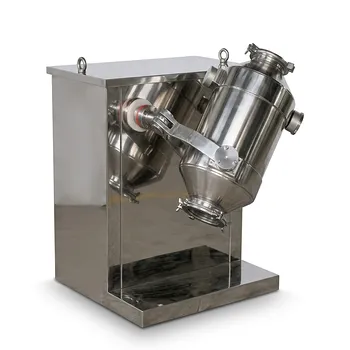
Three-Dimensional Motion Mixer for Laboratory Powder and Granule Blending
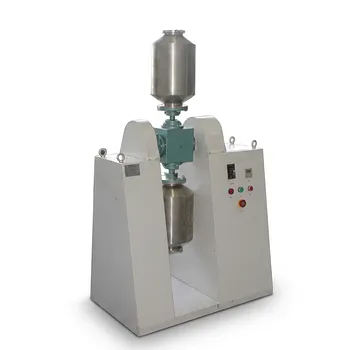
Multi Dimensional Universal Mixer for High Uniformity Powder Blending
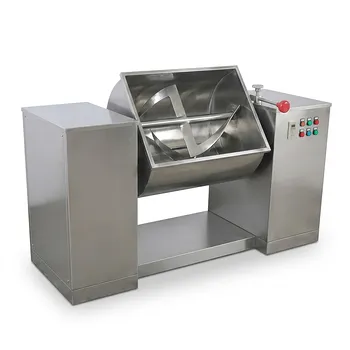
Horizontal Trough Mixer for Uniform Powder and Paste Blending
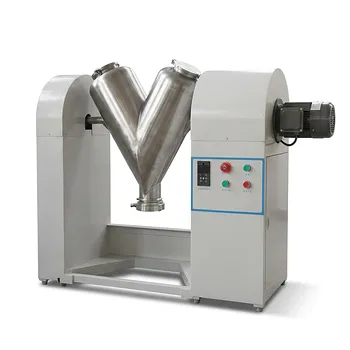
V-Type Powder Mixer for Uniform Blending of Dry Powders and Granules
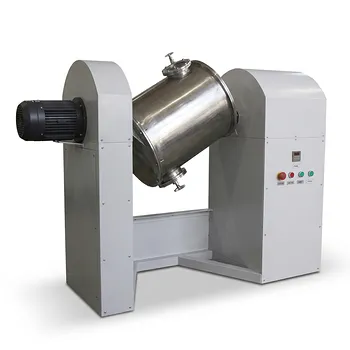
Inclined Mixer for Homogeneous Powder Blending and Grinding
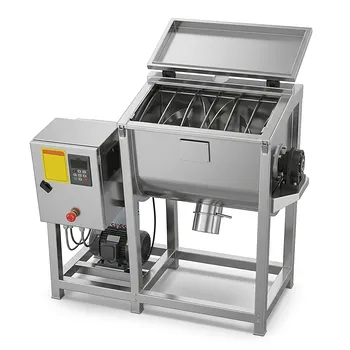
Horizontal Ribbon Mixer for Uniform Powder and Slurry Mixing
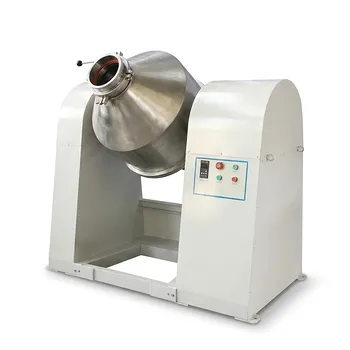
Industrial Double Cone Mixer for Powder Blending and Homogeneous Mixing
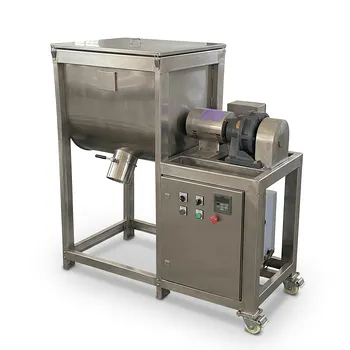
Horizontal Ribbon Mixer for Dry Powder and Slurry Blending

Dry Three Dimensional Vibratory Sieve Shaker
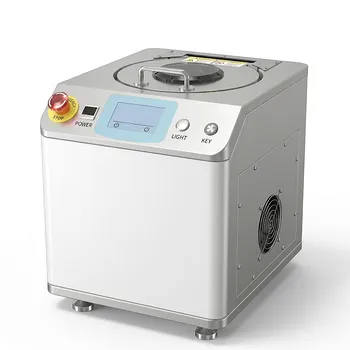
High Efficiency Vacuum Planetary Centrifugal Mixer and Defoaming Machine for Industrial Material Research and Precise Laboratory Powder Dispersion

Heavy Duty Dry Three Dimensional Vibratory Sieve Shaker for Particle Separation
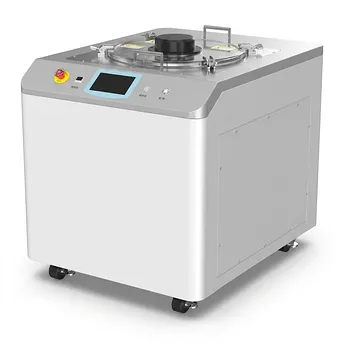
Industrial Planetary Centrifugal Vacuum Defoaming Mixer for High Viscosity Paste and Powder Homogenization

Single Tank High Energy Vibratory Ball Mill for Laboratory Grinding and Mixing
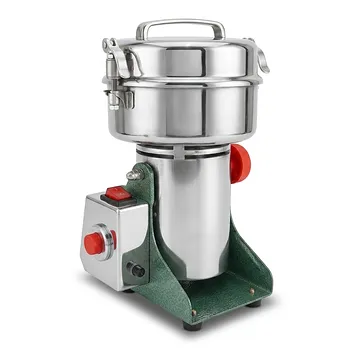
Small High-Speed Laboratory Grinder for Powder Processing
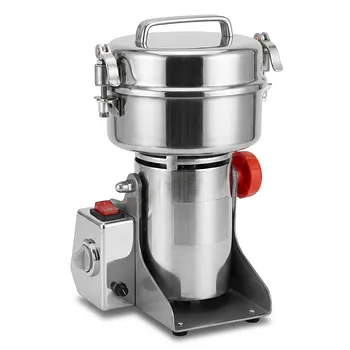
High Speed Laboratory Powder Grinder Small Batch Sample Preparation Mill
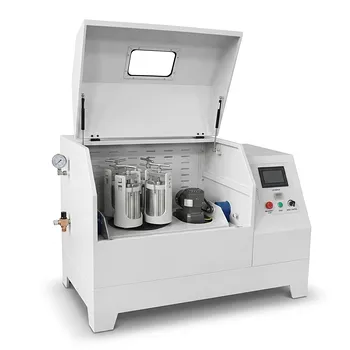
Vertical Production Planetary Ball Mill for High Throughput Powder Processing
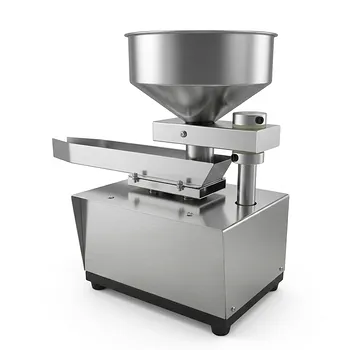
Automatic Vibrating Powder Feeder for Laboratory Material Processing Precision Vibratory Hopper Feeder for Granular and Powder Material Handling Industrial Grade Vibrating Tray Feeder for Consistent Material Sample Preparation
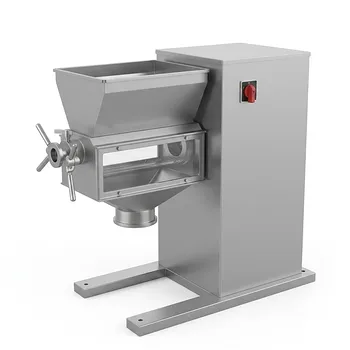
Industrial Swing Granulator for Powder Processing in Pharma Food and Chemical Industries
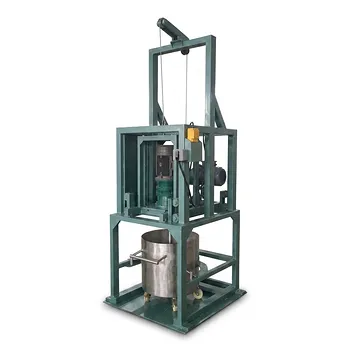
High-Speed Simple Disperser for Efficient Mixing, Dispersion, and Emulsification