The Hidden Geometry of Your Morning Coffee: What Particle Size Reveals About Control and Chaos
Jul 06, 2026
The Barista’s Dilemma
You grind the beans. The aroma fills the lab—or the café. Yet the espresso shot runs too fast, the flavor hollow and sour. The next one, a second finer on the grinder, chokes the machine and leaves a bitter, over-extracted puddle.
The difference between those two shots hides in a world we rarely see: a chaos of fragments, ranging from invisible “fines” to coarse, bouldery chunks. The naked eye cannot judge the proportion. A microscope would just show a jagged landscape.
What you need is a way to turn that invisible complexity into a number.
That’s where the vibratory sieve shaker enters. It acts less like a machine and more like a mechanical confession—forcing every particle to declare its size and, in doing so, telling you the true story of your grind.
The Arithmetic of Extraction
Brewing coffee is fundamentally a problem of mass transfer. Water needs access to soluble compounds trapped inside cell walls. The more surface area your grinding exposes, the faster and more complete the extraction.
But “more” is not automatically better.
The Goldilocks Zone of Surface Area
If all your particles were identical spheres of 100 microns, extraction would be beautifully predictable. Reality gives you a distribution: a bell curve that can be narrow and steep, or wide and sloppy.
Too many ultra-fine particles (below 150 micrometers) create excessive surface area. They over-extract in seconds, dumping bitter tannins and clogging filter pores. Too many coarse particles leave the center underextracted, resulting in sourness and a thin body.
The vibratory sieve shaker reveals exactly where your grind sits on this spectrum.
The Mechanical Eye: How a Sieve Shaker Grades Reality
A stack of sieves, each with progressively smaller mesh openings, is not just a testing tool. It’s a physical argument. It says: “You think your grinder is consistent? Let’s measure it.”
High-Frequency Vibration as a Sorting Algorithm
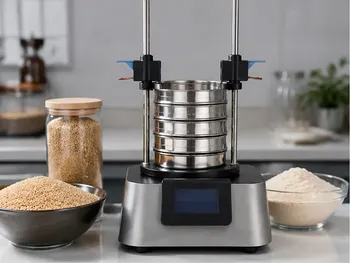
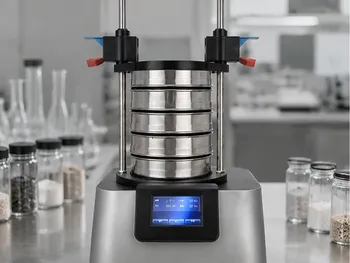
The shaker applies a consistent amplitude and frequency—usually for five to ten minutes—until the mass on each sieve stabilizes. This motion gives every particle multiple opportunities to present its smallest dimension to the aperture. What emerges is a stratified column of size classes, from coarse gravel on top to a whisper of fines at the bottom.
Weighing each fraction and plotting a cumulative passing percentage curve transforms a messy scoop of grounds into a clean, repeatable signature: the particle size distribution.
The Dataset That Tells the Truth
Once you have that data, the mean particle diameter and the slope of the distribution become your feedback loop:
- A tight “bell curve” means your grinder is producing uniform grounds—predictable extraction.
- A fat tail of fines signals misalignment, worn burrs, or overheating during grinding.
- A shift in the peak tells you that environmental humidity or bean density has altered the fracture mechanics.
The vibratory sieve shaker becomes the psychologist of your process, reading the subconscious habits of your equipment.
The Psychology of “Controlling” the Grind
There is a quiet engineer’s romance in sieving. It promises that chaos can be ordered. A particle hidden in a canister is a mystery; a particle resting on a precisely weighed sieve pan is a known quantity.
Morgan Housel often writes about the gap between what we can control and what we think we can control. In powder processing, that gap is filled by standardized sieving. The shaker doesn’t guess. It doesn’t have good days and bad days. It applies brute mechanical honesty and forces the material to obey geometry.
That honesty is both comforting and unsettling—because a sieve curve can tell you your $20,000 grinder is performing inconsistently. The numbers do not care about your ego.
A Table of Sieving Strategies for Different Goals
Not every sieving exercise needs the same stack. Align your mesh selection with your endgame.
| Primary Goal | Sieving Focus | Key Metric to Watch |
|---|---|---|
| Brewing consistency | Fine‑mesh stack (e.g., down to 26 µm) | Percentage of fines below 150 µm |
| Grinder calibration | Full‑range stack, 20–140 mesh | Geometric mean diameter and curve steepness |
| Industrial biomass or filtration | Coarse–to–medium range | Bulk density and specific surface area |
| R&D on new materials | Variable, often with sieving aids | Cumulative mass distribution for compaction modeling |
The Designer’s Paradox: When a Particle Isn’t a Sphere
Every tool has its blind spots, and the vibratory sieve shaker’s vulnerability is shape.
The Needle Under the Bridge
Coffee particles are rarely perfect spheres. They fracture into shards and elongated splinters. A needle-like fragment can orient itself vertically and slip through a mesh aperture that is far smaller than its length. The shaker classifies by width, not volume. You get a result that says “fine,” but the actual mass behaves like something much larger during extraction.
Blinding: The Oily Sabotage
Dark-roasted coffee carries oils that turn fine powders into a sticky paste. These particles can bridge across sieve openings—blinding them—so that undersized material no longer passes. The result: an artificially coarser distribution and a misleading sense of control.
Sample Loss and Its Lies
In high-precision labs, a few milligrams of dust clinging to the sieve frame or lost during transfer can shift the cumulative mass percentage. The error is small, but when you’re optimizing for an espresso recipe that lives and dies by half a gram of yield, small errors compound into confused tasting notes.
These trade-offs are not reasons to abandon sieving. They are reasons to choose equipment designed to mitigate them—sieves with anti-static surfaces, integrated sieving aids, and vibration patterns that keep pores clear.
From Coffee Grounds to Industrial Compacts
The same principles that govern your espresso puck govern how a biomass briquette holds together or how a filter membrane flows.
We’ve seen labs use vibratory sieving to predict the mechanical durability of a pressed coffee‑based filter. If the particle distribution is too wide, the compact crumbles under pressure. If it’s too uniform, the porosity drops and water flow chokes. The sieve shaker becomes the first checkpoint—long before a hydraulic press shapes the final product.
At that moment, screening equipment and compaction technology speak the same language.
The Full Suite: Sieving as Part of a Bigger Picture
A sieve shaker is most powerful when it sits inside an integrated sample preparation workflow. We provide complete laboratory solutions that place particle size analysis at the center of material science.
What That Workflow Looks Like
- Crushing and Milling: Jaw crushers, roll crushers, and liquid nitrogen cryogenic grinders for brittle or heat‑sensitive feeds. Planetary ball mills and jet mills for ultra‑fine target sizes.
- Precision Sieving: Vibratory and air‑jet sieve shakers with standardized meshes, capable of handling everything from oily coffee grounds to abrasive minerals.
- Compaction and Pressing: Cold Isostatic Presses (CIP), Warm Isostatic Presses (WIP), XRF pellet presses, vacuum hot presses—all designed to turn a well‑sized powder into a mechanically sound compact.
- Mixing and Defoaming: Specialized powder mixers and defoaming systems for uniform blends before pressing.
Together, these tools transform raw material into a specimen whose every grain is accounted for.
Mastering the Powder Universe
Particle size distribution is not just a QA checkbox. It is the silent architect of extraction, texture, and structural integrity. A vibratory sieve shaker does not merely measure—it educates, exposing how a few microns of shift in the bell curve can cascade into a completely different material behavior.
When you control the geometry of your powders, you control the story your final product tells—whether that story is a balanced espresso shot, a predictable biomass filter, or a high‑performance ceramic composite. The right sieving equipment, paired with robust milling and pressing systems, turns empirical guesswork into engineered repeatability.
The hidden geometry of your coffee—and of your next breakthrough material—is waiting to be revealed. One sieve at a time.
Quick Links
Suggested Products
Vibratory Sieve Shaker Electromagnetic 3D Motion Powder Particle Size Analyzer for Dry and Wet Sieving Laboratory Dry and Wet Three Dimensional Vibratory Sieve Shaker for Particle Analysis Stainless Steel Laboratory Vibratory Test Sieve Shaker Heavy Duty Dry Three Dimensional Vibratory Sieve Shaker for Particle Separation Dry Three Dimensional Vibratory Sieve ShakerFurther Reading
The Hidden Economics of Particle Size: Why the Most Overlooked Variable in Material Science Controls Everything The Invisible Architecture of Powder: How a Vibratory Sieve Shaker Decides What Your Amaranth Bread Becomes The Particle-Size Lever: Why the Most Overlooked Step in Catalyst Design Determines Everything Else When Glass Melts Fail, It Was Never the Furnace: The Hidden Economics of Sand Gradation The Quarter-Millimeter Margin: Why Vibratory Sieve Precision Determines Artificial Stone Profitability
PowderPreparation
Last updated on May 14, 2026
Related Products
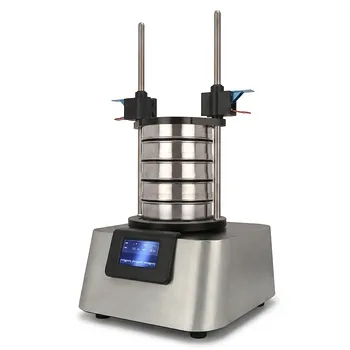
Vibratory Sieve Shaker Electromagnetic 3D Motion Powder Particle Size Analyzer for Dry and Wet Sieving
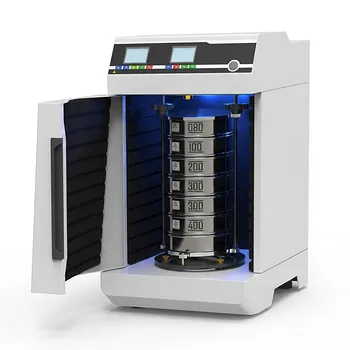
Laboratory Dry and Wet Three Dimensional Vibratory Sieve Shaker for Particle Analysis
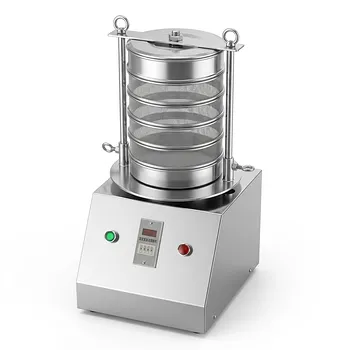
Stainless Steel Laboratory Vibratory Test Sieve Shaker
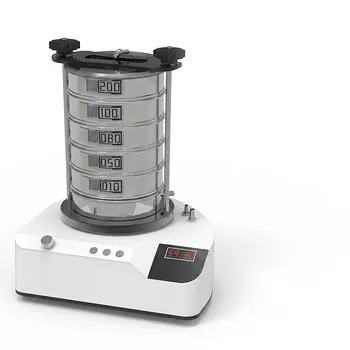
Heavy Duty Dry Three Dimensional Vibratory Sieve Shaker for Particle Separation
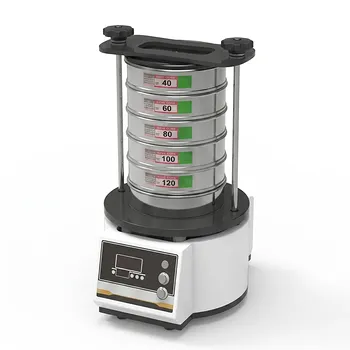
Dry Three Dimensional Vibratory Sieve Shaker
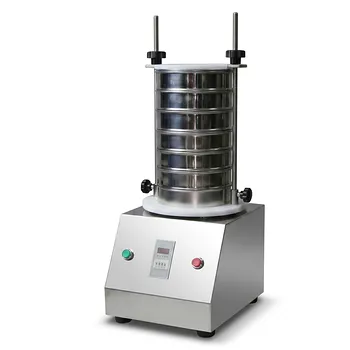
Small Laboratory Vibratory Sieve Shaker for Powder Gradation and Particle Size Analysis
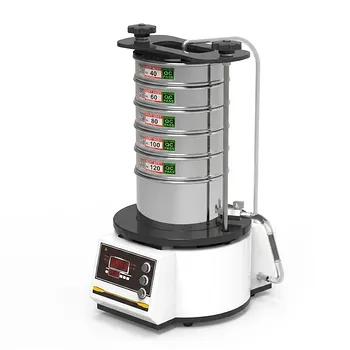
High Frequency Wet Three-Dimensional Vibrating Sieve Shaker for Dry and Wet Particle Size Analysis
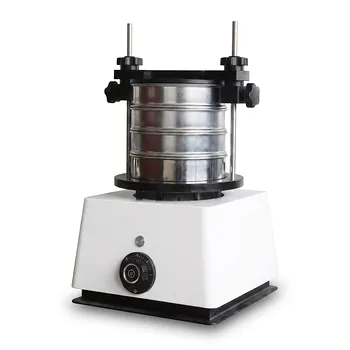
Small Laboratory Vibrating Sieve Shaker for Precise Particle Size Analysis
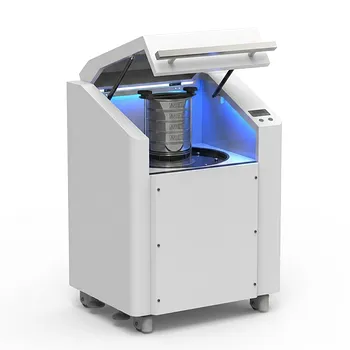
High Frequency Cabinet Type Three-Dimensional Rotary Vibrating Sieve Shaker for Dry Sieving and Particle Classification
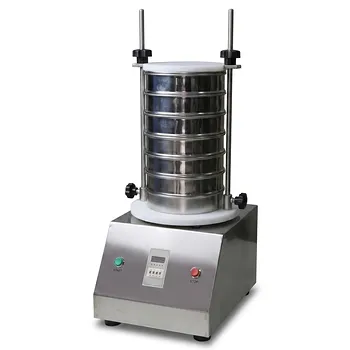
Laboratory Vibratory Test Sieve Shaker for Precision Particle Size Analysis and Powder Grading
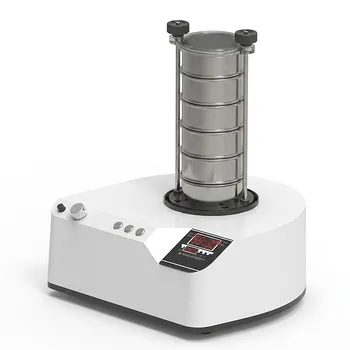
三维电磁微量振动筛分仪
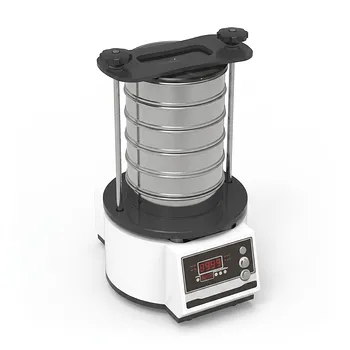
Tapping Oscillating Sieve Shaker for Dry and Wet Particle Size Analysis
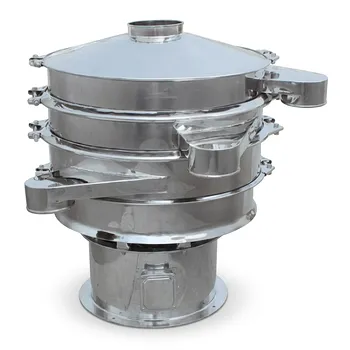
Stainless Steel Rotary Vibrating Sieve High Precision Circular Vibratory Separator Industrial Powder Grading Machine Multi Layer Sifting Equipment
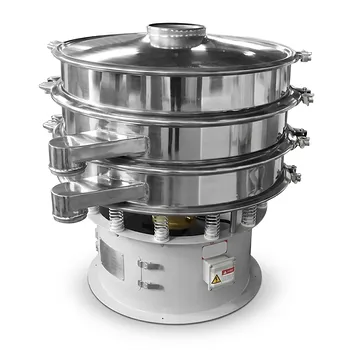
Three Dimensional Rotary Vibrating Sieve
Small Vibrating Ultrafine Grinder for Traditional Chinese Medicine
Automatic Vibrating Powder Feeder for Laboratory Material Processing Precision Vibratory Hopper Feeder for Granular and Powder Material Handling Industrial Grade Vibrating Tray Feeder for Consistent Material Sample Preparation
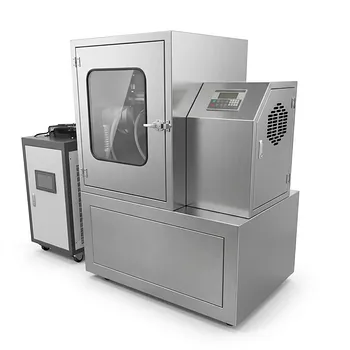
Vibratory Superfine Grinder for Ultra Fine Laboratory Powder Milling
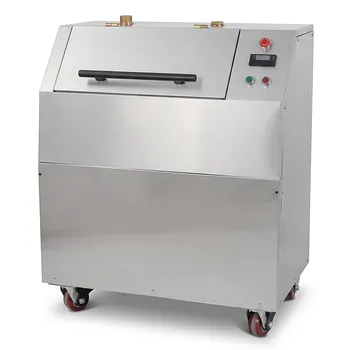
Vibratory Disc Mill for Rapid Fine Grinding and High Throughput Sample Preparation of Hard and Brittle Materials