The Unseen Razor: How Planetary Ball Mills Sculpt the World’s Sharpest Abrasives
Oct 14, 2026
The lab technician stares at a scanning electron micrograph.
The particles are coarse, jagged. Too large by an order of magnitude.
A sandblasting nozzle will spray these at a titanium hip implant in 48 hours, and the surface finish required isn’t just smooth—it’s a biological promise.
Failure at this stage is invisible to the eye, but it echoes through a supply chain.
Ultrafine abrasive preparation looks simple on a flowchart: Mill. Classify. Done.
But anyone who has tried to reliably hit the 0.2 to 0.6 micron window knows it’s not a size. It’s a psychological threshold. Below it, powders behave differently. They agglomerate. They react. They wear down your mill before you wear down them.
And the only machine designed from first principles to cross that threshold is the planetary ball mill.
The Problem with Small Things
Humans can grasp a millimeter.
A hundred microns—the width of a hair—is still tactile.
But 0.3 microns? We have no intuitive model for that scale. It’s where physics shifts from Newtonian breaking to a high-energy ballet of fracture and re-welding.
Traditional mills fall into a trap here.
A jaw crusher is a blunt instrument.
A rotor mill generates too much heat for too little reduction.
Even a horizontal bead mill, while powerful, often lacks the impact energy density to crack ceramics below a micron without losing all material identity to contamination.
What a planetary ball mill does differently is simple to describe and immensely hard to engineer: it subjects powder to synergistic impact and shear forces created by rotation of the grinding jar on its own axis while orbiting the main disk. The resulting acceleration can exceed 50 g. Inside, every particle becomes a microscopic anvil.
The Dance of the Hard Media
At the heart of the mill is a choice that sounds trivial: the balls.
It is anything but.
To grind silicon carbide into a submicron abrasive, you need a grinding medium harder than the target.
Agate is a common answer. Hard, chemically resistant, and relatively inert. It produces contamination levels measured in parts per million—acceptable for most ceramic finishing operations.
But there is a cruel paradox: the harder the media, the sharper the abrasives, and the more the media itself erodes. Contamination lurks. And with it, the gradual poisoning of what you’re trying to create.
This is a classic psychology of precision: every gain in particle reduction is partially offset by a loss in purity.
Master engineers learn to track the wear rate as if reading a fuel gauge. They add cooling intervals not because the powder demands it, but because the media’s lifespan depends on thermal steadiness.
Homogeneity Is Not a Bonus
A senior researcher once told me, “If you just crush particles, you make dust. If you want performance, you have to teach particles to share.”
He was describing deep homogenization.
In multi-component abrasive systems, where mineralizers or trace additives unlock final surface chemistry, simple mixing fails. Additives clump. Nanoparticles form nests of agglomerates.
The planetary ball mill acts as a de-agglomeration engine.
The shear forces peel agglomerates apart at scales invisible to a laser diffractometer. By repeatedly cold-welding and fracturing dissimilar materials, the mill distributes an additive at near-atomic proximity to the abrasive crystal.
The resulting powder doesn’t just have the right size. It has the right distribution of identity. In sandblasting, that translates into a uniform erosion pattern. In polishing, it becomes a mirror.
Cracking the Crystal Itself
Beyond size, there is a ghost in the machine: mechanochemical activation.
When a particle fractures, its fresh surface carries dangling bonds—places eager to react. Repeated impacts inject energy into the crystal lattice, creating dislocations and, sometimes, local phase transformations. This stored energy increases the surface reactivity of the abrasive.
Why does this matter?
For sintering.
For coating adhesion.
For the way a particle fractures again when it hits a titanium surface at 400 meters per second.
A powder that has been mechanically activated resists brittle ejection; it digs in, cuts, and leaves a nano-textured finish rather than shattered debris.
Planetary ball milling is the only lab-scale method that imparts this level of activation consistently, precisely because it cuts particles open over and over until the material itself is “primed.”
The Hidden Ledger of Trade-offs
Every technical process has a silent accounting sheet.
The planetary ball mill runs at speed and energy densities that create heat, and heat is a thief of crystal structure.
Heat Generation
Without periodic pausing—or a mill designed with forced-air cooling—temperatures inside a jar can rise enough to anneal out dislocations you just created. The material relaxes. The particle size distribution drifts.
Knowing your mill’s thermal behavior is as critical as setting its RPM.
Media Wear and Contamination
We touched on this, but its cost is often underestimated. For high-purity electronic-grade abrasives (like those used in CMP), trace iron or silicate from jar wear can be a rejection criterion. Here, selecting yttria-stabilized zirconia or tungsten carbide jars becomes a performance calculation, not an upgrade.
Energy and Time
Reaching a stable sub-micron state can take hours. The power draw is non-trivial. Yet the alternative—chemically precipitated powders—can’t match the fracture surface sharpness of a milled product. The economics tilt: if performance is paramount, milling pays.
These trade-offs don’t make the planetary ball mill a flawed tool.
They make it an honest one. Understand them, and you gain control.
Designing Your Abrasive Protocol
There is no universal milling recipe, but a decision tree emerges:
| Goal | Recommended Approach | Why |
|---|---|---|
| Extreme refinement (≤0.3 µm) | High rotation speed, high-density balls (e.g., agate or YSZ), intermittent cooling | Maximizes impact energy without thermal annealing |
| Ultimate chemical uniformity | Wet milling in suspension, moderate speed | Prevents re-agglomeration and distributes additives |
| High surface reactivity | Extended dry milling with rest cycles | Builds dislocation density, activates surfaces |
| Minimal contamination | Same-material jar and ball liners, low-energy mode | Sacrifices speed for purity |
These rules are not theoretical. They’re derived from thousands of experiments where a lab missed a specification by 50 nanometers and lost a customer.
The Full Toolchain of Ultrafine Precision
A planetary ball mill does not work alone.
In a laboratory producing advanced abrasives, it often sits beside a jet mill for pre-grinding, or a cryogenic grinder when heat-sensitive precursors must be shattered before final milling. The resulting powder may then be consolidated in a vacuum hot press to form a dense abrasive compact, or used as-is in a slurry for finishing.
This is where equipment integration becomes as important as a single machine’s performance.
Our labs span that entire chain: from jaw crushers and liquid nitrogen cryogenic grinders that handle the brittle first break, to the planetary ball mills, jet mills, and sand mills that refine and activate, right through to the cold isostatic presses (CIP) and hot presses that turn powder into a precision solid.
When a customer arrives needing 0.25‑micron alumina abrasive with a tight span, they rarely need just a mill. They need a path.
That path begins with understanding the mechanisms described here and ends with a system that respects the material’s behavior at every stage.
The Engineer’s Romance
There is a moment, late in a milling run, when the sound of the mill changes.
The heavy clunk of massive media transitions to a softer, sand-like hiss. It’s the sound of a powder reaching its terminal fineness—where particles are so small that lubrication layers form, and fracture mechanics give way to plastic flow.
That is the sound of an edge being created.
Ultrafine abrasive preparation is not a commodity process. It’s a brutal, delicate, and deeply human pursuit of control over a universe that resists precision. The planetary ball mill is not the only tool, but it is the lens through which that control becomes visible.
If you’re refining the particle that will shape the next implant, turbine blade, or optical lens, the logic starts here.
From the choice of grinding media to the management of heat, every decision compounds. Build your protocol around the physics, and the microns will follow.
Quick Links
Suggested Products
Vertical Semi Circular Planetary Ball Mill for Laboratory Precision Grinding High Energy Planetary Ball Mill for Nano Scale Grinding and Mechanical Alloying Vertical Production Planetary Ball Mill for High Throughput Powder Processing Heavy Duty Horizontal Planetary Ball Mill for Efficient Industrial Grinding and Sample Preparation 360° Rotating Omnidirectional Laboratory Planetary Ball Mill for Homogeneous Ultra-Fine Grinding and MixingFurther Reading
The 65-Micron Gate: Unlocking the True Isotopic Fingerprint of Portland Cement The Energy Budget of a Single Impact: How the Ball-to-Powder Ratio Shapes Nanocrystalline Reality The High-Energy Gamble: What SiBCN-rGO Fibers Teach Us About Perfect Homogenization The Gentle Violence of a Planetary Mill: Why the Most Critical Moment in SiC–VC Composites Happens Before Any Heat The Forge at 10,000 g: How a Planetary Ball Mill Designs Self-Lubricating Composites Atom by Atom
PowderPreparation
Last updated on May 14, 2026
Related Products
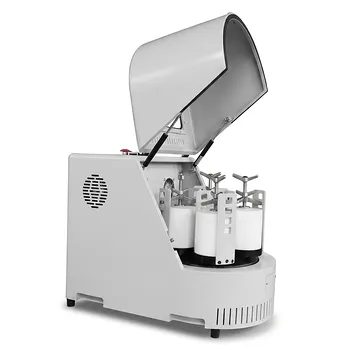
Vertical Semi Circular Planetary Ball Mill for Laboratory Precision Grinding
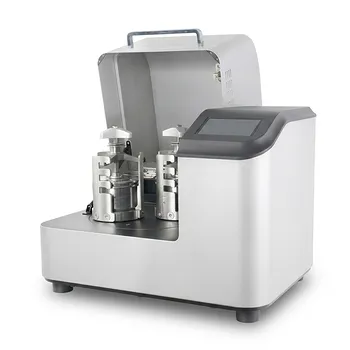
High Energy Planetary Ball Mill for Nano Scale Grinding and Mechanical Alloying
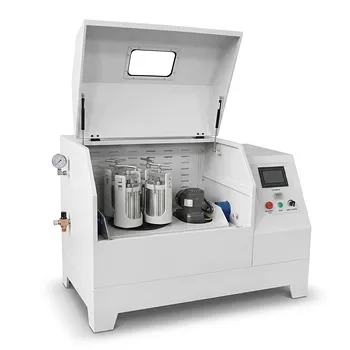
Vertical Production Planetary Ball Mill for High Throughput Powder Processing
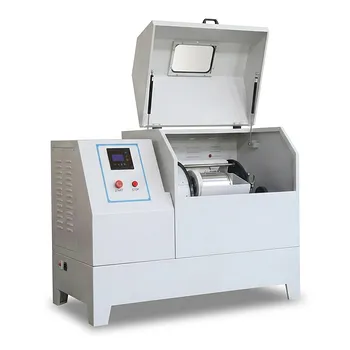
Heavy Duty Horizontal Planetary Ball Mill for Efficient Industrial Grinding and Sample Preparation
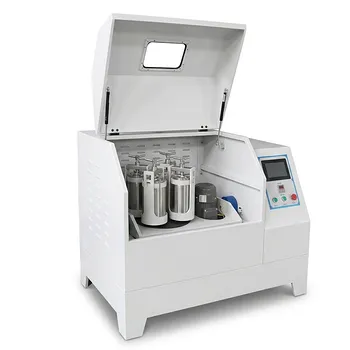
360° Rotating Omnidirectional Laboratory Planetary Ball Mill for Homogeneous Ultra-Fine Grinding and Mixing
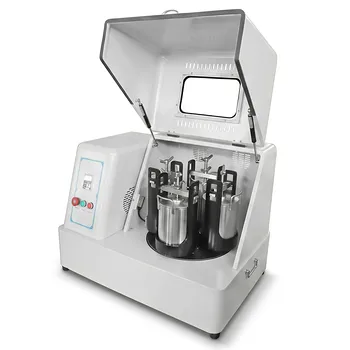
Vertical Square Planetary Ball Mill for Laboratory Sample Preparation and Nanoscale Grinding
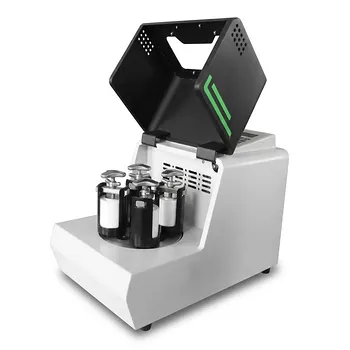
Miniature Planetary Ball Mill with Vacuum Grinding and High Efficiency for Laboratory Sample Preparation
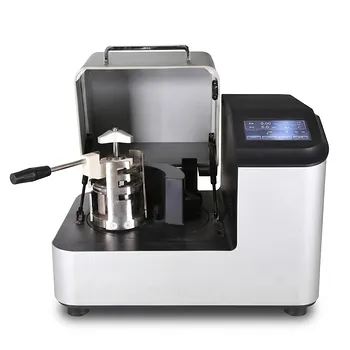
High Energy Laboratory Planetary Ball Mill for Nano Grinding and Material Science Sample Preparation
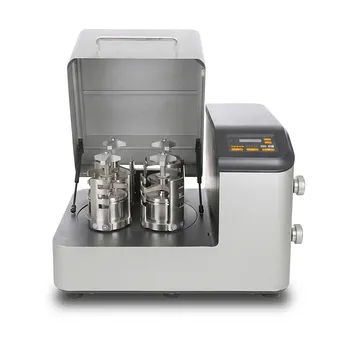
High Energy Planetary Ball Mill for Nano Scale Grinding and Colloidal Mixing in Material Science Research
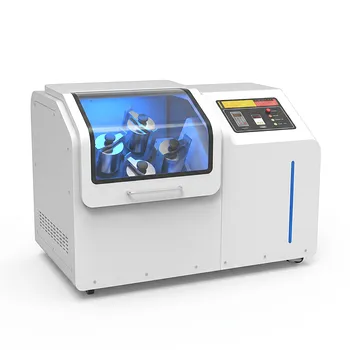
High Energy Omnidirectional Planetary Ball Mill 16L
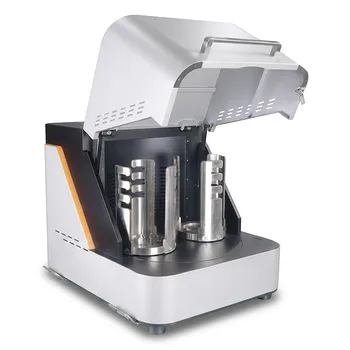
High Energy Laboratory Planetary Ball Mill for Nano Grinding and Colloidal Mixing of Hard and Brittle Materials
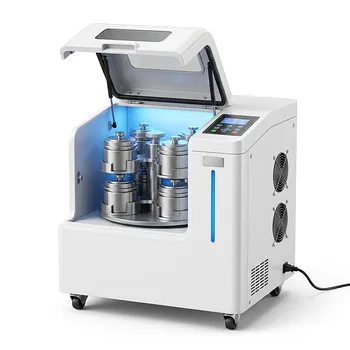
High Energy Omnidirectional Planetary Ball Mill 20L
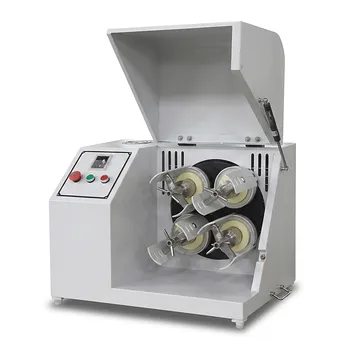
Horizontal Light Duty Planetary Ball Mill for Laboratory Sample Preparation

8L Planetary Ball Mill for Laboratory Grinding and Sample Preparation
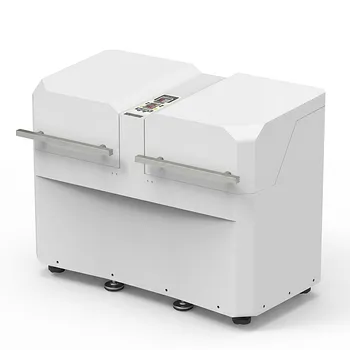
Dual Station Planetary Ball Mill 24L
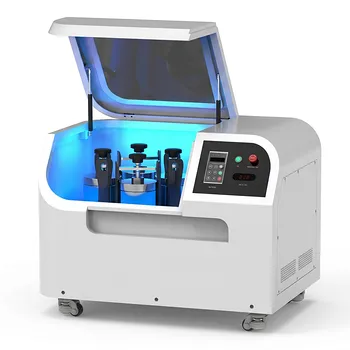
Planetary Ball Mill 12L

Nano High Energy Vibratory Ball Mill for Laboratory Sample Preparation
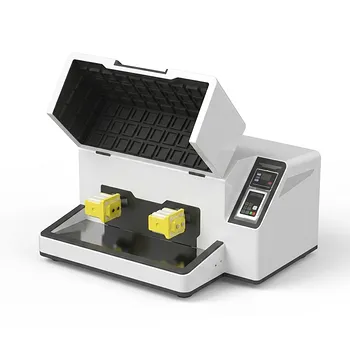
Multi-Platform Nanoscale High-Energy Vibratory Ball Mill
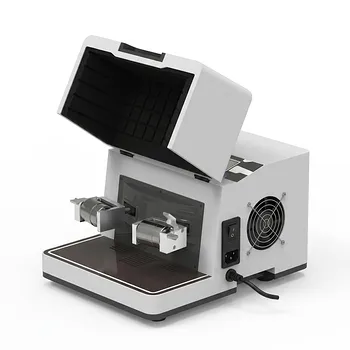
High Energy Hybrid Vibratory Ball Mill for Grinding Mixing and Cell Disruption