The Sieve That Sees the Future: How a Vibratory Shaker Predicts Ceramic Failure Before It Happens
Jul 17, 2026
The Crack That Shouldn't Exist
The fracture surface sat under the microscope like a crime scene. The ceramic should have been flawless — dense beta-SiAlON, sintered to perfection. Instead, the cross-section showed a constellation of voids and a single, monstrous grain ten times larger than its neighbors. The engineer traced the problem backward, past the sintering cycle, past the hot press, past the ball mill. The culprit lived in a step so mundane it was almost invisible: classification.
A particle that wasn't supposed to be there survived. It passed through a gap in the workflow nobody thought to close.
This is how high-performance ceramics fail. Not dramatically, but quietly. A single oversized aggregate slips through, and the microstructure never recovers. The material you spent weeks designing betrays you long before it ever reaches a testing rig.
The Unspoken Anxiety of Every Materials Engineer
We trust our furnaces. We calibrate our presses. But there's a persistent, low-grade worry that something upstream — something granular and unglamorous — will silently poison the entire batch. That worry has a name: uncontrolled particle size distribution.
It feels like trying to bake a perfect soufflé while someone randomly drops pebbles into your flour. You can control temperature and time with scientific rigor, but if the raw material carries hidden outliers, you're building on a flawed foundation. The psychology here is fascinating: we obsess over the visible parameters while the invisible ones quietly dictate the outcome.
The Gatekeeper Nobody Sees
A vibratory sieve shaker doesn't look like a sophisticated instrument. It shakes. It rattles. It sorts particles through a mesh. But in the beta-SiAlON workflow, it performs a role that no downstream process can compensate for. It is the mechanical gatekeeper — the quality floor beneath which nothing should fall.
When the raw powder arrives from initial crushing, it's not a uniform substance. It's a mixture of fully reacted material and stubborn aggregates that didn't break down during synthesis. These clusters, often invisible to the naked eye, carry localized chemistry different from the surrounding powder. If they enter ball milling, they break down eventually — but not before consuming extra energy, wearing down milling media, and introducing unpredictable variability into the particle size distribution.
A 220-Micron Insurance Policy
The sieve shaker, using mesh sizes typically around 220 µm, catches what the crusher missed. It refuses passage to particles whose width — the critical dimension for screening — exceeds the opening. Through mechanical vibration and impact, particles continuously rearrange, jumping and rotating until they either pass through or are retained. This isn't random agitation. It's a precisely engineered process that forces every particle to present its smallest dimension to the mesh.
What emerges on the other side is powder with a guaranteed upper size limit. That guarantee changes everything downstream.
The Ball Mill's Silent Partner
When oversized aggregates enter a planetary ball mill, they don't just grind down. They become micro-forges of inefficiency. The mill must expend disproportionate energy breaking down these outliers, extending processing time and generating excess heat. Meanwhile, the grinding media themselves degrade faster, introducing contamination that compromises the final chemistry.
Predictability Is the Real Product
By delivering a consistent feedstock to the ball mill, the vibratory sieve shaker transforms milling from an art into a controlled operation. You know the maximum particle size. You can calculate the required milling time with confidence. Every batch follows the same trajectory. This predictability is what separates laboratory-scale curiosity from industrial-scale reliability.
It's also what reduces the psychological burden on the operator. When you know the sieve has done its job, you stop second-guessing the ball mill. You stop wondering if that one strange batch was a fluke or a warning sign. The process becomes boring — and in materials science, boring is beautiful.
The Sintering Reckoning
The true cost of poor classification only becomes visible under extreme heat and pressure. During sintering, the green body — pressed from your carefully milled powder — undergoes a transformation. Particles bond, pores close, and the microstructure emerges. Every inconsistency in the particle size distribution becomes a nucleation site for disaster.
The Monster Grain Phenomenon
Abnormal grain growth is the materials engineer's nightmare. Left unchecked, certain grains consume their neighbors like a cellular Pac-Man, growing orders of magnitude larger than the matrix. These monster grains concentrate stress, initiate cracks, and turn a precision ceramic into a brittle failure waiting to happen.
The root cause often traces back to a single large particle that survived the entire process. During sintering, it acts as a seed for abnormal growth. The surrounding fine particles, with their higher surface energy, feed its expansion. You can't fix this in the furnace. You can only prevent it upstream.
Packing Density and the Ghost of Voids
Particle size distribution directly controls how well the powder packs when pressed into a green body. A well-classified powder achieves uniform density, which translates to even shrinkage during sintering. A powder with uncontrolled outliers compacts unevenly. Some regions pack tightly; others contain hidden voids. When the part shrinks, those voids become permanent defects — internal cavities that act as stress concentrators and fracture origins.
That fracture surface under the microscope? The one with the constellation of voids? It was born the moment an oversized particle bullied its way into the green body. The sintering cycle merely revealed what was already there.
The Hidden Trade-offs
No process is perfect, and vibrational sieving carries its own negotiation between competing values.
Sieve Blinding: When the Gatekeeper Goes Blind
Fine particles can lodge themselves in mesh openings, effectively changing the effective aperture size. This "blinding" transforms your 220 µm sieve into something smaller, causing perfectly acceptable particles to be rejected. It also makes the separation unpredictable — the opposite of what you're trying to achieve. Regular maintenance isn't optional; it's the price of precision.
Throughput vs. Precision: The Eternal Tension
Crank up the vibration amplitude, and powder flies through faster. But high-amplitude shaking can force near-sized particles through the mesh by pure mechanical bullying, or it can shatter fragile aggregates that should have been retained for chemical reasons. Finding the optimal frequency and amplitude — the rhythm that respects both speed and selectivity — requires understanding your specific material's behavior.
Abrasive ceramics like silicon carbide or SiAlON slowly wear the mesh itself. Over weeks and months, the openings grow. Your 220 µm sieve becomes 230, then 240. The quality floor sinks inch by inch until suddenly, failures return and nobody knows why.
The Integration Mindset
Here's where the psychology shifts from anxiety to confidence. A vibratory sieve shaker, properly integrated into a complete sample preparation workflow, becomes more than a single piece of equipment. It becomes the node that connects crushing to milling, that bridges synthesis to compaction.
Consider how the entire powder processing chain works together:
Crushers (jaw, roll, cryogenic) reduce raw material to manageable fragments. Mills (planetary ball, jet, bead) achieve the fine particle sizes needed for advanced ceramics. Sieve shakers (vibratory, air-jet) with precision test sieves enforce the size discipline. Mixers and defoaming mixers ensure homogeneity. And finally, hydraulic presses (CIP, WIP, hot press, vacuum hot press, XRF pellet press) compact the prepared powder into green bodies ready for sintering.
Each step depends on the previous one. The sieve shaker, sitting between crushing and milling, validates what came before and enables what comes after.
The Cold Isostatic Press Connection
When you load powder into a Cold Isostatic Press (CIP), you're trusting that it will compact uniformly under isostatic pressure. But uniform compaction requires uniform powder. If the sieve shaker didn't do its job, the CIP will amplify the inconsistency — pressing some regions to higher density than others. The resulting green body carries internal stress gradients that manifest during sintering as warpage or cracking.
The warm isostatic press (WIP) and vacuum hot press add temperature to the equation, making particle size consistency even more critical. Thermal gradients interact with packing density variations in ways that are difficult to model and impossible to fix.
Practical Paths Forward
The way you deploy vibratory sieving depends on what you're trying to optimize. Here are three common scenarios:
If Mechanical Strength Is Your Obsession
Use multi-stage sieving with progressively finer meshes. This narrows the particle size distribution to a band where abnormal grain growth has no hiding place. The result is a dense, homogeneous microstructure that delivers predictable strength and thermal stability.
If Production Cost Keeps You Awake at Night
Prioritize the pre-milling sieve step. By removing oversized aggregates before they reach the ball mill, you reduce milling time and decrease wear on expensive grinding media. The sieve pays for itself in process efficiency long before the final properties are measured.
If You're Chasing Fundamental Understanding
Employ precision test sieves in the 20–160 µm range to isolate specific size fractions. This allows you to run controlled sintering experiments where particle size is the only variable. You can map exactly how grain growth kinetics respond to initial particle dimensions, building a mechanistic model that guides future material design.
The principles apply beyond beta-SiAlON. Any advanced ceramic — silicon nitride, SiC, transparent aluminas — benefits from the same rigorous classification discipline.
The Poetry of Powder
Engineers are often reluctant romantics. We fall in love with the idea that a collection of fine particles, properly controlled, can become something as sublime as a turbine blade, a transparent armor window, or a surgical implant. But that transformation requires a chain of integrity that stretches from the first crushing step to the final sintering cycle. No link in that chain is optional.
The vibratory sieve shaker is the link nobody celebrates. It doesn't spin at thousands of rpm like a jet mill. It doesn't apply tons of force like a hydraulic press. It simply shakes, patiently, persistently, refusing passage to anything that doesn't belong. In that refusal lies the difference between a material that fails and one that soars.
When the workflow includes liquid nitrogen cryogenic grinding for temperature-sensitive materials, jaw crushers for initial size reduction, and vacuum hot presses for final densification, the sieve shaker remains the quiet sentinel — ensuring that every subsequent operation works with material it can trust.
Your microstructure carries the memory of every process step. Make sure that memory is a clean one. The particles you let through today are the defects you'll stare at under the microscope tomorrow.
Contact Our Experts to discuss how complete laboratory sample preparation solutions — from crushers and mills to sieve shakers, powder mixers, and the full spectrum of hydraulic presses including Cold Isostatic Presses and vacuum hot presses — can bring this level of control to your advanced ceramic development.
Quick Links
Suggested Products
Vibratory Sieve Shaker Electromagnetic 3D Motion Powder Particle Size Analyzer for Dry and Wet Sieving Laboratory Dry and Wet Three Dimensional Vibratory Sieve Shaker for Particle Analysis Stainless Steel Laboratory Vibratory Test Sieve Shaker Heavy Duty Dry Three Dimensional Vibratory Sieve Shaker for Particle Separation Dry Three Dimensional Vibratory Sieve ShakerFurther Reading
The Hidden Economics of Particle Size: Why the Most Overlooked Variable in Material Science Controls Everything The Invisible Architecture of Powder: How a Vibratory Sieve Shaker Decides What Your Amaranth Bread Becomes The Particle-Size Lever: Why the Most Overlooked Step in Catalyst Design Determines Everything Else When Glass Melts Fail, It Was Never the Furnace: The Hidden Economics of Sand Gradation The Quarter-Millimeter Margin: Why Vibratory Sieve Precision Determines Artificial Stone Profitability
PowderPreparation
Last updated on May 14, 2026
Related Products
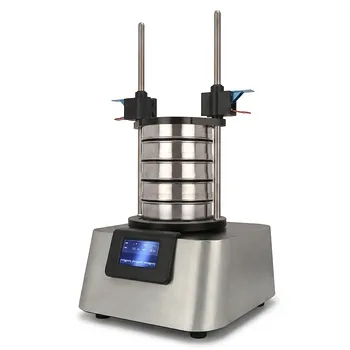
Vibratory Sieve Shaker Electromagnetic 3D Motion Powder Particle Size Analyzer for Dry and Wet Sieving
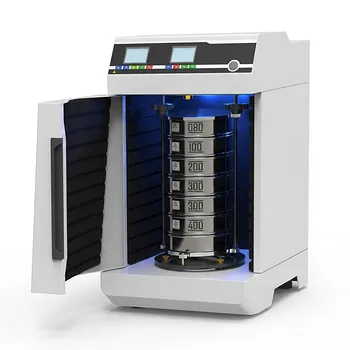
Laboratory Dry and Wet Three Dimensional Vibratory Sieve Shaker for Particle Analysis
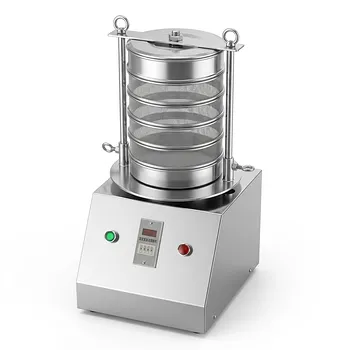
Stainless Steel Laboratory Vibratory Test Sieve Shaker
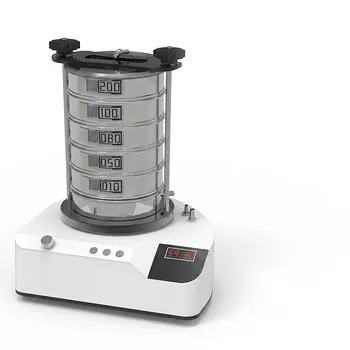
Heavy Duty Dry Three Dimensional Vibratory Sieve Shaker for Particle Separation
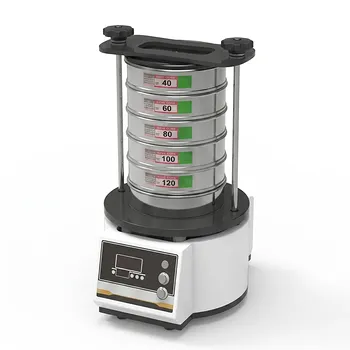
Dry Three Dimensional Vibratory Sieve Shaker
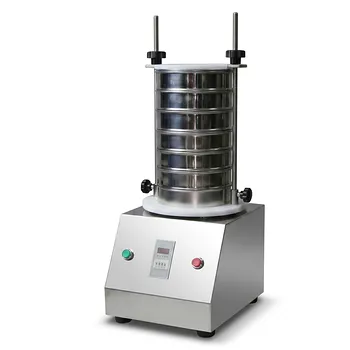
Small Laboratory Vibratory Sieve Shaker for Powder Gradation and Particle Size Analysis
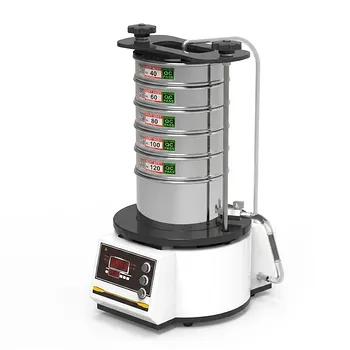
High Frequency Wet Three-Dimensional Vibrating Sieve Shaker for Dry and Wet Particle Size Analysis
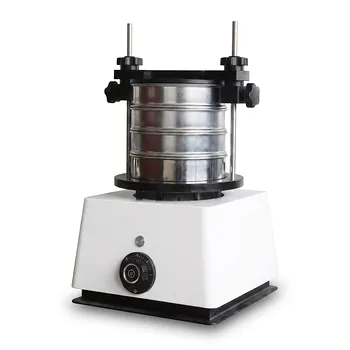
Small Laboratory Vibrating Sieve Shaker for Precise Particle Size Analysis
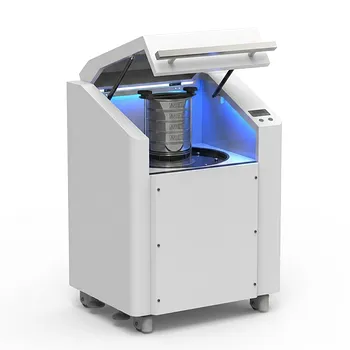
High Frequency Cabinet Type Three-Dimensional Rotary Vibrating Sieve Shaker for Dry Sieving and Particle Classification
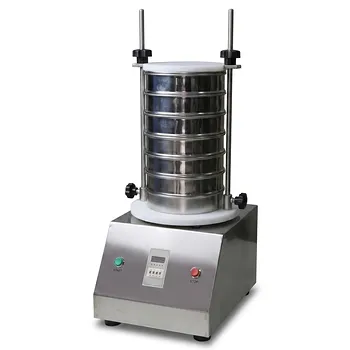
Laboratory Vibratory Test Sieve Shaker for Precision Particle Size Analysis and Powder Grading
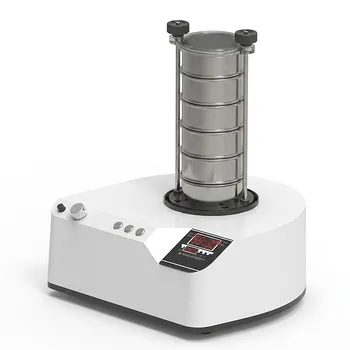
三维电磁微量振动筛分仪
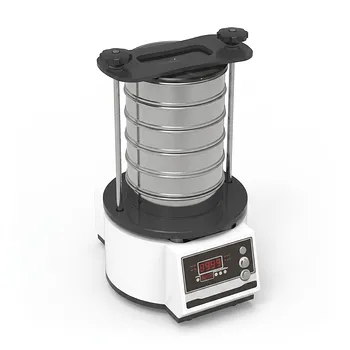
Tapping Oscillating Sieve Shaker for Dry and Wet Particle Size Analysis
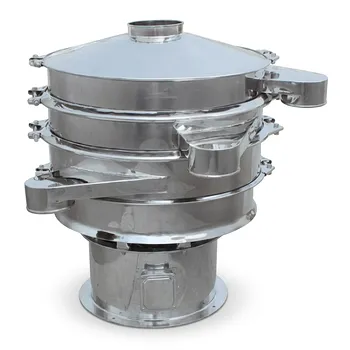
Stainless Steel Rotary Vibrating Sieve High Precision Circular Vibratory Separator Industrial Powder Grading Machine Multi Layer Sifting Equipment
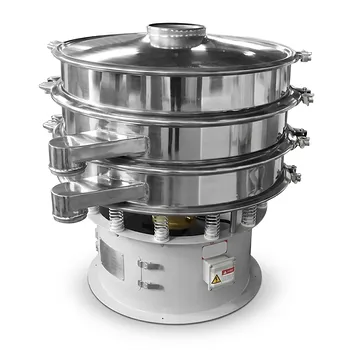
Three Dimensional Rotary Vibrating Sieve
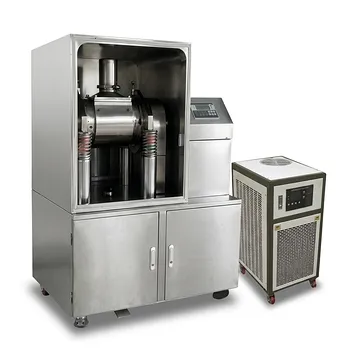
Small Vibrating Ultrafine Grinder for Traditional Chinese Medicine

Automatic Vibrating Powder Feeder for Laboratory Material Processing Precision Vibratory Hopper Feeder for Granular and Powder Material Handling Industrial Grade Vibrating Tray Feeder for Consistent Material Sample Preparation
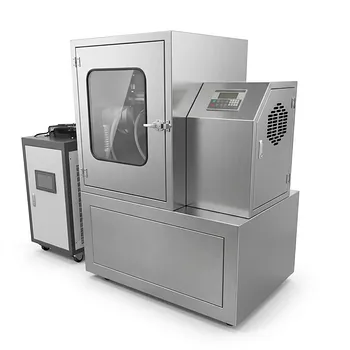
Vibratory Superfine Grinder for Ultra Fine Laboratory Powder Milling
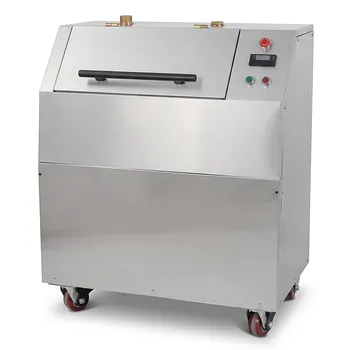
Vibratory Disc Mill for Rapid Fine Grinding and High Throughput Sample Preparation of Hard and Brittle Materials