The Dance of Sharp Angles: Why the Chaos of a Vibrating Sieve Is the Only Thing That Makes Sense for Black Silicon Carbide
May 18, 2026

The Illusion of Simple Sorting
You can hold a handful of black silicon carbide powder in your palm. Under light, it glitters like a thousand microscopic shards of obsidian. The logic of grading seems elementary: you want a pile of big ones and a pile of small ones. Find a mesh with holes, shake it for a minute, and let gravity do the work.
This logic fails almost immediately.
What separates advanced abrasive engineering from catastrophic surface failure is not what you know, but what you are willing to acknowledge about your own perception. A substance like black silicon carbide—harder than almost anything save diamond—behaves in ways that punish intuition. The particles are not spheres. They are splintered, angular, aggressive. They lock together like puzzle pieces. They blind a sieve’s apertures not because they are too large, but because they present the wrong axis to the hole. An operator shaking the stack by hand might never see it. The eye only registers what passes through. It never counts what gets stuck for reasons that have nothing to do with size.
The Geometry of Unfair Testing
When Shape Deceives the Mesh
Consider a single particle of black silicon carbide. Imagine it as a tiny, elongated blade. Its length might be 150 microns, its width only 40. A 45-micron sieve sits below it. Will it pass? Yes—if it can hit the mesh exactly on its narrow edge. If it lies flat, it will ride the surface indefinitely, a giant trapped in a world of small doors.
This is not a particle size problem. It is a particle orientation problem.
The Manual Operator’s Bias
A human shaking a sieve stack experiences fatigue. The first thirty seconds are energetic; the next two minutes are a slow degradation of amplitude. An operator hoping for a “clean” cut on a 325 mesh might unconsciously shake harder or tap the frame against a bench. Another operator, worried about damaging fragile sieves, might treat the stack delicately. The powder never receives a standardized invitation to align its axis. It receives a suggestion, and the data becomes a fiction.
We do not naturally think in terms of energy transfer. We think in terms of outcome. This is why grading without mechanical consistency is an exercise in self-deception.
Giving Particles a Language of Their Own
The Vertical Leap
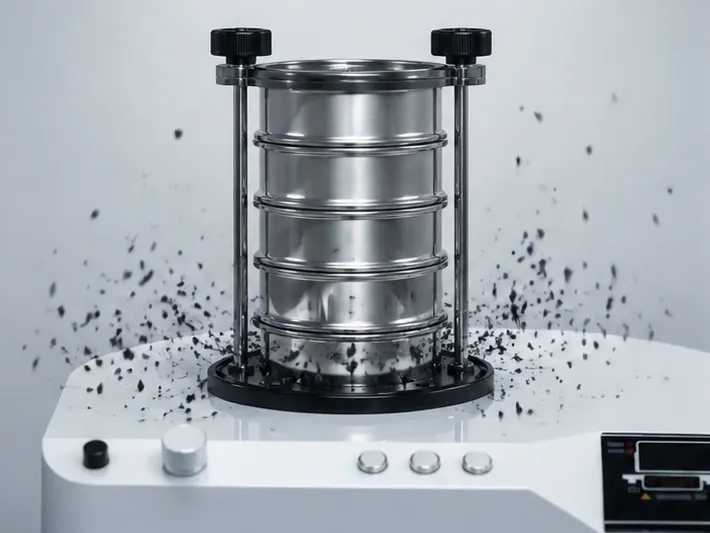
A mechanical sieve shaker imposes a discipline that humans cannot replicate. It generates a rapid vertical vibration, which forces every particle in the stack to jump. In that microsecond of flight, the particle rotates. Gravity has no monopoly on its orientation; momentum takes over. The sharp, flat shard that was reclining on the mesh is suddenly airborne and turning. When it lands, it presents a different profile. If enough jumps occur, the probability of encountering the mesh in its passing orientation converges to a statistical certainty.
This is not magic. It is opportunity density.
The Purpose of the Hammer
Superimposed on the vibration is a periodic tapping mechanism—often from a hammer striking the top of the sieve stack. This does something vibration alone cannot: it sends a shockwave through the column of trapped particles. It shatters the fragile bridges where angular grains have locked arms. A cluster that mimics a single large particle suddenly disintegrates into its true constituents. The tap is a reset button, a declaration that agglomeration will not be mistaken for mass.
The psychological parallel is compelling. We all develop mental clumping—biases that aggregate unrelated fears into one monolithic barrier. A good decision-making process introduces periodic disruption to break those clusters apart. The sieve shaker automates intellectual honesty for your powder.
The Sleep-Deprived Engineer and the Abrasive Slurry
A Case in Point
Imagine an engineer responsible for formulating a lapping slurry used to polish silicon carbide wafers. The specification calls for a tight distribution around FEPA F 600 (mean size roughly 9–12 microns). If a single 20-micron rogue particle makes it into the slurry, the polishing process does not just scratch one wafer; it gouges a continuous swirl pattern into hundreds of dollars of substrate before the line is halted.
The engineer suspects the incoming powder is out of spec. Someone grabbed a sieve, performed a manual test, and reported that “99% passed.” What they did not see was that the 20-micron particle was lying flat on the 15-micron mesh, refusing to jump. The sieve shaker’s vertical impulse would have forced that rogue to stand up and squeeze through, alerting the quality check to the contamination. The difference between “passed” and “failed” was not the particle. It was the energy of the system.
This is the hidden cost of manual sieving: the data looks good, but the catastrophe is simply deferred.
When the Mesh Fights Back
Blinding and the Hardness Paradox
There is an uncomfortable truth about grading black silicon carbide. The material is brutally hard. When a particle becomes wedged in a stainless-steel mesh aperture, the next vibrating cycle does not simply dislodge it; it grinds it in deeper. Over minutes, the effective open area of the sieve diminishes. This is blinding.
A mechanical shaker mitigates this with amplitude control and tapping, but it also reveals the limitation of the technique. At some point, no amount of vertical movement can overcome the electrostatic attraction of ultra-fine dust or the physical welding of a shard into a wire. The operator learns to respect the sieve as a consumable intelligence source, not an immortal standard.
The 38-Micron Wall
Standard mechanical sieving loses its narrative authority below about 38 microns. Particles stop behaving like miniature rocks and start behaving like a moody, charged smoke. Air currents, humidity, and static electricity begin to write their own scripts. For these cuts, industry typically shifts to air jet sieving or wet methods—tools that acknowledge physics rather than fight it.
This is the Morgan Housel insight applied to powder: knowing the limits of your tool is more valuable than obsessing over its capabilities.
Beyond a Single Sieve Stack
The Whole Workflow Has a Story
We rarely just sieve. A black silicon carbide powder did not appear from nowhere. It was crushed, perhaps in a jaw crusher, then milled in a planetary ball mill or a jet mill. It may have been mixed with additives. Before it ever touched a sieve, it was a product of mechanical forces. The quality of the final sieve analysis is partly decided by the integrity of the upstream preparation.
This is why thinking about a sieve shaker in isolation is a mistake. It is the detective, not the whole crime lab. The milling step determines the feed's initial shape. An over-milled powder creates excessive fines that blind sieves rapidly. An under-milled powder contains coarse agglomerates that the shaker’s tap must work overtime to destroy. The entire sample preparation chain—crushing, milling, mixing, pressing—whispers into the sieve result.
The Romance of the Complete System
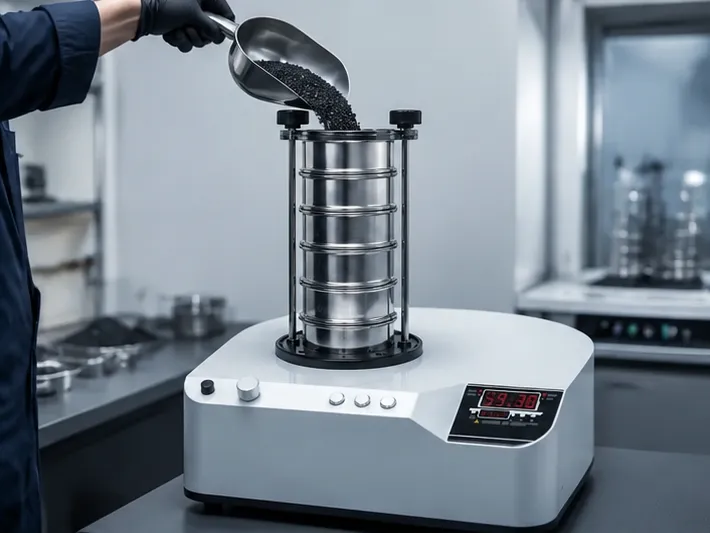
There is an engineer’s romance in viewing the laboratory as a single, coherent argument. A jaw crusher reduces brittle chunks to manageable gravel. A liquid nitrogen cryogenic grinder embrittles a temperature-sensitive composite so it fractures cleanly. A planetary ball mill grinds to a fine dust. A vibratory sieve shaker, armed with a stack of precise test sieves, then pronounces judgment on the particle distribution with statistical confidence. And if the goal is a component, a vacuum hot press consolidates the graded powder into a fully dense solid.
The sieve shaker is the articulate mouth of this mechanical creature. It speaks the language of percentage retained, of geometric mean diameter, of process stability.
Listening to the Data
From Mass Fractions to Truth
After the machine stops, the operator weighs the residue on each sieve. These numbers are not just data—they are the biome of your process. A sudden increase in the oversize fraction on a 200-mesh sieve might indicate a worn jaw crusher plate. A shift in the fines fraction might point to a mill jar that wasn’t sealed properly, causing excess grinding. The mechanical shaker didn’t just separate powder; it told you when to perform maintenance on a machine fifty feet away.
The Psychological Safety of Repeatability
There is a deep comfort in setting a timer and amplitude dial and knowing the test performed today is the exact mechanical twin of the test performed last month. This is not about robotics for its own sake. It is about erasing operator anxiety. When a customer disputes a shipment’s particle size, the engineer can pull the sieve test record and say: “This is the energy we applied. This is the time. There are no hidden variables in a handshake.” The shaker acts as an impartial witness.
Grading as a Decision, Not a Step
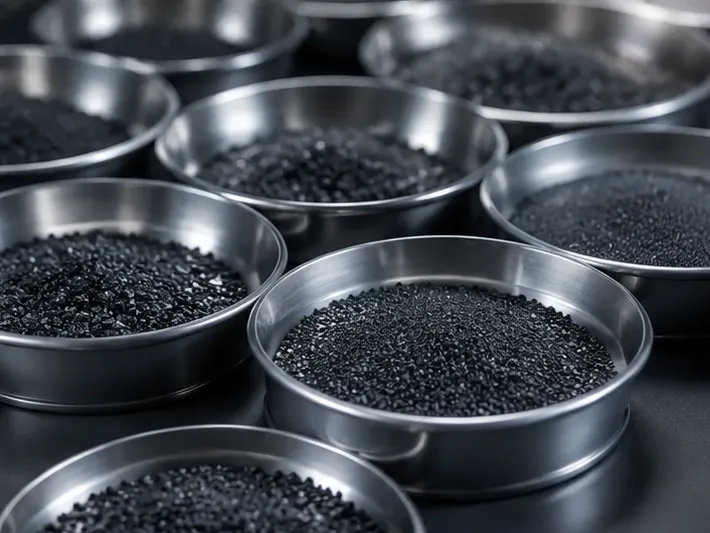
Quality is not an action. It is a series of decisions, each one vulnerable to our innate desire for neat narratives. A mechanical sieve shaker will not make a decision for you. But it removes the noise so the signal can speak. For black silicon carbide, where a stray oversize particle can transform a precision tool into a cheese grater, that signal is everything.
When you build a sample preparation workflow that acknowledges the angular brutality of your material—with crushers and mills that respect its toughness, with mixers that homogenize without destroying structure, and with presses that consolidate graded powder into specimens—the sieve shaker becomes the auditor of the entire process. It is the final, unsentimental critic that tells you if your upstream promises are being kept.
We design and manufacture these complete systems—from the initial crushing through to the final isostatic compaction—because isolated tools solve isolated problems, but a cohesive material science laboratory eliminates the gaps where errors hide. Understanding the angular grain of black silicon carbide is the first step. Giving it a standardized, repeatable, and psychologically honest voice through a mechanical sieve shaker is the second.
For a deeper discussion on matching the right milling, sieving, or pressing technology to your abrasive material workflow, reach out to a team that designs for the complete story, not just the chapter. Contact Our Experts
Quick Links
Suggested Products
三维电磁微量振动筛分仪 Vibratory Sieve Shaker Electromagnetic 3D Motion Powder Particle Size Analyzer for Dry and Wet Sieving Laboratory Dry and Wet Three Dimensional Vibratory Sieve Shaker for Particle Analysis Small Laboratory Vibrating Sieve Shaker for Precise Particle Size Analysis Stainless Steel Laboratory Vibratory Test Sieve ShakerFurther Reading
The Sieve and the Mind: Why Your Soil Test Results Depend on Replacing Human Fatigue with Engineered Consistency The Quiet Gravity of a Perfect Mix: How Sieves and 3D Tumblers Engineer Certainty in Drug Formulation The Particle Whisperer: How a Vibratory Sieve Shaker Decodes Pine Bark into a Predictable Engineering Material The Hidden Geometry of Strength: Why 20 MPa Really Begins With a Sieve The 75-Micron Mystery: How the Humble Sieve Decides Whether Your Brick Becomes a Wall or Returns to Dust
PowderPreparation
Last updated on May 14, 2026
Related Products

三维电磁微量振动筛分仪
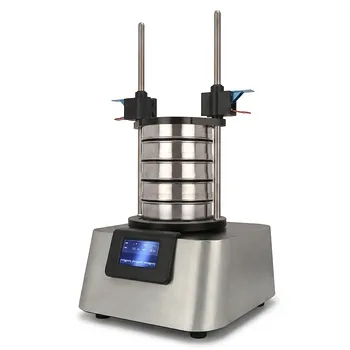
Vibratory Sieve Shaker Electromagnetic 3D Motion Powder Particle Size Analyzer for Dry and Wet Sieving

Laboratory Dry and Wet Three Dimensional Vibratory Sieve Shaker for Particle Analysis

Small Laboratory Vibrating Sieve Shaker for Precise Particle Size Analysis
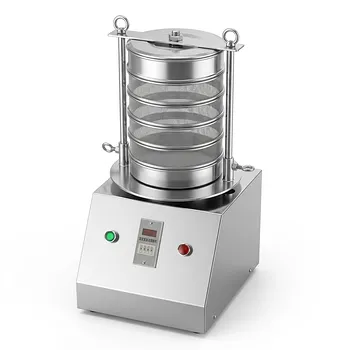
Stainless Steel Laboratory Vibratory Test Sieve Shaker

Heavy Duty Dry Three Dimensional Vibratory Sieve Shaker for Particle Separation

Dry Three Dimensional Vibratory Sieve Shaker

Small Laboratory Vibratory Sieve Shaker for Powder Gradation and Particle Size Analysis

Laboratory Vibratory Test Sieve Shaker for Precision Particle Size Analysis and Powder Grading
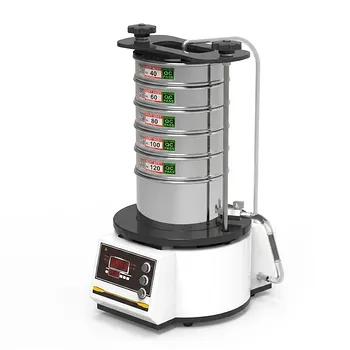
High Frequency Wet Three-Dimensional Vibrating Sieve Shaker for Dry and Wet Particle Size Analysis

Tapping Oscillating Sieve Shaker for Dry and Wet Particle Size Analysis
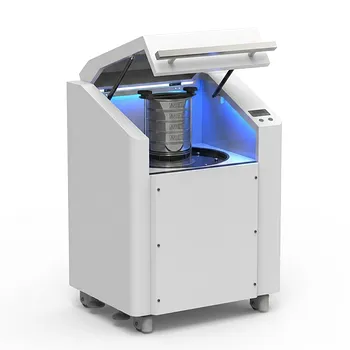
High Frequency Cabinet Type Three-Dimensional Rotary Vibrating Sieve Shaker for Dry Sieving and Particle Classification

Stainless Steel Rotary Vibrating Sieve High Precision Circular Vibratory Separator Industrial Powder Grading Machine Multi Layer Sifting Equipment

Three Dimensional Rotary Vibrating Sieve