The Sieve That Decides Mechanical Integrity: Why Standard Test Sieves Are the Unseen Foundation of Eggshell Powder Composites
Jul 15, 2026
The Day the Composite Failed
The tensile test should have been a routine validation. The polyester composite, loaded with what the researcher thought was a perfectly ground eggshell filler, snapped at only 70% of the expected force. Under the microscope, the fracture surface told a clear story: a cluster of oversized particles had turned the matrix into a web of micro-cracks long before the peak load arrived.
It wasn’t the filler chemistry. It wasn’t the resin. It was a particle size problem no one had measured precisely. And that silence—the invisible variability in what looked like fine powder—is the most expensive mistake in composite development.
The solution was already sitting in the lab, often underused: a stack of standard test sieves.
Why Particle Size is a Structural Conversation
Every particle of eggshell inside a polyester matrix is a negotiation. The resin tries to hold it; the particle tries to slip. When the particle is the right size, the bond wins. When it’s too large, geometry takes over and stress concentrates.
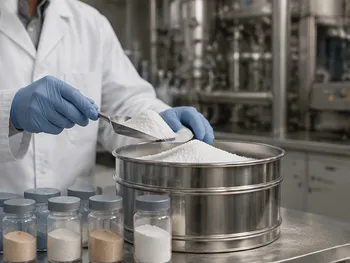
Standard test sieves don’t just sort material. They define the population of particles that will carry mechanical responsibility. By filtering ground eggshells to a specific average size—say 500 µm—sieves remove the outliers that initiate failure before the material has a chance to prove its design.
Without that control, you are not engineering a composite. You are hoping for one.
The Physics of Oversized Particles
A coarse eggshell particle acts as a stress concentrator because its irregular shape and stiffness mismatch with the polyester cause localized deformation fields. When external tension arrives, these fields amplify the internal stress around the particle. Cracks nucleate there, then propagate.
Using a standard test sieve to exclude everything above the critical size eliminates this class of premature failure. It’s not optimization; it’s basic structural integrity.
Uniformity Is the Real Reinforcement
A uniform particle size distribution allows the filler to disperse evenly in the liquid resin. When large and small particles coexist, the small ones tend to cluster around the large ones during mixing, creating resin-rich and filler-rich zones. These zones result in internal property gradients—some regions brittle, some ductile—that make the composite behave unpredictably.
A sieving step with certified meshes turns a chaotic mixture into a statistical monolith. Every cubic millimeter of the final part sees roughly the same filler fraction. That’s when the mechanical properties become repeatable enough for research papers and quality specifications.
The Psychology of Hidden Drift
Morgan Housel often writes that risk is what you don’t see. In powder processing, the biggest risk is gradual sieve degradation. A stainless-steel mesh can look intact while its openings have widened by microns. Over weeks, the average particle size creeps upward. No alarm sounds. The tensile strength declines by 2 % per batch until someone, months later, blames the resin supplier.
This silent drift is a product of wear, incomplete cleaning, or simply using sieves that were never calibrated to FEPA or ISO standards. Standard test sieves from a precision-focused ecosystem come with documented mesh openings and long-term dimensional stability. That documentation is a psychological anchor. It tells the operator: your process has not changed. The problem, if there is one, lies elsewhere.
Sieve Blinding: When the Sieve Lies to You
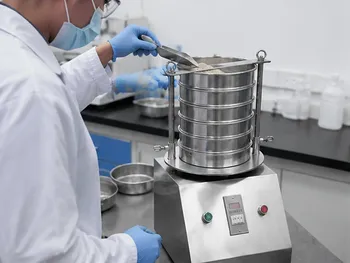
Blinding occurs when fine particles lodge in the mesh, effectively reducing the nominal opening. Suddenly the sieve is rejecting more material, productivity drops, and the operator might blame the grinder or the eggshell source. In reality, the sieving step has inserted a systematic bias. A vibratory sieve shaker with a pulsed action—and routine cleaning protocols—prevents this quiet deception.
From Agricultural Waste to Engineering Material
Eggshell powder is a calcium carbonate resource that would otherwise go to landfill. Turning it into a polyester reinforcement is a beautiful piece of circular engineering. But that transformation hinges on precision classification. A standard test sieve is the gatekeeper: on one side, raw agricultural dust; on the other, a controlled industrial filler.
The deeper truth is that particle size control is not a single tool’s job. It’s the center of an ecosystem.
The Integrated Sample Preparation Ecosystem
To truly lock in composite performance, you need to command the entire flow:
| Step | Equipment | Purpose |
|---|---|---|
| Size reduction | Jaw crushers, liquid nitrogen cryogenic grinders, planetary ball mills, jet mills | Turn shell waste into a fine, thermally undamaged powder |
| Particle classification | Vibratory sieve shakers with certified standard test sieves and meshes | Isolate the target size fraction and break agglomerates |
| Homogenization | Powder mixers, defoaming mixers | Ensure even dispersion and remove trapped air before curing |
| Compaction and shaping | Cold/Warm Isostatic Presses (CIP/WIP), vacuum hot presses, XRF pellet presses | Form solid test specimens or preforms without porosity |
A laboratory that integrates these modules eliminates the handover risks between grinding, sieving, mixing, and pressing. The particle that exits the sieve with the right morphology enters the resin with the same identity. Nothing is lost to agglomeration or moisture pickup because the workflow is continuous and controlled.
How to Select Your Sieving Strategy
- Maximum tensile strength: Choose a fine sieve—100 mesh or finer—to maximize surface area and minimize crack initiator size. Accept longer processing time as the cost of performance.
- Production efficiency: A 500 µm sieve removes the most dangerous oversize fraction while allowing fast throughput. This is the pragmatic balance for industrial scaling.
- Research repeatability: Pair certified standard test sieves with a vibratory shaker that maintains consistent amplitude. Record mesh ID, test duration, and cleaning interval. Reproducibility lives in those details.
The Engineer’s Romance of the Sieve
There is something quietly magnificent about a sieve stack. It contains no microchips, no algorithms. Yet it is the most elegant classifier ever invented: a spatial filter that accepts only particles with a specific probability of passing. In the world of composite materials, that lottery determines whether a part reaches its design life or fails in service.
When you hold a standard test sieve, you are holding a statistical guarantee. It says: I have removed the largest seeds of failure. What remains is known. That certainty, multiplied across thousands of samples, is the foundation of materials science itself.
Building that foundation demands more than one meticulously woven mesh. It demands crushers that don’t overheat the feed, mills that produce narrow size distributions, mixers that homogenize without air entrapment, and presses that consolidate without creating new defects. The standard test sieve is merely the most delicate voice in that chorus—but without it, every other instrument is playing a different score.
The Call to Action Hidden in Every Crack
The next time a composite specimen breaks below expectation, look at the fracture surface. If you see a pattern that speaks of particle size chaos, the problem is not the material. It’s the lack of disciplined classification.
Precision laboratory equipment exists to remove this variable from your research. With integrated crushers, liquid nitrogen cryogenic grinders, planetary ball mills, vibratory sieve shakers fitted with certified test sieves, powder mixers, and vacuum hot presses, you can build a workflow that delivers the same particle every time. And that particle will never surprise you.
The sieves are waiting. The solution is systematic. Contact Our Experts
Quick Links
Suggested Products
Stainless Steel Laboratory Vibratory Test Sieve Shaker Laboratory Vibratory Test Sieve Shaker for Precision Particle Size Analysis and Powder Grading Small Laboratory Vibrating Sieve Shaker for Precise Particle Size Analysis Small Laboratory Vibratory Sieve Shaker for Powder Gradation and Particle Size Analysis 三维电磁微量振动筛分仪Further Reading
The Sieve Never Lies: How a Simple Stack of Mesh Became the Lab’s Ultimate Truth-Teller The Particle Whisperer: How a Vibratory Sieve Shaker Decodes Pine Bark into a Predictable Engineering Material The 75-Micron Mystery: How the Humble Sieve Decides Whether Your Brick Becomes a Wall or Returns to Dust The Hidden Geometry of Strength: Why 20 MPa Really Begins With a Sieve The Hidden Economics of Particle Size: Why the Most Overlooked Variable in Material Science Controls Everything
PowderPreparation
Last updated on May 14, 2026
Related Products

Stainless Steel Laboratory Vibratory Test Sieve Shaker

Laboratory Vibratory Test Sieve Shaker for Precision Particle Size Analysis and Powder Grading

Small Laboratory Vibrating Sieve Shaker for Precise Particle Size Analysis

Small Laboratory Vibratory Sieve Shaker for Powder Gradation and Particle Size Analysis

三维电磁微量振动筛分仪
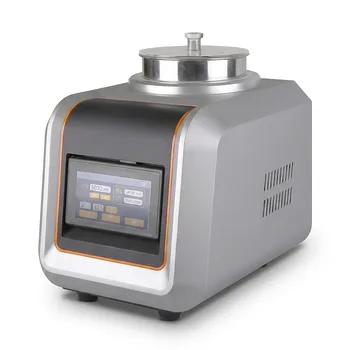
Laboratory Air Jet Sieving Machine for Fine Powder Particle Size Analysis and Deagglomeration

Stainless Steel Rotary Vibrating Sieve High Precision Circular Vibratory Separator Industrial Powder Grading Machine Multi Layer Sifting Equipment

Laboratory Dry and Wet Three Dimensional Vibratory Sieve Shaker for Particle Analysis

Three Dimensional Rotary Vibrating Sieve

High Frequency Cabinet Type Three-Dimensional Rotary Vibrating Sieve Shaker for Dry Sieving and Particle Classification

Vibratory Sieve Shaker Electromagnetic 3D Motion Powder Particle Size Analyzer for Dry and Wet Sieving

High Frequency Wet Three-Dimensional Vibrating Sieve Shaker for Dry and Wet Particle Size Analysis

Dry Three Dimensional Vibratory Sieve Shaker

Tapping Oscillating Sieve Shaker for Dry and Wet Particle Size Analysis

Heavy Duty Dry Three Dimensional Vibratory Sieve Shaker for Particle Separation
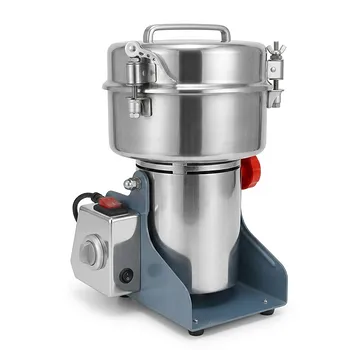
Small High-Speed Grinder for Efficient Laboratory Sample Preparation
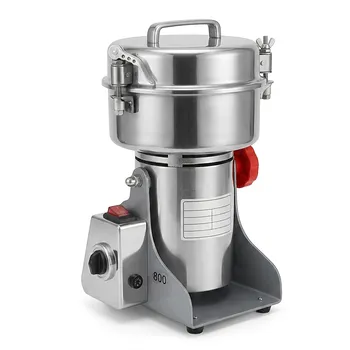
Small High-Speed Laboratory Grinder for Rapid Sample Preparation
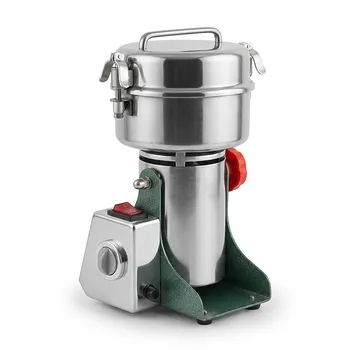
Small High-Speed Swing Grinder for Laboratory Sample Preparation
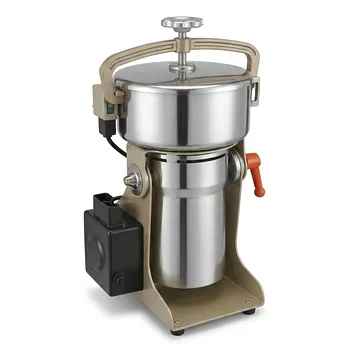
Multifunctional High Efficiency High Speed Laboratory Grinder