The Sieve and the Mind: Why Your Soil Test Results Depend on Replacing Human Fatigue with Engineered Consistency
Oct 09, 2026
The Morning the Numbers Wouldn’t Match
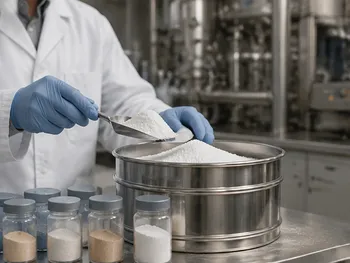
The geotechnical lab had run the same sandy loam sample three times, and each time the particle size distribution looked like it came from a different project. The technician, a veteran with steady hands, had done the manual sieving exactly as she always did—rhythmic shaking, patient tapping, careful weighing. Yet the curve for fines jumped from 18% to 26% across the replicates.
That is the moment when a quality problem transforms into a psychological one.
When the data refuses to repeat, we start doubting the material. We blame the soil’s heterogeneity. We question the sampling. Rarely do we question the tool that seems most under our control: our own two hands. But in dry sieve analysis, the human element is the dominant source of invisible noise. And invisible noise, once hidden in a data table, looks indistinguishable from material truth—until it fails a specification.
This is not a critique of human effort. It is a recognition that the task demands a kind of mechanical faithfulness that human physiology cannot deliver. The body gets tired. Attention drifts. Rhythm decays. The mind, meanwhile, is a masterful storyteller that convinces us our tenth sample was shaken exactly like the first.
The Energy That Cannot Be Held Constant
A Power Output That No Arm Sustains
Manual sieving is an act of applied physical energy. That energy is measured in acceleration, frequency, amplitude, and time. The human arm is a variable-output machine: its acceleration changes as glycogen depletes, its frequency shifts with respiration, and its amplitude shrinks when attention wanders to the clock on the wall.
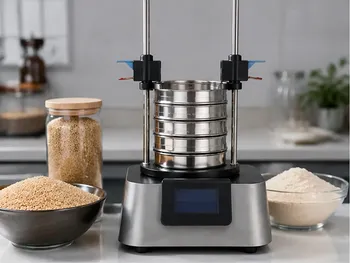
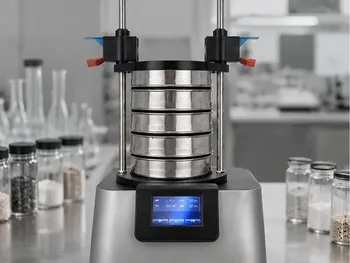
A mechanical sieve shaker operates on a different principle. It takes a calibrated power source—often standardized to a fixed number of cycles per minute—and delivers it without negotiation. The machine does not care if it is 9:00 AM or 4:30 PM. It does not hurry because a deadline looms. This constancy is not a convenience. It is a prerequisite for distinguishing signal from noise in particle size analysis.
Multi-Dimensional Movement as a Statistical Necessity
Hand shaking tends to impose a dominant plane of motion. Particles move back and forth, or in small circles, but they rarely experience the full three-dimensional reorientation that gives every grain a fair attempt at passing through an aperture. The result is a subtle, systematic under-representation of the finer fraction. Particles that could have passed remain trapped behind larger ones, not because the mesh was too small, but because the energy never rotated them into position.
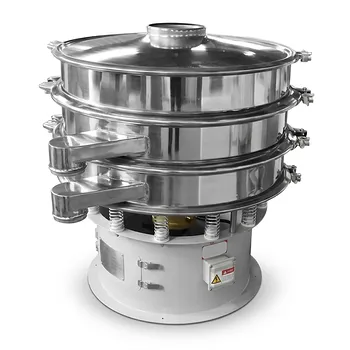
Modern mechanical shakers generate a composite vibration pattern that forces particles to jump, rotate, and redistribute across the sieve surface. This multi-dimensional agitation is not a performance gimmick. It is a deliberate engineering answer to the statistical problem of particle blinding. Every grain gets multiple independent chances to align with an opening, and that probabilistic rigor translates directly into the shape of the grain size curve.
The Psychology of Believing Your Own Data
The Operator Bias We Cannot Perceive
Morgan Housel once observed that the most dangerous biases are the ones we do not know we have. A technician who believes she is being consistent is performing a mental averaging: she remembers the rhythm she intended, not the rhythm she achieved. Over dozens of samples, this leads to a slow drift that no audit trail captures.
Mechanical sieving removes the operator as a physical variable. The energy input becomes a repeatable setting, not a variable performance. When the sieve shaker finishes its timed cycle—often a precise 15-minute interval—the result is a product of material properties alone. That shift from “I think I did the same thing” to “the machine did precisely this” is the foundation of defensible scientific data. It is the difference between a court-admissible lab report and a well-intentioned estimate.
Duration Discipline and the Over-Sieving Illusion
There is a quiet belief in many labs that a little extra shaking never hurts. If 10 minutes is good, 12 is better. This intuition is dangerous. Additional mechanical energy can fracture friable particles, artificially elevating the fines fraction. Conversely, ending too soon leaves the separation incomplete, biasing the coarse side.
Manual timing is approximate because the clock is external to the motion. Mechanical shakers internalize time. The cycle ends when the set duration expires, and every particle in the stack received the same cumulative energy dose. That ending is not an estimate. It is a boundary condition that makes results from different operators, different shifts, even different laboratories genuinely comparable.
A Comparison That Matters at the Balance
| Feature | Manual Sieving | Mechanical Sieve Shaker |
|---|---|---|
| Energy Consistency | Variable, operator-dependent | Fixed frequency & amplitude |
| Particle Movement | Predominantly linear, inconsistent | Multi-dimensional (3D) vibration |
| Data Integrity | Subject to random and systematic human error | Repeatable, statistically robust |
| Timing Control | Approximate, prone to drift | Precise, regulated, and documented |
| Batch Capacity | Limited by physical endurance | Handles full sieve towers and heavy aggregates |
These contrasts are not abstract. They live in the lab report that passes a consultant’s review and the one that triggers an expensive re-test. They live in the construction specification that holds because the fines content was measured correctly, and the one that fails because the data lied.
The Trade-Offs Worth Understanding
Calibration Is a Conversation with the Machine
A mechanical shaker does not eliminate maintenance; it changes its nature. Over time, vibration patterns can shift as components wear. Regular calibration becomes a dialogue between the lab and the instrument—a verification that the energy signature remains within specification. This effort is a small price for the confidence it buys. A calibrated shaker returns the favor with data that can be traced to known performance standards.
Protecting Fragile Grains from Aggressive Energy
Not every soil is a tough, angular aggregate. Some samples are soft, weathered, or rich in organic material. In such cases, the very energy that ensures thorough separation can also destroy the particles it is meant to measure. The solution is not to abandon mechanical sieving but to select a shaker with adjustable amplitude. The engineering challenge shifts from “how do I shake consistently?” to “how do I match the energy to the material’s fragility?” That is a solvable problem, and it is one that no amount of careful hand shaking can address because the human arm lacks both range and resolution.
Beyond the Sieve: The Sample Preparation Ecosystem
The Data Chain Begins Before the First Mesh
A sieve shaker’s performance depends utterly on what arrives at the top sieve. If particles are poorly crushed, if aggregates remain intact, if moisture has not been controlled, then even the most precise vibration pattern will produce misleading results. The scientific integrity of particle size analysis is a chain that stretches backward into sample preparation—and every link must be mechanically defined.
This is where the psychology of laboratory workflow matters. Labs often invest heavily in one precision instrument while neglecting upstream steps that quietly compromise the data. A state-of-the-art sieve shaker fed by inconsistent jaw crushing or manual grinding introduces a different kind of variability: a material one.
From Crushers to Presses, the Logic of Standardization
The same principle that justifies mechanical sieving—replace human variability with controlled, repeatable energy—applies across the entire sample preparation workflow. Jaw crushers and roll crushers deliver a defined reduction ratio that no mortar and pestle can match. Planetary ball mills, jet mills, and cryogenic grinders bring temperature control and precise energy input to size reduction, protecting heat-sensitive or volatile phases. Powder mixers and defoaming mixers ensure homogeneity before compaction. And when the final step demands a pellet for XRF analysis or a consolidated green body for further testing, a hydraulic press—cold isostatic, warm isostatic, or hot press—completes the process with calibrated, uniform pressure.
Each instrument is a commitment to making the material, not the operator, the sole source of variation. That is the engineer’s romance: a system where every mechanical step is accountable, every parameter is known, and the final data can be defended not because a skilled person ran the test, but because the test was designed to run itself.
Choosing the Path Your Data Deserves
If your primary requirement is regulatory compliance and defensible repeatability, a calibrated mechanical sieve shaker is the baseline, not an upgrade. It transforms particle size distribution from a skilled craft into a documented engineering process.
If your throughput demands are high and coarse aggregates dominate your workflow, multi-level mechanical sieve towers can process loads that would exhaust a technician in under an hour—without sacrificing the uniform energy distribution that keeps bottom sieves as effective as the top.
If you work with friable or delicate materials, choose equipment that gives you amplitude control. The goal is not maximum vibration; it is exactly the right vibration. Machines that let you dial in energy preserve the integrity of soft grains while still delivering the multi-dimensional motion that prevents blinding.
And if you are ready to see sample preparation as an unbroken system—from initial size reduction through final pressing—then the question is no longer “manual or mechanical?” It becomes “how do I build a workflow where every step is instrumented, calibrated, and repeatable?”
The data your projects rest on will be only as reliable as the weakest link in that chain. Most weak links are human. The strongest links are engineered.
We provide complete laboratory sample preparation solutions that turn this philosophy into operational reality—from vibratory and air-jet sieve shakers to jaw crushers, planetary ball mills, cryogenic grinders, powder mixers, and a full range of hydraulic presses. When your material science depends on data that no one can challenge, the tools must be as rigorous as the questions you ask.
Quick Links
Suggested Products
Vibratory Sieve Shaker Electromagnetic 3D Motion Powder Particle Size Analyzer for Dry and Wet Sieving 三维电磁微量振动筛分仪 Stainless Steel Laboratory Vibratory Test Sieve Shaker Small Laboratory Vibrating Sieve Shaker for Precise Particle Size Analysis Dry Three Dimensional Vibratory Sieve ShakerFurther Reading
The Hidden Economics of Particle Size: Why the Most Overlooked Variable in Material Science Controls Everything The Invisible Architecture of Powder: How a Vibratory Sieve Shaker Decides What Your Amaranth Bread Becomes The Particle-Size Lever: Why the Most Overlooked Step in Catalyst Design Determines Everything Else When Glass Melts Fail, It Was Never the Furnace: The Hidden Economics of Sand Gradation The Quarter-Millimeter Margin: Why Vibratory Sieve Precision Determines Artificial Stone Profitability
PowderPreparation
Last updated on May 14, 2026
Related Products
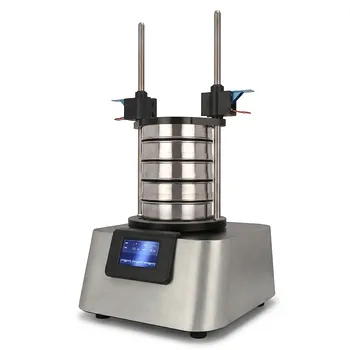
Vibratory Sieve Shaker Electromagnetic 3D Motion Powder Particle Size Analyzer for Dry and Wet Sieving
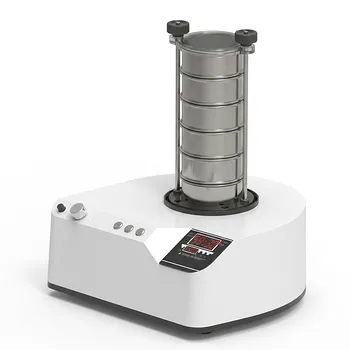
三维电磁微量振动筛分仪
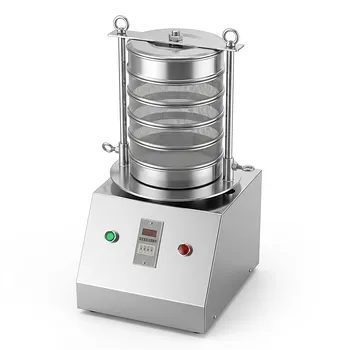
Stainless Steel Laboratory Vibratory Test Sieve Shaker
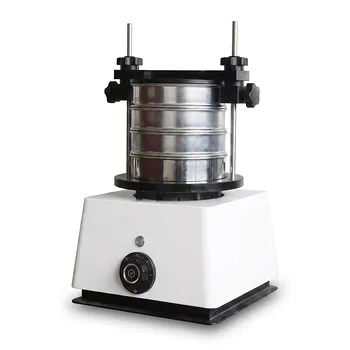
Small Laboratory Vibrating Sieve Shaker for Precise Particle Size Analysis
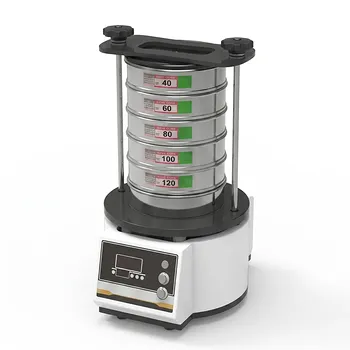
Dry Three Dimensional Vibratory Sieve Shaker
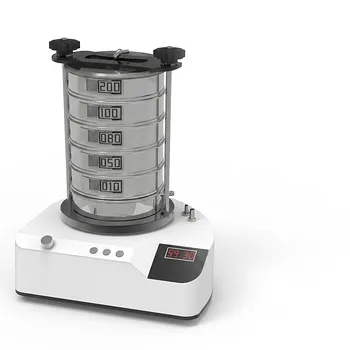
Heavy Duty Dry Three Dimensional Vibratory Sieve Shaker for Particle Separation
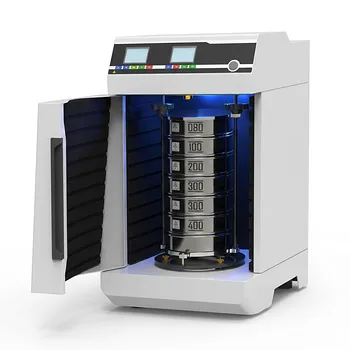
Laboratory Dry and Wet Three Dimensional Vibratory Sieve Shaker for Particle Analysis
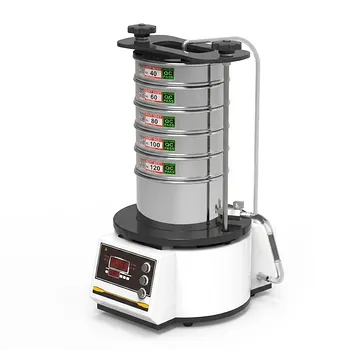
High Frequency Wet Three-Dimensional Vibrating Sieve Shaker for Dry and Wet Particle Size Analysis
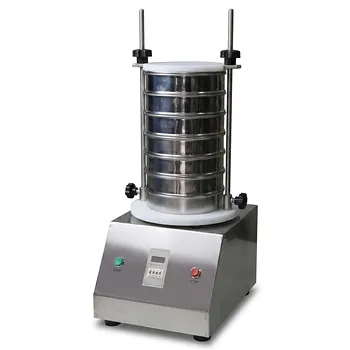
Laboratory Vibratory Test Sieve Shaker for Precision Particle Size Analysis and Powder Grading
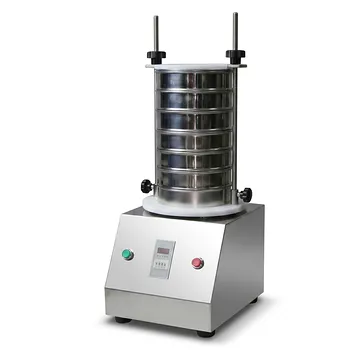
Small Laboratory Vibratory Sieve Shaker for Powder Gradation and Particle Size Analysis
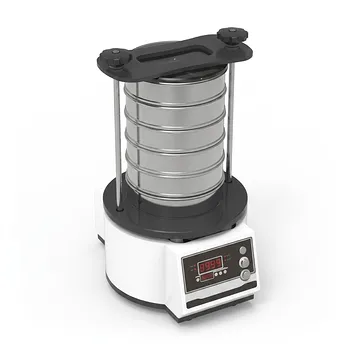
Tapping Oscillating Sieve Shaker for Dry and Wet Particle Size Analysis
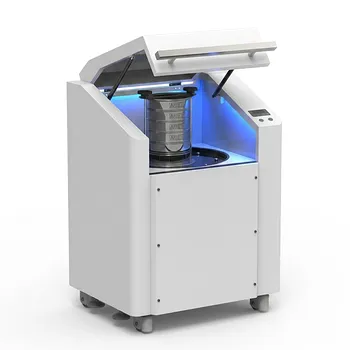
High Frequency Cabinet Type Three-Dimensional Rotary Vibrating Sieve Shaker for Dry Sieving and Particle Classification
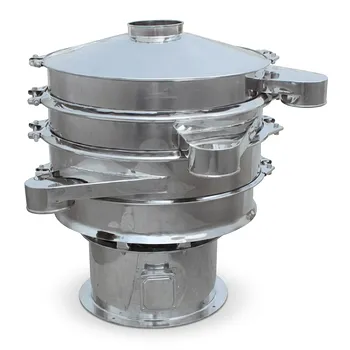
Stainless Steel Rotary Vibrating Sieve High Precision Circular Vibratory Separator Industrial Powder Grading Machine Multi Layer Sifting Equipment
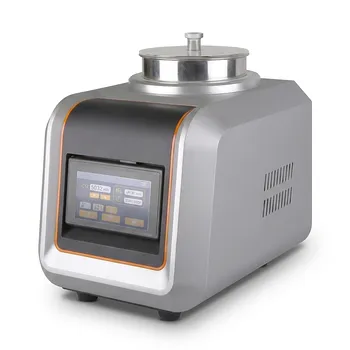
Laboratory Air Jet Sieving Machine for Fine Powder Particle Size Analysis and Deagglomeration