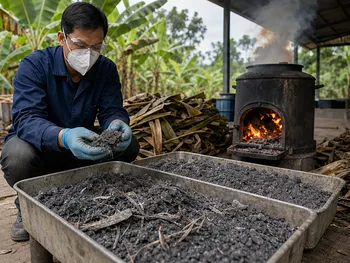
The Sand Paradox: Why Smart Money Chooses Mechanical Force Over Chemical Finesse for Silica Nanoparticles
Sep 01, 2026
The Hidden Cost of Perfection
In a bright, sterile lab on the outskirts of Munich, a team of chemical engineers did something remarkable. They dialed in every variable—pH, temperature, supersaturation—and grew silica nanoparticles so uniform that electron micrographs looked like computer renders. The batch was 2 grams. The cost-per-gram was breathtaking. When the order came for 2 tonnes, the math simply collapsed.
This moment—the silence after the spreadsheet is read—is the real story of nanomaterial production. It is not about whether something is possible. It is about whether the system that delivers that possibility can survive human economics.
Chemists tend to think bottom-up. They build particles the way nature builds seashells, atom by atom, through carefully controlled reactions. This approach offers atomic-level precision and purity that borders on spiritual. But the psychological trap is subtle: we assume that what works in a beaker can scale if we just add more glass. It rarely does.
Industrial production, the messy world of silos and trucks, does not need a perfect 2-gram crystal. It needs nanoparticles that are fit for purpose, produced with brutal consistency, from materials that cost more to ship than to buy.
The Day the Reactor Stopped
Consider a concrete manufacturer who wanted to introduce nanosilica into their admixtures. Early strength gain, reduced permeability—the data was compelling. Their pilot trials used commercially available nanoparticles synthesized via the Stöber process. Price: $180 per kilogram. The business case required $12.
Bottom-up synthesis demands expensive organosilane precursors (TEOS, TMOS) and solvents that require recovery systems. More critically, scaling a liquid-phase reaction creates thermodynamic headaches: heat transfer becomes nonlinear, mixing dead zones poison the size distribution, and batch-to-batch variation introduces enough uncertainty to terrify any quality control manager. One operator’s tiny deviation turns a million-dollar production run into a write-off.
Now walk across the factory floor to a different machine. It is fed not by argon-purged glove boxes but by a hopper of ordinary quartz sand. This is the domain of wet mechanochemical grinding—a process that treats refinement as a problem of force transfer, not molecular choreography.
Liquid Intelligence
At first glance, a ball mill looks primitive. Rotating chamber, grinding media, material. But the physics inside that rotating vessel is a study in controlled chaos.
Preventing the Invisible Clump
As particles fracture below roughly 10 microns, Van der Waals forces begin to shout louder than gravity. Dry-milled powders clump together, forming artificial agglomerates that trick particle size analyzers. When water or another carrier liquid enters the chamber, it adsorbs onto fresh fracture surfaces, creating an electrostatic barrier that keeps particles apart. This is not just chemistry—it is a rheological intervention. The slurry becomes a medium where fines flow and classifiers can actually do their job.
Impact Efficiency Without Cushioning
In dry conditions, a fine powder can coat the grinding balls, creating a cushion that absorbs impact energy. You heat up the mill while achieving almost nothing. Wet grinding suspends particles between the media, transforming each collision into a more efficient stress event. The result: finer product sizes at lower specific energy consumption. The mill works harder, not longer.
Temperature Is the Silent Saboteur
Grinding generates heat, and heat changes everything. It can warp internal components, accelerate media wear, and even alter the amorphous structure of silica particles themselves. Liquid acts as a thief of thermal energy, carrying it away from the point of contact. This extends the life of the mill’s lining and—critically—preserves the mechanical stability of the nanoparticles during formation. You protect your equipment and your product in the same act of dissipation.
The Psychology of Raw Materials
There is an engineer’s romance in transforming the ordinary into the extraordinary. Silica nanoparticles produced from sand—a material so abundant it defines geological time—carries a kind of material poetry. The same silicon dioxide that has been crushed underfoot for millennia becomes, through mechanical energy alone, a high-value additive that strengthens concrete and polishes optics.
But beyond romance, there is economics. A tonne of silica sand can cost less than a single laboratory-grade bottle of TEOS. The feedstock math is not incremental; it is orders-of-magnitude different. For applications where nanoparticles act as functional fillers—concrete densifiers, anti-settling agents for coatings, reinforcement in polymer composites—the atomic perfection of bottom-up particles is an over-engineered luxury. The market pays for performance, not perfection.
Which Path Costs Less in the Long Run?
| Decision Factor | Bottom-Up Chemical Synthesis | Wet Mechanochemical Grinding |
|---|---|---|
| Raw material cost | High (specialty precursors, solvents) | Extremely low (natural sand, water) |
| Process complexity | Numerous sensitive parameters | Simplified, fewer failure points |
| Scale-up risk | High (thermodynamic shifts) | Moderate (modular expansion possible) |
| Purity achievable | Excellent | Good; requires media selection management |
| Labor skill floor | Chemist-level monitoring required | Technician-level operation feasible |
| Ideal market | Biomedical, optics, high-margin precision | Construction, coatings, bulk performance |
Where Mass Matters Most
The numbers favor mechanochemical grinding whenever the application prioritizes volume and cost-per-functional-kilogram over atomic perfection. The concrete industry, projected to consume tens of thousands of tonnes of nanosilica in the coming decade, cannot absorb the economics of chemical synthesis. It needs a process that converts megawatts and sand into value, reliably, day after grinding day.
The same logic applies to a mid-sized coatings manufacturer that needs 500 tonnes of silica matting agent annually. A wet planetary ball mill processing sand slurries can meet that demand with a process control scheme simple enough that a technician—not a PhD—manages the shift. That is not dumbing down the process; it is smart engineering. Fewer parameters mean fewer opportunities for failure. Fewer failures mean predictable margins.
The Contamination Trade-off (and How to Manage It)
Mechanochemical grinding wears media. This is not a flaw; it is a physical reality acknowledged by every powder technologist. Trace amounts of zirconia from grinding balls or stainless steel from the mill lining can enter the product.
For concrete additives, this contamination is irrelevant—often beneficial. For sensitive optical coatings, it matters. Choosing the right grinding media and mill lining (tungsten carbide, agate, sintered corundum) allows engineers to keep contamination within acceptable limits while still reaping the economic rewards of mechanical processing. The key is matching the equipment specification to the quality requirements, not rejecting an entire methodology because perfect purity is absent.
A Bridge Built with Precision
The distance between a laboratory’s gram-scale curiosity and a factory’s tonne-scale reality feels wide. It is populated by equipment that must be precise enough to prove a process, and robust enough to survive it when scaled.
Our laboratory sample preparation systems are designed to occupy exactly that bridge. We do not only sell machines; we provide a physical link between research ambition and commercial production.
When you explore wet mechanochemical grinding for silica nanoparticle production, you need more than a generic mill. You need:
- Planetary ball mills with tightly controlled energy input that deliver repeatable size reduction progressions—allowing you to map the exact grinding time and media ratio needed before you scale.
- Air-jet sieve shakers and advanced test sieves that close the feedback loop, ensuring that what leaves your mill meets your particle size specification with statistical confidence.
- Preparatory crushers (jaw and roll) that handle feed material before it enters the fine grinding stage, creating an integrated workflow from raw mineral to nanoparticle slurry.
- Liquid nitrogen cryogenic grinders for materials or composite mixtures that require embrittlement before processing, expanding your research envelope beyond silica alone.
The same engineering discipline applies across our full range. Cold and warm isostatic presses for powder compaction, hot presses for advanced ceramics—these are not separate worlds. They are part of the same material science continuum, where what begins as a nanoparticle in suspension can end as a fully dense component with tailored properties.
When a process moves from grinding to consolidation, you do not want to renegotiate reliability. You want a partner whose crushers, mills, sieve shakers, and presses speak the same language of materials integrity.
Your decision to pursue wet mechanochemical grinding over chemical synthesis starts with economics and powder physics. It succeeds or fails on equipment that understands both.
Quick Links
Suggested Products
Laboratory Small Horizontal Sand Mill for Nano Materials Wet Grinding Laboratory Horizontal Pin Nano Sand Mill Horizontal Bead Mill for Nanoscale Grinding and Advanced Material Powder Processing Vertical Square Planetary Ball Mill for Laboratory Sample Preparation and Nanoscale Grinding Small Laboratory Colloid Mill for Ultra-Fine Wet Grinding and EmulsificationFurther Reading
The Grain, the Grinder, and the Hidden Poison: Why Mycotoxin Testing Depends on a Perfectly Boring Pulverization The Paradox of Small Things: Why Tinier Beads Unlock the Nano World, and Sometimes Fail The Energy Window: Why Better Silica Nanoparticles Aren't About Grinding Longer, But Smarter The Hidden Variable in Green Chemistry: Why Your Banana Leaf Ash Fails (And How Precision Grinding Fixes It) The Particle Paradox: Why the Secret to a Perfect Effervescent Tablet Lives in the Grinding Room
PowderPreparation
Last updated on May 14, 2026
Related Products
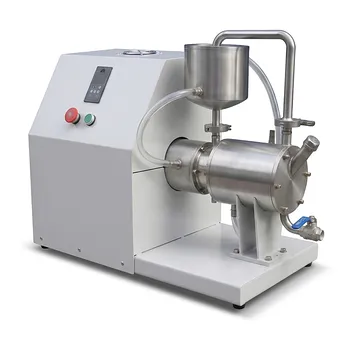
Laboratory Small Horizontal Sand Mill for Nano Materials Wet Grinding
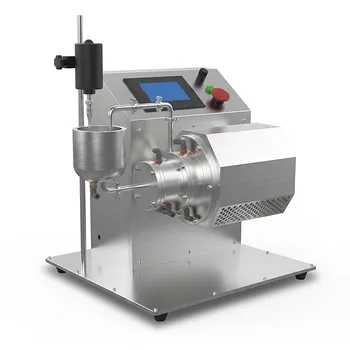
Laboratory Horizontal Pin Nano Sand Mill
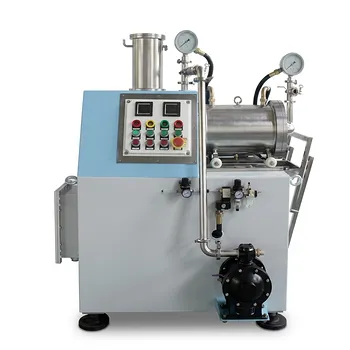
Horizontal Bead Mill for Nanoscale Grinding and Advanced Material Powder Processing
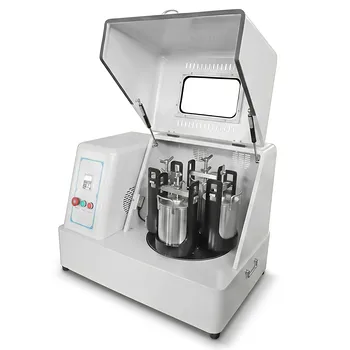
Vertical Square Planetary Ball Mill for Laboratory Sample Preparation and Nanoscale Grinding
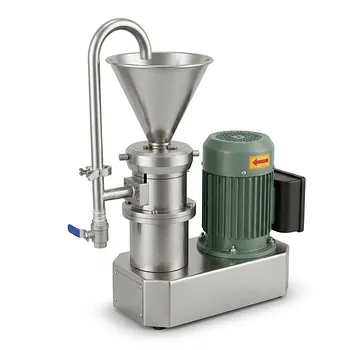
Small Laboratory Colloid Mill for Ultra-Fine Wet Grinding and Emulsification
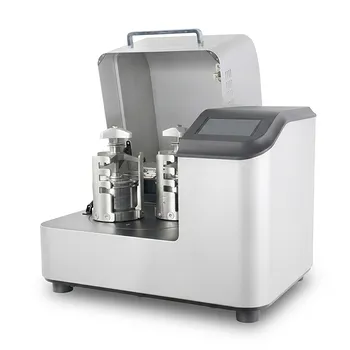
High Energy Planetary Ball Mill for Nano Scale Grinding and Mechanical Alloying
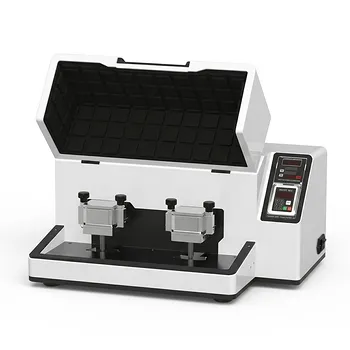
Nanoscale High Energy Vibratory Ball Mill Low Temperature
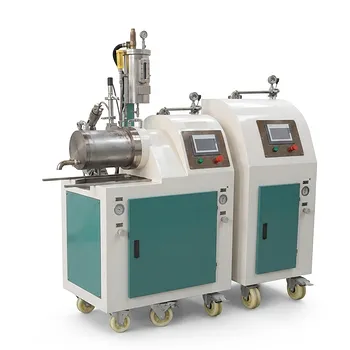
Mass Production Nano Sand Mill for Industrial Nanomaterial Grinding and Dispersion
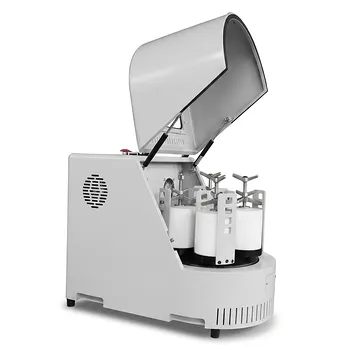
Vertical Semi Circular Planetary Ball Mill for Laboratory Precision Grinding
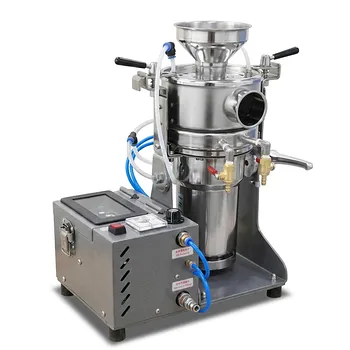
Water Cooled Pulse Jet Ultrafine Grinder
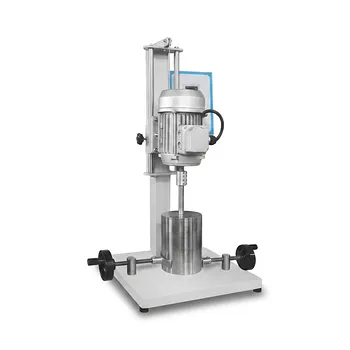
Laboratory Basket Sand Mill for Wet Grinding and Dispersion of Viscous Slurries
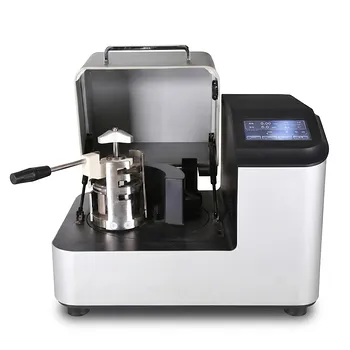
High Energy Laboratory Planetary Ball Mill for Nano Grinding and Material Science Sample Preparation
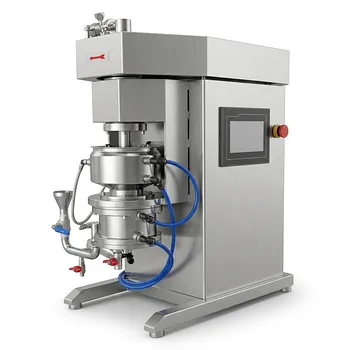
Small Ceramic Structure Laboratory Sand Mill Nanoscale Grinding Dispersion Equipment Seal-less Screen-less Design
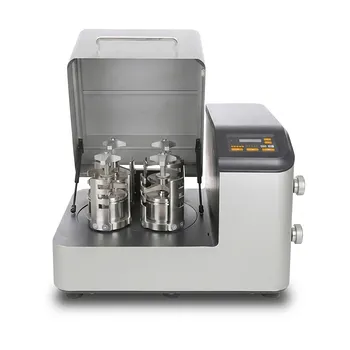
High Energy Planetary Ball Mill for Nano Scale Grinding and Colloidal Mixing in Material Science Research
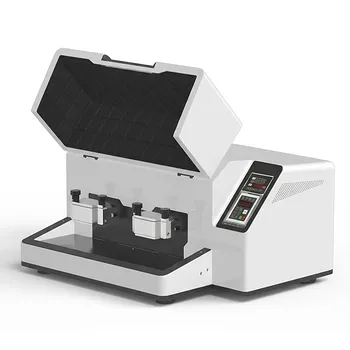
Nanoscale High-Energy Vibratory Ball Mill for Laboratory Sample Preparation, Mechanochemistry, and Mechanical Alloying
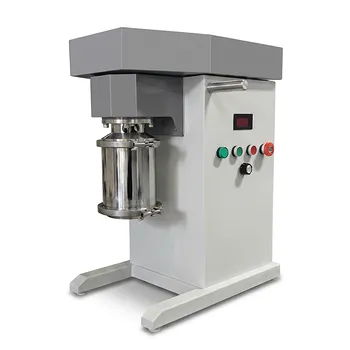
Nano Laboratory Bead Mill Desktop Sub Micron Sand Mill Screenless Seal Less Powder Grinder
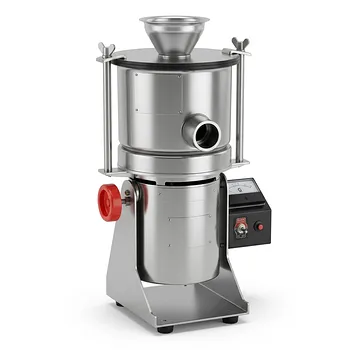
Laboratory Ultrafine Impact and Airflow Grinder for Precise Particle Size Control
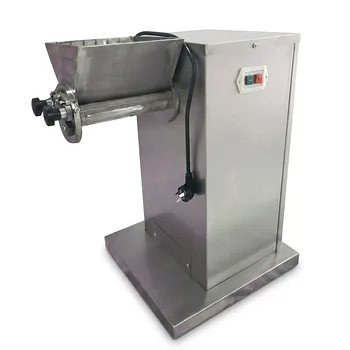
Small Laboratory Oscillating Granulator for Wet and Dry Granulation Processing
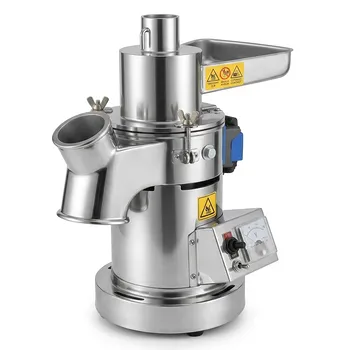
Continuous Feeding Grinder High Efficiency Pulverizer for Lab Sample Preparation