The Quiet Gravity of a Perfect Mix: How Sieves and 3D Tumblers Engineer Certainty in Drug Formulation
Sep 28, 2026
The Invisible Fault Line in Drug Development
Late one evening in a formulation lab, a team stares at a batch of hot-melt extrudates. The strands are beautiful, golden, mechanically flawless. Yet the dissolution test tells a different story: the active release varies by nearly 40 percent from strand to strand. Nobody changed the screw speed, the temperature profile, or the polymer grade. The failure was baked in hours earlier—during the preparation of a simple physical mixture no one paid attention to.
We love focusing on the moment of transformation: the thermal processing, the compaction, the spectroscopic fingerprint. But in pharmaceutical manufacturing, the most expensive mistakes often happen before anything gets hot, before any pressure is applied. They happen in the quiet, room-temperature world of sieves and low-energy tumblers.
The invisible architecture of a solid dosage form is determined not by its final shape but by the micro-distribution of its components before processing. Get the blend wrong, and no downstream technology can undo it.
The Sieve Is Not Just a Screen
Breaking Apart the Hidden Memory of Powders
Most raw pharmaceutical powders arrive with a history. They have sat in warehouses, absorbed humidity, been vibrated during transport, and formed stubborn agglomerates that act like miniature vaults. Inside each clump, active pharmaceutical ingredient (API) particles remain locked away from the surrounding polymer.
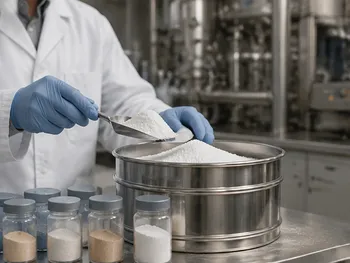
A laboratory standard sieve does something almost philosophical: it resets that history. By mechanically forcing material through a calibrated mesh, it erases the physical memory of transport and storage. What emerges is a powder in a state of renewed individuality—each particle free to interact with its neighbors without the gravitational pull of old agglomerates.
The Overlooked Art of Size Normalization
Uniform mixing begins with uniform starting dimensions. When particle sizes vary widely, larger granules tend to settle or stratify differently under vibration. You might have the right total mass of drug in the hopper, but if the coarse fraction migrates during handling, your individual capsule can be off by a clinically meaningful margin.
A consistent particle size distribution is a prerequisite for a stable mixture. Sieves don’t just separate what is coarse from what is fine—they normalize the population so that the subsequent mixing step can function statistically, not just wishfully.
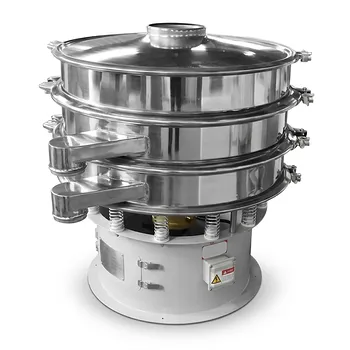
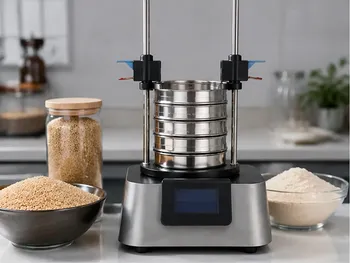
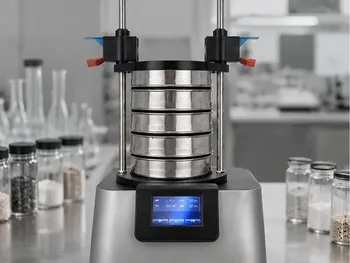
Our laboratory solutions for sieving include vibratory and air-jet sieve shakers, designed to automate this normalization without introducing the very heat or mechanical shock that can alter drug crystal habits. Standard test sieves with precision meshes form the quiet gatekeepers of repeatable blend quality.
The 3D Mixer: Dancing Into Uniformity Without Breaking a Sweat
Spatial Tumbling and the Psychology of Randomness
The human brain imagines mixing as stirring: a blade through the center, a vortex, high shear. But biology and material science often punish intensity. Proteins denature, amorphous phases crystallize, and sensitive APIs degrade.
A three-dimensional powder mixer works on a different principle. It tumbles the entire batch through space along multiple axes simultaneously, creating a random walk for each particle. There is no central impeller, no hot friction zone. Just slow, geometric inevitability.
Psychologically, this is hard to trust. We equate speed and power with effectiveness. Yet in powder mixing, the most sophisticated machines often look like they’re doing a gentle ballet. That ballet, however, yields a distribution so uniform that even terahertz spectroscopy—a method sensitive to component domain sizes—can verify homogeneity across an entire sample.
The Heat That Never Arrived
A core advantage of three-dimensional mixing is its low-energy signature. High-shear mixers can inadvertently raise the blend temperature above the glass transition of an amorphous polymer or soften a waxy API, creating new agglomerates even as they break old ones. 3D mixing avoids this thermodynamic trap entirely.
For formulations designed for hot-melt extrusion or injection molding, this is essential. You want the first real thermal exposure to happen inside the extruder barrel, not prematurely inside the mixer. Low-energy dynamics preserve the chemical integrity of the components, keeping the material’s thermal history clean and defined.
The Fragile Chain from Homogeneity to Clinical Efficacy
A Consistent Feedstock Is a Machine’s Best Friend
Thermal processes like hot-melt extrusion have enough variables to control without a fluctuating feedstock. A well-blended physical mixture feeds the extruder a steady, rheologically predictable stream. When the drug is uniformly distributed, the local viscosity and melting behavior remain stable along the screw profile, producing extrudates with consistent porosity and dissolution kinetics.
The same principle applies to compaction. Whether you use a standard lab press or a cold isostatic press (CIP), the powder must flow into the die as a uniform mass. Any segregation in the feed hopper translates directly into weight variation and dose inaccuracy in the final compact.
The Analytical Lens Needs Truth, Not Noise
Homogeneous blends enable accurate non-destructive testing. Terahertz spectroscopy, for example, measures refractive index variations to map pore distribution and component uniformity in tablets. If the original mixture was poorly blended, the resulting spectral maps will contain “hot spots” that look like coating defects or density anomalies—red herrings that waste investigation time.
When the mix is right, analytical signals become clear. Uniformity is not just a quality attribute; it is the backbone of reliable data interpretation.
The Trade-Offs No One Mentions
When Low Energy Meets Highly Cohesive Powders
Three-dimensional mixers are gentle, which is their superpower. But with extremely sticky or cohesive powders, gentleness can struggle to separate particles that cling together electrostatically or through moisture bridges. In such cases, processing times must extend, or an upstream de-clumping step—using a sieve or a vacuum defoaming mixer to reduce moisture and static—becomes essential.
The psychology here is important. Many formulators, frustrated by a persistent lack of mixing uniformity, immediately reach for more energy. They switch to a high-shear mixer, inadvertently damaging their API. The better answer is often to improve the material’s flowability before the mixer, not to change the mixer’s philosophy.
The Sieve Under Pressure
A sieve is not infinitely forgiving. Overloading leads to mesh blinding—particles lodge in the apertures and block further separation. Worse, applying excessive mechanical force can fracture brittle drug crystals, reducing particle size in ways that alter dissolution rate and compaction behavior. A lab that blames its mixer for inconsistent results might actually be suffering from an abused sieve.
Choosing the Right Rhythm for Your Mixture
Every drug-polymer system has a purpose, and your preparation tools should align with it:
- If thermal stability is paramount: Prioritize a 3D mixing approach that achieves statistical homogeneity without pre-process heat. Let the extruder or hot press be the first to raise the temperature.
- If dosage accuracy is your non-negotiable: Enforce rigorous sieving protocols to eliminate API agglomerates. A single 100-micron clump can represent a significant fraction of the dose in a micro-tablet.
- If you rely on advanced analytical validation: Use the tumbling uniformity of a 3D mixer to produce the random distribution that methods like terahertz spectroscopy demand. Calibration errors often start as mixing errors.
- If your formulation includes volatile or moisture-sensitive components: Consider a vacuum defoaming mixer in tandem with sieving to remove interstitial moisture while preserving blend architecture.
| Process Step | Equipment Type | Key Psychological Insight |
|---|---|---|
| Pre-mix normalization | Sieves / Sieve Shakers | We underestimate the hidden agglomerates that storage creates. Resetting powder history is non-negotiable. |
| Blend homogenization | 3D Powder Mixers | Gentle, spatial tumbling feels counterintuitive but delivers the most thermodynamically honest mixture. |
| Moisture/defoaming | Vacuum Defoaming Mixers | Removing micro-bubbles and humidity before compaction prevents invisible density defects. |
| Final compaction | CIP/WIP, Lab Presses, Vacuum Hot Presses | Uniform feedstocks transform these machines from “pressure applicators” into precision shapers of dosage architecture. |
An Integrated Arsenal for Precision, Not Just Equipment
Achieving the perfect drug-polymer physical mixture requires more than buying a sieve and a mixer. It demands an integrated system where crushers, cryogenic grinders, and various mills (planetary ball mills for mechanical alloying, jet mills for micronizing, rotor mills for gentle size reduction) prepare the raw materials to the precise dimensions needed. Then, precision sieve shakers normalize the population, and three-dimensional mixers distribute the API without altering its energy state. Finally, laboratory presses—from XRF pellet presses for quick analytical checks to cold/warm isostatic presses (CIP/WIP) for high-uniformity compacts—shape the blend into its final form.
Our complete laboratory sample preparation solutions are built for this exact workflow. Whether you are refining a hot-melt extrusion process or developing advanced amorphous solid dispersions, the invisible upstream steps are where your product’s reliability is forged.
The Romance of the Invisible
In the end, the most beautiful thing about a well-blended powder is that you never see it. It disappears into the final tablet, leaving behind only the evidence of its perfection: tight dissolution curves, flawless terahertz maps, and patients who receive the exact dose they need.
We often chase complexity—AI-driven analytics, real-time release, nanotech coatings. But the foundation remains stubbornly physical. A sieve. A tumbler. A dance of particles searching for their most random, most uniform arrangement. That quiet precision, that invisible gravity, is what builds trust in every pill swallowed.
Contact Our Experts to design a sample preparation workflow that brings this invisible precision to your next formulation challenge.
Quick Links
Suggested Products
Vibratory Sieve Shaker Electromagnetic 3D Motion Powder Particle Size Analyzer for Dry and Wet Sieving 三维电磁微量振动筛分仪 Stainless Steel Laboratory Vibratory Test Sieve Shaker Small Laboratory Vibrating Sieve Shaker for Precise Particle Size Analysis Dry Three Dimensional Vibratory Sieve ShakerFurther Reading
The Hidden Economics of Particle Size: Why the Most Overlooked Variable in Material Science Controls Everything The Invisible Architecture of Powder: How a Vibratory Sieve Shaker Decides What Your Amaranth Bread Becomes The Particle-Size Lever: Why the Most Overlooked Step in Catalyst Design Determines Everything Else When Glass Melts Fail, It Was Never the Furnace: The Hidden Economics of Sand Gradation The Quarter-Millimeter Margin: Why Vibratory Sieve Precision Determines Artificial Stone Profitability
PowderPreparation
Last updated on May 14, 2026
Related Products
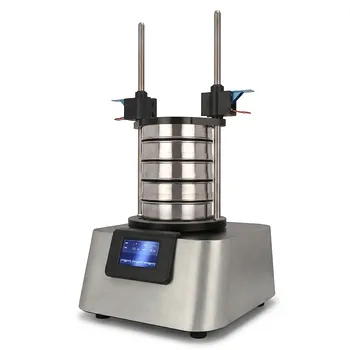
Vibratory Sieve Shaker Electromagnetic 3D Motion Powder Particle Size Analyzer for Dry and Wet Sieving
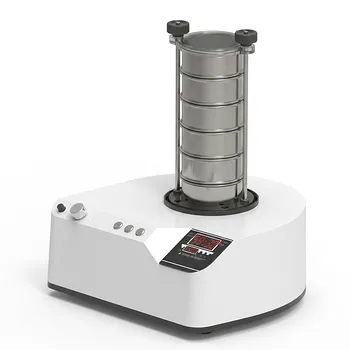
三维电磁微量振动筛分仪
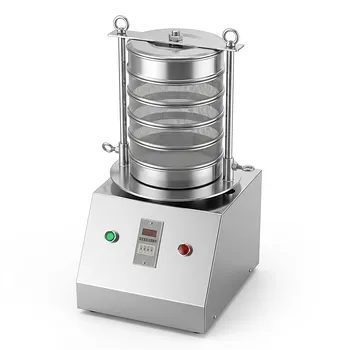
Stainless Steel Laboratory Vibratory Test Sieve Shaker
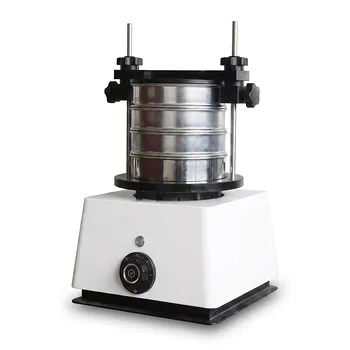
Small Laboratory Vibrating Sieve Shaker for Precise Particle Size Analysis
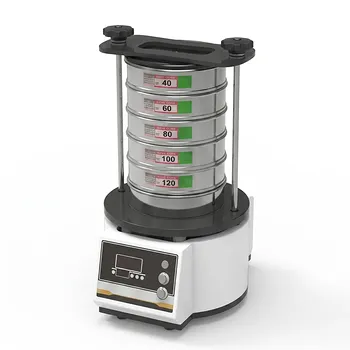
Dry Three Dimensional Vibratory Sieve Shaker
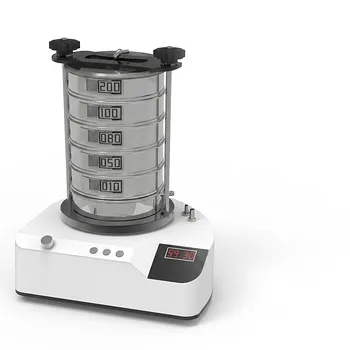
Heavy Duty Dry Three Dimensional Vibratory Sieve Shaker for Particle Separation
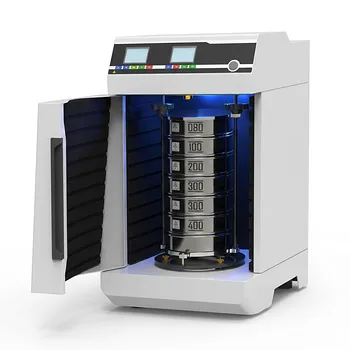
Laboratory Dry and Wet Three Dimensional Vibratory Sieve Shaker for Particle Analysis
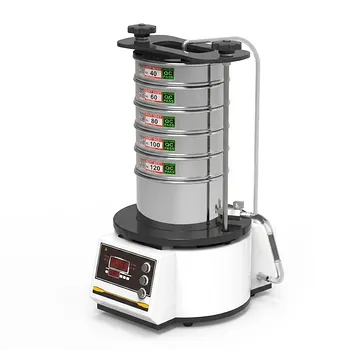
High Frequency Wet Three-Dimensional Vibrating Sieve Shaker for Dry and Wet Particle Size Analysis
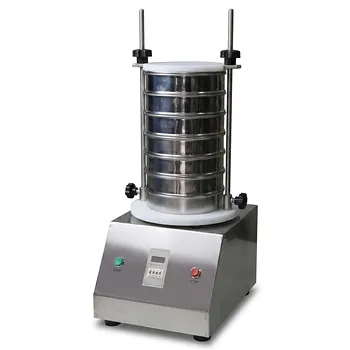
Laboratory Vibratory Test Sieve Shaker for Precision Particle Size Analysis and Powder Grading
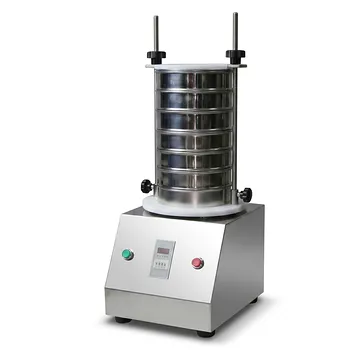
Small Laboratory Vibratory Sieve Shaker for Powder Gradation and Particle Size Analysis
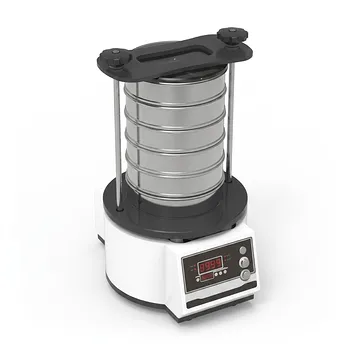
Tapping Oscillating Sieve Shaker for Dry and Wet Particle Size Analysis
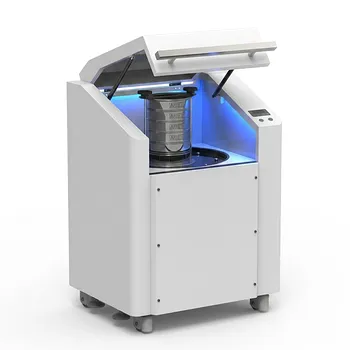
High Frequency Cabinet Type Three-Dimensional Rotary Vibrating Sieve Shaker for Dry Sieving and Particle Classification
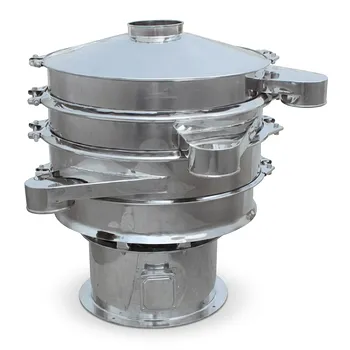
Stainless Steel Rotary Vibrating Sieve High Precision Circular Vibratory Separator Industrial Powder Grading Machine Multi Layer Sifting Equipment
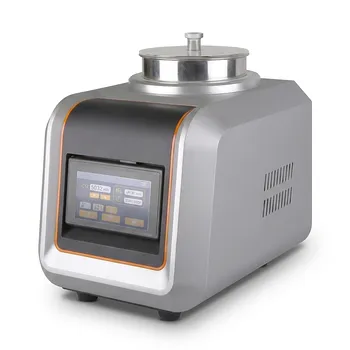
Laboratory Air Jet Sieving Machine for Fine Powder Particle Size Analysis and Deagglomeration