The Pressure Before the Fire: Why a Laboratory Hydraulic Press Defines Your Ceramic’s Destiny
Sep 12, 2026
The Quiet Catastrophe Inside a Perfectly Sintered Part
The technician lifted the alumina substrate from the kiln and held it to the light. From the outside, it looked flawless—a creamy white disk destined for a high-vacuum chamber. But a simple dye penetrant test revealed what the eye couldn’t see: a web of micro-cracks radiating from the core, invisible until the part was one thermal cycle away from failure.
No one blamed the furnace. The firing curve was textbook. The sintering atmosphere was pristine. The real flaw had been born hours earlier, in a brief moment of compaction, when loose powder became a fragile green body. The hydraulic press had done its job, but no one had stopped to ask if the job had been done thoughtfully.
We tend to worship temperature. We obsess over ramp rates and dwell times. But the truth is quieter and far less glamorous: the battle for a reliable ceramic component is won or lost before the heat ever comes on. It is won in the split second when a piston descends onto a pile of dust.
A Pile of Dust Holds No Promises
Alumina powder on a lab bench looks like nothing. It’s chalky, unruly, and full of air. Every grain is a tiny, jagged shard of aluminum oxide with its own agenda. Left alone, these grains refuse to cooperate—they trap voids, form arches, and resist any attempt to become something solid.
To turn that chaos into a precision electronic insulator, a ballistic armor tile, or a biomedical implant, you first have to force those reluctant particles into a fragile truce. You have to create what ceramists call a green body: a compacted, semi-solid piece that holds its shape but remains un-sintered, as delicate as dried clay on a riverbank.
The tool that brokers this truce is the laboratory hydraulic press. It doesn’t just push down on powder; it orchestrates a sequence of physical events that set the genetic code of the finished ceramic. And if it gets the sequence wrong, no sintering magic can fully erase the damage.
How Pressure Reorganizes a Microscopic World
When the press platen moves, three things happen in quick succession. They sound mechanical, but they are stitched together by a deeper force—the desperate drive of matter to find equilibrium under stress.
1. The Great Rearrangement
At low pressures, particles slide and rotate to fill the largest gaps. It’s a frantic, almost intelligent migration. Voids collapse not because particles are crushed, but because they finally stop blocking each other. In this phase, the powder bed can lose 30–50% of its original volume.
2. Mechanical Interlocking, the Handshake Before the Bond
Once the easy voids are gone, the press pushes harder. Here, at pressures often around 80 to 150 MPa for alumina, particles begin to deform at their contact points. Organic binders—if present—soften and flow. The grains lock together not by chemical bonding, but by pure geometric entanglement. It’s a mechanical handshake, a promise that atomic diffusion will later turn into a weld.
3. The Invisible Escape
All the while, air is leaving. Compression literally squeezes the atmosphere out of the powder bed. This physical degassing is unglamorous but utterly critical. A pocket of trapped gas left behind will expand during sintering, creating a blister or an internal crack. The press, at its best, is also an exhaust system.
The green body is nothing more than a snapshot of a system violently persuaded to be still. Its quality depends on how gently or how thoroughly that persuasion was applied.
The Hidden Metrics That Rule the Furnace
A green body tells you almost nothing by sight. Its truths are measured in numbers that don’t exist until you go looking for them.
Green density is the first. It’s the ratio of the compact’s actual density to the theoretical density of pore-free alumina. A high green density—say, 55–65% of theoretical—acts as a head start. It reduces the distance atoms must travel during sintering, making it easier to reach full density without exaggerated grain growth.
Green strength is the second. It’s what lets an operator pick up a fragile ring or a thin disk without it crumbling. This strength isn’t chemical; it comes from friction, mechanical interlocking, and the binding power of a few weight-percent of organic additives. A press that fails to distribute pressure evenly will produce a part that feels firm in one area and soft in another—a prelude to warping.
Dimensional stability is the third. The green body is a map of future shrinkage. If density varies from the top rim to the bottom core, the part will shrink unevenly in the kiln. The final dimensions won’t match the technical drawing, and internal stresses may nucleate cracks that only appear days later under load.
The Devil in the Die Wall
Here is where the psychology of compaction begins to matter. Engineers love the idea that higher pressure equals better quality. It feels decisive. But the press operates inside a steel die, and that changes everything.
Die wall friction siphons away pressure as you move away from the punch face. The powder near the top feels the full force; the powder at the bottom feels less. The result is a density gradient—a green body that is denser at the edges than in the center, or denser at the top than the bottom. During sintering, this gradient translates directly into non-uniform shrinkage. Corners curl. Flat surfaces bow. And the engineer blames the furnace, not the press.
Lamination is an even more insidious failure. If pressure is applied too quickly, air gets trapped between layers of compacted powder. When the press releases, the compressed air springs back and shears the green body into horizontal flakes. The part looks intact until you touch it, and then it separates like a mille-feuille pastry. The fix is counterintuitive: slow down. A dwell time at peak pressure lets air migrate out before the structure is locked.
Then there is tooling wear. Alumina is abrasive. It eats steel molds. Over time, worn die walls increase friction further and can introduce metallic impurities into the ceramic. A speck of iron from a degraded mold becomes a dark, brittle inclusion in what was supposed to be a high-purity insulator. The press didn’t fail—the tooling was simply forgotten.
The Engineer’s Romanticism: Controlling What Doesn’t Shout
The laboratory hydraulic press is not a blunt hammer. It’s an instrument of persuasion, and its parameters are the vocabulary of a conversation with matter.
A press used at 50 MPa produces a green body with different genetics than one used at 150 MPa. The first may need a slower sintering ramp to compensate for lower starting density; the second may already be riddled with micro-laminations unless the loading rate was carefully chosen. The choice isn’t just technical—it’s almost philosophical. You are deciding how much stress to store inside an object that will soon be subjected to 1600°C.
The most capable engineers approach compaction the way a watchmaker approaches a balance spring. They control:
- Loading rate: Slow enough to let air escape, fast enough to keep the cycle practical.
- Dwell time: A pause at peak pressure to let stress gradients relax.
- Lubrication: A thin film on the die wall to reduce friction and smooth out density distributions.
- Mold material and maintenance: Hardened steel or tungsten carbide, inspected and replaced before they become contamination sources.
These variables don’t announce themselves when they’re wrong. They whisper. And the cost of ignoring them appears only when the sintered part is already scrap.
| Compaction Variable | What It Silently Controls |
|---|---|
| Peak pressure | Green density, particle-to-particle contact area, and the starting point for sintering shrinkage. |
| Loading rate | Air evacuation and the risk of lamination; a faster rate isn’t a sign of productivity but of potential defects. |
| Dwell time | Stress relaxation and binder redistribution; it heals what the initial compression bruised. |
| Die lubrication | Density uniformity; a thin layer can be the difference between a flat part and a warped one. |
Building the Bridge Between Powder and Performance
A laboratory hydraulic press is the critical link between raw powder characteristics and the predictable behavior of a finished alumina ceramic. It is the moment when random particle arrangements are given a memory—a memory of pressure gradients, of friction, of the brief pause that let them settle. That memory survives sintering, shaping the distribution of pores and grains in the final product.
Without precise control at this stage, you are not engineering a component; you are gambling with thermodynamics. And the house usually wins.
For facilities developing advanced ceramics—whether thin-film substrates that must stay flat to the micron, or wear-resistant seals that must survive thousands of thermal cycles—the press is not just another piece of equipment. It is the place where quality is either built in or permanently locked out.
Precision Compaction Requires a System, Not Just a Press
Achieving a perfect green body demands more than a single tool. It requires an ecosystem of preparation: powders that are correctly milled to size, properly mixed, and then compacted with absolute control. The press sits at the center of a workflow that starts with crushing and grinding, moves through sizing and mixing, and culminates in the formation of a body that is ready for the kiln.
Our laboratory systems are designed around this entire upstream reality. We provide planetary ball mills, jet mills, and cryogenic grinders that bring your alumina feedstock to the ideal particle size distribution. We offer high-accuracy sieve shakers and powder mixers that guarantee homogeneity before the powder ever touches the die. And at the core of the process, our range of hydraulic presses—from standard laboratory presses and XRF pellet presses to Cold and Warm Isostatic Presses (CIP/WIP), hot presses, and vacuum hot presses—delivers the controlled, repeatable force that transforms powder into a reliable green body.
Every press is built to address the hidden challenges: rigid frames that resist deflection, consistent pressure delivery that minimizes density gradients, and compatibility with hardened tooling that stands up to abrasive ceramics. When your application demands a part that can’t afford to fail, the preparation chain can’t be an afterthought.
To explore how our full-spectrum laboratory preparation equipment can refine your entire compaction process, Contact Our Experts today.
Quick Links
Suggested Products
6-Ton Small Single-Punch Tablet Press — Laboratory Powder & Granule Tableting Equipment / Tablet Forming Machine 5 Ton Single Punch Tablet Press Laboratory Small Batch Production Manual Tablet Press with Dual Scale Pressure Gauge for Pharmaceutical Food Chemical Laboratory Sample Preparation 6 Ton Variable Frequency Single Punch Tablet Press High Speed Small Laboratory Crusher for Dry Material Sample PreparationFurther Reading
From Dust to Data: How Precision Laboratory Presses Forge Truth in Mineral Testing The Hidden Fracture: Why Ceramic Feed Rods Fail Before the First Melt The Layers That Wouldn’t Lie Flat: Why Nine Sheets of Ceramic Demand a Laboratory Press That Thinks in Microns The Invisible Architect of Powder: How a Single Additive Saves Ductile Metals from Themselves The Crack in the Crucible: A Systems Approach to Perfect Bismuth Ferrite Targets and the Hidden Physics of Powder Compaction
PowderPreparation
Last updated on May 14, 2026
Related Products
6-Ton Small Single-Punch Tablet Press — Laboratory Powder & Granule Tableting Equipment / Tablet Forming Machine
5 Ton Single Punch Tablet Press Laboratory Small Batch Production
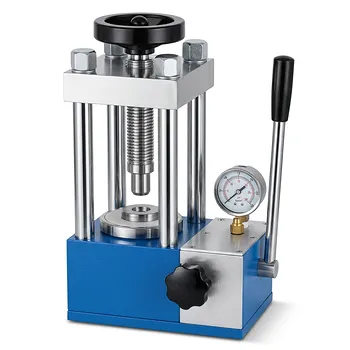
Manual Tablet Press with Dual Scale Pressure Gauge for Pharmaceutical Food Chemical Laboratory Sample Preparation
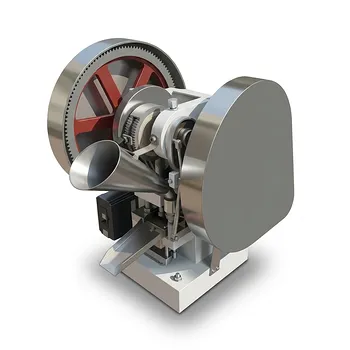
6 Ton Variable Frequency Single Punch Tablet Press
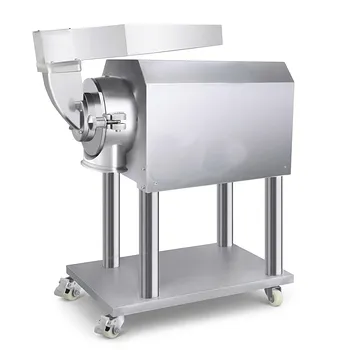
High Speed Small Laboratory Crusher for Dry Material Sample Preparation
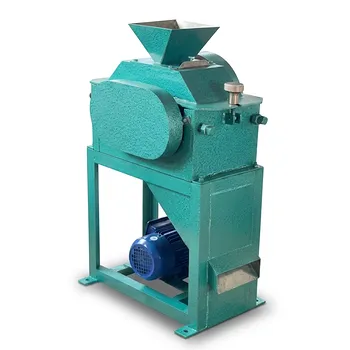
Laboratory Double Roll Crusher for Medium Hardness Materials Coal Ore Sample Preparation
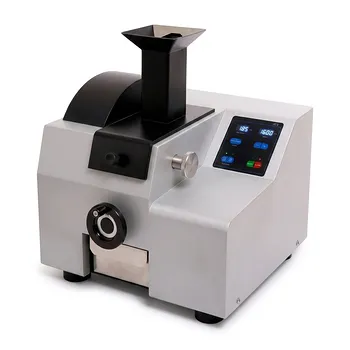
Laboratory Benchtop Jaw Crusher for Hard Brittle Materials Primary Size Reduction and Sample Preparation
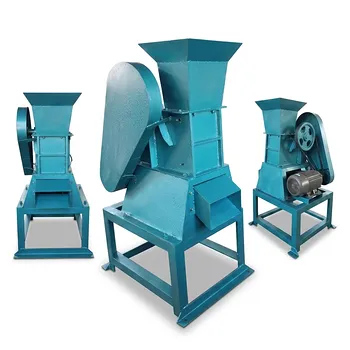
Custom Raised Height Laboratory Jaw Crusher for Precision Sample Preparation in Material Science
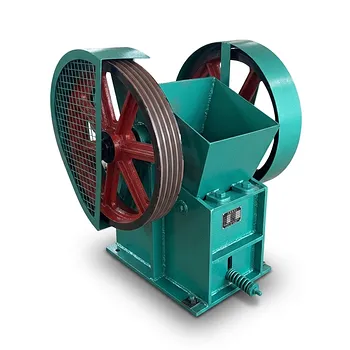
150x250mm Laboratory Jaw Crusher for Medium Hard Material Crushing and Sample Preparation
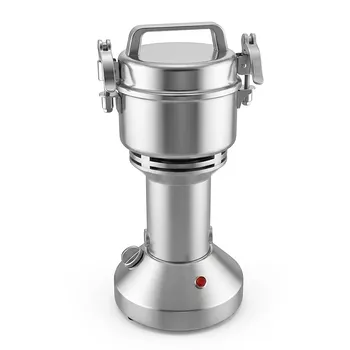
Small High Speed Upright Grinder for Laboratory Sample Preparation
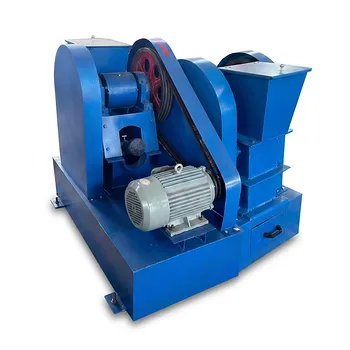
Horizontal Jaw Crusher Medium Hard Material Crushing Laboratory Sample Preparation Equipment
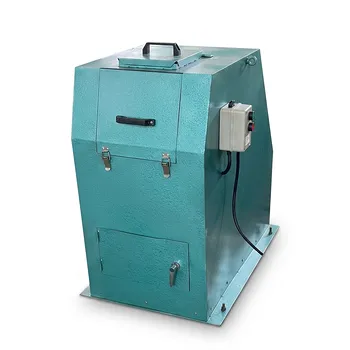
Environmentally Friendly Sealed Laboratory Jaw Crusher for Sample Preparation
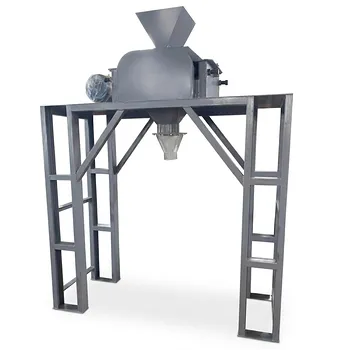
Heightened Customized Laboratory Double Roll Crusher for Coal Ore Rock Crushing
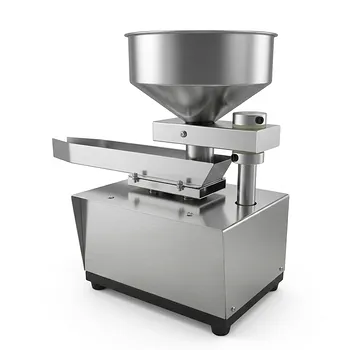
Automatic Vibrating Powder Feeder for Laboratory Material Processing Precision Vibratory Hopper Feeder for Granular and Powder Material Handling Industrial Grade Vibrating Tray Feeder for Consistent Material Sample Preparation
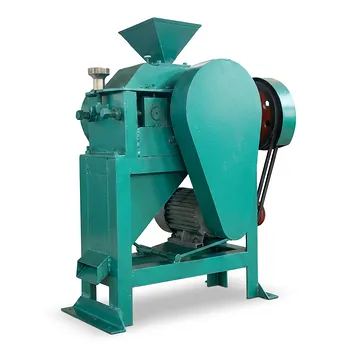
Laboratory Sealed Double Roll Crusher for Coal Ore Rock and Medium Hardness Materials Sample Preparation
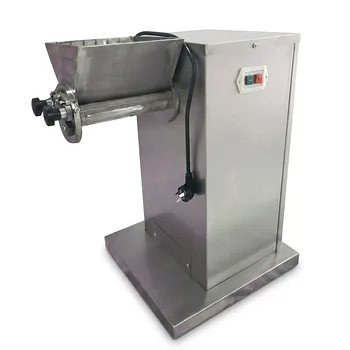
Small Laboratory Oscillating Granulator for Wet and Dry Granulation Processing
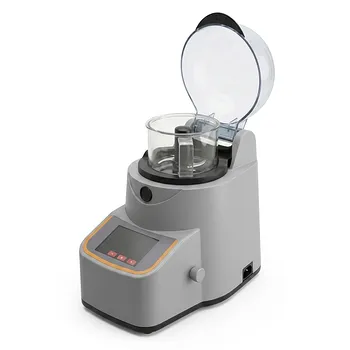
Industrial Knife Mill for Food and Biological Sample Preparation High Speed Laboratory Homogenizer
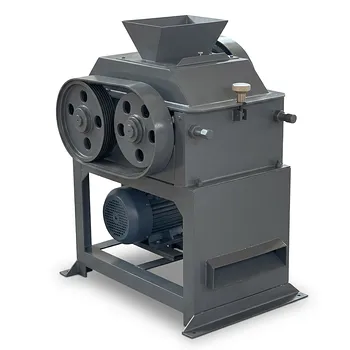
Sealed Laboratory Double Roll Crusher for Coal, Mineral, Ore Sample Preparation
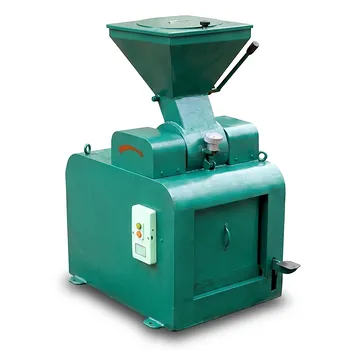
Laboratory Sealed Hammer Crushers for Coal Sample Preparation and Medium Strength Material Crushing