The Physics of Powder: How Planetary Ball Milling Unlocks Hard Carbon’s Potential
Oct 17, 2026
The Unseen Architecture of an Anode
A sodium-ion battery is not born—it is milled.
Inside every hard carbon anode lies a geometry most engineers never see. It is a labyrinth of disordered carbon stacks, micron-scale pores, and surface edges that invite sodium ions to intercalate. The quality of that invitation determines everything: rate capability, cycle life, slurry coatability.
Get the powder wrong, and you have a paste that refuses to coat. You get hot spots on the current collector. You get an anode that looks perfect on paper but dies at the first high-current pulse. Get it right, and the battery becomes predictable. Boring. Manufacturable.
This is the quiet revolution planetary ball milling brings to hard carbon research. It does not just crush blocks into dust. It engineers a physical environment where every collision, every rotation, and every friction event becomes a deliberate design tool.
A Machine That Defies Intuition
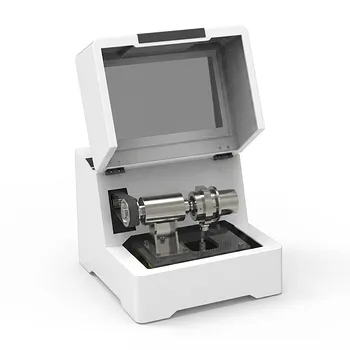
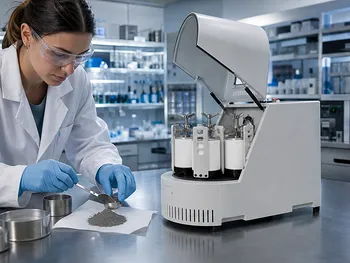
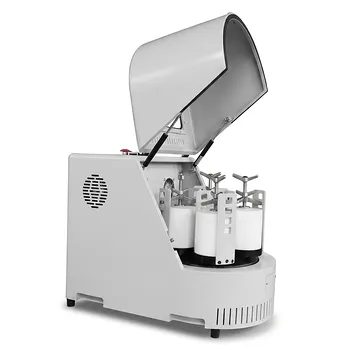
A planetary ball mill looks like a piece of heavy machinery someone forgot to simplify. A central disk spins in one direction. Grinding jars mounted on that disk spin in the opposite direction on their own axes. The result is not a simple tumbling action. It is a superposition of two centrifugal forces that create Coriolis-like effects inside the jar.
The grinding media—often tungsten carbide, zirconia, or hardened steel balls—do not just fall. They careen. They ricochet off jar walls at angles a traditional mill could never achieve. And in that chaos, a single hard carbon block meets its fate not once, but thousands of times per second.
The Dual Motion That Does the Real Work
- Revolution: The entire jar assembly rotates around the central axis, generating a centrifugal field that pins material and balls against the inner wall.
- Rotation: Each jar spins independently, creating an opposing centrifugal field that pulls the charge away from the wall.
The intersection of these fields creates a zone of turbulent shear. It is here—not just at the impact points—that particle refinement happens. The carbon block experiences microfracture after microfracture, each one propagating deeper into its disordered structure.
What Happens When Carbon Meets Chaos
Most researchers focus on a single number: particle size. But a planetary ball mill changes four things simultaneously. Ignoring any one of them leads to disappointing electrodes.
Particle Size Distribution: The Micron-Scale Lottery
Hard carbon blocks from pyrolysis can start at millimeter dimensions. After planetary milling, the D50 value routinely falls below 100 microns, often into the single-digit micron range. But the distribution matters more than the median.
A tight distribution creates a slurry that flows evenly under a doctor blade. A broad distribution with lingering coarse particles acts like sand in paint—disrupting the conductive network, creating local current density spikes, accelerating degradation.
The machine’s control over this distribution comes from ball-to-powder ratio, rotation speed, and milling duration. Change one parameter, and the Gaussian curve shifts.
Specific Surface Area: The Hidden Multiplier
Crushing a block creates new surfaces. Planetary milling creates them at a rate no other grinding method can match for hard carbon. Specific surface area can increase by an order of magnitude—from a few square meters per gram to hundreds.
This is the parameter that directly governs sodium-ion intercalation kinetics. Every new surface square meter exposes active edge sites. More edges mean more sodium insertion points. More insertion points mean the battery can accept charge faster without lithium-dendrite-style failure modes.
But there is a cost. Excessive surface area introduces more solid-electrolyte interphase (SEI) formation. It consumes irreversible sodium on the first cycle. The mill operator must know where the optimum lies.
Disorder Engineering: The Structural Tuning Knob
Hard carbon is not graphite. Its carbon layers stack in a turbostratic disorder—short graphene-like fragments twisted at random angles. Planetary milling does not just break these stacks. It can shear them apart, altering the interlayer spacing.
For sodium storage, this matters enormously. Sodium ions are larger than lithium ions. They need wider spacing to insert without destroying the host. Gentle but persistent shear forces can pry open these layers, creating precisely the defect sites where sodium prefers to reside.
Milling too aggressively, however, can turn the entire structure amorphous. You lose the very pores and edges that store sodium reversibly. The carbon becomes electrochemically dead. Thermal management during milling becomes non-negotiable.
The Thermal Wildcard
Energy is not free. The intense impacts inside a planetary ball mill convert kinetic energy into heat. Jar temperatures can rise rapidly, sometimes exceeding 100°C without intervention.
For carbon powders, heat is a stealthy enemy. It can oxidize freshly exposed surfaces, creating surface functional groups that react with electrolyte. It can anneal out deliberately engineered defects. In rare cases, it can ignite fine carbon dust.
A Practical Approach to Heat Control
- Use intermittent milling cycles with forced cooling pauses.
- Employ atmosphere-controlled grinding jars (argon or nitrogen blanket).
- Monitor jar temperature rather than motor temperature—the lag can deceive you.
- Consider cryogenic assistance via liquid nitrogen cooling systems when working with extremely sensitive carbon precursors.
This is where laboratory infrastructure matters. A planetary mill alone is not a solution. It is part of an ecosystem that includes crushers for pre-size reduction, sieve shakers for quality verification, and—critically—the vacuum or inert-gas systems that preserve what the mill has created.
From Powder to Pellet: The Complete Workflow
Battery researchers often overlook a simple truth: the powder you make must eventually become an electrode. And that electrode’s performance depends on what happened before the slurry tank ever received it.
Stage 1: Pre-Crushing
Hard carbon precursors arrive as irregular chunks. Jaw crushers reduce them to manageable gravel. For thermally sensitive or volatile-rich materials, a liquid nitrogen cryogenic grinder embrittles the structure before fracture, preserving the precursor’s chemical identity.
Stage 2: Planetary Ball Milling
This is the core refinement step. Here, you trade bulk for surface area. You select your grinding media, your jar material, your speed-to-time ratio. You decide whether to mill dry—producing a free-flowing powder—or wet, suspending the carbon in a solvent that prevents agglomeration.
Stage 3: Classification
Not every particle emerges at the right size. Vibratory and air-jet sieve shakers with calibrated test sieves sort the milled powder, rejecting oversize particles back to the mill and ensuring the slurry feedstock is monodisperse. A mesh screen is the simplest quality-control instrument in the lab.
Stage 4: Compaction for Characterization
To test the powder’s behavior, you need a pellet. A standard lab press or a specialized XRF pellet press can compress the carbon powder into a dense, uniform disc for electrochemical testing. For advanced sintering studies, a vacuum hot press applies temperature and pressure simultaneously, consolidating the structure while preventing oxidation.
Stage 5: Mixing and Defoaming
Before coating, the carbon powder must blend with binders and conductive additives. Powder mixers and defoaming mixers ensure homogeneity without destroying the particle morphology you worked so hard to engineer. A trapped air bubble in slurry is a pinhole in the electrode.
| Process Stage | Equipment | Role in Hard Carbon Workflow |
|---|---|---|
| Pre-Size Reduction | Jaw crusher, cryogenic grinder | Breaks precursor blocks to mill-feedable size; preserves chemistry |
| Core Refinement | Planetary ball mill | Controls particle size, surface area, and carbon disorder |
| Quality Verification | Vibratory/air-jet sieve shaker, test sieves | Eliminates oversize particles; ensures slurry uniformity |
| Compaction Testing | XRF press, vacuum hot press | Produces dense pellets for electrochemical evaluation |
| Slurry Preparation | Powder mixer, defoaming mixer | Homogenizes carbon with binders and conductive agents |
The Subtle Art of Parameter Selection
There is no universal recipe for hard carbon milling. But there are patterns.
High-rate battery applications demand surface area above all. Researchers push toward longer milling times at moderate speeds, accepting some loss of initial coulombic efficiency in exchange for faster charge acceptance.
Manufacturing lines prize consistency. They use precisely controlled ball-to-powder ratios—often 10:1 or 20:1 by mass—to narrow the particle size distribution. The goal is not the highest performance, but the lowest variance across thousands of electrodes.
Long-cycle-life projects must preserve structure. Intermittent milling, cooling cycles, and careful atmosphere control prevent the amorphization that shortens calendar life. They sacrifice some rate capability for endurance.
Each choice reveals a philosophy about what matters most.
Where the Machine Meets the Mission
A planetary ball mill is not a device you simply turn on. It is a design partner. It rewards curiosity and punishes neglect. The engineers who master it learn to read the subtle sounds of the jar, the temperature curve from the cooling jacket, the laser-diffraction data that arrives every 30 minutes.
They learn that milling is not about breaking things down. It is about building up the exact powder a battery needs—one collision at a time.
For laboratories moving from hard carbon precursors to full-cell prototypes, the path runs through powder processing and compaction as a unified system. Planetary ball mills, cryogenic grinders, sieve shakers, mixers, and vacuum hot presses form the integrated workflow that turns carbon blocks into anodes worth testing.
To explore how complete laboratory sample preparation solutions can streamline your hard carbon anode development, Contact Our Experts.
Quick Links
Suggested Products
Vertical Semi Circular Planetary Ball Mill for Laboratory Precision Grinding High Energy Planetary Ball Mill for Nano Scale Grinding and Mechanical Alloying Vertical Production Planetary Ball Mill for High Throughput Powder Processing Heavy Duty Horizontal Planetary Ball Mill for Efficient Industrial Grinding and Sample Preparation 360° Rotating Omnidirectional Laboratory Planetary Ball Mill for Homogeneous Ultra-Fine Grinding and MixingFurther Reading
The 65-Micron Gate: Unlocking the True Isotopic Fingerprint of Portland Cement The Energy Budget of a Single Impact: How the Ball-to-Powder Ratio Shapes Nanocrystalline Reality The High-Energy Gamble: What SiBCN-rGO Fibers Teach Us About Perfect Homogenization The Gentle Violence of a Planetary Mill: Why the Most Critical Moment in SiC–VC Composites Happens Before Any Heat The Forge at 10,000 g: How a Planetary Ball Mill Designs Self-Lubricating Composites Atom by Atom
PowderPreparation
Last updated on May 14, 2026
Related Products
Vertical Semi Circular Planetary Ball Mill for Laboratory Precision Grinding
High Energy Planetary Ball Mill for Nano Scale Grinding and Mechanical Alloying
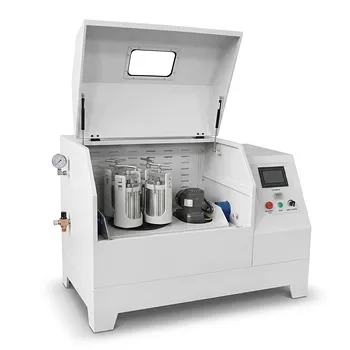
Vertical Production Planetary Ball Mill for High Throughput Powder Processing
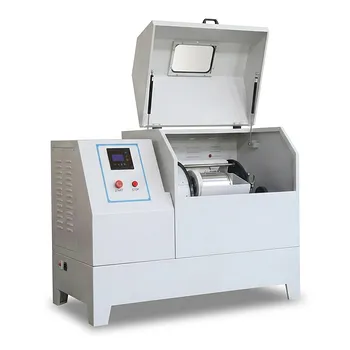
Heavy Duty Horizontal Planetary Ball Mill for Efficient Industrial Grinding and Sample Preparation
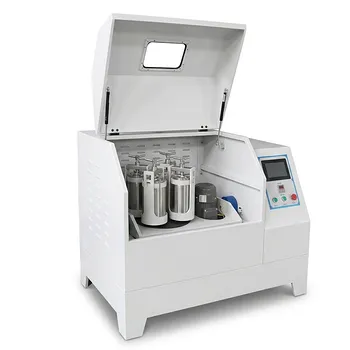
360° Rotating Omnidirectional Laboratory Planetary Ball Mill for Homogeneous Ultra-Fine Grinding and Mixing
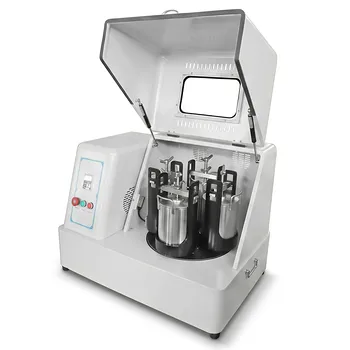
Vertical Square Planetary Ball Mill for Laboratory Sample Preparation and Nanoscale Grinding
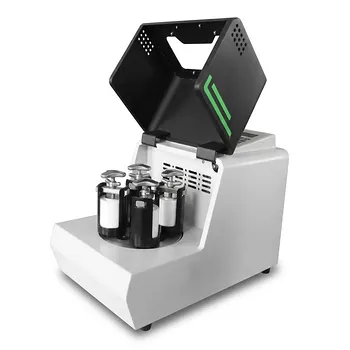
Miniature Planetary Ball Mill with Vacuum Grinding and High Efficiency for Laboratory Sample Preparation
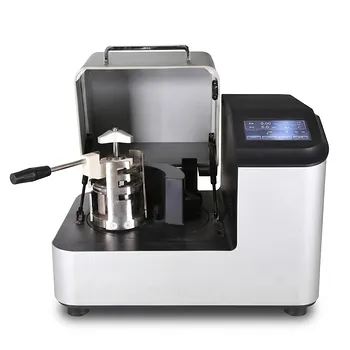
High Energy Laboratory Planetary Ball Mill for Nano Grinding and Material Science Sample Preparation
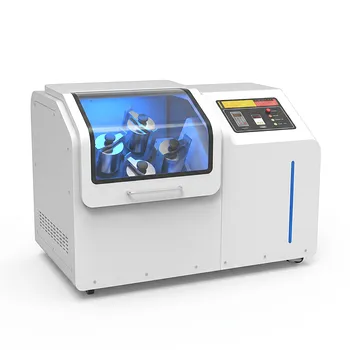
High Energy Omnidirectional Planetary Ball Mill 16L
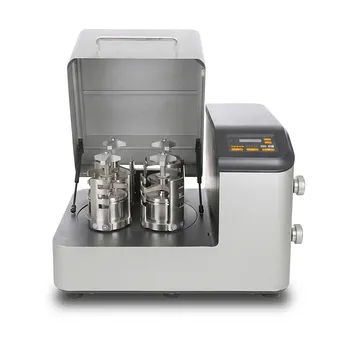
High Energy Planetary Ball Mill for Nano Scale Grinding and Colloidal Mixing in Material Science Research
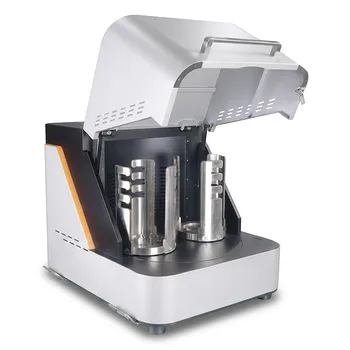
High Energy Laboratory Planetary Ball Mill for Nano Grinding and Colloidal Mixing of Hard and Brittle Materials
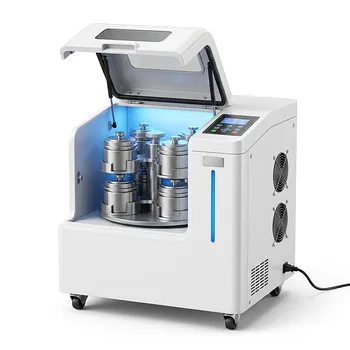
High Energy Omnidirectional Planetary Ball Mill 20L
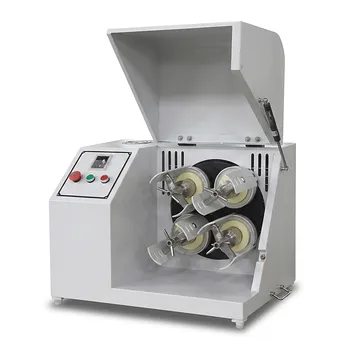
Horizontal Light Duty Planetary Ball Mill for Laboratory Sample Preparation

8L Planetary Ball Mill for Laboratory Grinding and Sample Preparation
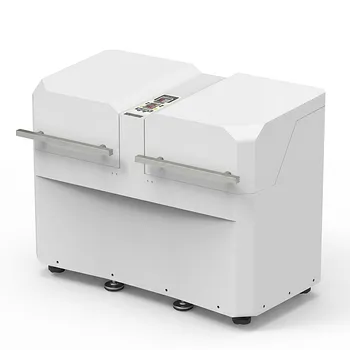
Dual Station Planetary Ball Mill 24L
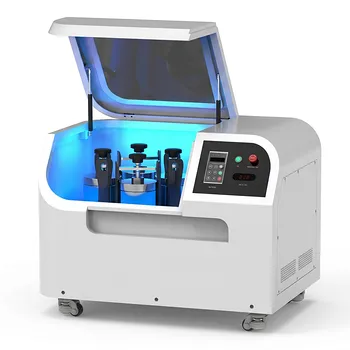
Planetary Ball Mill 12L

Nano High Energy Vibratory Ball Mill for Laboratory Sample Preparation
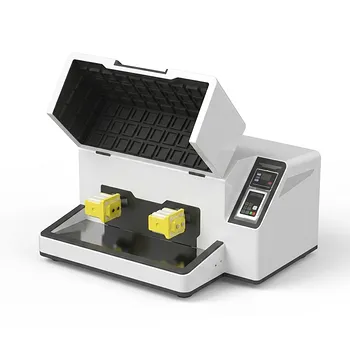
Multi-Platform Nanoscale High-Energy Vibratory Ball Mill
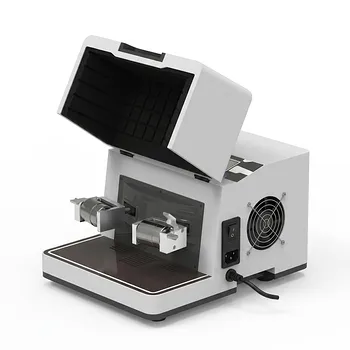
High Energy Hybrid Vibratory Ball Mill for Grinding Mixing and Cell Disruption