The Arithmetic of Interlock: Why Sieve Shakers Are the Storytellers of Pavement Strength
Aug 19, 2026
A Quiet Conversation with Stone
The failure doesn’t announce itself with a bang. It whispers in the form of a hairline crack, a slight rut, a patch of moisture that never dries.
An engineer stands on a two-year-old highway and asks the question we rarely want to face: Did we truly know what was in this mix?
The answer rarely lives in the paving machine or the weather. It lives in a stack of brass sieves on a laboratory bench, vibrating at 50 hertz, telling an honest story about every grain of rock that passed through it—or didn’t.
This is the arithmetic of interlock. It’s not glamorous. But it is where roads are born.
Vibratory sieve shakers don’t just separate particles. They reveal the narrative of your raw material. And that narrative determines everything.
The Sieve Shaker’s Unforgiving Honesty
Mechanized Truth-Telling
Hand shaking is an act of hope. Vibratory shakers are an act of physics.
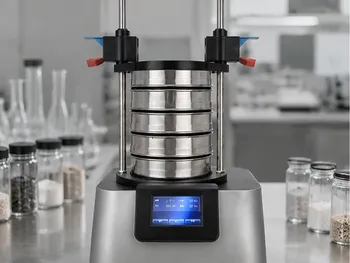
A laboratory standard vibratory sieve shaker uses high-frequency mechanical energy to force aggregate particles through a vertical column of standard test sieves. Each particle gets multiple chances to align with the correct aperture. This isn’t just convenience—it’s repeatability.
The machine has no bias. It doesn’t care if the aggregate came from a pristine quarry or a pile of recycled concrete. It classifies by size, every time.
The Language of Standards
For asphalt mixtures, the conversation must be fluent in numbers: 19.5mm, 10mm, 4.75mm, 0.075mm. The shaker accommodates sieves from coarse openings down to mineral-filler fines, making it possible to verify compliance with ASTM E11 or local specifications.
Without this, a gradation curve is just a sketch. With it, it becomes a legal and structural fingerprint.
The Foundation for Proportion
Gradation analysis isn’t about sorting rocks. It’s about building a mathematical skeleton.
Techniques like the Rothfuch method depend on precise fraction separation. The shaker provides the raw data that allows an engineer to calculate the ideal mass ratios—turning geology into a designed composite.
The Psychology of the Mineral Skeleton
Why We Crave Interlock
Humans have a deep need for predictability. In pavement engineering, that need expresses itself as an obsession with stone-on-stone contact.
A well-graded aggregate mixture forms an interlocking structure. Large coarse particles carry the load; smaller ones wedge between them, preventing movement. This skeleton isn’t static: under traffic, it micro-adjusts, redistributes stress, and resists deformation.
The sieve shaker gives us a map of that skeleton before a single truck tire touches it.
Density as a Feeling of Safety
Porosity terrifies pavement engineers. Too many voids, and water creeps in, freezes, and tears the matrix apart. Too few voids, and the asphalt becomes a bleeding, unstable mass under summer sun.
Gradation analysis through accurate sieving allows us to chase a goldilocks density—one that balances drainage, flexibility, and load-bearing capacity. It’s a feeling of comfort built on particle size distribution tables.
Uniformity Is a Belief System
Segregation is the enemy of quality. When coarse and fine particles drift apart during placement, the road loses its identity. What was designed as a high-performance mix becomes a patchwork of weak spots.
The sieve shaker, by enforcing standardized separation, helps ensure that the mix leaving the plant has the same structural DNA as the mix that arrives at the paver. This consistency is a psychological anchor: the road is the same everywhere, and we can trust it.
The Limits of Shake-and-Hope
Too Much Material, Too Little Patience
Every lab has a moment of temptation: add a little extra sample to save time.
The moment you overload a sieve, you blind it. Small particles sit on the back of large ones, never touching the mesh. The shaker vibrates, but nothing separates. The resulting curve becomes a fiction—and the pavement becomes a gamble.
When Shape Lies About Size
Vibratory shakers measure the smallest cross-section a particle can wriggle through. For a flaky or elongated grain, that’s a lie.
A flat piece of recycled concrete might pass a 10mm sieve but occupy the volume of a 14mm sphere in the mix. This distorts the interlock logic and forces the asphalt’s skeleton to carry hidden stresses.
The problem often starts before the sieving. If a jaw crusher produces needle-like fragments, no amount of shaking can fix the story—it will just tell it inaccurately.
Wear, Calibration, and the Slow Drift
Metal fatigue is real. Sieve meshes loosen over time; their apertures enlarge under repeated vibration. Amplitude settings drift. A shaker that isn’t calibrated becomes a random number generator.
Accuracy requires vigilance. But it also requires a view of the entire sample preparation chain.
The Complete Workflow: From Boulders to Believability
The vibratory sieve shaker is the narrator. But the story itself is written upstream.
A flawed gradation analysis often isn’t the shaker’s fault. It’s the fault of insufficient crushing, poor homogenization, or inconsistent grinding that creates the problematic particle shapes in the first place. This is where the dream of a perfect interlock either survives or dies.
Crushing That Respects Geometry
If you want your sieve shaker to report truth, feed it honest particles.
A jaw crusher or roll crusher is designed to reduce large rocks without turning an entire batch into flat slivers. For asphalt aggregates, this initial breakage stage sets the tone. When working with hard or brittle materials, our laboratory jaw crushers produce cubic-shaped fragments that behave predictably in the sieve stack.
Milling for the Fines
The story doesn’t end at 4.75mm. The mineral filler—the dust that fills the last voids—is just as crucial.
Planetary ball mills and jet mills reduce materials to micron-level powders without overheating or contamination. For heat-sensitive or viscoelastic substances, liquid nitrogen cryogenic grinders preserve chemical integrity while achieving the required fineness. This ensures that when your sieves separate the 0.075mm fraction, what lands in the pan is exactly what you designed, not a thermally degraded byproduct.
Mixing, Defoaming, and the Art of Homogeneity
Aggregate particles don’t exist in isolation. Before sieving, a representative sample must be drawn from a homogeneous blend. Powder mixers and defoaming mixers ensure that the material hitting the top sieve is statistically identical to the material 10 seconds later.
Without this, the best shaker in the world becomes an expensive exercise in sampling error.
From Powder to Proof
Sometimes the goal isn’t just a gradation curve. Sometimes you need to press that gradation into a physical pellet for XRF analysis, or into a compacted specimen for mechanical testing.
Our hydraulic presses—including cold/warm isostatic presses (CIP/WIP), XRF pellet presses, and vacuum hot presses—transform carefully sieved powders into dense, homogeneous compacts. This closes the loop: you can correlate the particle size distribution directly with mechanical or compositional properties.
The entire workflow—from crusher to mill to sieve shaker to press—becomes a single, coherent truth machine.
Choosing Your Analytical Strategy
If Load-Bearing Matters Most
Focus on the interlocking skeleton. Use the shaker to tightly control the coarse aggregate fractions (10mm to 20mm) . Pair it with jaw crushing that maximizes cubic particles, and consider hot-pressing your asphalt specimens to study the skeleton’s load response.
If Longevity Keeps You Awake at Night
Look to the fines. The space between rocks is where water lives and dies. Prioritize sieving accuracy at 4.75mm and below. Use jet mills or planetary ball mills to generate filler of consistent fineness, then validate void ratios with high-precision vibratory shakers. The math will tell you what the road needs to survive a decade of freeze-thaw cycles.
If Regulatory Compliance Is the Non-Negotiable
Calibration becomes your mantra. Ensure your sieve shaker maintains the vibration amplitude and frequency demanded by standards. Verify your test sieves against master sieves. And remember: a certificate is only as strong as the full chain of custody—from crusher to screen to press. Our equipment provides that traceability, ensuring every report stands up to the most rigorous audit.
The Road Is a Material Science Problem
We often think of highways as civil engineering triumphs—and they are. But at their molecular heart, they are granular assemblies under stress. A pavement’s destiny is sealed in the laboratory, long before the asphalt truck leaves the plant.
The vibratory sieve shaker is not just a lab tool. It is the instrument that translates geology into performance. It tells you what you have, so you can design what you need. And it does so without flattery, without hope, and without error—if you feed it the truth from the very first crush.
The machines we build—crushers, mills, mixers, sieve shakers, and presses—are designed to protect that thread of truth from start to finish. Because when a highway stands strong for 20 years under millions of axles, it’s not luck. It’s the arithmetic of interlock, shaken into certainty.
Ready to give your materials the unfiltered voice they deserve? Contact Our Experts
Quick Links
Suggested Products
Vibratory Sieve Shaker Electromagnetic 3D Motion Powder Particle Size Analyzer for Dry and Wet Sieving Laboratory Dry and Wet Three Dimensional Vibratory Sieve Shaker for Particle Analysis Stainless Steel Laboratory Vibratory Test Sieve Shaker Heavy Duty Dry Three Dimensional Vibratory Sieve Shaker for Particle Separation Dry Three Dimensional Vibratory Sieve ShakerFurther Reading
The Hidden Economics of Particle Size: Why the Most Overlooked Variable in Material Science Controls Everything The Invisible Architecture of Powder: How a Vibratory Sieve Shaker Decides What Your Amaranth Bread Becomes The Particle-Size Lever: Why the Most Overlooked Step in Catalyst Design Determines Everything Else When Glass Melts Fail, It Was Never the Furnace: The Hidden Economics of Sand Gradation The Quarter-Millimeter Margin: Why Vibratory Sieve Precision Determines Artificial Stone Profitability
PowderPreparation
Last updated on May 14, 2026
Related Products
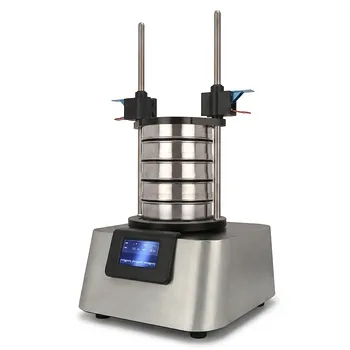
Vibratory Sieve Shaker Electromagnetic 3D Motion Powder Particle Size Analyzer for Dry and Wet Sieving
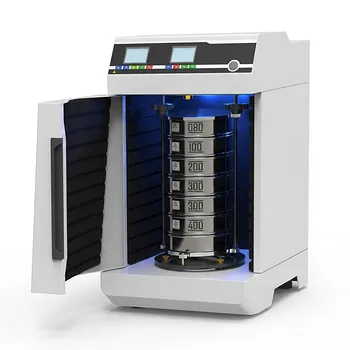
Laboratory Dry and Wet Three Dimensional Vibratory Sieve Shaker for Particle Analysis
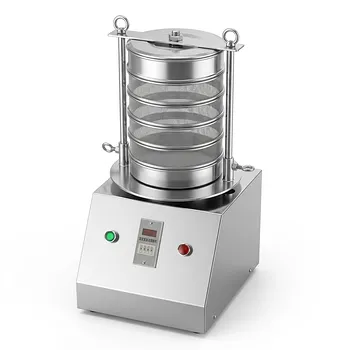
Stainless Steel Laboratory Vibratory Test Sieve Shaker
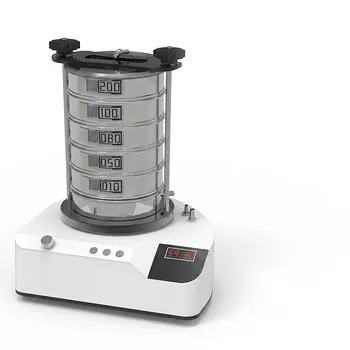
Heavy Duty Dry Three Dimensional Vibratory Sieve Shaker for Particle Separation
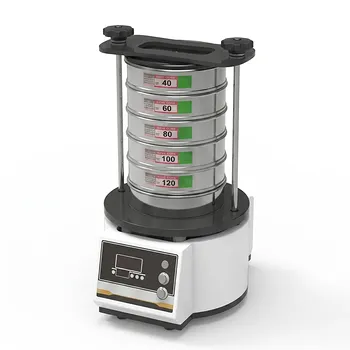
Dry Three Dimensional Vibratory Sieve Shaker
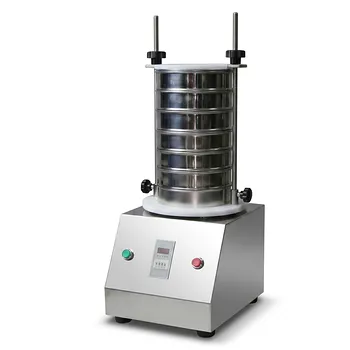
Small Laboratory Vibratory Sieve Shaker for Powder Gradation and Particle Size Analysis
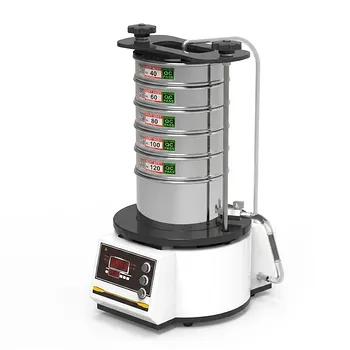
High Frequency Wet Three-Dimensional Vibrating Sieve Shaker for Dry and Wet Particle Size Analysis

Small Laboratory Vibrating Sieve Shaker for Precise Particle Size Analysis
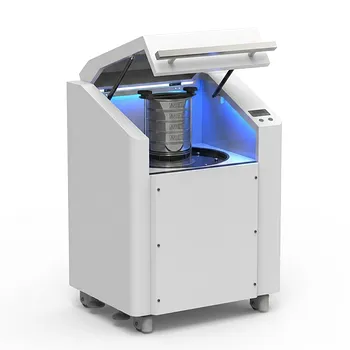
High Frequency Cabinet Type Three-Dimensional Rotary Vibrating Sieve Shaker for Dry Sieving and Particle Classification

Laboratory Vibratory Test Sieve Shaker for Precision Particle Size Analysis and Powder Grading
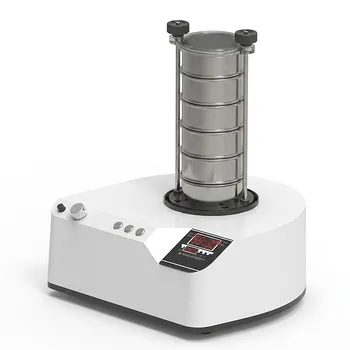
三维电磁微量振动筛分仪
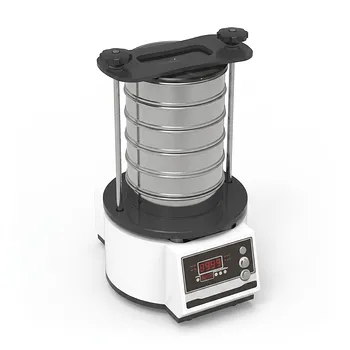
Tapping Oscillating Sieve Shaker for Dry and Wet Particle Size Analysis

Stainless Steel Rotary Vibrating Sieve High Precision Circular Vibratory Separator Industrial Powder Grading Machine Multi Layer Sifting Equipment
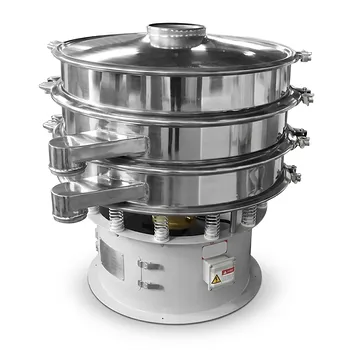
Three Dimensional Rotary Vibrating Sieve
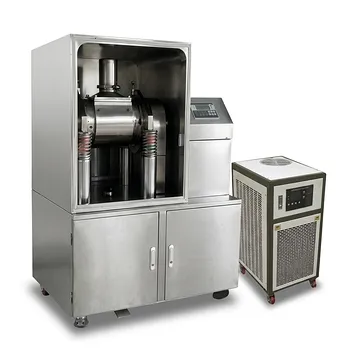
Small Vibrating Ultrafine Grinder for Traditional Chinese Medicine

Automatic Vibrating Powder Feeder for Laboratory Material Processing Precision Vibratory Hopper Feeder for Granular and Powder Material Handling Industrial Grade Vibrating Tray Feeder for Consistent Material Sample Preparation
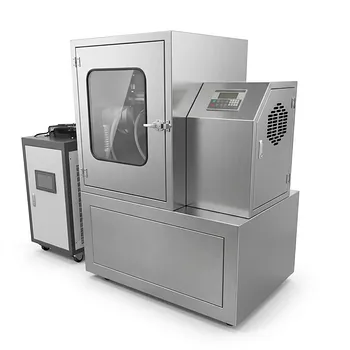
Vibratory Superfine Grinder for Ultra Fine Laboratory Powder Milling
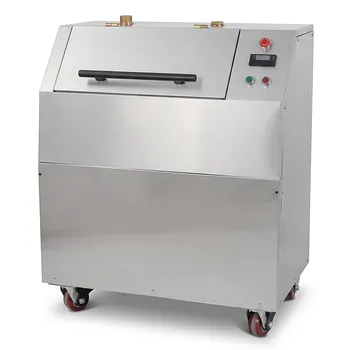
Vibratory Disc Mill for Rapid Fine Grinding and High Throughput Sample Preparation of Hard and Brittle Materials