The Micron That Matters: Why Powder Sieving is the Hidden Precision Variable in Electrical Discharge Machining
Aug 25, 2026
The Ghost in the Gap
There is a moment in high-precision manufacturing that looks like magic but feels like surgery. A graphite electrode descends into a steel block, never touching it. Sparks fly. The metal erodes. A cavity forms with tolerances measured in single-digit microns. This is Electrical Discharge Machining—and its entire premise rests on a gap you cannot see.
That gap must remain perfect. If it wavers by the width of a dust particle, the process fails catastrophically. Yet too many engineers treat the dielectric fluid in that gap as a given. They wonder why surface finishes drift. Why electrodes wear unexpectedly. Why their scrap bin fills with parts ghosted by micro-arcing.
The answer often floats invisibly in suspension: the powder itself.
Most technical failures in EDM are not electrical problems. They are particle problems.
When Powder Becomes a Structural Element
We do not typically think of zinc oxide or titanium dioxide as structural components. But suspended in dielectric fluid, these powders become the architecture of the spark. They modify conductivity. They seed the plasma channel. They determine whether energy disperses evenly or concentrates into destructive arcs.
The physics is unforgiving. A particle cluster just 20 microns across—double the intended diameter—can bridge a discharge gap designed for 10. The resulting arc is not a controlled erosion tool. It is a welding torch. Localized melting. Surface contamination. Tool damage. A part destined for rejection.
The problem compounds because these oversized clusters are statistically rare. They slip through conventional sieving. They hide in the tail of a distribution curve that looks acceptable on paper but behaves chaotically in application.
The Psychology of Ignoring the Tail
Morgan Housel writes often about tail events—the rare, extreme outcomes that dominate long-term results. In finance, a single disastrous day can erase years of compounding. In EDM, a single oversize particle can destroy hours of precision machining.
The human bias is to optimize for the mean. We measure average particle size. We congratulate ourselves when the median lands between 9 and 14 micrometers. But EDM does not care about your median. It cares about your maximum.
This is the quiet insight that separates process control from wishful thinking. You are not sieving to improve the average. You are sieving to eliminate the outliers.
The 10-Micrometer Truth
Precision is not a preference. It is a requirement dictated by the physics of the discharge gap itself.
Stable discharge depends on uniformity.
An analytical sieve shaker with a 10-micrometer mesh does something deceptively simple: it removes the particles that should not exist in your process. The oversized aggregates. The sintered clusters formed during powder storage. The contaminants introduced during handling.
- 9–14 μm median distribution: The sweet spot for most high-precision EDM applications
- 10 μm mesh cutoff: The gatekeeper that rejects bridging particles before they enter the fluid
- Frequent calibration: The practice that ensures your 10 μm mesh remains a true 10 μm mesh
Neglect any one of these, and your process drifts. Not immediately. Not obviously. But inexorably.
The Hidden Cost of Clogging
There is a form of failure that never triggers an alarm. It presents as gradually declining performance. Electrode wear increases 3% per shift. Surface roughness creeps upward. Cycle times extend.
The cause, upon investigation, is often blinding of the fluid circulation system. Narrow channels in the electrode, designed for consistent flushing, become partial blockages. Flow rates drop. Debris evacuation slows. The discharge environment degrades.
Suspension Stability is a Mechanical Property
Powders that have not been properly classified do not stay suspended. They settle in dead zones. They accumulate in corners of the tank. They re-enter the flow unpredictably when turbulence shifts—a phenomenon familiar to anyone who has watched sediment swirl after disturbing a calm pond.
Precision sieving achieves two things simultaneously:
- It narrows the particle size distribution so that settling behavior becomes uniform and predictable
- It eliminates clusters that act as nucleation points for further agglomeration
The result is a colloidal stability that persists through entire production runs.
Contamination is Chemistry by Accident
Fine powders, particularly those below 15 micrometers, carry enormous surface area relative to their mass. This surface adsorbs moisture. It attracts oxygen. It provides reactive sites for contamination that alters the dielectric properties of your fluid and the metallurgical integrity of your workpiece.
If you are machining aerospace components. If you are producing medical device molds. If your end-use demands certified material properties—the chemical purity of your EDM media matters. Sieving is your first line of defense against uncontrolled surface chemistry. Every contaminant particle excluded at the sieve is a metallurgical defect prevented in the finished part.
Precision Versus Throughput: The Engineer's Dilemma
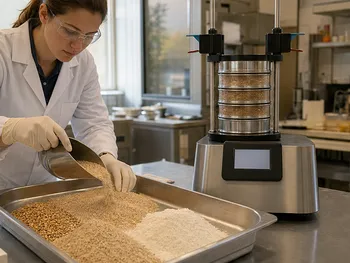
Every production engineer feels the tension. Analytical sieve shakers deliver unmatched accuracy. They are designed for exact classification. For quality control. For the kind of meticulous particle analysis that makes research papers possible.
But they are not mass production tools.
Loading a precision mesh with kilogram-scale batches of raw EDM powder will blind the sieve. Rapidly. The fine apertures—delicate electroformed nickel structures—will clog with particles that lodge in the openings. Throughput collapses. Frustration mounts.
The Mesh Blinding Problem
Mesh blinding is a fact of life when sieving fine powders. Particles wedge into apertures. Static charges cause adhesion. Humidity forms bridges between mesh wires. The effective open area shrinks until nothing passes at all.
Operators respond by increasing vibration amplitude. They tap the sieve frame. They scrub the mesh with brushes. Each intervention risks damaging the precision aperture, stretching wires, or creating gaps large enough to pass oversize particles.
You can blind a mesh slowly for months and never know it. The sieve continues vibrating. Powder continues falling. But gradually, imperceptibly, particles that should have been rejected pass through stretched openings. Your 10-micrometer sieve becomes a 12-micrometer sieve, then 15, and your EDM process suffers the consequences without you ever seeing a clear cause.
Calibration is Not Optional
The difference between a precision instrument and an unreliable one is calibration. For analytical sieves used in EDM media preparation, this means:
| Action | Frequency | Rationale |
|---|---|---|
| Mesh inspection under magnification | Weekly | Detect early signs of stretching or damage |
| Certification against reference standards | Monthly | Verify aperture size compliance |
| Ultrasonic cleaning | Per batch | Remove lodged particles without mechanical abrasion |
| Replacement of worn meshes | As indicated | Stretched mesh cannot be repaired—only replaced |
A mesh that is not calibrated is not a precision mesh. It is a random classifier with unknown consequences.
Matching Sieving Strategy to Your Goal
The most sophisticated equipment delivers no value if applied to the wrong problem. Before selecting sieving protocols, define what optimization matters most.
High-Precision Surface Finish
If your parts require mirror finishes measured in Ra values below 0.4 micrometers, there is no substitute for tight particle control. Every micron of variation in your powder distribution translates directly to variation in your discharge—and therefore your surface.
Target a 10-micrometer mesh. Accept lower throughput. Invest in proper mesh maintenance. The surface quality will justify every minute spent on preparation.
Maximum Material Removal Rate
If you are roughing large cavities where cycle time dominates cost calculations, your concern shifts. Oversize particles that cause arcing remain unacceptable—they damage electrodes and scrap parts—but the extreme fine end of the distribution matters less.
Remove aggregates above 15 micrometers aggressively. Allow a broader distribution below that threshold. The discharge gap tolerates some variation at higher power settings, provided bridging is prevented.
Fluid Longevity and Recycling
Recovered dielectric fluid contains debris. It contains sintered clusters formed by the intense heat of the spark. It contains electrode wear particles and workpiece erosion residue.
Re-sieving recovered powder before reintroduction to the fluid system prevents these contaminants from accumulating cycle after cycle. This pays back in extended fluid life, reduced replacement costs, and consistent processing conditions across thousands of parts.
The Equipment That Makes It Possible
Achieving these outcomes requires instrumentation designed for the task. Not repurposed food sieves. Not worn laboratory meshes inherited from a previous researcher's project. Purpose-built powder processing equipment that delivers repeatability and precision.
The Sieving Foundation
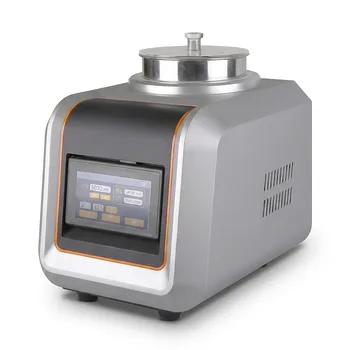
Vibratory sieve shakers provide the mechanical energy necessary to separate particles at fine apertures without damaging mesh surfaces. Air-jet sieve shakers add aerodynamic dispersion that breaks soft agglomerates and keeps fine powders flowing freely across the mesh. Each technology suits different powders, different size ranges, and different throughput requirements.
Critical to any sieving operation are the test sieves themselves—electroformed precision mesh stretched to certified tolerances. Their accuracy underpins every downstream process decision.
Beyond Classification: The Full Preparation Chain
Raw powder entering your EDM process has traveled a long path. It was synthesized. Milled. Perhaps cryogenically ground to achieve the starting size distribution. It may have been mixed with additives to modify dielectric properties.
Each upstream step affects downstream sieving success:
- Planetary ball mills create the primary particle size distribution that sieving then refines
- Jet mills use high-velocity particle collisions to achieve sub-15-micrometer starting powders with minimal contamination
- Liquid nitrogen cryogenic grinders enable size reduction of materials too ductile or temperature-sensitive for ambient milling
- Powder mixers and defoaming mixers ensure homogeneous additive distribution before classification
When the full preparation chain is designed for compatibility, sieving becomes not a bottleneck but a verification step confirming that upstream processes performed correctly.
Agglomeration Defeated at Every Stage
Powders clump. It is their nature. High surface energy drives particles to stick together, forming agglomerates that behave like single large particles in the discharge gap.
Precision jet milling disrupts these agglomerates during size reduction. Analytical sieving removes any that reform during handling. This redundancy against agglomeration is not wasteful. It is the kind of engineering conservatism that makes processes reliable.
The Economics of Getting It Right
Scrapped EDM parts are expensive. Not just in direct material costs, but in the machine time wasted, the electrode wear incurred, the inspection labor consumed, and the delivery schedules disrupted. One hundred dollars of powder preparation can prevent ten thousand dollars of downstream failure.
Yet the opposite error—over-processing—has its own costs. Sieving to sub-micron tolerances when your application tolerates 15 micrometers wastes time, reduces yield, and consumes expensive consumables without proportional benefit.
Calibrate Your Sieving to Your Specification
The correct particle size distribution is the one that meets your part requirements at minimum processing cost. Define what "acceptable" means for your surface finish, your electrode wear rate, and your rejection percentage. Then design sieving protocols that reliably deliver that distribution.
Measure what matters. Control what you measure. Verify regularly.
This is not complicated engineering philosophy. It is the fundamental discipline that separates consistent EDM performance from mysterious process variation.
The Laboratory Behind the Production Floor
Every production decision about sieving parameters should trace back to laboratory characterization. Scanning electron microscopy of sieved fractions. Particle size analysis confirming distribution widths. Contamination testing verifying chemical purity after classification.
Production sieving without analytical validation is guesswork. Analytical sieving without production implementation is academic exercise. The two must connect—laboratory shakers that scale to process requirements, precision meshes that maintain their specifications from quality control samples to production batches.
Where Material Science Meets Manufacturing Reality
There is a satisfaction in watching a well-characterized powder disperse smoothly into dielectric fluid. It flows. It suspends. It performs exactly as the physics predicts, because the variables that physics demands—uniform particle size, controlled chemistry, predictable surface area—have been delivered.
This satisfaction is not merely aesthetic. It is the confidence of knowing your process will repeat tomorrow what it achieved today.
The EDM electrodes continue their controlled erosion. The dielectric pump circulates clean, consistent fluid. Parts emerge with surfaces that require no hand polishing, no rework, no apologies to the quality department or the customer.
Every aspect of that stability traces back to decisions made in powder preparation. The crusher that reduced the raw material. The mill that achieved the primary size reduction. The sieve shaker and precision mesh that made the final, uncompromising cut.
If you are ready to bring this level of control to your EDM media preparation or any powder processing application, our team can help you select the right combination of equipment for your specific requirements. From planetary ball mills and jet mills to analytical sieve shakers and complete compaction solutions including cold isostatic presses and vacuum hot presses, we provide the tools that make precision possible. Contact Our Experts
Quick Links
Suggested Products
High Frequency Wet Three-Dimensional Vibrating Sieve Shaker for Dry and Wet Particle Size Analysis Small Laboratory Vibrating Sieve Shaker for Precise Particle Size Analysis Laboratory Dry and Wet Three Dimensional Vibratory Sieve Shaker for Particle Analysis Vibratory Sieve Shaker Electromagnetic 3D Motion Powder Particle Size Analyzer for Dry and Wet Sieving Laboratory Vibratory Test Sieve Shaker for Precision Particle Size Analysis and Powder GradingFurther Reading
The Hidden Geometry of Grain: What Multi-Dimensional Sieving Reveals About Process, Nutrition, and Consistency The Great Unblinding: How a Simple Sieve Unlocks the Hidden Fortunes in Electronic Waste The Quiet Gravity of a Perfect Mix: How Sieves and 3D Tumblers Engineer Certainty in Drug Formulation The Sieve and the Mind: Why Your Soil Test Results Depend on Replacing Human Fatigue with Engineered Consistency The Eggshell Paradox: Why True Material Performance Starts with the Right Shake
PowderPreparation
Last updated on May 14, 2026
Related Products
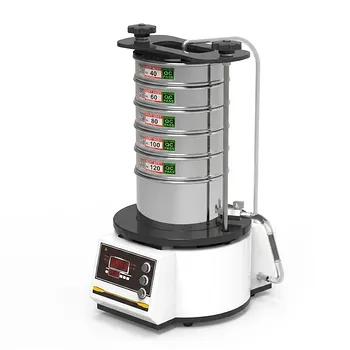
High Frequency Wet Three-Dimensional Vibrating Sieve Shaker for Dry and Wet Particle Size Analysis
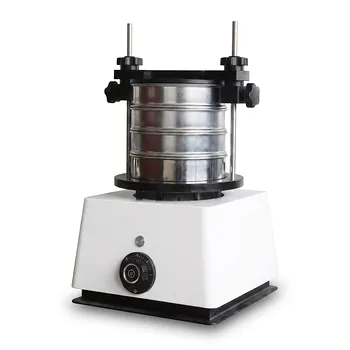
Small Laboratory Vibrating Sieve Shaker for Precise Particle Size Analysis
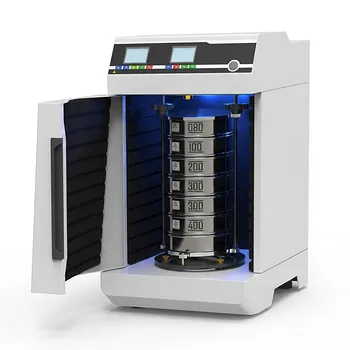
Laboratory Dry and Wet Three Dimensional Vibratory Sieve Shaker for Particle Analysis
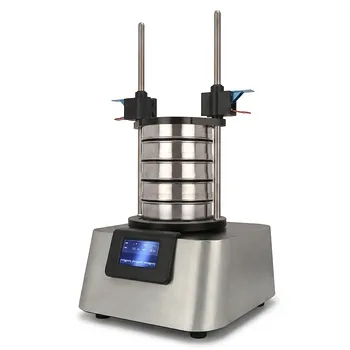
Vibratory Sieve Shaker Electromagnetic 3D Motion Powder Particle Size Analyzer for Dry and Wet Sieving
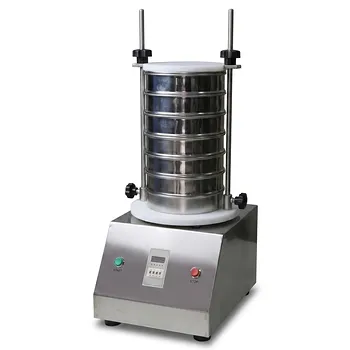
Laboratory Vibratory Test Sieve Shaker for Precision Particle Size Analysis and Powder Grading
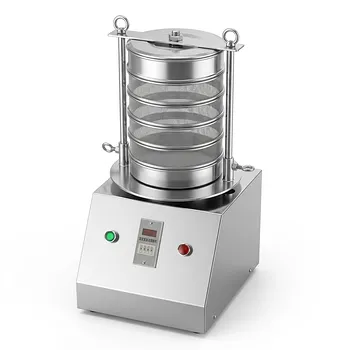
Stainless Steel Laboratory Vibratory Test Sieve Shaker
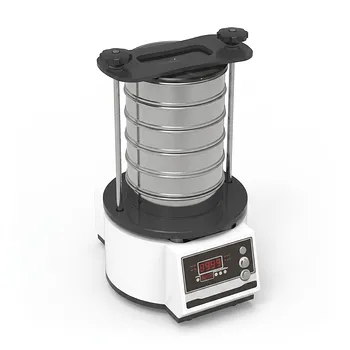
Tapping Oscillating Sieve Shaker for Dry and Wet Particle Size Analysis
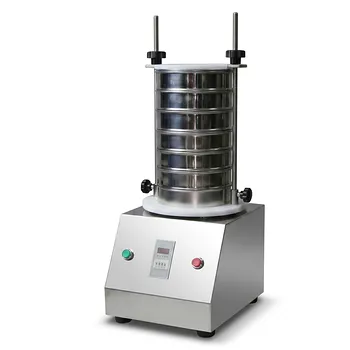
Small Laboratory Vibratory Sieve Shaker for Powder Gradation and Particle Size Analysis
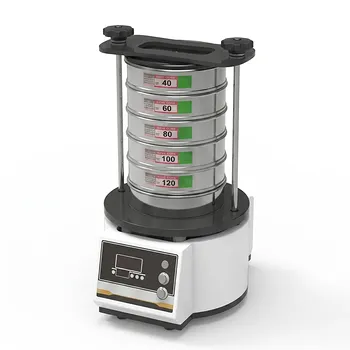
Dry Three Dimensional Vibratory Sieve Shaker
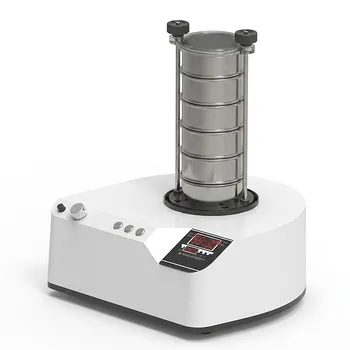
三维电磁微量振动筛分仪
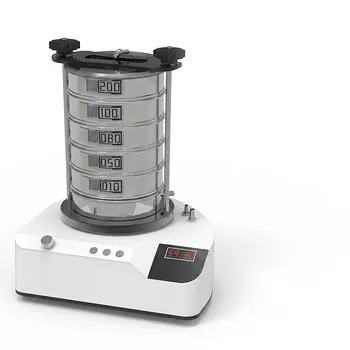
Heavy Duty Dry Three Dimensional Vibratory Sieve Shaker for Particle Separation
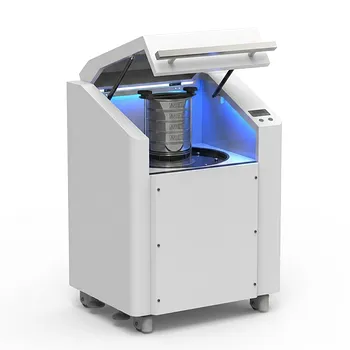
High Frequency Cabinet Type Three-Dimensional Rotary Vibrating Sieve Shaker for Dry Sieving and Particle Classification