The Great Unblinding: How a Simple Sieve Unlocks the Hidden Fortunes in Electronic Waste
Aug 01, 2026
The Powder That Refused to Give Up Its Gold
The lab in Shenzhen had a problem that felt almost personal. A stack of discarded printed circuit boards—fiberglass, copper, epoxy resin, traces of gold—had been crushed into a fine, grayish dust. It was full of value. The numbers proved it. Yet every attempt to separate the metals from the polymers ended in disappointment. The shaking table spat out a middling stream of half-metal, half-plastic mush. The leaching baths delivered inconsistent dissolution rates, ruining the kinetic models. The team had optimized temperature, acid concentration, flow rate. They had ignored only one variable. The powder itself.
Morgan Housel once observed that the biggest risk is always what you aren't watching. In PCB recycling, the variable nobody watches is particle size distribution. And that blind spot costs millions.
A powder is not a singular thing. It is a population. And like any population, it has a distribution of sizes, shapes, and behaviors. When you feed a chaotic population into a gravity separator, you are not sorting by density. You are forcing the machine to solve a physics problem it was never designed to solve: disentangling the weight of a large plastic particle from the weight of a small copper one. The result is not separation. It is statistical noise.
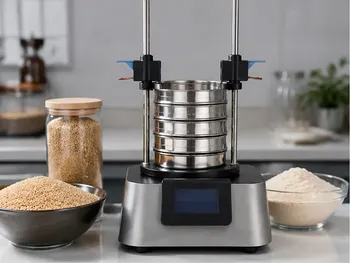
This is where a laboratory vibratory sieve shaker stops being a humble screening tool and becomes the central nervous system of a recovery operation. It is the instrument that says: I will not let this chaos enter your process.
The Physics of Variable Interference
Why Gravity Separation Fails Silently
Imagine a shaking table. It vibrates, tilts, stratifies. Heavy particles sink; light particles float. This mechanism works flawlessly—so long as “heavy” means “metal” and “light” means “plastic.” But particle size corrupts this logic.
A large plastic flake and a small copper grain might have identical settling velocities in water. The shaking table, blind to chemistry, sees them as the same material. It sends them both to the same exit stream. You have not separated copper from plastic. You have separated big from small.
This is the variable interference principle: when particle size spans a wide range, density ceases to be the dominant sorting signal. The process becomes a lottery.
The vibratory sieve shaker eliminates this lottery. It classifies the crushed PCB powder into narrow size fractions—say, 52 to 72 mesh. Now every particle entering the shaking table has roughly the same volume. Density becomes the only meaningful difference. Recovery rates jump, not by incremental percentage points, but by step changes. What looked like a metallurgical problem was, in fact, a sample preparation problem.
Multi-Layer Thinking
A single sieve gives you an “over” and an “under.” That is a binary view of the world. Modern vibratory sieve shakers stack multiple meshes, creating a vertical column of classification. One feed. Multiple products.
- The coarse fraction (>200 µm): fiberglass-rich, ready for composite filler production.
- The intermediate fraction (75–200 µm): copper-rich, ideal for gravity concentration.
- The fine fraction (<75 µm): high surface area, destined for hydrometallurgical leaching.
This is not just screening. It is the physical pre-concentration of value. The sieve shaker, in its quiet, oscillating way, performs a first-pass economic sort—directing each particle to its highest-value fate.
The Hidden Psychology: Why Labs Skip the Sieve
It defies logic, yet it happens constantly. A researcher spends weeks optimizing leaching parameters on a powder that was never classified. They publish results that cannot be replicated. An operator blames the shaking table manufacturer when the real culprit is upstream.
The psychology here is familiar to anyone who has read Kahneman: we prefer to optimize systems we can see. A leaching reactor with its digital controls feels like science. A white box that vibrates and hums feels like an accessory. It is not. It is the gatekeeper of reproducibility.
Atul Gawande, in his surgical narratives, often returns to the same theme: the most catastrophic failures stem not from dramatic errors, but from simple, mundane steps that were skipped. The checklist. The hand-washing. The sieve.
A laboratory vibratory sieve shaker is the checklist of powder processing. When you skip it, you introduce an uncontrolled distribution of particle sizes. You are no longer measuring the intrinsic behavior of your material. You are measuring the noise.
When the Mesh Fights Back
Mesh Blinding: The Sticky Truth
PCB powders contain epoxy resins. When crushed, these resins can become slightly tacky. Under vibration, they smear across the mesh openings, clogging them. This is called blinding. It is the sieve shaker’s version of atherosclerosis.
The result is a gradual loss of screening efficiency. Particles that should pass through are retained. The size distribution drifts. Your carefully designed experiment loses its foundation.
The solution often lies in the tools you pair with the shaker: rubber tapping balls, ultrasonic de-blinding systems, periodic brushing. A good shaker is designed not just to vibrate, but to clean itself during operation. It is a machine that acknowledges its own vulnerability.
Throughput vs. Precision
There is a trade-off that every engineer must face. A laboratory vibratory sieve shaker is built for precision, not bulk tonnage. It will not process a factory’s daily waste stream. But it will give you the truth about your powder. And with that truth, you can scale.
Many operations skip lab-scale classification because they view it as a bottleneck. They go straight to industrial screening and wonder why the separation plant underperforms. The psychology here is impatience. We want to build the machine before we understand the material.
The sieve shaker forces a slower, smarter rhythm. It says: understand your powder first; scale later.
The Moisture Trap
PCB powders are hygroscopic. They pick up moisture from the air. Even a small amount of moisture causes fine metal particles to cling to larger plastic ones, forming agglomerates that defeat size-based classification. The sieve shaker cannot perform its function if the feed is damp.
Drying is not optional. It is the prerequisite. A vacuum oven or a low-temperature drying step before sieving is the handshake between sample preparation and accurate results. Neglect it, and you are back in the world of noise.
Matching the Sieve to the Mission
The vibratory sieve shaker is not a one-setting machine. Its use must be aligned with what you ultimately want to recover. The following framework is born from hard experience on PCB lines:
-
If your goal is gravity separation (shaking tables, spirals):
Focus on a narrow coarse-to-intermediate cut. For example, classify to -60+80 mesh. Offer the table a uniform feed where density governs behavior. Expect copper recovery to rise until it flattens at the theoretical limit. -
If your goal is hydrometallurgical leaching:
Isolate the sub-90 µm fraction. This maximizes specific surface area. Your leaching kinetics will become predictable, and your Arrhenius plots will finally make sense. Reaction consistency is a gift that only uniform particle size can give. -
If your goal is composite material manufacturing:
Set a strict upper limit—often 75 µm. Reject anything larger. Oversized particles act as stress concentrators in the final composite. The sieve shaker here is a quality assurance instrument, not just a preparative tool. -
If your goal is full resource mapping:
Use a stack of five or more sieves. Generate a size-by-size assay. You will learn that gold concentrates in the -150 mesh fraction, while fiberglass dominates the +100 mesh. This knowledge reshapes the entire economic model of your recycling line.
The Engineer's Romantic View
There is something beautiful about a vibratory sieve shaker when you watch it closely. The stack of meshes, clamped tight and humming at 50 Hz, performs a kind of material meditation. It does not add reagents. It does not heat or pressurize. It simply asks the powder to sort itself by the oldest definition of identity: size.
In an era obsessed with chemical complexity, the sieve shaker is a reminder that physical preparation still rules. It is the moment where control begins. Before the acid, before the furnace, before the spectrometer—there is the mesh.
And when the mesh has done its work, the powder that emerges is no longer a messy, heterogeneous waste. It is a standardized feedstock. It is ready for the next machine in the chain. It is, finally, a reliable subject of scientific inquiry.
The Complete Workflow: From Board to Knowledge
The vibratory sieve shaker does not stand alone. It sits in the middle of a workflow that begins with size reduction and ends with compaction or analysis. A responsible lab builds this chain with intention.
- Primary crushing: Jaw crushers and roll crushers reduce whole boards to coarse granules. If the boards are tough, a liquid nitrogen cryogenic grinder embrittles them, making fracture clean and metal-rich.
- Fine milling: The granules pass into planetary ball mills, jet mills, or disc mills. Here they reach the targeted micron range for liberation—the point where copper foil separates from fiberglass laminate.
- Classification: This is the sieve shaker's moment. Vibratory or air-jet, with precision test sieves, it sorts the milled powder into narrow cuts.
- Post-processing and analysis: Classified powders can be mixed in laboratory mixers, defoamed, and then compacted. Hydraulic presses—Cold Isostatic Presses (CIP), Warm Isostatic Presses (WIP), XRF pellet presses, vacuum hot presses—transform the powder into a stable solid for X-ray fluorescence or further metallurgical testing.
Every component in this chain solves a specific failure mode from the previous step. The crusher overcomes bulk material heterogeneity. The mill achieves liberation. The sieve shaker imposes size discipline. The press creates a uniform solid for analysis.
When one link is missing, the chain breaks. The most common missing link, in practice, is classification. The sieve shaker is the machine that makes every downstream instrument smarter.
Beyond the Lab: The Distributor's Perspective
For organizations that supply equipment to universities, recycling plants, or material science labs, the vibratory sieve shaker is not just a product—it is an entry point. It leads naturally to test sieves, crushers, mills, and presses. The customer who understands the value of precise classification will soon demand precision in every other step.
Supply chain reliability, certification, and OEM/ODM flexibility become critical. A distributor needs a partner who offers a complete portfolio: jaw crushers for the rough work, planetary ball mills for the fine work, air-jet and vibratory sieve shakers for classification, and a full spectrum of hydraulic presses—from basic lab models to sophisticated vacuum hot presses.
This is a business built on the idea that preparation is everything. Sell the workflow, not the widget. The customer’s profit per ton of recycled PCBs depends on recovery rate. Recovery rate depends on separation efficiency. Separation efficiency depends—first and foremost—on particle size. And particle size control begins with a sieve shaker.
The chain is clear. The investment is modest. The return is disproportionate.
The Takeaway
We often look for technological salvation in the newest leaching agent, the smartest sensor, the most automated sorting line. But the bottleneck in PCB powder recovery is frequently much earlier, in a place few people think to look. It is in the grain size distribution. It is in the blinding of a mesh. It is in the moisture that glues copper to fiberglass.
A laboratory vibratory sieve shaker addresses these problems not with complexity, but with a kind of elegant, physical honesty. It separates particles by the one property they cannot hide: size. And in doing so, it standardizes everything that follows.
The result is not just better recovery. It is trustworthy data. It is scalable processes. It is the quiet confidence that when a separation fails, you can rule out the powder—and look elsewhere.
If you work with electronic waste, you are not simply handling trash. You are managing a complex, particulate raw material. Treat it with the respect that particle science demands. Control the size distribution. Control the economics.
For laboratories and distributors seeking complete, reliable sample preparation solutions that span from primary crushing to final pellet pressing, the path forward is to build a workflow that leaves no step to chance. The vibratory sieve shaker is the heart of that workflow. It is where the random becomes predictable, and where waste begins to look like a resource again.
Quick Links
Suggested Products
Vibratory Sieve Shaker Electromagnetic 3D Motion Powder Particle Size Analyzer for Dry and Wet Sieving Laboratory Dry and Wet Three Dimensional Vibratory Sieve Shaker for Particle Analysis Dry Three Dimensional Vibratory Sieve Shaker Stainless Steel Laboratory Vibratory Test Sieve Shaker Heavy Duty Dry Three Dimensional Vibratory Sieve Shaker for Particle SeparationFurther Reading
The Invisible Architecture of Powder: How a Vibratory Sieve Shaker Decides What Your Amaranth Bread Becomes The Hidden Economics of Particle Size: Why the Most Overlooked Variable in Material Science Controls Everything The Particle-Size Lever: Why the Most Overlooked Step in Catalyst Design Determines Everything Else The Hidden Geometry of Your Morning Coffee: What Particle Size Reveals About Control and Chaos The Arithmetic of Interlock: Why Sieve Shakers Are the Storytellers of Pavement Strength
PowderPreparation
Last updated on May 14, 2026
Related Products

Vibratory Sieve Shaker Electromagnetic 3D Motion Powder Particle Size Analyzer for Dry and Wet Sieving

Laboratory Dry and Wet Three Dimensional Vibratory Sieve Shaker for Particle Analysis

Dry Three Dimensional Vibratory Sieve Shaker

Stainless Steel Laboratory Vibratory Test Sieve Shaker

Heavy Duty Dry Three Dimensional Vibratory Sieve Shaker for Particle Separation

Small Laboratory Vibratory Sieve Shaker for Powder Gradation and Particle Size Analysis

Small Laboratory Vibrating Sieve Shaker for Precise Particle Size Analysis

High Frequency Wet Three-Dimensional Vibrating Sieve Shaker for Dry and Wet Particle Size Analysis

High Frequency Cabinet Type Three-Dimensional Rotary Vibrating Sieve Shaker for Dry Sieving and Particle Classification

Laboratory Vibratory Test Sieve Shaker for Precision Particle Size Analysis and Powder Grading

三维电磁微量振动筛分仪

Stainless Steel Rotary Vibrating Sieve High Precision Circular Vibratory Separator Industrial Powder Grading Machine Multi Layer Sifting Equipment

Tapping Oscillating Sieve Shaker for Dry and Wet Particle Size Analysis

Three Dimensional Rotary Vibrating Sieve
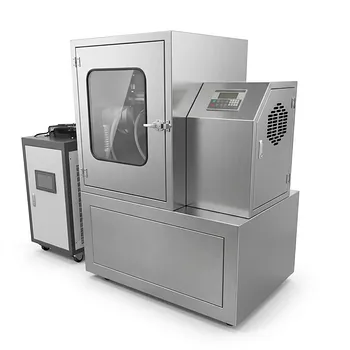
Vibratory Superfine Grinder for Ultra Fine Laboratory Powder Milling
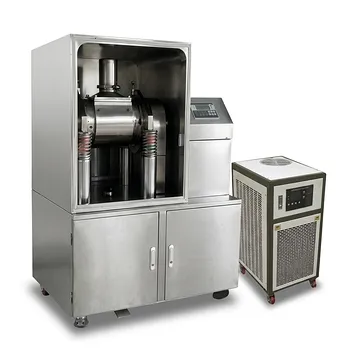
Small Vibrating Ultrafine Grinder for Traditional Chinese Medicine

Automatic Vibrating Powder Feeder for Laboratory Material Processing Precision Vibratory Hopper Feeder for Granular and Powder Material Handling Industrial Grade Vibrating Tray Feeder for Consistent Material Sample Preparation